
Updated November 2026 · By Joel Blackstock, LICSW-S
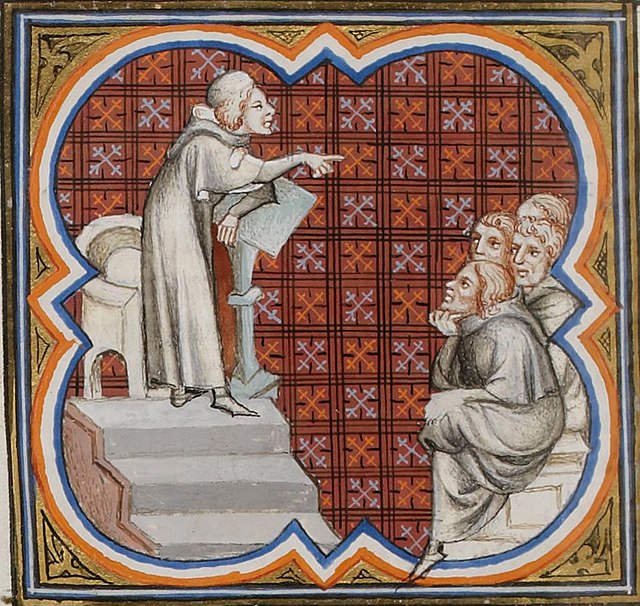
Amalric of Bena (Amaury de Bène, died c. 1206) was a master in the Paris schools who taught that God is all and that every Christian must believe he is a member of Christ’s body. He was censured shortly before he died. In 1210 a Paris council excommunicated him posthumously, ordered his body moved to unconsecrated ground and sent ten of his followers to the fire.
His story matters to depth psychology because it sets two claims side by side. Amalric said the divine is present in every believer, which is close to what Carl Jung later called the Self. Some of his followers, according to their accusers, said the Holy Spirit was incarnate in them, so nothing they did could be sin, which is what Jung called inflation. The difference between relating to something larger than the ego and claiming to be it is the argument here, and a working distinction in therapy. The church’s answer, burning the living and moving the dead, shows the other half: a collective expelling an inner authority it could not absorb.
Who Amalric of Bena was
Amalric was born in the second half of the twelfth century at Bène, a village in the diocese of Chartres, and taught philosophy and theology in Paris in the years when its schools were turning into a university. The 1911 Encyclopaedia Britannica calls him a subtle dialectician whose lectures drew a large circle of hearers.1 The sources give no birth year.
His trouble began while he was alive. The historian J. M. M. H. Thijssen treats Amalric’s case as the earliest documented academic censure at the University of Paris and places it around 1206, shortly before his death.2 According to the 1911 Britannica, Amalric was not summoned to Rome. He appealed to Pope Innocent III himself, the pope upheld the sentence, and Amalric was sent back to Paris to recant. He died soon afterward, of grief, it was said.1 T
What Amalric taught
What we know of his teaching comes through his opponents, and only three propositions can be securely attributed to him. First, God is all: omnia sunt Deus. Second, every Christian is bound to believe that he is a member of the body of Christ, and this belief is necessary for salvation. Third, whoever remains in the love of God cannot sin.1
The second and third echo scripture. Paul told the Corinthians, “Now ye are the body of Christ, and members in particular” (1 Corinthians 12:27), and 1 John 4:16 says that “he that dwelleth in love dwelleth in God, and God in him.” The image was common. What stands out is the insistence: Amalric made it an article of faith that each Christian had to hold about himself.
The first proposition earned him the name of pantheist. He seems to have drawn it from the ninth-century Irish philosopher John Scottus Eriugena, whose Periphyseon twelfth-century Neoplatonists had revived.1, 3 Thomas Aquinas reported that Amalric was condemned for saying God is the formal principle of all things, an echo of Eriugena’s God as the “form of all things.”
Read psychologically, the second and third propositions are not claims of identity. A member is part of a body, not the body. Remaining in love describes staying inside a relationship, and the promise of sinlessness holds only while one stays there. Keep that condition in mind. It is what his followers are said to have dropped.
1210: the spy, the council and the fire
After his death a circle of students and admirers, many of them priests and clerics, kept his ideas alive.5 The authorities learned of them through Master Ralph of Namur, a cleric whose superiors told him to pose as a convert and infiltrate the group, some three months before the burnings. A royal counsellor, the Hospitaller Brother Guérin, was consulted at once. As the historian Gary Dickson notes, the matter was urgent, and not only to the Church.4
Fourteen people were taken. A council held at Paris in 1210 condemned them, and four were sentenced to prison for life.2, 5 On 20 November 1210 the other ten were burned before a large crowd in the marketplace of Les Champeaux, outside the Saint-Honoré gate. At least nine of them were priests, deacons or subdeacons, stripped of their clerical status six days earlier at the nearby church of Saint-Honoré and handed to the officials of King Philip Augustus.4
The same council turned on the dead man. It excommunicated Amalric and ordered his body removed to unconsecrated ground. It also ordered the quires of David of Dinant burned, prohibited the teaching of Aristotle’s works on natural philosophy, and ordered certain theological works written in French surrendered to the local bishops.2 David, another Paris master, was accused of identifying God with prime matter.3 The some accounts said his bones were burned and the ashes scattered. That version appears in the 1911 Britannica, which also dates the burnings a year early, to 1209. Thijssen’s reading of the council’s decisions and the Catholic Encyclopedia both describe removal to unconsecrated ground.1, 2, 5
Five years later the Fourth Lateran Council added the verdict that has followed him ever since. Its second canon, after condemning a treatise of Joachim of Fiore on the Trinity, condemned the teaching of “Amaury,” a man “whose mind the father of lies has so darkened that his teaching is to be regarded not so much heretical as insane.”6 In 1225 Pope Honorius III condemned Eriugena’s book itself, the source Amalric was supposed to have drawn on.5
Seen together, these acts form a pattern, although Thijssen cautions that the rulings on David, Aristotle and the French books were not necessarily tied to the Amalrician case.2 The authorities burned the leaders, moved the corpse, burned another master’s writings, banned a philosophy and called in theology written in the language ordinary people spoke. Each act closes a channel. The canon of 1215 then reclassified Amalric’s teaching as madness. This is what a collective does with material it cannot integrate. It pushes the material outside its boundary, which Jungians call projecting the shadow, and then names it insane, so nobody has to ask what it was saying.
The Self and the problem of inflation
In Jung’s psychology the Self is the archetype of wholeness and the organizing center of the psyche, larger than the ego and not under its control. In Aion he gave a chapter to “Christ, a Symbol of the Self.”9 In Answer to Job (1952) he argued that the incarnation does not end with Christ: through the Holy Spirit the divine has to enter ordinary, “empirical” human beings, sins and all.8 Set Amalric’s second proposition beside that and the resemblance is plain: the divine works through every member, not only through one exceptional figure.
Jung also described what goes wrong when someone takes this literally about himself. In “The Relations between the Ego and the Unconscious,” he warned that the ego, flooded by contents of the collective unconscious, can identify with them and swell into an inflated, quasi-magical figure he called the mana personality. His remedy was a distinction: the Self as a center beyond the ego, which the ego relates to but does not become.10 Edward Edinger built a model on it, the ego–Self axis. A healthy ego stays connected to the Self without merging with it. Lose the connection and you get alienation; collapse the distance and you get inflation. Edinger thought psychological life cycles between the two.11, 12
The Amalricians, as their enemies described them, made the inflated move. Amalric said that whoever remains in the love of God cannot sin. The followers, on this account, dropped the condition: the Spirit is incarnate in us, so what we do is holy. The 1911 Britannica repeats the charge that they “indulged in every excess.”1 Treat that with caution. It comes from their prosecutors and chroniclers, and Robert Lerner’s study of the later “Free Spirit” heresy found not a tightly organized sect of anarchistic deviants but a spectrum of belief that emphasized voluntary poverty and quietist mysticism.13 We cannot know how the Amalricians lived. We can see the psychological shape of the idea they were accused of.
More than a century later the Brabant mystic Jan van Ruusbroec drew the line the Amalricians were accused of erasing. He wrote against a Free Spirit teacher in Brussels named Bloemardinne, and he qualified his own language of union: “There where I assert that we are one in God, I must be understood in this sense that we are one in love, not in essence and nature.”14 That is the ego–Self axis in fourteenth-century terms. See our piece on Jan van Ruusbroec and depth psychology; the Catholic Encyclopedia counts the Strasbourg preacher Johannes Tauler among the contemporaries who praised him.14
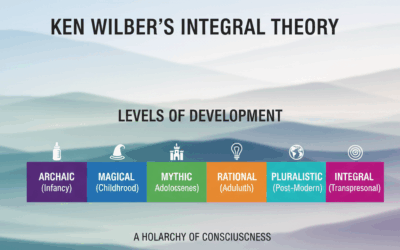
Ken Wilber named a related confusion the “pre/trans fallacy.” States before the ego and states beyond it are both non-egoic, so they are easily mistaken for each other. One error elevates a prepersonal state to transpersonal status; the other reduces a genuinely transpersonal experience to a prepersonal one.15 The Paris story contains both. If the reports are accurate, some followers treated a grandiose state as a spiritual one, and the Lateran canon treated Amalric’s whole teaching as insanity.
What survived, and what did not
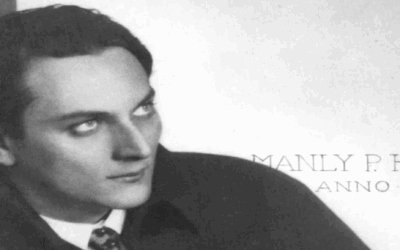
The earlier version of this page described Amalric’s ideas as an underground river feeding the Free Spirit movement, the Rhineland mystics, the Reformation and transpersonal psychology. The record is thinner. Lerner found that the Free Spirit was a spectrum of belief rather than a tightly organized sect, which leaves no single channel to carry anything forward.13 The traceable line runs through Eriugena: the Periphyseon was condemned, yet Meister Eckhart and Nicholas of Cusa both knew it, and Cusanus owned a copy.3 No source reviewed here connects Amalric to the Reformation or to modern transpersonal psychology. The romance of a suppressed secret lineage runs through much twentieth-century esoteric writing, including that of Manly P. Hall. It is better read as myth than as history.
What survived is the question. Can a person know the divine directly, without an institution in between, and stay sane and decent doing it? Later Jungians, from James Hollis on the Self to June Singer on the creative unconscious, restated it in the language of ego and Self. The answer in that tradition, as in Ruusbroec, is yes, on a condition: the ego stays in relationship and does not claim the throne.
What this looks like in therapy
Nobody comes to therapy saying they have an Amalric problem. The pattern shows up in three more ordinary forms.
The first is the person who had an experience of something larger than themselves, in prayer, in nature or in grief, and learned from family or church that such experiences were presumptuous, dangerous or crazy. They moved it, in effect, out of consecrated ground. Clinicians have not always helped. In 1992 David Lukoff, Francis Lu and Robert Turner argued that mental health professionals tended to ignore or pathologize religious and spiritual experience, and proposed a diagnostic category partly to reduce harm from misdiagnosis.16 DSM-IV adopted “religious or spiritual problem” as a condition that may be a focus of clinical attention, not a mental disorder.17 In practice that means asking what the experience meant and what it asked of the person before deciding what it was.
The second is the person raised under an outer authority so complete that their own perceptions never counted as evidence. Questioning it can feel like heresy from the inside, with the dread to match. A meta-analysis of 49 studies found that negative religious coping, the strained and conflicted ways people draw on faith under stress, was associated with poorer psychological adjustment, and positive religious coping with better adjustment.18 These are correlations, not proof of cause. The work is rarely to argue someone into or out of belief. It is to help an inner authority sit beside the outer one without being burned by it.
The third is inflation itself: spiritual or psychological language used to put oneself beyond feedback. My higher self, my intuition, my healing, so no one may question it. Grandiose religious conviction can also be part of mania or psychosis, so a clinician’s first job is to assess for that and bring in medical care when it is needed. Lukoff and his colleagues discuss differential diagnosis in this area.16 When it is not illness, the Jungian move is Ruusbroec’s: keep the relationship, refuse the identity. Dreams, active imagination and attention to the body give the larger psyche a voice without handing it the ego’s chair. Parts-based therapy draws a similar line between a part that feels certain and the whole person.
None of this requires believing what Amalric believed. It requires taking seriously what his story shows: people experience something in themselves larger than the ego, and both denying that experience and identifying with it do damage.
If questions like these are part of what brings you to therapy, our page on Jungian depth therapy in Hoover describes how we approach this kind of work. You can also contact us to ask whether it is a good fit.
References
- Chisholm, H. (Ed.). (1911). Amalric, of Bena. In Encyclopædia Britannica (11th ed., Vol. 1, p. 779). Cambridge University Press. https://en.wikisource.org/wiki/1911_Encyclopædia_Britannica/Amalric,_of_Bena
- Thijssen, J. M. M. H. (1996). Master Amalric and the Amalricians: Inquisitorial procedure and the suppression of heresy at the University of Paris. Speculum, 71(1), 43–65. https://doi.org/10.2307/2865200
- Moran, D., & Guiu, A. (2019). John Scottus Eriugena. In Stanford Encyclopedia of Philosophy. Stanford University. https://plato.stanford.edu/entries/scottus-eriugena/
- Dickson, G. (1989). The burning of the Amalricians. The Journal of Ecclesiastical History, 40(3), 347–369. https://doi.org/10.1017/S0022046900046510
- a’Becket, J. J. (1907). Amalricians. In C. G. Herbermann et al. (Eds.), The Catholic encyclopedia (Vol. 1, pp. 379–380). Robert Appleton Company. https://en.wikisource.org/wiki/Catholic_Encyclopedia_(1913)/Amalricians
- Schroeder, H. J. (Trans.). (1937). The canons of the Fourth Lateran Council, 1215, canon 2. In Disciplinary decrees of the general councils: Text, translation and commentary. B. Herder. Reproduced in the Internet Medieval Sourcebook, Fordham University. https://sourcebooks.fordham.edu/basis/lateran4.asp
- Gardner, E. G. (1910). Joachim of Flora. In C. G. Herbermann et al. (Eds.), The Catholic encyclopedia (Vol. 8). Robert Appleton Company. https://en.wikisource.org/wiki/Catholic_Encyclopedia_(1913)/Joachim_of_Flora
- Jung, C. G. (1969). Psychology and religion: West and East (G. Adler & R. F. C. Hull, Eds. and Trans.; 2nd ed.; Collected Works, Vol. 11). Princeton University Press.
- Jung, C. G. (1979). Aion: Researches into the phenomenology of the self (R. F. C. Hull, Trans.; 2nd ed.; Collected Works, Vol. 9, Part 2). Princeton University Press. (Original work published 1951)
- Jung, C. G. (1972). Two essays on analytical psychology (R. F. C. Hull, Trans.; 2nd ed.; Collected Works, Vol. 7). Princeton University Press.
- Edinger, E. F. (1960). The ego-self paradox. Journal of Analytical Psychology, 5(1), 3–18. https://doi.org/10.1111/j.1465-5922.1960.00003.x
- Edinger, E. F. (1992). Ego and archetype: Individuation and the religious function of the psyche. Shambhala. (Original work published 1972)
- Lerner, R. E. (1972). The heresy of the Free Spirit in the later Middle Ages. University of California Press. https://doi.org/10.1525/9780520352698
- Scully, V. (1912). Blessed John Ruysbroeck. In C. G. Herbermann et al. (Eds.), The Catholic encyclopedia (Vol. 13). Robert Appleton Company. https://en.wikisource.org/wiki/Catholic_Encyclopedia_(1913)/Bl._John_Ruysbroeck
- Wilber, K. (1982). The pre/trans fallacy. Journal of Humanistic Psychology, 22(2), 5–43. https://doi.org/10.1177/0022167882222002
- Lukoff, D., Lu, F., & Turner, R. (1992). Toward a more culturally sensitive DSM-IV: Psychoreligious and psychospiritual problems. The Journal of Nervous and Mental Disease, 180(11), 673–682. https://doi.org/10.1097/00005053-199211000-00001
- Turner, R. P., Lukoff, D., Barnhouse, R. T., & Lu, F. G. (1995). Religious or spiritual problem: A culturally sensitive diagnostic category in the DSM-IV. The Journal of Nervous and Mental Disease, 183(7), 435–444. https://doi.org/10.1097/00005053-199507000-00003
- Ano, G. G., & Vasconcelles, E. B. (2005). Religious coping and psychological adjustment to stress: A meta-analysis. Journal of Clinical Psychology, 61(4), 461–480. https://doi.org/10.1002/jclp.20049








0 Comments