

Updated November 2026 · By Joel Blackstock, LICSW-S
Holographic memory theory is the proposal, made by the neurosurgeon Karl Pribram in the 1960s, that the brain stores memories the way a hologram stores an image: spread through the whole medium as patterns of wave interference, so that any piece can call up the whole. The theory was never confirmed. Memory is distributed in the brain, but in specific networks of cells, not as a hologram. My argument here is that the hologram is best read as a metaphor, and as a sign of what we hope is true about memory. Pribram got one thing right: memories are spread across many regions and tend to fade gradually after damage rather than vanish all at once. He got the mechanism wrong. The idea's long life in trauma therapy says less about neurons than about a wish, that nothing in a broken mind is ever truly lost. Held as a metaphor, it can help a client. Taken as neuroscience, it misleads clients and the clinicians who treat them. An earlier version of this article presented holonomic brain theory as demonstrated fact, said it began as a joint project of Pribram and the physicist David Bohm, treated it as evidence for "non-local" consciousness and used it to explain why particular therapies work. None of that holds up. This version keeps the subject and corrects the record.Where holographic memory theory came from
Holography came first. Dennis Gabor, a Hungarian-born physicist working for the British Thomson-Houston company in Rugby, England, invented it in 1947 while trying to improve the electron microscope, and described the method in Nature the following year.1 It earned him the 1971 Nobel Prize in Physics. Good optical holograms had to wait for the laser. In 1964 Emmett Leith and Juris Upatnieks reported laser holograms of three-dimensional scenes that reproduced parallax and depth like the original objects.2 A hologram does not record a picture. A laser beam is split in two: one part lights the object, the other goes straight to the photographic plate, and the plate records the interference pattern where the two waves meet. The pattern looks like ripples on water, not like the object, yet a matching light shone back through it brings the three-dimensional scene back. What caught the attention of brain scientists is that information about the whole scene is spread across the plate: a large enough piece of a hologram still reconstructs the whole scene, seen from a narrower range of angles and with more noise and less detail. Neuroscience had a matching puzzle. Karl Lashley spent more than three decades training rats and then removing parts of their cortex to find where a learned habit was kept. In Brain Mechanisms and Intelligence (1929) he reported that how much cortex was removed mattered more than where it was removed, and in his 1950 essay "In Search of the Engram" he concluded that memories were distributed within functional areas of the cortex rather than stored in one place.3,4 The earlier version of this page said his rats kept their memory of the maze "intact" after large lesions. They did not; their performance worsened in proportion to the tissue removed. Pribram, trained as a neurosurgeon, worked with Lashley at the Yerkes primate laboratories in Florida in the 1940s. He saw in the hologram a way to explain Lashley's results: if experience were recorded as interference patterns spread through brain tissue, a memory could survive partial damage. He set out the idea for a general readership in Scientific American in 1969 and at length in Languages of the Brain (1971).5,6 In 1968 H. Christopher Longuet-Higgins independently published a short "holographic model of temporal recall" in Nature.7 Pribram later refined his version. In Brain and Perception (1991) he argued that the brain works less like one large hologram than like many small, local ones, processed patch by patch in the fine branches of dendrites. He called this holonomy, which is where the name holonomic brain theory comes from.8 David Bohm's part in the story came later and from a different direction. Bohm was a theoretical physicist, best known for an alternative interpretation of quantum mechanics. In Wholeness and the Implicate Order (1980) he used the hologram as an image of a universe in which each region enfolds information about the whole, while noting that a hologram is static and that the order he had in mind was in constant movement.9 Pribram had published his hypothesis years before that book appeared. He did take up Bohm's ideas later, for example in an essay titled "The implicate brain" for a 1987 collection honoring Bohm,10 but the fusion of the two men's work into a single worldview happened mostly in popular writing, above all Michael Talbot's The Holographic Universe (1991), which built a picture of reality as a hologram on Bohm and Pribram and then used it to explain telepathy and other paranormal claims.11 Much of what circulates online as "holographic memory theory" owes more to Talbot than to Pribram's laboratory.What held up and what did not
Pribram was right that memory is distributed. A single experience leaves traces in many places, and damage to one region rarely erases a memory outright. But the distribution is not the kind a hologram has. The modern search for the engram, the physical trace of a memory, has found sparse, specific groups of cells rather than a pattern spread evenly through tissue.12,13 In 2012 Susumu Tonegawa's laboratory at MIT tagged the small set of hippocampal neurons that were active while mice learned to fear one cage, then switched those neurons back on with light while the mice were in a different cage. The mice froze, as if remembering.14 Reactivating a sparse ensemble was enough to bring the memory back. That is close to the opposite of a hologram, in which every fragment holds the whole. Later work from the same group traced cells active during a single fear memory across 117 brain regions and found that reactivating several of those ensembles together produced stronger recall than reactivating one. The authors read this as support for a unified engram complex: one memory stored across many functionally connected regions.15 One piece of Pribram's program did survive, though not in the form he hoped. Cells in the primary visual cortex respond to stripes of particular widths and orientations within a small patch of the visual field, and their response profiles are well described by the same functions Gabor used in signal analysis. A 1987 study in cat visual cortex found that two-dimensional Gabor filters fit the receptive fields of simple cells with leftover error that was statistically indistinguishable from noise.16 That is a real link between the brain and the mathematics Pribram borrowed from Gabor, but it concerns how early vision analyzes small patches of an image, not how memories are stored. The properties that made the hologram attractive, such as storage spread across many elements, recall of a whole from a part and a gradual decline after damage, also turned out not to need a hologram. In 1969 Willshaw, Buneman and Longuet-Higgins published a model titled, pointedly, "Non-holographic associative memory," which got many of the same properties from a grid of modifiable connections laid out like input neurons, output neurons and the synapses between them.17 In 1982 the physicist John Hopfield showed that a network of simple neuron-like units could work as a content-addressable memory that "correctly yields an entire memory from any subpart of sufficient size," and that keeps working when individual units fail.18 That is close to a definition of holographic memory, achieved with ordinary network connections. Holographic ideas do live on in computing: T. A. Plate's "holographic reduced representations" use related mathematics to pack structured information into fixed-length lists of numbers.19 These are engineering tools, not claims about brain tissue, and every such system has a finite capacity, whatever the earlier version's claim of "infinite storage capacity" for the brain."Non-local" memory, quantum claims and split brains
In neuroscience, "non-local" storage has a modest meaning: a memory is not kept in one spot. The earlier version slid from that meaning to the quantum physicist's meaning, and from there to a mind that reaches beyond the brain. Nothing in Pribram's experiments showed that, and the physics argues against it. In 2000 the physicist Max Tegmark estimated that quantum coherence in the brain would decay within about a ten-trillionth of a second or less, while neurons do their work over thousandths to tenths of a second. His conclusion was that the brain's information processing is best treated as classical.20 Serious field theories of consciousness exist, but they are different animals. Johnjoe McFadden's electromagnetic field theory of consciousness proposes that conscious experience is information carried in the brain's own electromagnetic field, which is ordinary classical physics, and its author lists predictions that have not yet been tested.21 Broader claims that consciousness is a field underlying the universe have not fared well. A 2025 paper by the Uppsala University materials scientist Maria Strømme proposing exactly that, discussed in the site's piece on Strømme's physics of universal consciousness, was retracted by the journal AIP Advances in 2026.22 The earlier version also offered split-brain patients as evidence that consciousness "behaves like a fractured hologram," with each half keeping the whole. The split-brain studies that Roger Sperry, Joseph Bogen and Michael Gazzaniga began in the early 1960s, with patients whose corpus callosum had been cut to control severe epilepsy, point nearly the other way. They made the case that the two hemispheres are specialized, so each half has abilities the other lacks.23 Whether such patients have one consciousness or two is still argued. A 2017 study of two patients by Yair Pinto and colleagues, including the consciousness researcher Victor Lamme, found that they detected and identified stimuli anywhere in the visual field well above chance, whichever hand they used and whether they answered aloud. The authors concluded that cutting the callosum splits perception without creating two independent conscious perceivers.24 Neither side of that debate needs a hologram.What trauma does to memory, without the hologram
The earlier version described trauma as "the fragmentation of a highly organized wave pattern into disconnected, hyper-charged pieces." The experience behind the image is real: many survivors describe intrusive images, smells or body sensations that arrive without context and feel like the present. What produces that experience is less settled than the image suggests. One of the best-known models, Chris Brewin's dual representation theory, separates sensory-bound memory representations from contextual ones that carry information about time and place. In the 2010 revision, distressing intrusions arise when the brain systems supporting the two kinds of representation fail to work together properly.25 David Rubin and colleagues have argued that PTSD can be explained by ordinary memory processes, with no special mechanisms for trauma.26 The data are mixed. A 2012 review of 16 studies found that people who dissociated during a trauma rated their own memories as more fragmented, but the link did not hold when outside raters or computer coding measured fragmentation.27 A 2016 study of 30 trauma-exposed adults with PTSD and 30 without found no difference between the groups in the coherence of their trauma memories across 28 measures. Some trauma memories were more coherent than the comparison memories.28 "My memory is in pieces" is a real report about how remembering feels. It is not yet an established fact about how the memory is stored. The brain findings are more consistent, though they describe average differences between groups, not a shattered hologram. A 2007 meta-analysis of imaging studies found that people with PTSD, like people with other anxiety disorders, showed more activity than comparison groups in the amygdala and insula during negative emotional processing, and that only the PTSD groups showed reduced activity in parts of the anterior cingulate and ventromedial prefrontal cortex, areas linked to regulating emotion.29 The site's guide to how trauma is stored differently in different types of memory goes through these systems one at a time. The real mechanism behind "a fragment calls up the whole" is association. The hippocampus binds the elements of an event, such as its place, its people and its objects, so that a cue for one element can bring back the rest. A 2015 imaging study found that retrieving one pair of elements from a learned event reinstated brain activity for the other elements too, including ones the task did not ask about, and that the amount of reinstatement tracked hippocampal activity. The researchers called this pattern completion.30 It is how a smell or a tone of voice can bring back a whole scene, and it is a better account of the clinical experience the hologram was borrowed to describe. The earlier version also said Antonio Damasio showed that emotional experiences "write physical response patterns directly into our bodily tissues." Damasio's somatic marker hypothesis says something narrower: that signals about body states bias decisions, that these signals can arise in the brain's own representation of the body as well as in the body itself, and that the ventromedial prefrontal cortex is central to the process.31 It is a hypothesis about decision-making, and a 2006 critical review concluded that it needs more empirical support to remain tenable.32 The body matters a great deal in trauma. The claim about tissues is not Damasio's.Why the hologram keeps its hold on therapists
Every era describes memory with its most impressive recording technology. Douwe Draaisma traced the sequence in Metaphors of Memory (2000), from wax tablets and books through photography and computers to the hologram.33 Each metaphor arrives with a machine and borrows its prestige, and the hologram arrived with the laser. We are living through the next swap now, as people describe memory in the language of neural networks and chatbots. A materialist reading takes this seriously: our pictures of the mind are partly made of whatever our tools can do, and they date as the tools do. The hologram carries a second meaning, which matters more in a consulting room. It is an image of wholeness that survives breakage. Smash the plate and every large shard still holds the scene. Depth psychology has its own versions of that image. In Jungian psychology the Self is the whole of the psyche, conscious and unconscious, of which the ego is only a part. Erich Neumann, in The Origins and History of Consciousness (German 1949, English 1954), traced the emergence of the ego from the collective unconscious through a sequence of mythic stages, and he developed the idea of an ego-Self axis that Edward Edinger built on in Ego and Archetype (1972).34,35 The earlier version claimed that Jung's collective unconscious "finds its perfect modern explanation" in holography and that Neumann's and Edinger's work demonstrated a "holographic reality." Neither man demonstrated anything of the kind, and neither was trying to. They wrote interpretive psychology drawn from myth, religion and clinical practice. Their work is valuable as a way of seeing, which is how it is used in Jungian depth therapy, but it is not a set of experimental findings, and borrowing the vocabulary of physics does not turn one into the other. The deeper appeal is emotional. The earlier version's closing table promised that "the core Self is forever undamageable." Some therapies adopt a version of that idea as a working stance, and it can be a kind one, telling a client that the person under the symptoms is still there. As a claim about the brain it is unproven, and a client who feels permanently changed by trauma deserves not to be told that the feeling is an illusion. Donald Kalsched's work on archetypal defenses in trauma describes the darker side of the same wish. The psyche's protective systems can seal off an injured part so completely that the protection becomes a second injury.What this looks like in therapy
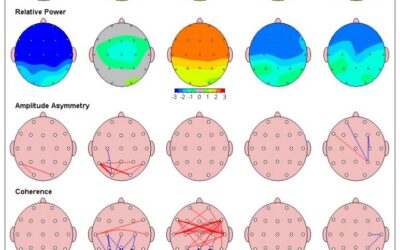
Taken as a metaphor, the hologram points at something clinicians see every week: a memory is a network, and a network can be entered at many points. A client may not be able to tell the story of a car accident in order, but a tightening in the chest, an image of headlights or the sound of glass can open onto the rest of it. That is pattern completion, and many trauma methods use it on purpose. EMDR, Brainspotting and the somatic therapies each begin from one element of a memory, whether an image, a body sensation or a point in the visual field, and work outward. Our page on Brainspotting therapy for trauma describes what that looks like in a session. The metaphor goes wrong when it is used to promise that working with one fragment will retrieve a complete, accurate file. Memory is reconstructive. Each recall rebuilds the memory, and the rebuilt version can take on new material. Elizabeth Loftus and Jacqueline Pickrell showed in 1995 that some adults can be led to remember childhood events that never happened.36 Animal research, including a widely cited 2000 study in rats, suggests that a retrieved fear memory can become briefly unstable and has to be stored again, a process called reconsolidation.37 Whether that window can be used reliably to change human memories is still contested.38 Either way, a therapist working with images and body sensations should ask open questions, avoid suggesting what a sensation means or what happened, and treat what emerges as experience to work with rather than as recovered evidence. David Grove's Clean Language, covered in the site's guide to Clean Language and Symbolic Modeling in psychotherapy, was built around exactly that discipline of using the client's own words and metaphors instead of the therapist's. Clients also deserve a straight account of the evidence, because the earlier version used holographic theory to suggest that some methods reach "the deep root of the injury" while talk therapy cannot. The guidelines say otherwise. The American Psychological Association's PTSD guideline, summarized in 2019, strongly recommends cognitive behavioral therapy, cognitive processing therapy, cognitive therapy and prolonged exposure for adults, and conditionally recommends EMDR, brief eclectic psychotherapy and narrative exposure therapy.39 The 2023 VA/DoD guideline recommends prolonged exposure, cognitive processing therapy or EMDR.40 The experiential methods have much less behind them. The main comparison study of Brainspotting for PTSD treated 76 adults, 53 with Brainspotting and 23 with EMDR. Both groups improved, the EMDR group's effect sizes were larger, and the method's developer, David Grand, was a co-author.41 Somatic Experiencing's first randomized trial for PTSD compared it with a waitlist in 63 participants.42 Two Danish trials added it to standard care for low back pain with trauma symptoms: the first found fewer PTSD symptoms with SE added, though its authors questioned how clinically important the effect was, and the second found no added benefit on any outcome.43,44 A 2021 scoping review rated the overall quality of SE research as mixed.45 A 2020 systematic review of EEG neurofeedback for PTSD found four small randomized trials with 123 participants in total. The results favored neurofeedback, but the certainty of the evidence was rated very low.46 A PubMed search turns up no published controlled trial of Emotional Transformation Therapy. QEEG brain maps, which Taproot offers through its brain mapping and neurofeedback service, measure the brain's electrical rhythms at the scalp. They describe patterns of activity; they are not pictures of holographic interference patterns, and nothing in them confirms holographic theory. None of this makes the experiential methods useless. They have been studied less, in smaller samples and often by their developers. Taproot uses several of them, and a client choosing among them should hear plainly where the evidence is thin.Holographic Memory Resolution and its first trial
Holographic Memory Resolution, or HMR, is a therapy that borrowed the name. Brent Baum developed it in the early 1990s. It combines guided imagery, clean-language interviewing and elements of energy psychology, and its developers say it "embraces holonomic philosophy" drawn from Pribram's work.47 The earlier version called its first published study "rigorous" and said it gave "clear, empirical verification" that targeting trauma imprints brings rapid relief. Here is what the study, by Gaddy and colleagues, reported. Sixty adults with chronic physical or emotional pain at two U.S. clinics were offered four HMR sessions between October 2021 and July 2022. Seventy-three percent completed all four, which met the study's preset feasibility benchmark of 70%. Self-reported depression, anxiety, somatic symptom burden and PTSD symptoms fell over the sessions, and the change in vitality was not statistically significant. There was no control group and no randomization. The authors reported that specific pain scores were not consistently captured, which is a large gap in a study of chronic pain. HMR's developer, Brent Baum, was the second author. The paper's discussion describes trauma as encoded with "a unique set of personal frequencies"; that is the method's theory, not something the study measured. The authors themselves called a randomized controlled trial "the next step to measure efficacy."47 Before that study, the only journal article on HMR we could find was a three-page 2005 column in Perspectives in Psychiatric Care.48 A 2026 follow-up paper interviewed 18 of the participants about their experience; it describes how the sessions felt to them, not whether HMR works better than an alternative.49 The earlier version's figure of more than 20,000 survivors treated could not be traced to any source and has been removed. A fair summary is that HMR has been shown to be feasible to deliver and has not been tested against anything else. The site's fuller guide to Holographic Memory Resolution covers the method itself. If you are living with trauma that shows up as images, sensations or a body that will not settle, the useful question is which approach fits you and what its evidence looks like, and that is worth talking through with a clinician before you start. If you are in Alabama and want to have that conversation with someone at Taproot, you can contact us here.References
- Gabor, D. (1948). A new microscopic principle. Nature, 161(4098), 777–778. https://doi.org/10.1038/161777a0
- Leith, E. N., & Upatnieks, J. (1964). Wavefront reconstruction with diffused illumination and three-dimensional objects. Journal of the Optical Society of America, 54(11), 1295. https://doi.org/10.1364/JOSA.54.001295
- Lashley, K. S. (1929). Brain mechanisms and intelligence: A quantitative study of injuries to the brain. University of Chicago Press.
- Bruce, D. (2001). Fifty years since Lashley's In Search of the Engram: Refutations and conjectures. Journal of the History of the Neurosciences, 10(3), 308–318. https://doi.org/10.1076/jhin.10.3.308.9086
- Pribram, K. H. (1969). The neurophysiology of remembering. Scientific American, 220(1), 73–86. https://doi.org/10.1038/scientificamerican0169-73
- Pribram, K. H. (1971). Languages of the brain: Experimental paradoxes and principles in neuropsychology. Prentice-Hall.
- Longuet-Higgins, H. C. (1968). Holographic model of temporal recall. Nature, 217(5123), 104. https://doi.org/10.1038/217104a0
- Pribram, K. H. (1991). Brain and perception: Holonomy and structure in figural processing. Lawrence Erlbaum Associates.
- Bohm, D. (1980). Wholeness and the implicate order. Routledge & Kegan Paul.
- Pribram, K. H. (2012). The implicate brain. In B. J. Hiley & F. D. Peat (Eds.), Quantum implications: Essays in honour of David Bohm (pp. 371–377). Routledge. (Original work published 1987) https://doi.org/10.4324/9780203392799-28
- Talbot, M. (1991). The holographic universe. HarperCollins.
- Josselyn, S. A., Köhler, S., & Frankland, P. W. (2015). Finding the engram. Nature Reviews Neuroscience, 16(9), 521–534. https://doi.org/10.1038/nrn4000
- Josselyn, S. A., & Tonegawa, S. (2020). Memory engrams: Recalling the past and imagining the future. Science, 367(6473), Article eaaw4325. https://doi.org/10.1126/science.aaw4325
- Liu, X., Ramirez, S., Pang, P. T., Puryear, C. B., Govindarajan, A., Deisseroth, K., & Tonegawa, S. (2012). Optogenetic stimulation of a hippocampal engram activates fear memory recall. Nature, 484(7394), 381–385. https://doi.org/10.1038/nature11028
- Roy, D. S., Park, Y.-G., Kim, M. E., Zhang, Y., Ogawa, S. K., DiNapoli, N., Gu, X., Cho, J. H., Choi, H., Kamentsky, L., Martin, J., Mosto, O., Aida, T., Chung, K., & Tonegawa, S. (2022). Brain-wide mapping reveals that engrams for a single memory are distributed across multiple brain regions. Nature Communications, 13, Article 1799. https://doi.org/10.1038/s41467-022-29384-4
- Jones, J. P., & Palmer, L. A. (1987). An evaluation of the two-dimensional Gabor filter model of simple receptive fields in cat striate cortex. Journal of Neurophysiology, 58(6), 1233–1258. https://doi.org/10.1152/jn.1987.58.6.1233
- Willshaw, D. J., Buneman, O. P., & Longuet-Higgins, H. C. (1969). Non-holographic associative memory. Nature, 222(5197), 960–962. https://doi.org/10.1038/222960a0
- Hopfield, J. J. (1982). Neural networks and physical systems with emergent collective computational abilities. Proceedings of the National Academy of Sciences, 79(8), 2554–2558. https://doi.org/10.1073/pnas.79.8.2554
- Plate, T. A. (1995). Holographic reduced representations. IEEE Transactions on Neural Networks, 6(3), 623–641. https://doi.org/10.1109/72.377968
- Tegmark, M. (2000). Importance of quantum decoherence in brain processes. Physical Review E, 61(4), 4194–4206. https://doi.org/10.1103/PhysRevE.61.4194
- McFadden, J. (2020). Integrating information in the brain's EM field: The cemi field theory of consciousness. Neuroscience of Consciousness, 2020(1), Article niaa016. https://doi.org/10.1093/nc/niaa016
- Strømme, M. (2026). Retraction: "Universal consciousness as foundational field: A theoretical bridge between quantum physics and non-dual philosophy" (AIP Advances, 15(11), 115319, 2025). AIP Advances, 16(5), Article 059902. https://doi.org/10.1063/5.0339733
- Gazzaniga, M. S. (2005). Forty-five years of split-brain research and still going strong. Nature Reviews Neuroscience, 6(8), 653–659. https://doi.org/10.1038/nrn1723
- Pinto, Y., Neville, D. A., Otten, M., Corballis, P. M., Lamme, V. A. F., de Haan, E. H. F., Foschi, N., & Fabri, M. (2017). Split brain: Divided perception but undivided consciousness. Brain, 140(5), 1231–1237. https://doi.org/10.1093/brain/aww358
- Brewin, C. R., Gregory, J. D., Lipton, M., & Burgess, N. (2010). Intrusive images in psychological disorders: Characteristics, neural mechanisms, and treatment implications. Psychological Review, 117(1), 210–232. https://doi.org/10.1037/a0018113
- Rubin, D. C., Berntsen, D., & Bohni, M. K. (2008). A memory-based model of posttraumatic stress disorder: Evaluating basic assumptions underlying the PTSD diagnosis. Psychological Review, 115(4), 985–1011. https://doi.org/10.1037/a0013397
- Bedard-Gilligan, M., & Zoellner, L. A. (2012). Dissociation and memory fragmentation in post-traumatic stress disorder: An evaluation of the dissociative encoding hypothesis. Memory, 20(3), 277–299. https://doi.org/10.1080/09658211.2012.655747
- Rubin, D. C., Deffler, S. A., Ogle, C. M., Dowell, N. M., Graesser, A. C., & Beckham, J. C. (2016). Participant, rater, and computer measures of coherence in posttraumatic stress disorder. Journal of Abnormal Psychology, 125(1), 11–25. https://doi.org/10.1037/abn0000126
- Etkin, A., & Wager, T. D. (2007). Functional neuroimaging of anxiety: A meta-analysis of emotional processing in PTSD, social anxiety disorder, and specific phobia. American Journal of Psychiatry, 164(10), 1476–1488. https://doi.org/10.1176/appi.ajp.2007.07030504
- Horner, A. J., Bisby, J. A., Bush, D., Lin, W.-J., & Burgess, N. (2015). Evidence for holistic episodic recollection via hippocampal pattern completion. Nature Communications, 6, Article 7462. https://doi.org/10.1038/ncomms8462
- Damasio, A. R. (1996). The somatic marker hypothesis and the possible functions of the prefrontal cortex. Philosophical Transactions of the Royal Society of London. Series B: Biological Sciences, 351(1346), 1413–1420. https://doi.org/10.1098/rstb.1996.0125
- Dunn, B. D., Dalgleish, T., & Lawrence, A. D. (2006). The somatic marker hypothesis: A critical evaluation. Neuroscience & Biobehavioral Reviews, 30(2), 239–271. https://doi.org/10.1016/j.neubiorev.2005.07.001
- Draaisma, D. (2000). Metaphors of memory: A history of ideas about the mind. Cambridge University Press.
- Neumann, E. (1954). The origins and history of consciousness. Bollingen Foundation. (Original work published 1949)
- Edinger, E. F. (1972). Ego and archetype: Individuation and the religious function of the psyche. G. P. Putnam's Sons for the C. G. Jung Foundation for Analytical Psychology.
- Loftus, E. F., & Pickrell, J. E. (1995). The formation of false memories. Psychiatric Annals, 25(12), 720–725. https://doi.org/10.3928/0048-5713-19951201-07
- Nader, K., Schafe, G. E., & LeDoux, J. E. (2000). Fear memories require protein synthesis in the amygdala for reconsolidation after retrieval. Nature, 406(6797), 722–726. https://doi.org/10.1038/35021052
- Elsey, J. W. B., Van Ast, V. A., & Kindt, M. (2018). Human memory reconsolidation: A guiding framework and critical review of the evidence. Psychological Bulletin, 144(8), 797–848. https://doi.org/10.1037/bul0000152
- Guideline Development Panel for the Treatment of PTSD in Adults, American Psychological Association. (2019). Summary of the clinical practice guideline for the treatment of posttraumatic stress disorder (PTSD) in adults. American Psychologist, 74(5), 596–607. https://doi.org/10.1037/amp0000473
- Schnurr, P. P., Hamblen, J. L., Wolf, J., Coller, R., Collie, C., Fuller, M. A., Holtzheimer, P. E., Kelly, U., Lang, A. J., McGraw, K., Morganstein, J. C., Norman, S. B., Papke, K., Petrakis, I., Riggs, D., Sall, J. A., Shiner, B., Wiechers, I., & Kelber, M. S. (2024). The management of posttraumatic stress disorder and acute stress disorder: Synopsis of the 2023 U.S. Department of Veterans Affairs and U.S. Department of Defense clinical practice guideline. Annals of Internal Medicine, 177(3), 363–374. https://doi.org/10.7326/M23-2757
- Hildebrand, A., Grand, D., & Stemmler, M. (2017). Brainspotting: The efficacy of a new therapy approach for the treatment of posttraumatic stress disorder in comparison to eye movement desensitization and reprocessing. Mediterranean Journal of Clinical Psychology, 5. https://doi.org/10.6092/2282-1619/2017.5.1376
- Brom, D., Stokar, Y., Lawi, C., Nuriel-Porat, V., Ziv, Y., Lerner, K., & Ross, G. (2017). Somatic Experiencing for posttraumatic stress disorder: A randomized controlled outcome study. Journal of Traumatic Stress, 30(3), 304–312. https://doi.org/10.1002/jts.22189
- Andersen, T. E., Lahav, Y., Ellegaard, H., & Manniche, C. (2017). A randomized controlled trial of brief Somatic Experiencing for chronic low back pain and comorbid post-traumatic stress disorder symptoms. European Journal of Psychotraumatology, 8(1), Article 1331108. https://doi.org/10.1080/20008198.2017.1331108
- Andersen, T. E., Ellegaard, H., Schiøttz-Christensen, B., Mejldal, A., & Manniche, C. (2020). Somatic Experiencing for patients with low back pain and comorbid posttraumatic stress symptoms: A randomised controlled trial. European Journal of Psychotraumatology, 11(1), Article 1797306. https://doi.org/10.1080/20008198.2020.1797306
- Kuhfuß, M., Maldei, T., Hetmanek, A., & Baumann, N. (2021). Somatic experiencing: Effectiveness and key factors of a body-oriented trauma therapy: A scoping literature review. European Journal of Psychotraumatology, 12(1), Article 1929023. https://doi.org/10.1080/20008198.2021.1929023
- Steingrimsson, S., Bilonic, G., Ekelund, A.-C., Larson, T., Stadig, I., Svensson, M., Vukovic, I. S., Wartenberg, C., Wrede, O., & Bernhardsson, S. (2020). Electroencephalography-based neurofeedback as treatment for post-traumatic stress disorder: A systematic review and meta-analysis. European Psychiatry, 63(1), Article e7. https://doi.org/10.1192/j.eurpsy.2019.7
- Gaddy, M. D., Baum, B., Kiesow, B., Coombs, N. C., Beamon, E. R., Mullowney, Y., Williams, G. C., & Brant, J. M. (2024). The use of Holographic Memory Resolution to improve the physical and biopsychosocial symptoms of chronic pain: A feasibility, mixed methods study. Psychiatric Research and Clinical Practice, 6(1), 4–11. https://doi.org/10.1176/appi.prcp.20230028
- Brandman, W. (2005). Integrative perspectives: Holographic memory resolution. Perspectives in Psychiatric Care, 41(3), 139–141. https://doi.org/10.1111/j.1744-6163.2005.00026.x
- Gaddy, M. D., Baum, B. M., Nelson, J. M., Kiesow, B., Mullowney, Y., Tedrow, W., Riemann, L. A., & Brant, J. M. (2026). Perspectives of participants undergoing holographic memory resolution for chronic pain and associated biopsychosocial symptoms: A qualitative study. Health Psychology Open, 13, Article 20551029261428515. https://doi.org/10.1177/20551029261428515














0 Comments