Anna Freud: Continuing the Legacy

by | Jul 20, 2024 | 0 comments

Anna Freud Child Psychoanalysis

The Loyal Daughter and the Gatekeeper of Truth

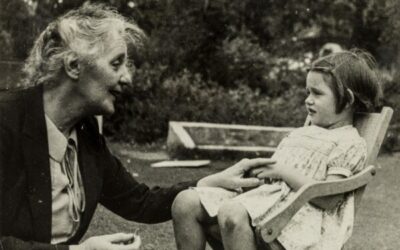
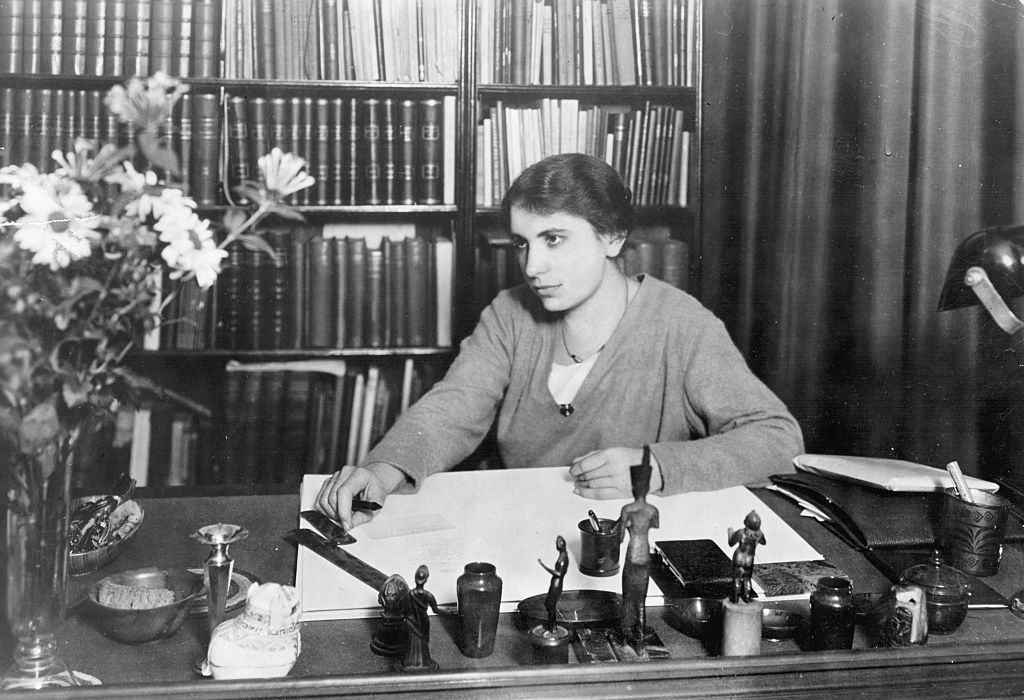
Anna Freud (1895–1982) occupies a unique and controversial space in the history of psychology. She is best known as the pioneer of Child Psychoanalysis and the savior of Ego Psychology. However, her legacy is complicated by her role as the fierce guardian of her father, Sigmund Freud. While she expanded his theories, she also sterilized them, working tirelessly to protect the “Freudian Empire” from dissenters, critics, and embarrassing historical truths.

Unlike the Swiss psychiatrist Carl Jung, who broke away to form his own school, Anna remained the “Vestal Virgin” of psychoanalysis. She nursed her father through his years of oral cancer and, after his death, assumed control of the Freud Archives. Critics argue that this position allowed her to curate history, suppressing evidence that might damage the Freud legend.

Biography & Timeline: Anna Freud

The youngest of Freud’s six children, Anna was the only one to follow in his footsteps. She did not have a medical degree; her background was in teaching. This informed her practical, pedagogical approach to therapy. She believed that children could not be analyzed like adults because their “Super-Ego” was not yet formed; they needed education and guidance, not just interpretation.

In the late 1930s, the Freud family fled Nazi Austria for London. There, Anna engaged in the famous “Controversial Discussions” with Melanie Klein. While Klein argued that infants had violent, psychotic fantasies from birth, Anna argued for a more developmental approach, influencing later thinkers like Erik Erikson.

Key Milestones in the Life of Anna Freud

Year Event / Publication
1895 Born in Vienna, Austria.
1922 Becomes a member of the Vienna Psychoanalytic Society.
1936 Publishes The Ego and the Mechanisms of Defense.
1941 Founds the Hampstead War Nurseries for traumatized children.
1980s The “Freud Wars” erupt over her management of the Archives.
1982 Dies in London.

Major Concepts: The Ego and Defense

Defense Mechanisms

While Sigmund discovered the Id, Anna clarified the Ego. Her most enduring contribution is the categorization of Defense Mechanisms—the unconscious strategies we use to protect ourselves from anxiety. Concepts like Projection, Repression, and Displacement were codified by Anna. She shifted the focus of therapy from “digging up the past” to analyzing how the patient is resisting the present. This paved the way for modern Ego Psychology and influenced the cognitive models of thinkers like Jean Piaget.

Identification with the Aggressor

Working with war orphans in London, Anna observed a chilling phenomenon: victims often mimic their abusers to manage fear. She coined the term “Identification with the Aggressor.” This insight is crucial for understanding cycles of abuse and trauma, a theme later expanded upon by attachment theorists like Harry Harlow and Mary Ainsworth.

The Controversy: The Freud Archives and the “Cover-Up”

Anna Freud’s later years were marred by accusations of censorship. As the executor of her father’s estate, she controlled access to thousands of his letters and papers. She famously sealed many documents in the Library of Congress, restricting access until the year 2113.

The Jeffrey Masson Affair

The controversy exploded in the 1980s involving Jeffrey Masson, the fiercely ambitious projects director of the Freud Archives. Masson gained access to the unedited letters between Freud and Wilhelm Fliess. He discovered that Freud had originally believed his female patients were sexually abused (The Seduction Theory) but later recanted this to save his professional reputation, deciding the abuse was merely “fantasy.”

Masson claimed Anna Freud and the psychoanalytic establishment knew this and had engaged in a systematic cover-up to protect the institution. He famously called psychoanalysis a “sterile cult.” While Masson was fired and ostracized, the scandal cracked the foundation of the Freudian monolith. It raised uncomfortable questions: Did Anna prioritize the myth of her father over the truth of his patients?

The Shadow of the Movement

Critics argue that Anna’s “defense mechanisms” were not just clinical theories, but the way she ran the International Psychoanalytic Association. Dissent was often pathologized. Innovative thinkers like Donald Winnicott had to navigate the rigid political landscape she enforced. By silencing opposition, she may have delayed the evolution of the field, keeping it tethered to the dogmas of the 19th century rather than allowing it to grow.


Bibliography

  • Freud, A. (1936). The Ego and the Mechanisms of Defense. Hogarth Press.
  • Freud, A. (1965). Normality and Pathology in Childhood. International Universities Press.
  • Malcolm, J. (1984). In the Freud Archives. Knopf. (A detailed account of the Masson/Anna Freud controversy).
  • Young-Bruehl, E. (1988). Anna Freud: A Biography. Summit Books.

Explore the Other Articles by Categories on Our Blog 

The Psychoanalytic Theories of Melanie Klein

The Psychoanalytic Theories of Melanie Klein

Exploring the Earliest Stages of Psychic Life "The early ego lacks cohesion, and a tendency towards integration alternates with a tendency towards disintegration, a falling into bits... The result is an acute feeling of insecurity." 1. Who Was Melanie Klein Melanie...

Mircea Eliade’s Insights into the Sacred

Mircea Eliade’s Insights into the Sacred

Mircea Eliade's Insights into the Sacred “A religious symbol conveys its message even if it is no longer consciously understood in every part. For a symbol speaks to the whole human being and not only to the intelligence.” ― Mircea Eliade, The Sacred and the Profane:...

Richard Tarnas: Cultural History Through Astrology

Richard Tarnas: Cultural History Through Astrology

The Historian of the Western Soul In 1991, Richard Tarnas published a book that became standard reading in universities worldwide: The Passion of the Western Mind. It was a brilliant, sweeping history of Western thought from Plato to Hegel to Jung. But in 2006, he...

Hot Gossip from Zurich: The Biggest Fights Carl Jung Got Into

Hot Gossip from Zurich: The Biggest Fights Carl Jung Got Into

Everyone knows about the divorce. Freud and Jung, Vienna and Zurich, the letters crossing in the January mail of 1913, Freud telling his former crown prince to take his full freedom and spare him the supposed tokens of friendship. The theoretical grounds get taught in...

From Insult to Evidence: A History of Eclectic Psychotherapy

From Insult to Evidence: A History of Eclectic Psychotherapy

In 1952, a psychologist at the Institute of Psychiatry in London published a short review article with a flat title and a live charge inside it. Hans Eysenck was a behaviorist, a statistician by temperament, and a man constitutionally incapable of deference. "The...

The Brief History of Psychotherapy: Freud to the Fourth Wave

The Brief History of Psychotherapy: Freud to the Fourth Wave

From Freud, Jung, and Adler to the Somatic Fourth Wave Every school of therapy is a defense structure. It forms to manage an unbearable anxiety, it hardens into doctrine, and it eventually meets the limit of what it was built to avoid looking at. The history of the...

Who was Theodore Millon?

Who was Theodore Millon?

The Grand Unifier: Theodore Millon and the Mathematical Architecture of the Self In the fragmented landscape of 20th-century psychology, where clinicians pledged loyalty to competing schools of thought like feudal lords, Theodore Millon (1928–2014) stood as a rare...

What is a Diagnosis Anyway: Is the DSM Dying Part 2

What is a Diagnosis Anyway: Is the DSM Dying Part 2

The Archaeology of a Label: What We Forgot About Diagnosis and Why It Matters Now By Joel Blackstock, LICSW-S | Clinical Director, Taproot Therapy Collective Part II of A Critical Investigation into the Document That Defines American Mental Health Contents...

Is the DSM Dying? Rethinking Suffering

Is the DSM Dying? Rethinking Suffering

A Critical Investigation into the Document That Defines American Mental Health—and Why It May Have Already Failed By Joel Blackstock, LICSW-S | Clinical Director, Taproot Therapy Collective Contents Introduction: The Controversial Bible Part I: The History of a...

Understanding How the Different Types of Therapy Fit Together

Understanding How the Different Types of Therapy Fit Together

You've tried therapy before. Maybe it helped a little. Maybe you spent months talking about your childhood without anything changing. Maybe you learned coping skills that worked until they didn't. Maybe the therapist was nice but you left each session feeling like...

The Neuroscience of Disassociation

The Neuroscience of Disassociation

The unitary nature of consciousness is the most persistent intuition of human experience. We feel like a single protagonist in a continuous narrative. Yet, for the trauma survivor, this intuition is often a lie. As therapists, we are often the first to witness the...

Bill O’Hanlon: The Therapist Who Asked “How Do People Get Happy?”

Bill O’Hanlon: The Therapist Who Asked “How Do People Get Happy?”

Bill O’Hanlon, MS, LMFT, studied with Milton Erickson as his only work/study student (serving as Erickson’s gardener) before co-founding Solution-Oriented/Possibility Therapy in the 1980s. Author of nearly 40 books including the Oprah-featured “Do One Thing Different” and foundational “In Search of Solutions” with Michele Weiner-Davis, O’Hanlon delivered over 3,700 presentations worldwide teaching his collaborative, non-pathologizing approach asking “How do people get happy?” rather than “What’s wrong?” He retired from clinical practice in 2020 to pursue professional songwriting from Santa Fe, New Mexico.

0 Comments

Submit a Comment

Your email address will not be published. Required fields are marked *