

The post-Jungian schools are the traditions analysts built on Carl Jung’s work, before and after his death in 1961. Andrew Samuels mapped three of them in Jung and the Post-Jungians (1985): a classical school that stays close to Jung on the self and individuation, a developmental school, centered in London, that studies infancy and the transference, and an archetypal school, led by James Hillman, that works with images.1
My argument in this part of the series is that each of those schools answers a tension Jung left unresolved. He trained as a hospital psychiatrist and called himself an empiricist, yet he put religious experience at the center of his clinical thinking. That makes analytical psychology what I would call a post-secular psychology: it does not explain religion away, and it does not ask anyone to accept a creed. The schools split over which half of that inheritance to protect. The tradition’s future depends on whether it can treat neuroscience and the ecological crisis the way Jung said he treated the psyche, as evidence to weigh rather than doctrine to defend.
This is part four of my guide to understanding Jung, after Part 1 on Jung’s method, Part 2 on applying the archetypes and Part 3 on how Jungian analysis works.

From the Burghölzli to a post-secular psychology
Jung’s psychology began in a psychiatric hospital. From 1900 to 1909 he worked at the Burghölzli in Zurich under Eugen Bleuler,3 and his word-association experiments there gave him his first evidence for what he called complexes, emotionally charged clusters of ideas that disturb a person’s responses. That work brought him to Freud. Their collaboration lasted about seven years and came apart in 1912 and 1913, around the time Jung published the book later translated as Psychology of the Unconscious. What followed was the period Jung called his confrontation with the unconscious, recorded in the private journals that became The Red Book, a manuscript not published until 2009.
In his 1937 Terry Lectures at Yale, published as Psychology and Religion, Jung wrote: “Although I have often been called a philosopher, I am an empiricist and adhere as such to the phenomenological standpoint.” He said he restricted himself “to the observation of phenomena” and eschewed “any metaphysical or philosophical considerations.”2 Five years earlier, lecturing to clergy in Strasbourg, he had made a far larger claim: “Among all my patients in the second half of life—that is to say, over thirty-five—there has not been one whose problem in the last resort was not that of finding a religious outlook on life.” In the same paragraph he added that this “has nothing whatever to do with a particular creed or membership of a church.”2
Put those two statements side by side and you have the shape of Jung’s project. He treated the God-image as a psychological fact without claiming to settle whether God exists, and he expected modern people to suffer when that fact was ignored. That is what I mean by post-secular: secular in method, but unwilling to file religious experience under illness. In an essay on the Trinity that grew out of a 1940 Eranos lecture and was expanded in 1948, he wrote that “the goal of psychological, as of biological, development is self-realization, or individuation,” and that because the self “is indescribable and indistinguishable from a God-image,” self-realization, put “in religious or metaphysical terms,” “amounts to God’s incarnation.”2 An earlier version of this page credited that passage to Memories, Dreams, Reflections, which Aniela Jaffé assembled and which appeared only after Jung’s death, in 1962. It is paragraph 233 of volume 11 of the Collected Works.
How a method became institutions
The Psychological Club in Zurich dates to 1916, but the professional bodies came later. The Society of Analytical Psychology formed in London in 1946,4 the C. G. Jung Institute opened in Zurich in 1948, and the International Association for Analytical Psychology, which still accredits Jungian training around the world, was founded in 1955. That same year the London society launched the Journal of Analytical Psychology, with Michael Fordham as its first editor. When Jung died at Küsnacht on 6 June 1961, the movement already had two main poles, Zurich and London, and London trained analysts on a more clinical, psychoanalytic model.
In London, analysts loyal to the Zurich approach came to see Fordham’s focus on infancy as a departure from Jung. In 1975 and 1976 a group around Gerhard Adler left the Society of Analytical Psychology to form the Association of Jungian Analysts, and that body split again in 1982.4
Samuels’s three post-Jungian schools
The British psychotherapist Andrew Samuels set out the classification in a 1983 paper on “the emergence of schools of post-Jungian analytical psychology” and expanded it two years later in Jung and the Post-Jungians.5, 1 He distinguished the groups by what each emphasizes in theory and practice, such as how much weight it gives the self, the development of personality, the transference and the image.
The classical school stays closest to Jung’s own model and to the Collected Works. Samuels placed Emma Jung, Marie-Louise von Franz, Joseph Henderson, Aniela Jaffé, Jolande Jacobi and Erich Neumann here. Neumann, a Berlin-born analyst who practiced in Tel Aviv from 1934 until his death in 1960, wrote The Origins and History of Consciousness (1949), which traces the ego’s emergence from the unconscious through a sequence of mythological stages. An earlier version of this page put Neumann among the leaders of the developmental school. That confuses two kinds of development. Neumann’s stages are read from creation and hero myths, while the developmental school took its evidence from infants and from the analytic relationship.
The developmental school grew up around Michael Fordham (1905–1995), a London child psychiatrist who co-edited the English translation of Jung’s Collected Works and helped found the Society of Analytical Psychology.6 In 1947 Fordham proposed that an infant begins as a “primary self,” an undifferentiated whole that meets the world by deintegrating and then reintegrating what it has taken in. He was on close professional terms with object-relations analysts such as Donald Winnicott and Wilfred Bion, and the London training drew on Melanie Klein. In Samuels’s terms, the developmental school gives less weight to the self as a guiding center and more to how a personality gets built, and it gives the transference and countertransference more attention than either of the other schools.1
The archetypal school is James Hillman’s. Hillman (1926–2011) moved to Switzerland in 1953, met Jung, took his analyst’s diploma at the Jung Institute in 1959 and served as its director of studies until 1969. In Re-Visioning Psychology (1975) he argued for a psychology of soul that starts from images and fantasies rather than from the ego, a polytheistic psychology in which the ego is one fantasy among many.7 He was skeptical of individuation as the organizing goal of a life and spoke instead of soul-making. He kept archetypes but moved the emphasis from hidden structure to the image as it appears. His influence reached well beyond analysts, most visibly through his colleague Thomas Moore’s best-selling Care of the Soul (1992).
Read against the tension in Jung, the developmental school kept the clinician and gave the self less weight, while the classical and archetypal schools kept his seriousness about the numinous, one through the self and the other through the image. The schools overlap, and Samuels himself works in a blend of Jungian, relational psychoanalytic and humanistic approaches. The map earns its keep by naming the real disagreements: whether the self is a center to be found or a story to be told, whether a dream should be read through childhood history or left to speak as an image, and whether the analyst’s main instrument is interpretation or the relationship.
Offshoots, popularizations and what the evidence says
An earlier version of this page listed the Myers-Briggs Type Indicator, archetypal astrology and ecopsychology as if they were schools like Samuels’s. They are not. His schools are traditions of clinical training; the movements below borrowed Jung’s vocabulary for other purposes and should be judged by the evidence each invites.
Type. The MBTI was built during the Second World War by Katharine Cook Briggs and her daughter Isabel Briggs Myers, working from Jung’s Psychological Types (1921). Myers later set out its rationale in Gifts Differing (1980).8 Jung described two attitudes and four functions; the judging-perceiving scale was Briggs and Myers’s addition. The psychometric record is weak. In a sample of 468 adults, Robert McCrae and Paul Costa found no support for the idea that the MBTI measures true types; its scales behave like continuous dimensions that overlap with four of the Big Five personality traits, and they questioned how the judging-perceiving index had been interpreted.9 David Pittenger’s reviews reached similar conclusions.10, 11 The San Francisco analyst John Beebe’s model, which pairs each of the eight function-attitudes with an archetypal role from hero to trickster and daemon, is a clinical way of thinking about inner conflict, not a validated test.
Body and movement. Arnold Mindell (1940–2024) received his Jungian analyst’s diploma in Zurich in 1970 and went on to found process-oriented psychology. His first book, Dreambody (1982), treated bodily symptoms as carrying the same kind of meaning as dreams.12 Critics have called parts of his work New Age. Joan Chodorow, a dance/movement therapist and Jungian analyst whose work joins active imagination with the experience of the body, edited Jung on Active Imagination (1997), a collection of Jung’s writing on the method.13 I trace this turn in more detail in the shift from analytical to experiential post-Jungian psychotherapy and in a profile of Arnold Mindell’s process-oriented psychology.
Feminist revision. Jung’s anima and animus describe a man’s inner feminine and a woman’s inner masculine, and they carry the gender assumptions of his era. Naomi Goldenberg’s “A Feminist Critique of Jung” appeared in Signs in 1976,14 and Susan Rowland’s Jung: A Feminist Revision (2002) reread both the theory and the contributions of the women around Jung who helped build it.15 Popular books such as Jean Shinoda Bolen’s Goddesses in Everywoman (1984) used the archetypes as a vocabulary for women’s lives.
Ecopsychology. The historian Theodore Roszak, best known for The Making of a Counter Culture (1969), is credited with coining the word “ecopsychology” in The Voice of the Earth (1992), although other psychologists and environmentalists were using it at about the same time.16 Roszak was not a Jungian analyst, and ecopsychology is a broad movement rather than a post-Jungian school.
Archetypal astrology. Richard Tarnas, a cultural historian who studied with the psychiatrist Stanislav Grof at Esalen in the 1970s, argued in Cosmos and Psyche (2006) that the major events of Western cultural history correlate with the angular positions of the planets.17 This is where the post-Jungian label misleads most. Astrology has been tested directly. In a double-blind study published in Nature in 1985, astrologers could not match natal charts to personality-inventory profiles better than chance.18 Jung’s interest in astrology belongs to his biography, not to the evidence for his psychology.
The risks: inflation, bypassing and Jung’s own shadow
Jung named the first risk himself. In “The Relations between the Ego and the Unconscious” (1928) he described “psychic inflation” as “an extension of the personality beyond individual limits, in other words, a state of being puffed up.” It “is by no means a phenomenon induced exclusively by analysis, but occurs just as often in ordinary life,” he wrote, and gave as a common instance “the humourless way in which many men identify themselves with their business or their titles.”19 A psychology that takes gods, heroes and the self seriously gives people more to inflate with, including the people who teach it.
The second risk has a modern name. The psychotherapist John Welwood introduced the term “spiritual bypassing” in the mid-1980s for the use of spiritual ideas and practices to sidestep unresolved emotional wounds and unfinished developmental tasks, and he returns to it in Toward a Psychology of Awakening (2000).20 Jungian language makes bypassing easy: it is more comfortable to discuss one’s shadow in the abstract than to apologize to the person one hurt.
The third risk is diagnostic. Visions, voices and a sudden sense of cosmic meaning can belong to a spiritual crisis, to mania or psychosis, or to both at once. Stanislav and Christina Grof’s Spiritual Emergency (1989) argued that some of these crises are transformative rather than simply pathological.21 After a proposal by David Lukoff and colleagues, the DSM-IV in 1994 added “religious or spiritual problem” as a condition that may be a focus of clinical attention, without calling it a mental disorder.22, 23 Jung’s own years of confrontation with the unconscious can make Jungian clinicians too ready to romanticize a crisis. The responsible position takes the meaning seriously and still asks about sleep, safety and whether a psychiatric evaluation is needed.
The fourth risk is Jung’s own shadow. In 1933 he became president of the International General Medical Society for Psychotherapy, whose German branch was led by Matthias Göring. In “The State of Psychotherapy Today,” published in the Zentralblatt für Psychotherapie in 1934, he wrote that “the ‘Aryan’ unconscious has a higher potential than the Jewish.”24 Farhad Dalal argued in 1988 that Jung’s picture of Black people was racist and was woven into his concepts of the collective unconscious and individuation,25 and in 2018 a group of Jungians published an open letter on Jung’s writings about “Africans.”26 I weigh the case for and against him in The Trial of Carl Jung. A tradition built on the idea of the shadow has to apply it to its founder, and the post-Jungians who have done so are the ones keeping it credible.
The future: neuroscience and ecology without dogma
The hardest scientific question for Jungians is the archetype. Jung postulated the archetype as an a priori structure of the psyche, and he was accused of Lamarckism during his lifetime and after.27 Jean Knox proposed that archetypes resemble the image schemas of cognitive science, primitive conceptual structures never experienced directly.28 John Merchant concluded that it is “difficult to evidence the existence of autonomous archetypes unrelated to personal affective experience.”29 Christian Roesler, reviewing the genetics and neuroscience, found “no firm scientific foundation” for the claim that complex symbolic patterns such as the hero myth are transmitted so that every individual has access to them.30 Erik Goodwyn pushed back against a growing consensus that the inherited archetype should be abandoned for emergent models.27 That is what a tradition without dogma looks like: its central concept under test, in print, by the people who use it every day.
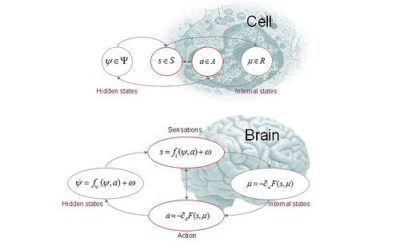
Karl Friston’s free-energy principle proposes a single framework for the brain as a system that predicts its own input and works to reduce the gap between prediction and experience.31 His 2010 review put that ambition as a question, asking whether several global brain theories might be unified within it. Still, the framework gives Jung’s picture of a psyche organized by deep expectations a scientific relative worth comparing, a case I make in Karl Friston and Carl Jung: The Unnoticed Rehabilitation. The danger runs both ways: borrowing a neuroscientist’s prestige to decorate Jungian claims is as dogmatic as dismissing them without reading the research.
Outcome research is the other test. Roesler’s 2013 review of studies of Jungian psychotherapy, mostly from Germany and Switzerland, reported improvements in symptoms, interpersonal problems and personality structure that held for up to six years, after an average of about 90 sessions.32 Those were naturalistic and retrospective studies rather than randomized trials, so they show that people who chose Jungian therapy tended to improve, not that the Jungian method caused the change. Roesler called the method empirically proven. My reading is that the evidence is encouraging and thin.
Ecology is the second frontier. In the essay Jung finished in English shortly before his death, he wrote: “Through scientific understanding, our world has become dehumanized. Man feels himself isolated in the cosmos. He is no longer involved in nature and has lost his emotional participation in natural events, which hitherto had a symbolic meaning for him.”33 Decades earlier, his own answer had been a place. From 1923 he built a tower at Bollingen on the upper lake of Zurich, did without electricity there, pumped his own water and chiseled inscriptions into a block of stone a quarry had cut to the wrong size,34 the subject of a separate post on the Bollingen stone. Ecology without dogma means refusing two shortcuts: turning the anima mundi, the old idea of a world soul, into literal metaphysics, and turning grief about damaged places into a symptom to be managed away. That grief is real psychological material.
What this looks like in therapy
Clients never need to learn Samuels’s map, but they meet its practical residue. From the classical and archetypal lines comes the habit of treating dreams, images and recurring fantasies as communications rather than noise, and of staying with an image before explaining it. From the developmental line comes attention to early attachment and to what happens between client and therapist, where old relational patterns tend to repeat. From Mindell, Chodorow and the body-oriented therapies comes the expectation that tension, posture and symptoms can carry meaning too, which is where depth work meets somatic and parts-based approaches.
The risks shape the work as much as the ideas do. A careful Jungian-informed therapist takes spiritual experience seriously without diagnosing it away or endorsing a grand interpretation, and still asks about sleep, mood, substance use and safety when an experience starts to overwhelm daily life. Type language and archetypal names are metaphors to try on, not labels. The therapist watches for inflation in both people in the room, including the pull to play the wise guide. Depth work is offered as a way of understanding a life, alongside other treatments where they fit, not as a proven treatment for any particular disorder.
At Taproot, Jungian depth therapy sits alongside trauma-focused, somatic and parts-based work, and the mix is worked out with each person rather than by school. If you are in Alabama and want to work with dreams, images or a life that no longer fits, you can contact us to talk about whether this kind of work suits you.
References
- Samuels, A. (1985). Jung and the post-Jungians. Routledge & Kegan Paul.
- Jung, C. G. (1969). Psychology and religion: West and East (R. F. C. Hull, Trans.; 2nd ed., The Collected Works of C. G. Jung, Vol. 11). Princeton University Press. Cited: pars. 2, 233, 353, 509.
- Möller, A., Scharfetter, C., & Hell, D. (2002). Development and termination of the working relationship of C. G. Jung and Eugen Bleuler, 1900–1909. History of Psychiatry, 13(52), 445–453. https://doi.org/10.1177/0957154X0201305206
- Casement, A. (1995). A brief history of Jungian splits in the United Kingdom. Journal of Analytical Psychology, 40(3), 327–342. https://doi.org/10.1111/j.1465-5922.1995.00327.x
- Samuels, A. (1983). The emergence of schools of post-Jungian analytical psychology. Journal of Analytical Psychology, 28(4), 345–362. https://doi.org/10.1111/j.1465-5922.1983.00345.x
- Astor, J. (1995). Michael Fordham: Innovations in analytical psychology. Routledge.
- Hillman, J. (1975). Re-visioning psychology. Harper & Row.
- Myers, I. B., with Myers, P. B. (1980). Gifts differing. Consulting Psychologists Press.
- McCrae, R. R., & Costa, P. T., Jr. (1989). Reinterpreting the Myers-Briggs Type Indicator from the perspective of the five-factor model of personality. Journal of Personality, 57(1), 17–40. https://doi.org/10.1111/j.1467-6494.1989.tb00759.x
- Pittenger, D. J. (1993). The utility of the Myers-Briggs Type Indicator. Review of Educational Research, 63(4), 467–488. https://doi.org/10.3102/00346543063004467
- Pittenger, D. J. (2005). Cautionary comments regarding the Myers-Briggs Type Indicator. Consulting Psychology Journal: Practice and Research, 57(3), 210–221. https://doi.org/10.1037/1065-9293.57.3.210
- Mindell, A. (1982). Dreambody: The body’s role in revealing the self. Sigo Press.
- Chodorow, J. (Ed.). (1997). Jung on active imagination. Princeton University Press.
- Goldenberg, N. R. (1976). A feminist critique of Jung. Signs: Journal of Women in Culture and Society, 2(2), 443–449. https://doi.org/10.1086/493369
- Rowland, S. (2002). Jung: A feminist revision. Polity Press.
- Roszak, T. (1992). The voice of the earth. Simon & Schuster.
- Tarnas, R. (2006). Cosmos and psyche: Intimations of a new world view. Viking.
- Carlson, S. (1985). A double-blind test of astrology. Nature, 318(6045), 419–425. https://doi.org/10.1038/318419a0
- Jung, C. G. (1966). Two essays on analytical psychology (R. F. C. Hull, Trans.; 2nd ed., The Collected Works of C. G. Jung, Vol. 7). Princeton University Press. Cited: par. 227.
- Welwood, J. (2000). Toward a psychology of awakening: Buddhism, psychotherapy, and the path of personal and spiritual transformation. Shambhala.
- Grof, S., & Grof, C. (Eds.). (1989). Spiritual emergency: When personal transformation becomes a crisis. Tarcher.
- Lukoff, D., Lu, F., & Turner, R. (1992). Toward a more culturally sensitive DSM-IV: Psychoreligious and psychospiritual problems. Journal of Nervous and Mental Disease, 180(11), 673–682. https://doi.org/10.1097/00005053-199211000-00001
- Turner, R. P., Lukoff, D., Barnhouse, R. T., & Lu, F. G. (1995). Religious or spiritual problem: A culturally sensitive diagnostic category in the DSM-IV. Journal of Nervous and Mental Disease, 183(7), 435–444. https://doi.org/10.1097/00005053-199507000-00003
- Jung, C. G. (1964). Civilization in transition (R. F. C. Hull, Trans.; The Collected Works of C. G. Jung, Vol. 10). Bollingen Foundation; Pantheon Books. Cited: par. 354.
- Dalal, F. (1988). Jung: A racist. British Journal of Psychotherapy, 4(3), 263–279. https://doi.org/10.1111/j.1752-0118.1988.tb01028.x
- Open letter from a group of Jungians on the question of Jung’s writings on and theories about “Africans.” (2018). British Journal of Psychotherapy, 34(4), 673–678. https://doi.org/10.1111/bjp.12408
- Goodwyn, E. (2010). Approaching archetypes: Reconsidering innateness. Journal of Analytical Psychology, 55(4), 502–521. https://doi.org/10.1111/j.1468-5922.2010.01862.x
- Knox, J. (2001). Memories, fantasies, archetypes: An exploration of some connections between cognitive science and analytical psychology. Journal of Analytical Psychology, 46(4), 613–635. https://doi.org/10.1111/1465-5922.00270
- Merchant, J. (2009). A reappraisal of classical archetype theory and its implications for theory and practice. Journal of Analytical Psychology, 54(3), 339–358. https://doi.org/10.1111/j.1468-5922.2009.01784.x
- Roesler, C. (2012). Are archetypes transmitted more by culture than biology? Questions arising from conceptualizations of the archetype. Journal of Analytical Psychology, 57(2), 223–246. https://doi.org/10.1111/j.1468-5922.2011.01963.x
- Friston, K. (2010). The free-energy principle: A unified brain theory? Nature Reviews Neuroscience, 11(2), 127–138. https://doi.org/10.1038/nrn2787
- Roesler, C. (2013). Evidence for the effectiveness of Jungian psychotherapy: A review of empirical studies. Behavioral Sciences, 3(4), 562–575. https://doi.org/10.3390/bs3040562
- Jung, C. G. (1976). The symbolic life: Miscellaneous writings (R. F. C. Hull, Trans.; The Collected Works of C. G. Jung, Vol. 18). Princeton University Press. Cited: par. 585.
- Jung, C. G. (1989). Memories, dreams, reflections (A. Jaffé, Ed.; R. Winston & C. Winston, Trans.; Rev. ed.). Vintage Books. (Original work published 1962)










0 Comments