

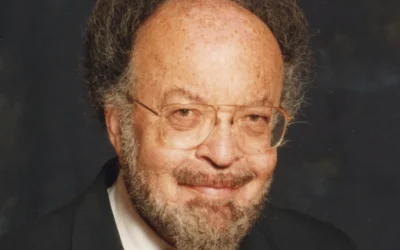
Process work, also called process-oriented psychology, is the method Arnold Mindell (1940–2024) built out of Jungian analysis in Zurich in the 1970s. It treats body symptoms, movements, relationship tensions and group conflict as forms of dreaming, and works with them by amplifying the signal where it shows up instead of interpreting it from a distance.1, 2
Mindell’s decisive move was a change in what one word meant. Jung used amplification for enlarging a dream image with parallels from myth, religion and culture. Mindell kept the word and turned it around: he asked people to intensify the signal itself, in the channel where it appeared, whether that was an earache, a gesture or a shouting match in a meeting. That shift is what carried Jungian method into the body, into couples and into large groups. It is also the source of the method’s real risks, because a symptom is not always a dream, and turning up a sensation can flood a traumatized nervous system or feed health anxiety.

Who Arnold Mindell was
Mindell was born in Schenectady, New York, in 1940.3 He took a master’s degree at the Massachusetts Institute of Technology. Accounts of the field differ: a 2001 newspaper profile says mechanical engineering, while Mindell later described his early training as applied physics.3, 4, 5 He went to Zurich to continue his studies at the Swiss Federal Institute of Technology (ETH), not to become an analyst. There he met Franz Riklin, then president of the C. G. Jung Institute, by chance, and began training in analytical psychology alongside doctoral work in psychology through the Union Institute in Cincinnati.2, 4
He received the Jung Institute’s analyst diploma in 1970 and stayed on as a training analyst.3 In that role in the early 1970s he began to develop what he first called dreambody work, and he counted Marie-Louise von Franz, Jung’s longtime collaborator, among his teachers.1 In 1979 he married Amy Kaplan, who as Amy Mindell became his co-developer for the rest of his career, and by the early 1980s the couple and their colleagues had opened a training center for process-oriented psychology in Zurich.3 The Jungian world kept paying attention as process work grew apart from it: in 1995 the analyst June Singer devoted a long piece in the San Francisco Jung Institute Library Journal to Arny and Amy Mindell and their process-oriented psychology.6
His first book, Dreambody: The Body’s Role in Revealing the Self, came out in 1982 from Sigo Press, the small publisher that had issued Barbara Hannah’s book on active imagination, Encounters with the Soul, the year before.7, 8 The pairing makes sense. Active imagination asks a person to engage an inner image while awake; Mindell extended the same engagement to whatever the body, a movement or a relationship was producing. More books followed quickly: River’s Way (1985), City Shadows (1988), on work with psychiatric patients, and Coma: Key to Awakening (1989).9, 10, 11 In 1990 the Mindells and colleagues opened the Process Work Center of Portland, Oregon, which added a master’s program in 1992.3 It operates today as the Process Work Institute.12 Mindell died on June 10, 2024.12
From dream images to the dreambody
Jung’s amplification works outward. A dream image is set beside myths, religious symbols and cultural motifs that resemble it, so that a personal picture is read against a collective one.13 Mindell described his own starting point plainly in a late retrospective: Jungian training had taught him to amplify dream symbols with associations, and he began to amplify body signals “in the same way,” which in its simplest form meant increasing the intensity of the physical signal.5
The case he chose to illustrate it, taken from Dreambody, is useful because it is so ordinary. A man in his mid-fifties came at his physician’s suggestion with high blood pressure and an ear infection that had dragged on for months. He had no interest in psychology, and when he first tried to intensify the earache he felt blocked; Mindell agreed with him that bodywork is not for everyone. Then the man tried again. The pain felt like something pushing from inside, and he began holding his breath and pressing air against closed lips while Mindell copied him. After a while he said the ear was telling him to stop pushing. He connected that pressure to the drive he kept himself under, and recalled a dream from the night before in which police arrested Mafia bosses. He read the dream himself: the ear was the police, arresting the pressure he put on himself.5
Notice what is missing. Nobody tells the man what the ear means. The meaning comes from inside the experience, and the dream confirms it afterward. Mindell’s retelling says nothing about whether his blood pressure changed. The session changed how the man understood his own pressure, which is a psychological result, not a medical one. That line between meaning and mechanism is the one popular summaries of process work blur most often.
Mindell was not the first Zurich analyst to take the body seriously; C. A. Meier had written on psychosomatic medicine from a Jungian point of view in 1963.14 Marion Woodman, writing in the same years as Mindell, came at the body through eating disorders and perfectionism in Addiction to Perfection (1982).15 What was new in Mindell was a method for staying with the body’s own signal. He framed it in Taoist terms: the dreaming process, like the Tao that cannot be spoken, differs from dream content, which can be. He contrasted interpretation, which stands outside a dream and analyzes its figures, with a more shamanic stance that follows the process as it appears in feelings, movements, smells, relationships and unpredictable events as well as dreams.1 The Shaman’s Body (1993) pushed that language furthest.16
Signals, channels and edges
Process work’s vocabulary looks odd at first, but it is mostly a way of sorting what a therapist notices. The primary process is what a person identifies with and intends. The secondary process is what happens without that intention: a symptom, a slip, a recurring dream figure, a gesture that contradicts the words. Between them sits the edge, the limit of what someone can perceive, say or believe they can do.2, 17
Information arrives through channels. The process work glossary lists visual, auditory, proprioceptive (felt), kinesthetic (movement), relationship, spiritual and world channels.17 Much of process work happens in movement, and the world channel is where Amy Mindell placed a client’s relationship to collective events, arguing that world events surface on their own in individual therapy and can be unfolded there.18 Secondary material tends to appear in the channels a person uses least, which is one reason a very verbal client’s process may show up first in the body.2
The double signal is the clinical workhorse: a person says one thing while the body, voice or eyes say another, such as saying they want to connect while looking at the floor.17 The technique Mindell called unfolding takes such a signal, works out which side of the edge it belongs to, and amplifies it in its own channel through movement, sound or posture until its content becomes clear.2 In practice that can mean letting a clenched hand clench further and then asking what the hand wants to do. Readers who know Voice Dialogue, Hal and Sidra Stone’s practice of speaking from disowned selves, will recognize the family resemblance: a part of the person that usually goes unheard gets a turn.
Then there is the physics. Mindell’s books, especially Quantum Mind (2000), set ideas from quantum mechanics beside psychological experience.19 Read them as analogies. The process work community’s own glossary calls entanglement “a metaphor borrowed from quantum physics.”17 Physics offers no evidence that quantum effects explain dreams, symptoms or the mood of a group, and the method does not need them to.
Worldwork, deep democracy and coma work
Mindell’s most original extension was to groups. In The Leader as Martial Artist (1992), subtitled An Introduction to Deep Democracy, and Sitting in the Fire (1995), he applied the same structure of primary process, secondary process and edge to organizations, towns and conflicts.20, 21 Deep democracy, in the community’s own definition, is the belief that there is wisdom in, under or behind all views, and that diverse opinions and experiences need room to be expressed before a sustainable solution can be found. Process work pairs it with rank, the relative power people carry because of race, gender, age, health, education, language, money or psychological and spiritual awareness.17
A ghost role is a role that a group feels but no one occupies: an absent critic everyone keeps mentioning, the ancestors, the environment, or a racism that no one in the room is enacting at the moment but that a newcomer still feels.17 It is a group-field idea, not a label for the irritating person in your life. Part of a facilitator’s job is to notice the ghost and invite someone to speak for it.
The documented applications are more modest than the legends around them. Arlene Audergon and Lane Arye described a five-year project that used process work to run large-group meetings among Serbs, Croats and Muslims after the war in Croatia.22 In South Africa, Myrna Lewis and her late husband Greg Lewis built the Lewis Deep Democracy method on Mindell’s psychology while working with one of the country’s largest employers during the transition from apartheid. By her account it is now taught on every continent.23
The coma work grew from the same premise. Set out in Coma: Key to Awakening (1989), it tries to reach people in comatose and near-death states through minimal signals such as eye movements and small twitches, treating them as communication to be met and followed.3, 11 Pierre Morin and Gary Reiss, coma therapists working in this tradition, later wrote a guide for families, Inside Coma (2010).24 These are accounts of practice, not trials, and a family facing a coma needs the medical team first.
What the evidence says, and the criticisms
I could find no randomized controlled trial of process work. The best outcome data come from the Swiss PAP-S study, a naturalistic study of outpatient therapy from 2007 to 2013 in which therapists from ten schools, including process-oriented psychotherapy after Mindell, treated clients in their usual way. Clients improved substantially on standard symptom measures, and the schools did not differ meaningfully in outcome.25 The published reports I could read do not break out process-oriented therapy’s results on their own, and there was no control group. At most, the study places process-oriented therapists inside a real-world Swiss sample in which the school of therapy made little difference to outcome. It cannot show that the method’s specific techniques cause change. An earlier analysis from the same project found that treatment-specific techniques made up a minority of what therapists actually did in session, and that the type of therapy did not predict outcome.26 That fits the wider literature, in which the quality of the working alliance predicts outcome across very different therapies.27
For group work, Aftab Erfan’s action research with a small Indigenous community in Canada used deep democracy facilitation in community planning meetings and documented “modest but promising” therapeutic effects.28 That is roughly where the evidence for worldwork sits: case reports and field studies, no controlled comparisons.
Criticism has come from several directions. In 2001 Willamette Week reported that a consultant hired by Oregon’s Office of Degree Authorization found the Portland school’s acceptance of romantic relationships between teachers and students, and its mixing of required therapy with training, out of step with professional ethics. A former student quoted there worried that workshops for seriously ill people encouraged the hope of acting one’s way out of illness, although Mindell had said in a 1990 interview, “We’re not trying to heal people.”3 The ethics problem is an old one in charismatic training communities. Adolf Guggenbühl-Craig, another Zurich analyst, had described it in Power in the Helping Professions (1971): the helper’s wish to heal can hide a wish for power.29
What this looks like in therapy
You do not need to be in formal process work to use its best ideas. In Jungian depth therapy and somatic therapy, what carries over is a set of habits. The first is treating the unintended signal as information: the laugh that arrives with a painful sentence, the foot that starts tapping when a parent comes up, the dream figure who keeps returning. The second is asking about an experience before explaining it. “What is that tightness like, and what would it do if it could move?” usually gets further than “That tightness is your anger.” The third is respect for the edge. When someone stops mid-sentence, the pause marks the border of their current identity, and shoving them across it is rarely the therapist’s job.
The fourth habit is caution, and it is where I part company with some process work enthusiasm. Psychosomatic medicine uses the same word for something clinicians worry about. Somatosensory amplification, a construct Arthur Barsky developed in research on hypochondriasis, describes experiencing body sensations as intense and threatening; it is tied to negative affect and plays a substantial role in how people report symptoms.30, 31 For a client with health anxiety, turning up a sensation in search of its meaning risks feeding the very vigilance that keeps the anxiety going. That is a clinical judgment, not a tested finding. Trauma calls for similar care. Somatic Experiencing, for example, approaches traumatic material indirectly and in small doses, which its developers call titration, and moves back and forth between activation and settling rather than evoking memories intensely.32 Mindell’s own case concedes the point when he tells a blocked client that bodywork is not for everyone.5
In practice the order matters. A physical symptom gets a medical evaluation first, and psychological work runs alongside medical care, never in place of it. If a client is curious about a sensation and steady enough to stay with it, we may slow down and follow it: describe it, let it move or make a sound, notice what image or memory comes. If attention to the body raises panic, we do the opposite and widen attention toward what feels stable. Dreams come in as the client’s material, not the therapist’s puzzle. And the relationship gets as much attention as any technique, because across therapies the alliance is one of the most consistent predictors of outcome.27
If following a symptom or a dream, rather than arguing with it, sounds like the kind of work you want, the closest fit at Taproot is Jungian depth therapy, often combined with somatic work. You can contact us to ask whether it suits what you are dealing with.
References
- Schuitevoerder, N., & Zweig, C. (1996). Life is but a dream: An interview with Arnold Mindell. Psychological Perspectives, 33(1), 78–91. https://doi.org/10.1080/00332929608405731
- International Association of Process Oriented Psychology. (n.d.). Foundations of process work. Retrieved November 8, 2026, from https://iapop.com/history/
- Shafer, D. (2001, August 28). Dream academy. Willamette Week. https://www.wweek.com/portland/article-285-dream-academy.html
- Van Nuys, D. (Host). (2008, August 29). From dreambody to worldwork with Arnold Mindell (No. 170). In Shrink Rap Radio (Audio podcast). https://shrinkrapradio.com/170-from-dreambody-to-worldwork/
- Mindell, A. (2018). Dream body/dreambody on the history and theory of processor-oriented psychology. Journal of Psychology & Clinical Psychiatry, 9(1), Article 00490. https://doi.org/10.15406/jpcpy.2018.09.00490
- Singer, J. (1995). Arny and Amy Mindell on process oriented psychology. The San Francisco Jung Institute Library Journal, 13(4), 25–40. https://doi.org/10.1525/jung.1.1995.13.4.25
- Mindell, A. (1982). Dreambody: The body’s role in revealing the self. Sigo Press.
- Hannah, B. (1981). Encounters with the soul: Active imagination as developed by C. G. Jung. Sigo Press.
- Mindell, A. (1985). River’s way: The process science of the dreambody. Routledge & Kegan Paul.
- Mindell, A. (1988). City shadows: Psychological interventions in psychiatry. Routledge.
- Mindell, A. (1989). Coma, key to awakening: Working with the dreambody near death. Shambhala.
- International Association of Process Oriented Psychology. (2024). Tribute to Arnold Mindell. Retrieved November 8, 2026, from https://iapop.com/tribute-to-arnold-mindell/
- Samuels, A., Shorter, B., & Plaut, F. (2012). A critical dictionary of Jungian analysis. Routledge. (Original work published 1986) https://doi.org/10.4324/9780203713822
- Meier, C. A. (1963). Psychosomatic medicine from the Jungian point of view. Journal of Analytical Psychology, 8(2), 103–122. https://doi.org/10.1111/j.1465-5922.1963.00103.x
- Woodman, M. (1982). Addiction to perfection: The still unravished bride. Inner City Books.
- Mindell, A. (1993). The shaman’s body: A new shamanism for transforming health, relationships, and the community. HarperSanFrancisco.
- International Association of Process Oriented Psychology. (n.d.). Glossary. Retrieved November 8, 2026, from https://iapop.com/glossary/
- Mindell, A. (1996). Discovering the world in the individual: The world channel in psychotherapy. Journal of Humanistic Psychology, 36(3), 67–84. https://doi.org/10.1177/00221678960363005
- Mindell, A. (2000). Quantum mind: The edge between physics and psychology. Lao Tse Press.
- Mindell, A. (1992). The leader as martial artist: An introduction to deep democracy. HarperSanFrancisco.
- Mindell, A. (1995). Sitting in the fire: Large group transformation using conflict and diversity. Lao Tse Press.
- Audergon, A., & Arye, L. (2005). Transforming conflict into community: Post-war reconciliation in Croatia. Psychotherapy and Politics International, 3(2), 112–121. https://doi.org/10.1002/ppi.24
- Lewis, M. (2025). Lewis Deep Democracy. Dispute Resolution Review, 4(3). https://doi.org/10.53300/001c.146329
- Morin, P., & Reiss, G. (2010). Inside coma: A new view of awareness, healing, and hope. Praeger. https://doi.org/10.5040/9798400670480
- Tschuschke, V., Koemeda-Lutz, M., von Wyl, A., Crameri, A., & Schulthess, P. (2022). The impact of clients’ and therapists’ characteristics on therapeutic alliance and outcome. Journal of Contemporary Psychotherapy, 52(2), 145–154. https://doi.org/10.1007/s10879-021-09527-2
- Tschuschke, V., Crameri, A., Koehler, M., Berglar, J., Muth, K., Staczan, P., von Wyl, A., Schulthess, P., & Koemeda-Lutz, M. (2015). The role of therapists’ treatment adherence, professional experience, therapeutic alliance, and clients’ severity of psychological problems: Prediction of treatment outcome in eight different psychotherapy approaches. Preliminary results of a naturalistic study. Psychotherapy Research, 25(4), 420–434. https://doi.org/10.1080/10503307.2014.896055
- Flückiger, C., Del Re, A. C., Wampold, B. E., & Horvath, A. O. (2018). The alliance in adult psychotherapy: A meta-analytic synthesis. Psychotherapy, 55(4), 316–340. https://doi.org/10.1037/pst0000172
- Erfan, A. (2017). Confronting collective traumas: An exploration of therapeutic planning. Planning Theory & Practice, 18(1), 34–50. https://doi.org/10.1080/14649357.2016.1249909
- Guggenbühl-Craig, A. (1971). Power in the helping professions. Spring Publications.
- Barsky, A. J., Wyshak, G., & Klerman, G. L. (1990). The Somatosensory Amplification Scale and its relationship to hypochondriasis. Journal of Psychiatric Research, 24(4), 323–334. https://doi.org/10.1016/0022-3956(90)90004-a
- Köteles, F., & Witthöft, M. (2017). Somatosensory amplification: An old construct from a new perspective. Journal of Psychosomatic Research, 101, 1–9. https://doi.org/10.1016/j.jpsychores.2017.07.011
- Payne, P., Levine, P. A., & Crane-Godreau, M. A. (2015). Somatic experiencing: Using interoception and proprioception as core elements of trauma therapy. Frontiers in Psychology, 6, 93. https://doi.org/10.3389/fpsyg.2015.00093















0 Comments