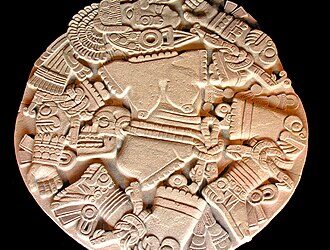
A deep exploration of why humans see complex geometric patterns during psychedelic experiences, meditation, and migraine auras. From neuroscience to Jungian archetypes, discover what these universal visions reveal about the architecture of consciousness itself.
Symbolism & Meaning: Decoding the Language of the Soul
The unconscious does not speak in literal terms; it communicates through image, myth, and metaphor. We bridge the gap between ancient symbolic wisdom and modern clinical practice, helping you translate the “secret language” of your dreams and archetypal patterns into a life of profound meaning.
Clinically Reviewed & Interpreted By:
Joel Blackstock, LICSW-S, MSW, PIP | Clinical Director & Jungian Specialist
The Map of Human Meaning
Dream Analysis & Color
Navigating the nocturnal environment.
- Color Symbolism: Decoding the neuro-spiritual significance of color in the dreamscape.
- Dream Dictionary: A clinical guide to animals, architecture, and trauma markers in dreams.
- Memory Integration: How symbols facilitate memory reconsolidation.
Archetypal Patterns
Universal blueprints of the psyche.
- The Wizard & Jester: Exploring the roles of transformation, creation, and deconstruction.
- The Innocent: Understanding purity, victimhood, and the child archetype.
- Mature Masculine: Decoding the symbols of the King, Warrior, Magician, and Lover.
Myth & Manifestation
The artifacts of the individuation process.
- The Bollingen Stone: Analyzing Jung’s personal symbolic “external soul.”
- Mythic Storytelling: Utilizing Southern Gothic archetypes for individual resilience.
- Shadow Symbols: Identifying the 50 common markers of the suppressed self.
Why Symbolism is Vital to Mental Health
Modern symptoms—like anxiety, depression, and purposelessness—are often “symbolic messages” that the conscious mind has ignored. In the Taproot model, we don’t just treat the symptom; we investigate its meaning. By utilizing Jungian techniques, we help you step into a “Third Space” where the impossible tensions of your life can find symbolic resolution.
Our practice in Hoover, AL, specialized in helping local residents navigate life transitions and complex trauma by reintegrating these lost symbolic narratives.
Dreams & Meaning in Birmingham: FAQ
Why are my dreams so intense lately?
Intense dreams often indicate that your “subcortical brain” is attempting to process unresolved stress or trauma. Symbols in these dreams act as placeholders for emotions that the thinking brain isn’t yet ready to face.
Where can I find a therapist in Hoover who does dream analysis?
Taproot Therapy Collective in Hoover, AL, is the region’s premier provider of Jungian-informed therapy. We specialize in depth-work and the clinical application of symbolism for the Greater Birmingham community.
Does color really have a “spiritual” meaning?
In a clinical context, color symbolism represents universal human responses to the biological environment. For example, “Violet” or “Magenta” often carry symbolic weight related to spiritual transition or emotional boundaries in the collective unconscious.
Translate Your Internal Landscape
Our research on symbolism is cited globally, but our clinical heart is here in Hoover. If you are seeking an expert depth therapist in Birmingham, AL to help you find meaning in the chaos, Taproot is ready to guide you.
📍 Taproot Therapy Collective: 2025 Shady Crest Dr, Suite 203, Hoover, AL 35216
Who Is Johnjoe McFadden?
Jungian Therapy and Depth Psychology, Neuroscience and the Brain for Therapists, Symbolism and Meaning in Psychotherapy
Explore Johnjoe McFadden’s CEMI field theory, which proposes that consciousness arises from the brain’s electromagnetic field, solving the binding problem and explaining free will.
The Gnostic Cure: Why the Future of Trauma Therapy is the Recovery of Reality
Alternative Medicine and Holistic Health, Discover + Heal + Grow: Taproot Therapy Collective Podcast Episodes, Jungian Therapy and Depth Psychology, Lifespan integration in Alabama, Symbolism and Meaning in Psychotherapy
Discover how modern trauma therapy is rediscovering the ancient path of Gnosticism. From the “simulation of self” to the somatic “red pill,” explore how we wake up from the false reality of trauma.
The Influencing Machine: How Technology Shapes the Architecture of Psychosis
Anthropology and Evolutionary Psychology for Therapy, Dreams and the Unconscious, Jungian Therapy and Depth Psychology, Symbolism and Meaning in Psychotherapy
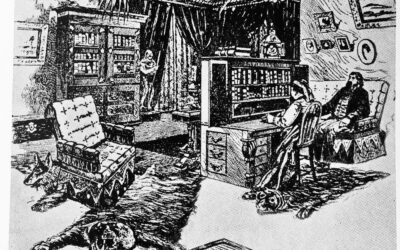
Explore how technological delusions in psychosis evolved from the 1810 Air Loom to modern simulation theory, revealing deep truths about technology’s impact on the human psyche and offering insights for healing in the digital age.
Active Imagination vs. Meditation: What’s the Difference?
Brainspotting in Alabama: Revolutionary Trauma Therapy for Deep Healing, Psychology Topics and Articles, Symbolism and Meaning in Psychotherapy
If you have ever tried to meditate and found yourself frustrated by a mind that refuses to go blank, you are not alone. The modern wellness industry heavily promotes mindfulness and "quieting the mind" as the gold standard for mental health. But for many people—especially those with creative minds, complex trauma, or high intellectual drive—silence is not the answer. In fact, silence can sometimes make the inner noise louder. Carl Jung recognized this problem over a century ago. His solution was not to silence...
The Radical Presence of Eugene Gendlin: How Felt Sensing Transforms Trauma Therapy and Political Understanding
History of Psychotherapy, Phenomenology and Existential Psychology, Philosophy for Therapists, Psychology, Symbolism and Meaning in Psychotherapy
Eugene Gendlin’s revolutionary work on the felt sense reveals how trauma disrupts the body’s natural flow of experiencing and how political oppression shapes what we can feel and think. His Focusing method offers both a powerful trauma therapy approach and a framework for understanding liberation as the restoration of our capacity to carry life forward.

Holy Wood: The Intersection of Forestry and Mythology
Alabama Local History, Christian Mysticism in Therapy, Mythology and Therapy, Symbolism and Meaning in Psychotherapy
The Sacred Species and Their Archetypal Meanings In the depths of the human psyche, trees stand as primordial witnesses to our spiritual evolution. They are the axis mundi, the world pillars that connect heaven, earth, and the underworld in virtually every mythological tradition. From a Jungian perspective, trees represent the Self—rooted in the unconscious depths while reaching toward conscious enlightenment. This essay explores ten sacred tree species, examining why specific trees were chosen for particular...
On the Absence of Idols: On Mythopoetic Meaning Making
Jungian Therapy and Depth Psychology, Metamodernism and Deconstruction, Symbolism and Meaning in Psychotherapy
"There is a very strong and very ancient emotion that is rarely mentioned or recognized: it is the anguish we feel for the absence of idols. If the eye has no image on which to rest, if there is nothing to mediate between the mental phantasm and that which simply is, then a subtle despondency creeps in. This is the atmosphere that reigns in the first dream of which we have a record, a dream told by a woman, Addudûri, overseer of the palace of Mari in Mesopotamia, in a letter etched on clay tablets more...
The Sacred Gaze: Eyes as Windows to the Divine in Ancient Art
Mythology and Therapy, Symbolism and Meaning in Psychotherapy
The human eye, that most expressive feature of the face, has held profound significance across ancient cultures as both a physical organ and a powerful symbol of divine connection, spiritual authority, and cosmic understanding. Yet the artistic treatment of eyes in ancient art reveals a fascinating paradox: the earliest human representations often deliberately omitted eyes entirely, while later civilizations would make them the most prominent and exaggerated features of their sacred art. This evolution from...
What is the Daimon? Tracing the Authentic Self Through the History of Psychotherapy
Jungian Therapy and Depth Psychology, Symbolism and Meaning in Psychotherapy
The concept of the daimon—an inner guiding force representing both our authentic self and the source of creative and healing potential—has appeared throughout the history of psychotherapy under various names and conceptualizations. From Socrates' divine sign to contemporary neuroscientific understandings of intuition and trauma, major figures in psychology and psychotherapy have understood this vulnerable center of selfhood that lies paradoxically close to both our greatest gifts and deepest wounds. Through...
The Tree of Life: A Universal Symbol of Growth, Connection and Transformation
Jungian Therapy and Depth Psychology, Symbolism and Meaning in Psychotherapy
Here is the revised essay with more integrated links: What do trees in Dreams Symbolize? The Tree of Life is one of the most pervasive and enduring symbols in human history, appearing in the art, myths and religious traditions of cultures around the world. From the ancient Middle East to medieval Europe to indigenous societies of the Americas, the Tree of Life has captured the human imagination as a powerful representation of growth, interconnectedness, and the cycle of birth, death and renewal. At its most...
The Symbolism of The Pomegranate
Comparative Religion for Therapy, Jungian Therapy and Depth Psychology, Symbolism and Meaning in Psychotherapy
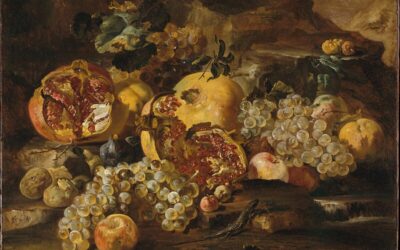
A Fruit Steeped in Symbolism and Spiritual Significance The pomegranate is a fruit that has captured the imagination of cultures and religions across the world for millennia. From ancient Greek myths to Jewish tradition, this unique fruit has been imbued with a rich tapestry of symbolic meanings and spiritual significance. In this exploration, we will delve into the various ways in which the pomegranate has been interpreted and revered, particularly in Jewish and Greek traditions, and how these meanings have been...
Consciousness, Emotion and the Self
Anthropology and Evolutionary Psychology for Therapy, Jungian Therapy and Depth Psychology, Symbolism and Meaning in Psychotherapy
Where Does Conciousness Come From? Where did conciousness come from?The nature of human consciousness has long been one of the great mysteries of science and philosophy. What is this subjective inner experience that seems to define our existence? Where does our sense of self come from? And what happens when the psyche is shattered by trauma? In recent decades, groundbreaking work by neuroscientists like Michael Gazzaniga and Antonio Damasio has shed new light on these profound questions. While approaching the...
How to Use Mythology as a Therapist
Jungian Therapy and Depth Psychology, Mythology and Therapy, Recovering from Abuse, Symbolism and Meaning in Psychotherapy
Insights from Greek, Norse, Egyptian, and Hindu Mythology for Psychotherapy, Creativity and Trauma Why do Depth Psychologists Use Mythology in Therapy? Mythology has long been recognized as a powerful tool for understanding the human psyche and the complexities of consciousness. Through vivid narratives and symbolic imagery, myths from around the world offer profound insights into the intricate workings of the mind, the nature of the self, and the universal experiences that shape our lives. Many therapists and...
Helena Blavatsky and the Theosophical Legacy: Charlatanry, Wisdom, and the Unconscious Mind
Jungian Therapy and Depth Psychology, Psychology of Mystics, Gurus, and Spiritual Philosophers, Symbolism and Meaning in Psychotherapy
Who was Helena Blavatsy? Helena Petrovna Blavatsky, the enigmatic and controversial founder of the Theosophical Society, left an indelible mark on the spiritual and intellectual landscape of the late 19th and early 20th centuries. Her life and work have been the subject of fascination, admiration, and criticism, making her one of the most polarizing figures in the history of Western esotericism. This essay explores Blavatsky's legacy, the key ideas of Theosophy, its similarities to other esoteric and...
How do Animals Show Up In Dreams Through Archetypes?
Anthropology and Evolutionary Psychology for Therapy, Jungian Therapy and Depth Psychology, Symbolism and Meaning in Psychotherapy
The Enduring Imprint of the Natural World on the Human Psyche Throughout human history, our relationship with the natural world has shaped our evolution, not only in terms of physical adaptation but also in the realm of the psyche. One of the most profound ways in which this connection manifests is through our relationship with and identification with animals. These creatures, both real and mythological, have long been woven into the fabric of our dreams, stories, and unconscious minds, serving as powerful...
The Epic of Gilgamesh: A Depth Psychological Reading
Comparative Religion for Therapy, Jungian Therapy and Depth Psychology, Mythology and Therapy, Symbolism and Meaning in Psychotherapy
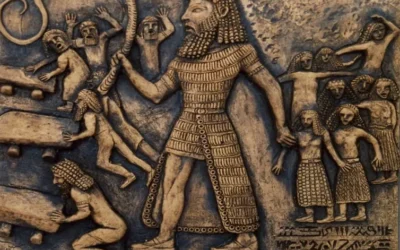
How to Understand The Epic of Gilgamesh What is the Epic of Gilgamesh The Epic of Gilgamesh is one of the oldest surviving works of literature, dated to around 2100 BCE. This Sumerian epic poem tells the story of Gilgamesh, the hero-king of Uruk, and his adventures with his wild-man companion Enkidu. On the surface, it is a tale of heroic exploits, friendship, loss, the search for immortality, and the acceptance of death. Yet when viewed through the lens of depth psychology, the Epic of Gilgamesh can be seen as a...
The Pantheon: Myths are Public Dreams, Dreams are Private Myths
Comparative Religion for Therapy, Jungian Therapy and Depth Psychology, Mythology and Therapy, Symbolism and Meaning in Psychotherapy
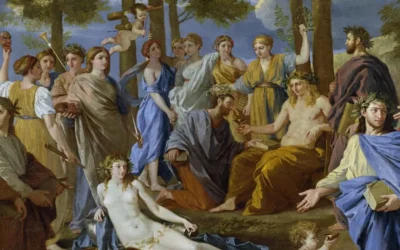
"Myths are public dreams, dreams are private myths. By finding your own dream and following it through, it will lead you to the myth-world in which you live. But just as in dream, the subject and object, though they seem to be separate, are really the same." Joseph Campbell Why do they use Mythology in Therapy? Mythology has long been a source of fascination for people around the world. These ancient stories, filled with gods, heroes, and fantastical creatures, have captured the imagination of generations....
The Wizard Archetype: Mastering the Mysteries
Jungian Therapy and Depth Psychology, Symbolism and Meaning in Psychotherapy
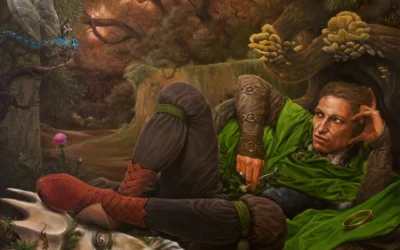
What is the Wizard Archetype? The Wizard archetype represents the eternal human fascination with magic, mystery, and the power to shape reality. Transcending cultures and historical eras, the Wizard embodies our desire to understand and harness the hidden forces of the universe [1]. This article explores the origins, characteristics, and significance of the Wizard archetype, tracing its evolution from ancient mythologies to modern times. Explore all the Archetypes The 12 Archetypes The Sage The Innocent The...
The Explorer Archetype: Adventure and Innovation
Symbolism and Meaning in Psychotherapy
What is the Explorer Archetype? Origins and Characteristics The Explorer archetype represents the universal human desire for adventure, discovery, and the pursuit of new frontiers. Present in various forms throughout history, the Explorer embodies the qualities of curiosity, independence, and the willingness to take risks in the search for new knowledge and experiences [1]. This article explores the origins, characteristics, and significance of the Explorer archetype, examining its role in shaping human culture...
The Jester Archetype: Exploring the Creation, Destruction, and Deconstruction
Jungian Therapy and Depth Psychology, Symbolism and Meaning in Psychotherapy
The Jester Archetype in Jungian Psychology: A Comprehensive Analysis of the Trickster's Role in the Collective Unconscious Understanding the Jester Through Jung's Lens We used branding archetypes when we designed our practice, Taproot Therapy Collective in Hoover, Alabama. I must admit that as a therapist I am fairly ove identified with the trickster or joker archetype. I use humor a lot in therapy and like to poke at old narratives that need to collapse for new modes of being to be born. The Jester archetype,...
The Caregiver Archetype: Exploring the Nurturing side
Jungian Therapy and Depth Psychology, Symbolism and Meaning in Psychotherapy
“Embrace the nurturing Caregiver archetype: offering compassion, support, and protection. Understand its role in relationships and personal development.”
The Lover Archetype: Exploring Conection and Control
Jungian Therapy and Depth Psychology, Symbolism and Meaning in Psychotherapy
What is the Lover Archetype? Origins and Characteristics The Lover archetype represents the universal human desire for intimacy, passion, and connection. Present in various forms throughout history, the Lover embodies the pursuit of love, beauty, and sensual pleasure [1]. This article explores the origins, characteristics, and significance of the Lover archetype, examining its role in shaping human culture and consciousness. Explore all the Archetypes The 12 Archetypes The Sage The Innocent The Creator The...
The Everyman Archetype: Exploring the most relatable parts of self
Jungian Therapy and Depth Psychology, Symbolism and Meaning in Psychotherapy
What is the Everyman Regular Guy Archetype? Origins and Characteristics The Regular Guy/Gal archetype represents the everyday person who embodies the values and experiences of the common people. Present in various forms throughout history, the Regular Guy/Gal serves as a relatable and grounding force in storytelling and culture [1]. This article explores the origins, characteristics, and significance of the Regular Guy/Gal archetype, examining its role in shaping human culture and consciousness. Explore all the...
The Hero Archetype: Exploring the Protagonist
Jungian Therapy and Depth Psychology, Symbolism and Meaning in Psychotherapy
The Hero Archetype Origins and Characteristics The Hero archetype represents the universal human desire to overcome challenges, achieve greatness, and serve others. Present in myths, legends, and stories across cultures, the Hero embodies courage, determination, and self-sacrifice [1]. This article explores the origins, characteristics, and significance of the Hero archetype, examining its role in shaping human culture and consciousness. Explore all the Archetypes The 12 Archetypes The Sage The Innocent The...
The Creator/Artist Archetype: Exploring the Impulse to Create and Innovate
Jungian Therapy and Depth Psychology, Symbolism and Meaning in Psychotherapy
What is the Artist Archetype? The Creator/Artist archetype represents the human drive to create, innovate, and express oneself through various forms of art and craftsmanship. This archetype is driven by a deep desire to bring ideas and visions to life, often challenging the status quo and pushing the boundaries of what is possible [1]. The Creator/Artist seeks to inspire, provoke, and transform through their creative endeavors. This article explores the origins, characteristics, and significance of the...
The Ruler Archetype: Exploring the Timeless Quest for Wisdom
Jungian Therapy and Depth Psychology, Symbolism and Meaning in Psychotherapy
“Explore the power of the Ruler archetype: embodying leadership, authority, and order. Discover its impact on personal ambition and societal structures.”
The Sage Archetype: Exploring the Timeless Quest for Wisdom
Jungian Therapy and Depth Psychology, Symbolism and Meaning in Psychotherapy
What is the Sage Archetype? The Sage archetype represents the eternal human pursuit of truth, knowledge, and wisdom. Transcending cultures and historical eras, the Sage embodies our desire to understand the world and our place within it [1]. This article explores the origins, characteristics, and significance of the Sage archetype, tracing its evolution from ancient mythologies to modern times. Explore all the Archetypes The 12 Archetypes The Sage The Innocent The Creator The Explorer The Rebel The Wizard The...
The Dark Side of Haloween Candy
Symbolism and Meaning in Psychotherapy
An Overview of Haloween and its Sweet Traditions Candy is a central feature of modern Halloween celebrations, with trick-or-treating children gathering sweets from neighbors and stores stocking up on mini chocolate bars and gummy worms. Yet this sweet tradition has a complex history that reflects broader social, economic, and cultural shifts. The story of Halloween candy is a microcosm of changing attitudes towards food, festival, and community in American society and beyond. Tracing the origins and evolution of...
Monsters in Dreams
Jungian Therapy and Depth Psychology, Symbolism and Meaning in Psychotherapy
A Jungian Perspective on the Symbolism and Cultural Significance of Halloween Creatures From the depths of our collective unconscious, monsters have long haunted our dreams and nightmares. These creatures, often associated with Halloween, take on various forms, such as vampires, werewolves, zombies, and ghosts, each embodying unique fears and anxieties that we may struggle to confront in our waking lives. By examining the appearance of these monsters in dreams from a Jungian perspective, we can gain insight into...
The Mummy: A Cultural, Historical, and Anthropological Perspective
Psychology of History, Symbolism and Meaning in Psychotherapy
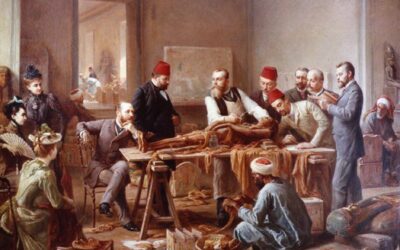
A History of the Mummy: Mummies have long held a place of fascination in the human imagination, serving as enduring symbols of ancient civilizations and the mysteries of life and death. From the carefully preserved remains of ancient Egyptian pharaohs to the naturally mummified bodies discovered in bogs and glaciers, mummies provide a tantalizing glimpse into the past and offer insights into the beliefs, practices, and cultural values of the societies that created them (Aufderheide, 2003). By examining mummies...
The Vampire: An Anthropological and Historical Exploration
Psychology of History, Symbolism and Meaning in Psychotherapy
Why do we believe in Vampires? Vampires have long captured the human imagination, appearing in the folklore, literature, and popular culture of societies across the globe. These enigmatic figures, often depicted as undead beings who sustain themselves by feeding on the life essence of the living, have roots that run deep in human history and mythology (Beresford, 2008). The persistent fascination with vampires can be attributed to their ability to embody and reflect the fears, desires, and cultural anxieties of...
The Evolution of Halloween Costumes
Psychology of History, Symbolism and Meaning in Psychotherapy
Costumes as a Reflection of Societal Change Halloween, celebrated annually on October 31st, has its roots in the ancient Celtic festival of Samhain, which marked the end of the harvest season and the beginning of winter. The Celts believed that on this night, the boundary between the world of the living and the dead blurred, allowing spirits to cross over. To ward off evil spirits and disguise themselves, people wore costumes made from animal skins, leaves, and other natural materials. As Halloween evolved over...
The “Lost World” of Miyazaki’s Masterpiece
Discover + Heal + Grow: Taproot Therapy Collective Podcast Episodes, Interviews and Case Studies, Phenomenology and Existential Psychology, Psychology, Psychology of Buildings and Architecture, Psychology of Film and TV, Psychology of Media and Culture, Symbolism and Meaning in Psychotherapy
*This review contains spoilers for the film The Boy and the Heron What is The Boy and the Heron trying to tell us? To escape from this depressing situation, they often find themselves wishing they could live in a world of their own - a world they can say is truly theirs, a world unknown even to their parents. To young people, anime is something they incorporate into this private world. I often refer to this feeling as one yearning for a lost world. It's a sense that although you may currently be living in a world...
The Jungian Anima and Animus: How They Show Up in Relationships
Depth Psychology Approaches and Techniques, Symbolism and Meaning in Psychotherapy
How does the anima and animus show up in relationships? The concept of the anima and animus is one of the most enduring and influential ideas to emerge from the work of Swiss psychiatrist Carl Jung. In this post, we'll take a deep dive into the anima/animus theory, exploring its origins, evolution, and practical applications in intimate relationships and family systems. We'll see how Jung's original formulation of the anima/animus was expanded upon by his proteges and successors, and consider criticisms and...
What Does the Garden of Eden Symbolize?
Depth Psychology Approaches and Techniques, Dreams and the Unconscious, Jungian Therapy and Depth Psychology, Symbolism and Meaning in Psychotherapy
The Symbolism of Eden: Language, Consciousness and the Birth of the Ego The story of the Garden of Eden, found in the opening chapters of Genesis, is one of the most well-known and influential myths in human history. On the surface, it describes the idyllic life of the first humans, their temptation by the serpent to eat the forbidden fruit, and their subsequent exile from paradise as punishment. Yet this simple narrative is laden with profound symbolic meanings that have been pondered by theologians,...
William Morris: Weaving the Threads of Myth into Design
Design Psychology, Psychology of Artists, Poets, and Writers, Symbolism and Meaning in Psychotherapy
Who Was William Morris? William Morris was a designer known for his exquisite tapestries depicting scenes from myth, legend and medieval romance. More than decorative objects, these woven works invite the viewer into a mesmerizing world of archetypes, hidden meanings and the unconscious stirrings of the soul. Morris's oeuvre exemplifies many of the insights of depth psychology - the recognition that powerful symbols, when engaged with imaginatively, can connect us to profound truths within the psyche. The Mythic...
The Psychology of Design: How Our Spaces Reveal Our Minds
Design Psychology, Industrial Organisational Psychology, Psychology of Buildings and Architecture, Symbolism and Meaning in Psychotherapy
The Psychology of Design in America Design is more than just the way things look. Design is an alchemization of a culture's values, aspirations, anxieties and worldview at a particular moment in time. Like an anthropologist studying ancient ruins to understand a lost civilization, we can examine the designs of past eras to gain insight into the psyche of the society that created them. Every curve of a 1950s tail fin, every earthtone in a 1970s living room, every boxy black appliance of the 1980s was...
Friedrich August Kekulé and the Role of Intuition in the Discovery of the Benzene Ring
Christian Mysticism in Therapy, Psychology of Mystics, Gurus, and Spiritual Philosophers, Symbolism and Meaning in Psychotherapy
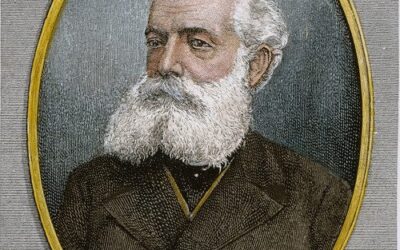
Who was Kekulé? Friedrich August Kekulé (1829-1896) was a German organic chemist who made several groundbreaking discoveries, most famously the cyclic structure of benzene. Kekulé's insight into the benzene ring was a pivotal moment in the history of chemistry that revolutionized the field. Interestingly, Kekulé attributed this discovery to a moment of intuition and visual inspiration that came to him in a dream. Kekulé's Dream and the Benzene Ring Structure The story of Kekulé's benzene ring discovery has become...
Embracing Your Inner Grendel:
Jungian Therapy and Depth Psychology, Symbolism and Meaning in Psychotherapy
A Jungian Perspective on Shadow Work and Healing from Fiction In his 1971 novel "Grendel," John Gardner reimagines the Old English epic "Beowulf" from the perspective of the titular monster. This postmodern retelling offers a provocative exploration of the complex interplay between hero and villain, good and evil, and the role of the shadow in the human psyche. By presenting Grendel as a thinking, feeling being grappling with existential questions and the search for meaning, Gardner invites readers to confront...
The Philosophy Behind and Around Carl Jung
Christian Mysticism in Therapy, Depth Psychology Approaches and Techniques, History of Psychotherapy, Phenomenology and Existential Psychology, Psychology of Mystics, Gurus, and Spiritual Philosophers, Psychotherapy Biographies: Historical Figures in the History of Psychology, Symbolism and Meaning in Psychotherapy
What were Carl Jung's Major Influences? Carl Jung was profoundly influenced by a wide range of philosophers, thinkers and mystics in developing his groundbreaking theories of analytical psychology. He drew upon ideas from existentialism, phenomenology, German idealism, Neoplatonism, Hermeticism, Gnosticism, and Christian mysticism to formulate his conceptions of the collective unconscious, archetypes, individuation, and the Self. Let's examine in-depth how some of these key figures shaped Jung's thought. Philemon...
Theodore Flournoy: Pioneer of Empirical Psychology and Psychical Research
Evidence Based Practice in Therapy, Phenomenology and Existential Psychology, Psychology of Mystics, Gurus, and Spiritual Philosophers, Psychotherapy Biographies: Historical Figures in the History of Psychology, Symbolism and Meaning in Psychotherapy
Who was Theodore Flournoy? Theodore Flournoy (1854-1920), a Swiss psychologist and philosopher, made significant contributions to the fields of empirical psychology and psychical research at the turn of the 20th century. His work bridged the gap between scientific psychology and the study of paranormal phenomena, influencing the development of both fields. Flournoy's innovative approaches to the study of consciousness, mediumship, and religious experiences have left a lasting impact on psychology, parapsychology,...
Understanding Carl Jung’s The Red Book
History of Psychotherapy, Jungian Therapy and Depth Psychology, Psychology Book Reviews and Non Fiction, Psychotherapy Biographies: Historical Figures in the History of Psychology, Symbolism and Meaning in Psychotherapy
The Holy Grail of the Unconscious: A Comprehensive Guide to Jung's Red Book For nearly a century, the history of psychology contained a massive black hole. We knew that between 1913 and 1930, the Swiss psychiatrist Carl Jung underwent a terrifying and transformative "confrontation with the unconscious." We knew he recorded his visions, dialogues with internal figures, and prophetic dreams in a large, red leather-bound volume. But almost no one had seen it. It was locked in a Swiss bank vault, a rumor, a ghost. In...
50 Common Symbols of the Shadow in Dreams
Dreams and the Unconscious, Psychology of Mystics, Gurus, and Spiritual Philosophers, Symbolism and Meaning in Psychotherapy
The Royal Road to the Shadow In Jungian psychology, a dream is not a random firing of neurons; it is a letter from the Self. Carl Jung argued that the psyche is a self-regulating system, and dreams are its primary mechanism for restoring balance. When we ignore our shadow—the rejected, shameful, or undeveloped parts of ourselves—the unconscious amplifies its message, often through nightmares or recurring symbols. At Taproot Therapy Collective, we use dreamwork as a vital tool for trauma recovery. Trauma often...
The Divided Mind and the Quest for Meaning Part 2
Comparative Religion for Therapy, Depth Psychology Approaches and Techniques, Psychology of Buildings and Architecture, Psychology of Conspiracy Theories, Psychology of Mystics, Gurus, and Spiritual Philosophers, Symbolism and Meaning in Psychotherapy
The Neurobiology of Original Sin The human psyche is not a single, unified commander. It is a committee of rivals, often screaming over one another for control of the steering wheel. This internal fracture is not merely a poetic metaphor for the human condition; it is a biological reality rooted in millions of years of evolutionary layering. As the Jungian analyst Edward F. Edinger articulated in his 1972 magnum opus Ego and Archetype, the central tragedy of human experience is the inevitable conflict between the...
Paganism: Insights from Anthropology, Psychology, and Comparative Religion
Anthropology and Evolutionary Psychology for Therapy, Comparative Religion for Therapy, Jungian Therapy and Depth Psychology, Symbolism and Meaning in Psychotherapy
“My point, once again, is not that those ancient people told literal stories and we are now smart enough to take them symbolically, but that they told them symbolically and we are now dumb enough to take them literally.” ― John Dominic Crossan, Who Is Jesus? Answers to Your Questions About the Historical Jesus Main Ideas and Key Points: 1. John Dominic Crossan argues that ancient people told religious stories symbolically, while modern people often interpret them literally. 2. The development of religion...
Using Jungian Psychology in Screenwriting and Fiction: Part 2 Parts Based Therapies
Depth Psychology Approaches and Techniques, Jungian Therapy and Depth Psychology, Symbolism and Meaning in Psychotherapy
Read More on Jung here: Carl Jung's Major Influences Jungian Analysis Archetypes Jung’s Method Jungian Thought Read Part 1 First! part 1: https://gettherapybirmingham.com/the-villain-with…nd-screenwriting/ part 2: https://gettherapybirmingham.com/using-jungian-ps…d-fiction-part-2/ part 3: https://gettherapybirmingham.com/applying-jungian…onality-theories/ Unveiling the Layers of the Self: Parts-Based Therapies in Psychotherapy and Fiction Main Points and Key Ideas: 1. Parts-based therapies view the human psyche...
The Symbolism of Color in Dreams
Dreams and the Unconscious, Symbolism and Meaning in Psychotherapy
What is the symbolism of different colors in dreams? What does the color red mean in dreams: In dream psychology and dream analysis, colors wield the power to mirror our deepest emotions and psychic states, and red, with its primal force and psychological weight, offers a particularly vivid palette of symbolism. The color red in dreams may reflect the journey of passion and emotion that color psychology outlines in phases of stimulation. Initially, a dream awash in pallid red tones could suggest a phase of...

Book Review of of Aztec Philosophy by James Maffie
Mythology and Therapy, Psychology Book Reviews and Non Fiction, Psychology of Buildings and Architecture, Psychology of Mystics, Gurus, and Spiritual Philosophers, Symbolism and Meaning in Psychotherapy, Trauma Treatment in Alabama, Trauma, Depth Psychology, and Social Work
The Collision of Ontologies: When Monism Met Dualism The historical collision that occurred when Hernán Cortés arrived in Tenochtitlán in 1519 was not merely a military conquest; it was a catastrophic clash of incompatible metaphysical realities. To the Spanish Catholic mind, the universe was dualistic: God vs. Creation, Good vs. Evil, Spirit vs. Matter. When they encountered the Aztecs, they projected this framework onto them, seeing "idols" and "devils." However, as contemporary philosopher James Maffie argues...

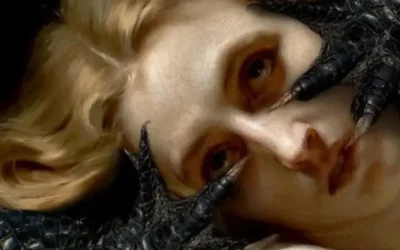
Exploring the Symbolic World: A Review of “The Book of Symbols”
Jungian Therapy and Depth Psychology, Psychology Book Reviews and Non Fiction, Symbolism and Meaning in Psychotherapy, Therapy Resources, Tips and Tools
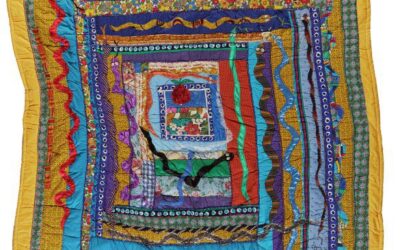
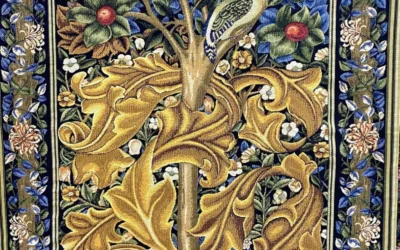
Unveiling the Mysteries of Symbolism: A Comprehensive Review of "The Book of Symbols" by Taschen As a therapist deeply fascinated by the power of symbolism and metaphor, I am always on the lookout for resources that explore the rich tapestry of meaning behind various images and archetypes. Recently, I had the pleasure of receiving a remarkable book as a birthday gift from my wife: "The Book of Symbols" by Taschen. This voluminous tome has quickly become a treasured addition to the waiting room of Taproot Therapy,...