
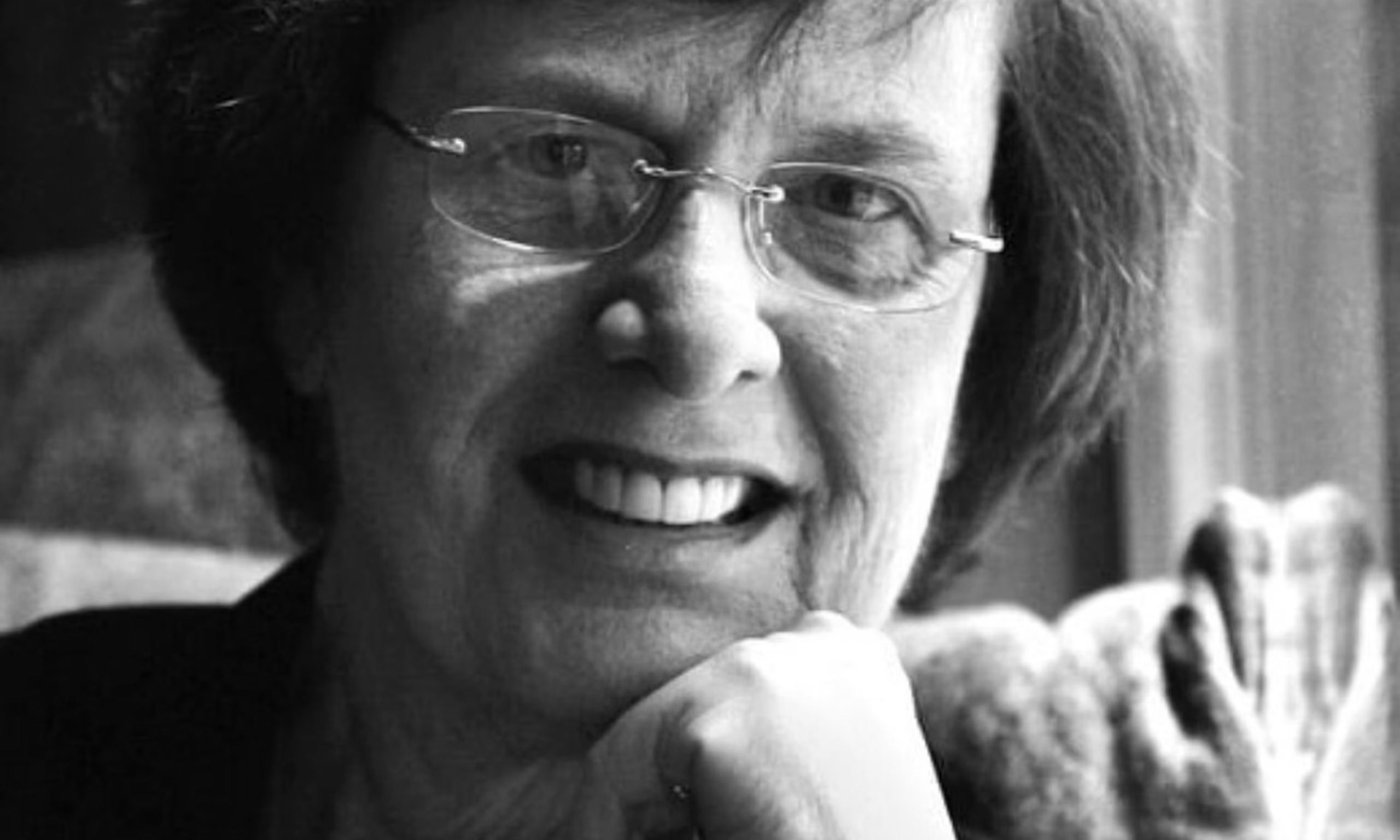
On a spring day in 1987, Francine Shapiro walked through a park near her home in Northern California, carrying troubling thoughts that had been persistent and distressing. She noticed something unexpected: as her eyes moved rapidly from side to side, following the natural movement patterns that occur when walking, the intensity of her disturbing thoughts diminished. Most people would have dismissed this as coincidence, perhaps attributing it to the pleasant distraction of being outdoors. Shapiro, with her background exploring stress reduction and self-care procedures, recognized she might have stumbled onto something significant.
That walk would prove to be one of the most consequential in the history of psychotherapy. Shapiro’s observation led her to systematically examine whether deliberate eye movements could reduce psychological distress, working with approximately seventy volunteers to develop standardized procedures that maximized therapeutic outcomes. Her research culminated in a randomized controlled study with trauma victims that demonstrated remarkable results. Within two years, she published her findings in the Journal of Traumatic Stress, introducing Eye Movement Desensitization and Reprocessing, known as EMDR, to the therapeutic world.
The therapy she developed has since become one of the most researched and widely implemented trauma treatments globally, recommended by the American Psychiatric Association, World Health Organization, and Department of Defense. Yet Shapiro’s path to this discovery was anything but conventional, shaped by personal tragedy, a career shift from literature to psychology, and experiences with illness that gave her unique insight into the mind-body relationship.
Francine Shapiro was born February 18, 1948, in Brooklyn, New York, to Shirley and Daniel Shapiro. She had three siblings, two sisters Deborah and Myriam who predeceased her, and a brother Charles. Growing up in Brooklyn during the postwar era, Shapiro developed deep love for literature and language. She earned her bachelor’s degree in English Literature from Brooklyn College, City University of New York in 1968, then pursued a master’s degree in English Literature, completing it in 1974.
After completing her graduate work, Shapiro became an English teacher in the inner city New York Public School System, teaching at Huddie Junior High School and Bushwick High School. These were challenging positions during a difficult period in New York City’s educational history, working with students facing poverty, violence, and limited opportunities. Her teaching experience gave her firsthand understanding of how adverse life circumstances shape young people’s development and future possibilities.
In 1974, while employed full-time as an English teacher, Shapiro enrolled in a PhD program in English Literature at New York University. She wanted, as she later explained, to shed light on culture through literature, intrigued by how human suffering could be transformed into art. Her first book, Thomas Hardy’s Chosen Poems, was published in 1978 while she was still a graduate student, demonstrating her scholarly capabilities and literary insight.
Then, in 1979, having completed all but her dissertation, Shapiro received a diagnosis that would fundamentally alter her life trajectory: breast cancer. She was thirty-one years old. The diagnosis came at a time when breast cancer survival rates were significantly lower than today, when treatment was more primitive and traumatic, when women faced the disease with less social support and understanding. The experience proved transformative, though not in ways anyone would choose.
Her post-recovery experiences shifted her attention from literature to questions about health, healing, and the relationship between mind and body. She became particularly interested in research on the depressant effects of stress on the immune system, influenced by the work of Norman Cousins and others exploring how psychological states affect physical health. She recognized that very few therapies were designed to help people manage stress and its physiological consequences.
Shapiro traveled, processing her experiences with illness and mortality, then settled in San Diego where she established a nonprofit organization called the Human Development Institute along with Shirley Phares-Kime. The institute provided weekend and eight-week training sessions in Neuro-Linguistic Programming (NLP), an approach to communication and personal change. Over the next several years, she participated in numerous workshops and programs exploring various stress reduction and self-care procedures, seeking understanding of how people could better manage psychological and physical wellbeing.
During this period of exploration, Shapiro enrolled in the Professional School of Psychological Studies in San Diego, a graduate training program approved by the state of California for psychologist licensure though not regionally accredited. This institution, now defunct, provided alternative pathway to psychology training. Critics later questioned the academic rigor of her doctoral training, but Shapiro’s subsequent contributions to research and clinical practice demonstrated she possessed both intellectual capability and scientific integrity regardless of institutional prestige.
Her observations regarding the beneficial effect of eye movements, and the development of procedures to utilize them in clinical practice, became the basis of her doctoral dissertation. She received her PhD in Clinical Psychology in 1988. Her thesis was published in the Journal of Traumatic Stress in 1989 under the title “Efficacy of the Eye Movement Desensitization Procedure in the Treatment of Traumatic Memories,” followed by an invited article published in the Journal of Behavior Therapy and Experimental Psychiatry.
The 1989 publication introduced what Shapiro initially called Eye Movement Desensitization (EMD), describing controlled study of twenty-two subjects with traumatic memories. The study reported that a single session of EMD treatment resulted in significant decreases in anxiety when compared to control condition. Subjects maintained these improvements at three-month follow-up. The results were striking enough that the journal editors invited commentary from other trauma researchers, some skeptical, others intrigued.
Shapiro continued developing and refining the approach, recognizing that the initial focus on desensitization didn’t capture the full therapeutic effects she was observing. Clients weren’t merely becoming less anxious about traumatic memories, they were fundamentally reconceptualizing their experiences, generating spontaneous insights, shifting their beliefs about themselves and the world. She renamed the therapy Eye Movement Desensitization and Reprocessing to reflect this broader cognitive and emotional transformation.
The theoretical foundation of EMDR rests on what Shapiro called the Adaptive Information Processing (AIP) model. This model proposes that the brain possesses inherent information processing system similar to other physiological systems that extract what the body needs for health and survival. When someone experiences an ordinary negative event, like receiving criticism from a supervisor, the brain naturally processes the information, integrating it with existing knowledge and storing it appropriately. The person might feel temporarily upset but then processes the experience: “That feedback was harsh but probably accurate in some ways. I can learn from this and do better next time.”
However, when someone experiences overwhelming trauma, combat, assault, severe accident, childhood abuse, the information processing system becomes disrupted. The traumatic experience gets stored in fragmented, dysfunctional format, frozen with all the original images, sensations, emotions, and beliefs that occurred during the event. The memory remains stuck in implicit, subcortical networks, inaccessible to the rational processing that normally integrates experience.
These maladaptively stored memories create the symptoms of posttraumatic stress disorder. Flashbacks occur because the memory isn’t properly encoded as past event but remains experientially present. Nightmares replay the frozen experience. Triggers activate the stored disturbance without the person understanding why sudden noise, particular smell, anniversary date produces overwhelming anxiety. The person may know cognitively that the trauma is over but the nervous system continues responding as if danger remains imminent.
Shapiro proposed that bilateral stimulation, whether through eye movements or other means like hand tapping or auditory tones, activates the brain’s innate information processing system, allowing it to resume the integration that was blocked by trauma. The bilateral stimulation appears to establish links between consciousness and the memory networks where disturbing information is stored, facilitates memory retrieval and recognition of true information, and moves the disturbing information along appropriate neural pathways until it connects with adaptive memory networks containing positive information needed to store the original memory with appropriate emotions and beliefs.
Multiple hypotheses have emerged about the mechanisms underlying EMDR’s effectiveness. One prominent theory suggests that bilateral stimulation taxes working memory. When clients attend to traumatic memories while simultaneously performing the bilateral task, their working memory capacity becomes divided. This dual attention reduces the vividness and emotional intensity of traumatic imagery, making the memory more tolerable and accessible to cognitive processing. The traumatic memory becomes less overwhelming, creating space for new information to integrate.
Another hypothesis proposes that bilateral stimulation mimics the eye movements occurring during REM sleep, when memory consolidation naturally happens. Research using electroencephalogram (EEG) has shown that brain wave patterns during bilateral stimulation in EMDR closely resemble those during slow-wave sleep, when the brain optimally consolidates memories. Perhaps EMDR triggers similar memory consolidation processes that occur during sleep, allowing dysfunctional memories to be reorganized and integrated into adaptive networks.
Additional theories suggest bilateral stimulation activates the parasympathetic nervous system, shifting from sympathetic fight-flight arousal toward calmer physiological states conducive to processing. Some researchers propose it elicits an orienting reflex, repeatedly drawing attention to new stimuli that interrupt the traumatic memory’s hold on consciousness. Others suggest it increases interhemispheric communication, allowing right brain emotional processing to integrate with left brain cognitive understanding.
While the precise neurobiological mechanisms remain debated, EMDR’s clinical effectiveness has been extensively documented. More than thirty randomized controlled trials have demonstrated EMDR’s efficacy for treating PTSD, with effect sizes comparable to or exceeding cognitive behavioral therapy and prolonged exposure. Meta-analyses confirm that EMDR produces significant reductions in PTSD symptoms, anxiety, and depression. The therapy has been adapted for treating not just single-incident trauma but complex developmental trauma, addiction, chronic pain, performance anxiety, and other conditions where maladaptively stored memories contribute to dysfunction.
EMDR follows an eight-phase protocol that Shapiro developed and refined over years of clinical practice. Phase One involves history taking and treatment planning, identifying traumatic experiences that need processing and assessing client stability and resources. Phase Two focuses on preparation, teaching clients stress reduction techniques and establishing the therapeutic alliance necessary for trauma work. These preparatory phases prove particularly crucial for clients with complex trauma or dissociative symptoms who need extensive stabilization before attempting memory processing.
Phase Three involves assessment of the specific traumatic memory to be targeted, identifying the image that represents the worst part of the incident, the negative belief about oneself associated with the memory, the desired positive belief, the emotions and body sensations connected to the memory, and measuring the current level of disturbance. This assessment creates detailed map of how the traumatic memory is stored.
Phase Four, desensitization, constitutes the core reprocessing work. The client focuses on the traumatic memory while engaging in bilateral stimulation, typically following the therapist’s fingers moving side to side or attending to alternating taps or tones. Sets of bilateral stimulation last twenty to thirty seconds, after which the therapist instructs the client to “let it go” and take a breath, then asks “What do you notice now?”
What happens during reprocessing often surprises both clients and observers. Rather than the client simply habituating to the traumatic memory through repeated exposure, new material spontaneously emerges. Clients report that images shift and change, earlier memories surface, insights occur, physical sensations move through the body and dissipate, emotions transform. Someone processing a car accident might suddenly access memory of childhood incident, then recognize connection between the two experiences, then feel compassion for their younger self, then notice the physical tension in their shoulders releasing. This appears to be the brain making connections between dysfunctionally stored information and adaptive memory networks that contain the resources needed for resolution.
The therapist’s role involves facilitating this natural processing rather than directing it. EMDR therapists are trained to “follow the client’s process,” allowing the associations to unfold without interpretation or intervention unless the processing gets stuck. If material emerges that threatens to overwhelm the client, the therapist can introduce stabilization techniques or positive resources. If the processing stalls on particular belief or sensation, the therapist can use “cognitive interweaves,” carefully crafted questions or statements that help activate needed information: “You were how old when this happened? What do you know now as an adult that you didn’t know then?”
Phase Five, installation, strengthens the positive cognition that has emerged through reprocessing. The client focuses on the original incident together with the desired positive belief while engaging in bilateral stimulation, enhancing the neural networks supporting the new adaptive understanding. Phase Six, body scan, checks for any remaining physical tension or disturbance associated with the memory, processing these somatic residues until the body feels neutral or positive when thinking about the incident.
Phase Seven, closure, ensures clients leave each session in stable condition whether or not the targeted memory has been completely processed. Phase Eight, reevaluation, occurs at the beginning of the next session, assessing whether treatment effects have maintained and determining which memories need targeting next.
Shapiro published the first comprehensive textbook, Eye Movement Desensitization and Reprocessing: Basic Principles, Protocols, and Procedures, in 1995 through Guilford Press. The book provided detailed explanation of the eight phases, the theoretical foundation, clinical applications, and research support. Second edition appeared in 2001, third edition in 2018, each incorporating new research findings and clinical refinements. The textbook has been translated into ten languages and has enhanced the clinical repertoires of more than 100,000 readers worldwide.
She also authored Getting Past Your Past: Take Control of Your Life with Self-Help Techniques from EMDR Therapy (2012), making EMDR principles accessible to general audiences. The book explains how past experiences create the lenses through which people perceive present circumstances, and provides self-help techniques adapted from EMDR for managing everyday triggers and upsets.
Shapiro edited EMDR as an Integrative Psychotherapy Approach: Experts of Diverse Orientations Explore the Paradigm Prism (2002), demonstrating how EMDR could integrate with psychodynamic, cognitive-behavioral, family systems, and other therapeutic approaches. The volume addressed criticism that EMDR was narrow technique by showing how it functioned as comprehensive psychotherapy framework.
Additional publications included Handbook of EMDR and Family Therapy Processes (2007) co-edited with Florence Kaslow and Louise Maxfield, extending EMDR applications to couples and family therapy. She wrote and co-authored more than ninety articles, chapters, and books about EMDR, contributing to journals in psychology, psychiatry, medicine, and traumatology.
Shapiro founded the EMDR Institute in Watsonville, California, serving as Executive Director. The Institute provides training in EMDR methodology, ensuring therapists receive proper instruction in the complex protocol rather than attempting to implement the approach based on superficial understanding. This training emphasis proved crucial because early critics charged that EMDR was nothing more than exposure therapy with added eye movements. Shapiro responded that proper EMDR implementation required extensive training in the full eight-phase protocol, the AIP model, and clinical decision-making about when and how to use various procedures.
Some scholars criticized Shapiro for this training requirement, suggesting she repeatedly increased the length and expense of training in response to controlled trials that cast doubt on EMDR’s efficacy. They noted that after researchers using initial written instructions found no difference between no-eye-movement control groups and EMDR experimental groups, Shapiro required completion of an EMDR training program to be qualified to administer EMDR properly. Defenders countered that any complex psychotherapy requires proper training, that attempting to learn EMDR from manual alone was like attempting to learn psychoanalysis or cognitive-behavioral therapy from reading book without supervision.
Shapiro also founded and served as President Emeritus of EMDR Humanitarian Assistance Programs (HAP), nonprofit organization that coordinates disaster response and provides pro bono training to clinicians worldwide. HAP has brought EMDR to areas affected by disasters, terrorism, war, and poverty, training thousands of clinicians to treat traumatized populations who otherwise would have no access to evidence-based trauma treatment. The organization received the 2011 International Society for Traumatic Stress Studies Sarah Haley Memorial Award for Clinical Excellence.
Shapiro’s humanitarian vision reflected deep commitment to alleviating suffering globally. She was troubled by the personal and societal costs of “needless suffering” arising from unresolved traumatic memories. In interviews, she expressed hope that if trauma could be treated effectively, differences between warring nations might be resolved, that “instead of the continuing reaction of anger, reliving images of past trauma, people can perhaps begin to see the common denominators between them, and instead of continuing to respond in pain and violence, they are able to get to that shared sense of humanity.”
She served as Senior Research Fellow Emeritus at the Mental Research Institute in Palo Alto, California, connecting her work to a center known for innovative brief therapy approaches. She was designated as one of the “Cadre of Experts” for the American Psychological Association and Canadian Psychological Association Joint Initiative on Ethnopolitical Warfare, advising on trauma treatment in contexts of political violence and ethnic conflict.
Shapiro received numerous honors recognizing her contributions. The International Sigmund Freud Award for Psychotherapy, presented by the City of Vienna in conjunction with the World Council for Psychotherapy, acknowledged her distinguished contribution to the field. The American Psychological Association Division 56 presented her the Award for Outstanding Contributions to Practice in Trauma Psychology. The California Psychological Association awarded her the Distinguished Scientific Achievement in Psychology Award.
Her work influenced how major trauma researchers and clinicians approach treatment. Bessel van der Kolk incorporated EMDR extensively at the Trauma Center, recognizing its effectiveness for accessing subcortically stored trauma that talking therapies couldn’t reach. Janina Fisher integrated EMDR with her parts work on structural dissociation, using bilateral stimulation to help clients process traumatic memories held by different self-states. Pat Ogden combined EMDR with Sensorimotor Psychotherapy, recognizing both approaches address how trauma encodes somatically.
EMDR shares affinities with other somatic and subcortical approaches. Like Peter Levine’s Somatic Experiencing, EMDR recognizes that trauma overwhelms normal processing capacity and requires interventions that bypass cognitive defenses to access the nervous system directly. Like brainspotting, developed by David Grand who was initially EMDR trainer, EMDR uses eye positioning and bilateral stimulation to access subcortically stored trauma.
The relationship with brainspotting warrants particular attention. Grand initially trained extensively in EMDR but noticed that sometimes when clients found particular eye position, therapeutic processing accelerated dramatically even without continued bilateral stimulation. This observation led him to develop brainspotting, which identifies and maintains the eye position where activation is strongest while allowing the brain’s processing to unfold. Both approaches recognize trauma’s subcortical encoding and use eye-based interventions, but differ in specific procedures.
Integration with Internal Family Systems has proven particularly fruitful. IFS recognizes psyche organizes into parts or subpersonalities, each potentially carrying traumatic memories and protective functions. EMDR can be adapted for parts work by having the client’s Self or Adult Self witness while specific parts receive bilateral stimulation processing. Rather than processing from undifferentiated first-person perspective which risks overwhelming the client, the observing Self maintains dual awareness: “I’m watching the young part of me who experienced that trauma process those memories while I remain grounded in present safety.”
Polyvagal theory, developed by Stephen Porges, provides neurobiological framework for understanding EMDR’s effects. Polyvagal theory describes how autonomic states shift between ventral vagal social engagement, sympathetic fight-flight, and dorsal vagal shutdown. Bilateral stimulation appears to support shift from sympathetic or dorsal activation toward ventral vagal regulation, creating physiological conditions where traumatic memories can be processed without overwhelming the system.
Right brain affect regulation research by Allan Schore illuminates why bilateral stimulation might be particularly effective. Schore’s work demonstrates that traumatic experiences often overwhelm right brain implicit processing before left brain explicit narrative can form. EMDR’s bilateral stimulation may facilitate integration between right brain emotional processing and left brain cognitive understanding, allowing experiences that were too overwhelming for verbal processing to finally achieve coherent narrative form.
Shapiro married Robert Welch, and they shared approximately thirty years together. Welch’s stepson Jamie and his family were part of their life. The marriage provided Shapiro with personal foundation supporting her demanding professional work training therapists, conducting research, writing, advocating for trauma treatment globally.
In her later years, Shapiro received a second cancer diagnosis. She continued working despite health challenges, driven by commitment to bringing EMDR to everyone who needed it. She struggled with respiratory issues that eventually proved severe. On June 16, 2019, Shapiro died suddenly at age seventy-one at a medical center north of San Francisco, not far from her home in Sea Ranch, California. The specific cause of death following her long struggle with respiratory problems remains unknown.
Her death prompted tributes from trauma treatment community worldwide. Colleagues described her as genius with amazing understanding of human nature and ability to integrate diverse ideas into coherent frameworks. They emphasized her humility despite her remarkable gifts, her focus on using her insights to help humanity rather than promote herself. They noted her dedication to bringing EMDR to areas of disaster, terrorism, war, and poverty, troubled when political decisions made treatment less available to traumatized populations including military veterans.
The scientific debate about EMDR continues. Critics maintain that EMDR represents “purple hat therapy,” their effectiveness stemming from underlying mainstream therapy exposure and cognitive restructuring rather than from bilateral stimulation. They argue controlled trials demonstrate that EMDR without eye movements produces equivalent effects to EMDR with eye movements, suggesting the bilateral stimulation is unnecessary addition to standard trauma treatment.
Defenders counter that such criticisms miss the point. EMDR’s effectiveness doesn’t depend solely on bilateral stimulation but on the entire eight-phase protocol including proper targeting of memories, development of positive cognitions, body-based processing, and the AIP model guiding clinical decisions. The bilateral stimulation accelerates and facilitates natural information processing, but the comprehensive approach creates the conditions allowing that processing to occur. Dismantling studies that remove eye movements while maintaining other elements may show comparable effects precisely because those other elements are powerful components.
Research on mechanisms continues generating insights. Studies measuring physiological responses during EMDR processing show decreases in heart rate variability, skin conductance, and other arousal markers, suggesting bilateral stimulation does affect autonomic nervous system functioning. Neuroimaging studies demonstrate changes in brain activation patterns, with decreased limbic reactivity and increased prefrontal engagement following successful EMDR treatment. EEG studies confirm similarities between bilateral stimulation and slow-wave sleep patterns associated with memory consolidation.
Meta-analyses comparing EMDR to other trauma treatments find it produces equivalent or superior outcomes while typically requiring fewer sessions. Some studies suggest EMDR may be particularly effective for clients who have difficulty with verbal processing or who dissociate during exposure-based treatments. The approach’s flexibility, allowing processing to occur without detailed recounting of traumatic events, makes it accessible for clients who cannot or will not engage in prolonged narrative exposure.
For depth psychology, EMDR provides neurobiologically grounded method for accessing unconscious material. Jung emphasized that complexes operate autonomously, seizing control of consciousness when activated by triggers. These complexes consist of emotionally charged memories and associations that remain split off from ego awareness. EMDR’s targeting of specific memories and use of bilateral stimulation to facilitate associative processing operationalizes active imagination, allowing unconscious material to surface and integrate without therapist interpretation.
Shadow work, the process of recognizing and integrating disowned aspects of self, becomes more accessible through EMDR framework. Shadow material consists precisely of experiences and affects that were too threatening to integrate into conscious identity, childhood rage that wasn’t permitted, vulnerability that brought punishment, sexuality that evoked shame. These split-off experiences don’t disappear but continue influencing behavior through symptoms and projections. EMDR provides method for identifying the specific memories where shadow material originated and processing them until they can be consciously held without overwhelming the system.
The concept of arrested development in psychodynamic theory maps onto EMDR’s understanding of frozen memories. When traumatic experience occurs at particular developmental stage, emotional growth around that domain often stops. Someone sexually abused at age seven may develop normally in many ways but remain seven years old emotionally around sexuality and intimacy. EMDR’s processing of the original traumatic memories allows arrested development to resume, the person developing capacities they couldn’t access while the trauma remained unresolved.
EMDR’s emphasis on bilateral stimulation and dual attention connects to ancient healing practices across cultures. Walking meditation, drumming circles, rocking motions used to soothe distress, these all involve rhythmic bilateral stimulation. Perhaps Shapiro’s discovery tapped into wisdom encoded in human nervous system evolution, that bilateral rhythmic activation facilitates state shifts allowing stuck experiences to move toward resolution. The innovation was systematizing this into reproducible clinical protocol with theoretical framework explaining the mechanisms.
Questions persist about whether eye movements are necessary or if bilateral stimulation of any kind produces equivalent effects. Studies comparing eye movements to hand tapping and auditory tones generally find all bilateral stimulation methods effective, though some research suggests eye movements may have slight advantage. The broader question involves whether bilateral stimulation is essential or whether other elements of the protocol, focused attention, memory activation, dual awareness, mindful observation, account for therapeutic effects.
Shapiro’s legacy extends far beyond EMDR’s specific techniques. She demonstrated that personal suffering could catalyze professional innovation, that cancer diagnosis and exploration of stress reduction could lead to treatment helping millions worldwide. She showed that careful systematic observation combined with willingness to test unconventional ideas could produce breakthroughs even when coming from outside mainstream academic institutions. She proved that trauma treatment could be accelerated beyond what cognitive and behavioral approaches thought possible, challenging assumptions about how long therapy must take.
Her insistence on proper training established standards for EMDR dissemination, preventing technique from being reduced to therapists waving fingers while clients thought about trauma. Her development of comprehensive eight-phase protocol demonstrated that effective trauma treatment requires more than single intervention but complete framework addressing stabilization, targeting, processing, and integration. Her creation of humanitarian programs brought evidence-based trauma treatment to populations who would never have access to expensive long-term therapy.
For clients suffering from PTSD, complex trauma, phobias, performance anxiety, and other conditions rooted in maladaptively stored memories, EMDR offers hope that healing can occur more rapidly than previously imagined. The accumulating research base confirms what Shapiro observed in her clinical practice: when information processing systems are activated appropriately, the brain demonstrates remarkable capacity to resolve traumatic experiences and reorganize dysfunctional memory networks into adaptive integration.
Timeline of Francine Shapiro’s Life and EMDR Development
1948: Born February 18 in Brooklyn, New York
1968: Earned BA in English Literature from Brooklyn College
1974: Completed MA in English Literature from Brooklyn College
1974: Enrolled in PhD program in English Literature at New York University
1974-1979: Worked as English teacher in New York City public schools
1978: Published Thomas Hardy’s Chosen Poems
1979: Diagnosed with breast cancer, completed all but dissertation
Early 1980s: Established Human Development Institute in San Diego, provided NLP training
1980s: Enrolled in Professional School of Psychological Studies, San Diego
1987: Made initial observation about eye movements reducing disturbing thoughts
1987-1988: Conducted systematic research developing EMDR procedures
1988: Received PhD in Clinical Psychology
1989: Published first randomized controlled trial in Journal of Traumatic Stress
Early 1990s: Developed Adaptive Information Processing theoretical model
1995: Published first edition of Eye Movement Desensitization and Reprocessing: Basic Principles, Protocols, and Procedures
1990s: Founded EMDR Institute in Watsonville, California
1990s: Founded EMDR Humanitarian Assistance Programs
2001: Published second edition of EMDR textbook
2002: Published EMDR as an Integrative Psychotherapy Approach
2007: Published Handbook of EMDR and Family Therapy Processes
2011: EMDR Humanitarian Assistance Programs received ISTSS Sarah Haley Memorial Award
2012: Published Getting Past Your Past
2018: Published third edition of EMDR textbook
2019: Died June 16 at age 71 in Sea Ranch, California
Complete Bibliography of Major Works by Francine Shapiro
Shapiro, F. (2018). Eye Movement Desensitization and Reprocessing (EMDR) Therapy: Basic Principles, Protocols, and Procedures (3rd edition). New York: Guilford Press.
Shapiro, F. (2012). Getting Past Your Past: Take Control of Your Life with Self-Help Techniques from EMDR Therapy. New York: Rodale.
Shapiro, F., Kaslow, F., & Maxfield, L. (Eds.) (2007). Handbook of EMDR and Family Therapy Processes. Hoboken, NJ: Wiley.
Shapiro, F. (Ed.) (2002). EMDR as an Integrative Psychotherapy Approach: Experts of Diverse Orientations Explore the Paradigm Prism. Washington, DC: American Psychological Association.
Shapiro, F. (2001). Eye Movement Desensitization and Reprocessing: Basic Principles, Protocols, and Procedures (2nd edition). New York: Guilford Press.
Shapiro, F. (1995). Eye Movement Desensitization and Reprocessing: Basic Principles, Protocols, and Procedures (1st edition). New York: Guilford Press.
Shapiro, F. (1989). Efficacy of the eye movement desensitization procedure in the treatment of traumatic memories. Journal of Traumatic Stress, 2(2), 199-223.
Shapiro, F. (2014). The role of eye movement desensitization and reprocessing (EMDR) therapy in medicine: Addressing the psychological and physical symptoms stemming from adverse life experiences. The Permanente Journal, 18(1), 71-77.
Shapiro, F. (2002). Eye Movement Desensitization and Reprocessing: Information processing in the treatment of trauma. Journal of Clinical Psychology, 58(8), 933-946.
Shapiro, F. (1978). Thomas Hardy’s Chosen Poems. [Publication details from graduate work]
Influences and Legacy
Shapiro’s background in literature and English teaching cultivated attention to language, narrative, and how people construct meaning from experience. Her personal experience with cancer deepened understanding of mind-body relationship and motivated exploration of stress reduction techniques. Her exposure to Neuro-Linguistic Programming provided framework for understanding how sensory-based interventions might facilitate change.
The work of Norman Cousins and others researching psychoneuroimmunology influenced her interest in how psychological states affect physical health. Her clinical training, though from non-traditional institution, provided foundation for developing systematic therapeutic approach. Her commitment to research, publishing controlled trials and seeking peer review, established EMDR’s legitimacy despite skepticism about unconventional methods.
Shapiro profoundly influenced contemporary trauma treatment. Virtually every major trauma training program includes EMDR. The Veterans Administration, Department of Defense, and military treatment facilities worldwide implement EMDR for combat trauma. Community mental health centers, private practices, hospital programs routinely offer EMDR. More than 100,000 clinicians have been trained in the approach.
Bessel van der Kolk’s integration of EMDR at the Trauma Center demonstrated its compatibility with other somatic approaches. Janina Fisher’s combination of EMDR with parts work showed its applicability to complex dissociative presentations. Pat Ogden’s incorporation of bilateral stimulation into Sensorimotor Psychotherapy created hybrid approaches. David Grand’s development of brainspotting extended eye-based interventions in new directions.
For depth psychology, EMDR provides concrete method for accessing unconscious material, processing complexes, integrating shadow, and facilitating individuation. The approach validates Jung’s emphasis on symbolic and somatic dimensions of psyche while grounding these in contemporary neuroscience. It demonstrates that healing involves not just insight but neural reorganization, that talking about trauma differs fundamentally from processing traumatic memory networks directly.
Shapiro’s death in 2019 marked end of an era but not end of EMDR’s evolution. Research continues elucidating mechanisms, refining protocols, expanding applications. Training programs proliferate globally. Humanitarian programs bring EMDR to disaster zones, war-torn regions, impoverished communities. The gift she gave, as colleagues noted, keeps on giving.



















0 Comments