Sabina Spielrein: Individuation through Paradoxes

by | Jul 10, 2024 | 0 comments

Sabina Spielrein Psychoanalyst

The Woman Between Freud and Jung

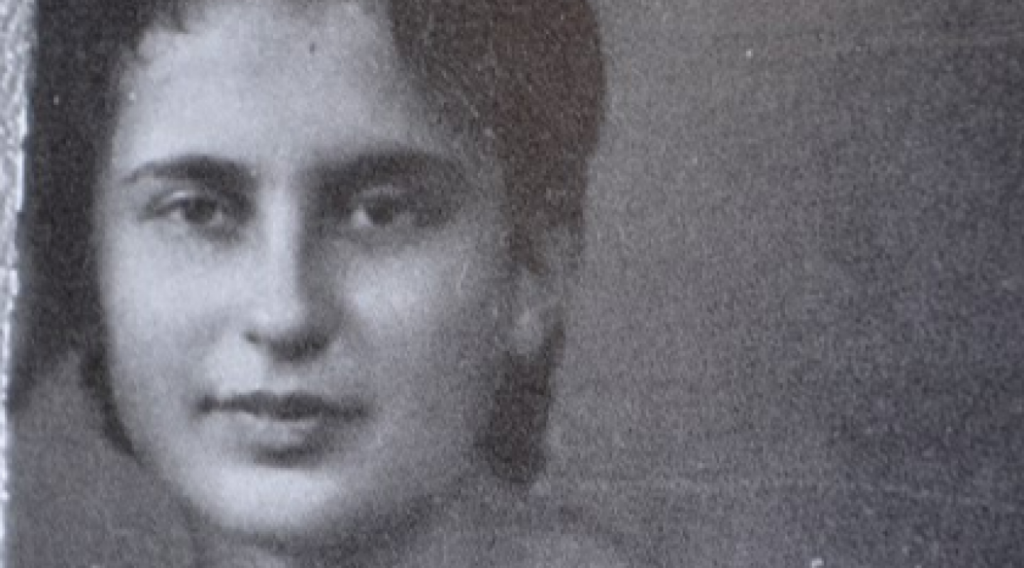
For decades, Sabina Spielrein (1885–1942) was known merely as a footnote in the history of psychoanalysis—the patient who had an affair with Carl Jung and caused a rift between him and Freud. Today, we know she was much more. She was a brilliant theorist in her own right, whose ideas about the “destructive” nature of sexuality anticipated Freud’s death drive (Thanatos) by nearly a decade.

Born in Russia to a wealthy Jewish family, Spielrein was admitted to the Burghölzli hospital in Zurich at age 19, suffering from “hysteria.” She became Jung’s first analytical patient. Their relationship evolved from doctor-patient to lovers to colleagues. She went on to become a psychoanalyst, practicing in Vienna, Geneva, and eventually the Soviet Union, where she helped pioneer child psychology before being murdered by the Nazis in 1942.

Biography & Timeline: Sabina Spielrein

Spielrein’s life is a tragedy of epic proportions, intertwined with the major cataclysms of the 20th century. After her recovery, she studied medicine and wrote her dissertation on schizophrenia, the first psychoanalytic dissertation ever written by a woman. She was a member of the Vienna Psychoanalytic Society and influenced developmental psychology through her work with Jean Piaget.

She returned to Russia in 1923 to help build a new, “Marxist” psychoanalysis. However, as Stalin rose to power, psychoanalysis was banned. Her three brothers were executed during the Great Purge. In 1942, during the German occupation of Rostov-on-Don, Spielrein and her two daughters were marched into Zmiyevskaya Balka and shot.

Key Milestones in the Life of Sabina Spielrein

Year Event / Publication
1885 Born in Rostov-on-Don, Russia.
1904 Admitted to Burghölzli Mental Hospital; begins treatment with Jung.
1911 Graduates medical school; publishes “Destruction as the Cause of Coming Into Being.”
1912 Joins the Vienna Psychoanalytic Society; meets Freud.
1923 Returns to the Soviet Union to teach and practice.
1942 Murdered by the SS in Zmiyevskaya Balka.

Major Concepts: Destruction and Creation

Destruction as the Cause of Coming Into Being

Spielrein’s most significant theoretical contribution is her 1912 paper, “Destruction as the Cause of Coming Into Being.” She argued that the reproductive drive contains a destructive component. To create something new, the old form must be destroyed.

The Insight: Love is not just “nice”; it is a dissolution of the ego. We fear intimacy because deep connection requires the partial death of our individual boundaries. This idea profoundly influenced Jung’s concept of transformation and Freud’s later theory of the Death Drive.

The Symbolic Language of Schizophrenia

In her dissertation, Spielrein analyzed the language of a patient with schizophrenia. She showed that the patient’s “delusions” were not nonsense, but a symbolic language attempting to articulate deep, archetypal truths. This anticipated the modern view that psychosis has meaning and structure.

The Conceptualization of Trauma: The Desire for Annihilation

Spielrein’s work offers a startling view of trauma. She suggested that there is a part of the psyche that desires dissolution. This is not just a “death wish” in the negative sense, but a longing to return to the undifferentiated wholeness of the universe.

In trauma, this drive becomes literalized. The survivor feels pulled toward self-destruction. Therapy involves helping the patient find symbolic ways to “die” and be reborn (e.g., through art, deep feeling, or creative change) so they do not have to physically destroy themselves. This aligns with the alchemical stage of Nigredo.

Legacy: The Mother of Analytical Psychology

For a long time, Sabina Spielrein was erased from history. Her papers were discovered in a Geneva basement in 1977, sparking a re-evaluation of her role. We now see her not just as a muse, but as a co-creator of depth psychology.

She stands as a testament to the resilience of the human spirit. She transformed her own madness into a theory that helps us understand the madness of the world. She taught us that destruction and creation are twins, and that we cannot have one without the other.


Bibliography

  • Spielrein, S. (1912). “Destruction as the Cause of Coming Into Being.” Jahrbuch für psychoanalytische und psychopathologische Forschungen.
  • Covington, C., & Wharton, B. (Eds.). (2003). Sabina Spielrein: Forgotten Pioneer of Psychoanalysis. Brunner-Routledge.
  • Carotenuto, A. (1982). A Secret Symmetry: Sabina Spielrein Between Jung and Freud. Pantheon.

Explore More on Jungian History

Explore the Other Articles by Categories on Our Blog 

Hardy Micronutrition is clinically proven to IMPROVE FOCUS and reduce the effects of autism, anxiety, ADHD, and depression in adults and children without drugsWatch Interview With HardyVisit GetHardy.com and use offer code TAPROOT for 15% off

Who was Theodore Millon?

Who was Theodore Millon?

The Grand Unifier: Theodore Millon and the Mathematical Architecture of the Self In the fragmented landscape of 20th-century psychology, where clinicians pledged loyalty to competing schools of thought like feudal lords, Theodore Millon (1928–2014) stood as a rare...

What is a Diagnosis Anyway: Is the DSM Dying Part 2

What is a Diagnosis Anyway: Is the DSM Dying Part 2

The Archaeology of a Label: What We Forgot About Diagnosis and Why It Matters Now By Joel Blackstock, LICSW-S | Clinical Director, Taproot Therapy Collective Part II of A Critical Investigation into the Document That Defines American Mental Health Contents...

Is the DSM Dying? Rethinking Suffering

Is the DSM Dying? Rethinking Suffering

A Critical Investigation into the Document That Defines American Mental Health—and Why It May Have Already Failed By Joel Blackstock, LICSW-S | Clinical Director, Taproot Therapy Collective Contents Introduction: The Controversial Bible Part I: The History of a...

Understanding How the Different Types of Therapy Fit Together

Understanding How the Different Types of Therapy Fit Together

You've tried therapy before. Maybe it helped a little. Maybe you spent months talking about your childhood without anything changing. Maybe you learned coping skills that worked until they didn't. Maybe the therapist was nice but you left each session feeling like...

Insights into Therapy Through Quantum Neuroscience

Insights into Therapy Through Quantum Neuroscience

Something extraordinary is happening in consciousness research right now. After decades of incremental progress and philosophical stalemate, 2025—designated by the United Nations as the International Year of Quantum Science and Technology—has delivered a cascade of...

The Metamorphosis of the Sufferer: From Neurotic Soul to Digital User

The Metamorphosis of the Sufferer: From Neurotic Soul to Digital User

From “neurotic soul” to “digital user”: How insurance companies, Big Pharma, and Silicon Valley systematically dismantled the depth of psychotherapy—and why the BetterHelp scandal was just the beginning. A critical history for therapists who refuse to become technicians.

The Neuroscience of Disassociation

The Neuroscience of Disassociation

The unitary nature of consciousness is the most persistent intuition of human experience. We feel like a single protagonist in a continuous narrative. Yet, for the trauma survivor, this intuition is often a lie. As therapists, we are often the first to witness the...

Bill O’Hanlon: The Therapist Who Asked “How Do People Get Happy?”

Bill O’Hanlon: The Therapist Who Asked “How Do People Get Happy?”

Bill O’Hanlon, MS, LMFT, studied with Milton Erickson as his only work/study student (serving as Erickson’s gardener) before co-founding Solution-Oriented/Possibility Therapy in the 1980s. Author of nearly 40 books including the Oprah-featured “Do One Thing Different” and foundational “In Search of Solutions” with Michele Weiner-Davis, O’Hanlon delivered over 3,700 presentations worldwide teaching his collaborative, non-pathologizing approach asking “How do people get happy?” rather than “What’s wrong?” He retired from clinical practice in 2020 to pursue professional songwriting from Santa Fe, New Mexico.

Diane Poole Heller: From Trauma Survivor to Pioneer of Attachment Healing

Diane Poole Heller: From Trauma Survivor to Pioneer of Attachment Healing

Diane Poole Heller, PhD, transformed her own 1988 traumatic car accident into a pioneering career developing DARe (Dynamic Attachment Re-patterning experience), a somatic approach integrating attachment theory and trauma resolution now taught worldwide. After 25 years as Senior Faculty for Peter Levine’s Somatic Experiencing Institute, she created Trauma Solutions and authored The Power of Attachment, teaching that regardless of childhood history, people can develop Secure Attachment Skills through attuned relationships, body-based interventions, and recognizing we’re all biologically hardwired for connection and healing.

Laurence Heller: The Clinical Psychologist Who Mapped How Developmental Trauma Distorts Identity

Laurence Heller: The Clinical Psychologist Who Mapped How Developmental Trauma Distorts Identity

Laurence Heller, PhD, spent over 40 years in private practice recognizing that developmental trauma creates not just nervous system dysregulation but fundamental identity distortions—pervasive shame, self-judgment, and disconnection from authentic self. He developed the NeuroAffective Relational Model (NARM), now taught worldwide, mapping five adaptive survival styles arising from disrupted developmental needs (Connection, Attunement, Trust, Autonomy, Love-Sexuality) and providing framework for healing through disidentification from survival-based identities while working simultaneously with psychology and physiology within attuned therapeutic relationships.

Bruce Perry: From Branch Davidian Waco to “What Happened to You?” – Three Decades Translating Neuroscience into Healing for Maltreated Children

Bruce Perry: From Branch Davidian Waco to “What Happened to You?” – Three Decades Translating Neuroscience into Healing for Maltreated Children

Bruce Perry developed the Neurosequential Model after treating children who survived the 1993 Branch Davidian siege in Waco. His three decades translating neuroscience into practical trauma treatment culminated in the #1 bestseller What Happened to You? with Oprah Winfrey. Perry’s fundamental insight: childhood behavior reflects developmental adaptation to environment rather than defect requiring correction, revolutionizing how thousands of professionals understand trauma.

Judith Herman: The Psychiatrist Who Named Complex Trauma and Challenged a Field’s Convenient Amnesia

Judith Herman: The Psychiatrist Who Named Complex Trauma and Challenged a Field’s Convenient Amnesia

Judith Herman, Harvard psychiatrist, transformed trauma treatment by distinguishing complex PTSD from single-incident trauma and articulating the three-stage recovery model emphasizing safety, remembrance, and reconnection. Her 1992 Trauma and Recovery challenged psychiatry’s “convenient amnesia” about sexual violence, while 2023’s Truth and Repair reimagines justice as healing rather than punishment, asking what survivors actually need: acknowledgment, validation, and community witness rather than retribution.

Gabor Maté: From Budapest Ghetto to Voice of Compassion in Addiction’s Darkest Corners

Gabor Maté: From Budapest Ghetto to Voice of Compassion in Addiction’s Darkest Corners

Gabor Maté, Holocaust survivor turned physician, spent twelve years treating severe addictions in Vancouver’s poorest neighborhood, asking “why the pain?” rather than “why the addiction?” His revolutionary recognition that addiction serves to escape unbearable emotions rooted in childhood trauma, detailed in bestseller In the Realm of Hungry Ghosts, transformed understanding of substance abuse from moral failing to developmental injury.

David Grand: From EMDR Trainer to Brainspotting Pioneer Through a Champion Skater’s Frozen Gaze

David Grand: From EMDR Trainer to Brainspotting Pioneer Through a Champion Skater’s Frozen Gaze

David Grand discovered brainspotting in 2003 when a figure skater’s eye wobble revealed where trauma was stored in her brain. By maintaining fixed eye position on that “brainspot” rather than using bilateral movement, processing accelerated dramatically. His development of this approach, now used by 13,000+ therapists worldwide, demonstrates how careful clinical observation combined with willingness to deviate from protocol can produce genuine therapeutic innovation for treating trauma, the yips, and performance blocks.

Richard Schwartz: From Failed Bulimia Study to Discovering the Internal Family System

Richard Schwartz: From Failed Bulimia Study to Discovering the Internal Family System

Richard Schwartz discovered Internal Family Systems in 1982 when bulimic clients described distinct “parts” battling inside them, leading him to recognize the mind’s natural multiplicity. His development of IFS therapy, which helps Self lead an internal family of managers protecting against exiled pain and firefighters dousing emotional flames, has revolutionized how millions understand their inner conflicts. From failed outcome study to global therapeutic movement, Schwartz demonstrated that beneath protective parts, everyone possesses undamaged Self capable of healing.

0 Comments

Submit a Comment

Your email address will not be published. Required fields are marked *