
Disclaimer: Neil Gaiman, the author of The Sandman, has been accused of serious misconduct. While we do not condone his alleged actions or endorse financially supporting him, his influential work has been significant in the fields of psychology, myth studies, and consciousness exploration. This article examines the themes and ideas in The Sandman comics from an academic perspective.
Neil Gaiman’s groundbreaking comic book series The Sandman is a rich tapestry of mythology, fantasy, and psychology. On the surface, it tells the story of Morpheus, the anthropomorphic embodiment of Dreams, and his dysfunctional family of eternal beings known as The Endless. But on a deeper level, Sandman is a profound exploration of the structure and development of human consciousness itself, mirroring the evolution of human civilization and the internal conflicts that arise as consciousness becomes more complex.
By mapping Jungian archetypes, psychological concepts, and anthropological insights onto cosmic entities, Gaiman creates a mythic framework for the emergence of the conscious and unconscious mind. Each member of the Endless represents a different aspect of the psyche’s birth and the inevitabilities of human experience, from the raw emotions of the limbic system to the rational ordering of the neocortex. Their conflicts and relationships mirror the tensions and integrations that form our inner world and the disagreements that human consciousness has with itself as it evolves.
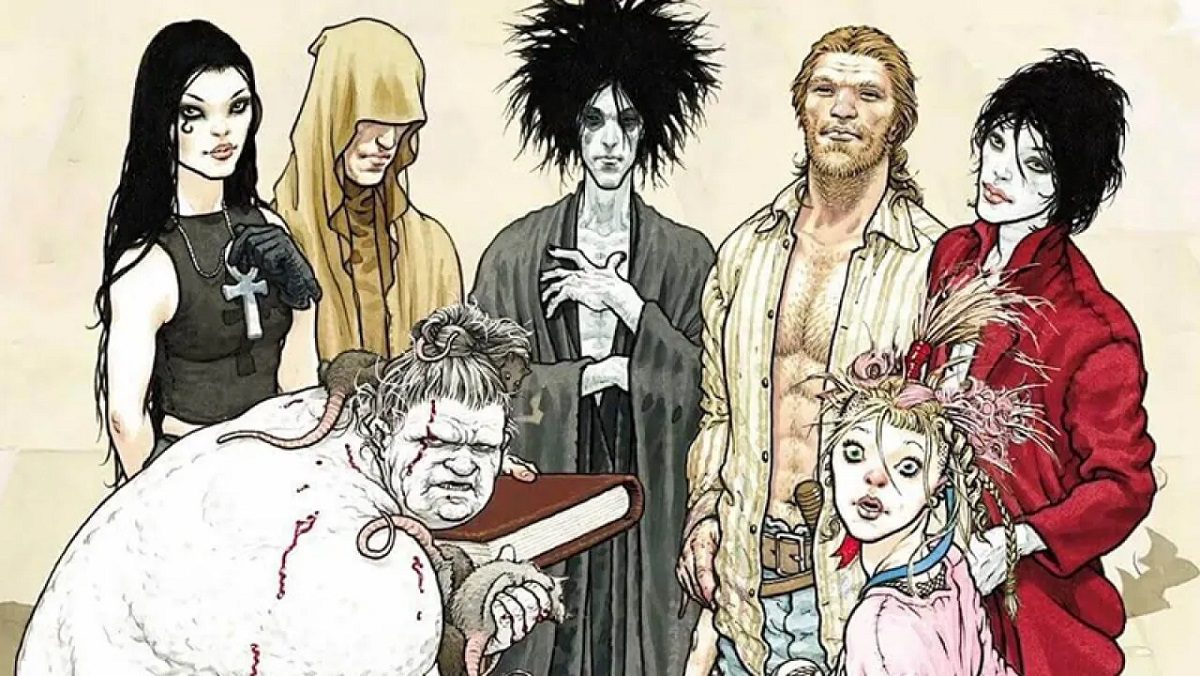
The Endless as Brain Networks and Psychological Forces: The seven Endless siblings each personify a primal drive or psychic function:
Dream
Dream, the third-born of the Endless, embodies the essence of narrative processing, memory consolidation, and meaning-making. As the personification of stories and the subconscious, Dream represents the human mind’s inherent need to create order and structure from the chaos of experience. His realm, the Dreaming, is a vast landscape where the raw materials of memory and sensation are woven into the intricate tapestries of myth, legend, and personal narrative. Dream’s journey throughout the series reflects the mind’s struggle to find meaning and purpose in the face of life’s challenges, and his ultimate sacrifice mirrors the necessity of relinquishing old stories and embracing change for growth and transformation to occur.
Desire and Despair
Desire and Despair, the twins born after Dream, represent the fundamental duality of human emotion and motivation. Desire embodies the powerful drive for satisfaction, pleasure, and connection that propels us forward, the yearning for something more that fuels our ambitions and passions. In contrast, Despair represents the inevitable shadow of unfulfilled longing, the crushing weight of disappointment and loss that can lead to stagnation and surrender. Together, these siblings personify the push and pull of the human heart, the constant negotiation between hope and fear, love and loss, that defines our emotional landscape.
Delirium
Delirium, the youngest of the Endless, is a tragic figure who embodies the fragility and fluidity of the human mind. Once known as Delight, her transformation reflects the ways in which the boundless joy and wonder of childhood can be eroded by the harsh realities of existence. As Delirium, she personifies the chaotic, non-linear nature of thought, the wild creativity that emerges from the breakdown of rational order. Her fractured, ever-shifting realm is a metaphor for the mind’s ability to generate new associations and insights, but also for the painful disorientation of mental illness and madness.
Destruction
Destruction, the prodigal sibling who abandoned his duties, represents the fundamental forces of change, entropy, and transformation that shape both the physical world and the human psyche. As the embodiment of aggression and chaos, Destruction mirrors the destructive impulses that lurk within the human heart, the urge to tear down and rebuild that fuels both creativity and conflict. Yet his decision to walk away from his role also reflects the mind’s capacity for choice and free will, the ability to redirect our energies towards creation and renewal rather than destruction and decay.
Destiny
Destiny, the eldest of the Endless, personifies the forces of determinism, pattern recognition, and prediction that shape our understanding of the world. His realm, a vast labyrinth of pathways and possibilities, represents the mind’s ceaseless effort to map the contours of reality, to discern the hidden structures and causal chains that underlie the apparent chaos of existence. Yet Destiny’s passive, observational nature also reflects the limitations of a purely deterministic worldview, the ways in which an overemphasis on fate and predestination can rob us of agency and meaning.
Death
Death, the second-born and most beloved of the Endless, embodies the fundamental realities of change, transition, and letting go that define the human experience. As the personification of life’s end, she represents the mind’s capacity to accept and embrace the impermanence of all things, to find meaning and beauty in the face of mortality. Her warm, nurturing presence throughout the series reflects the ways in which confronting death can paradoxically enrich and deepen our appreciation for life, transforming fear and despair into gratitude and acceptance.
Personifications of Consciousness
These anthropomorphic entities can be mapped to actual brain networks and regions. Dream’s realm evokes the default mode network, associated with internally focused thought, autobiographical memory retrieval, envisioning the future, and conceiving the perspectives of others. Desire and Despair call to mind the limbic system, the seat of emotion, motivation, and primal drives. Delirium reflects the mind’s divergent, associational paths, while Destruction suggests a Thanatos drive, the aggressive, eliminating impulse.
Drawing on neuroscientist Antonio Damasio‘s work, we can see the Endless as the embodiment of core components of consciousness. Damasio argues that the self emerges from the interaction of the brain’s “protoself” (neural patterns representing the internal state), with the “core self” (a second-order mapping of the protoself’s interaction with external objects), and the “autobiographical self” (the procession of memories that constitutes identity).
The Endless, with their defined realms and roles, evoke the protoself frameworks around which consciousness assembles itself. Dream’s domain is literally the space in which external sensations are processed into internal narratives, a higher-order mapping of experience. The Endless are the neurological building blocks that together give rise to the phenomenon of consciousness.
The Endless’ Parents – Night and Time:
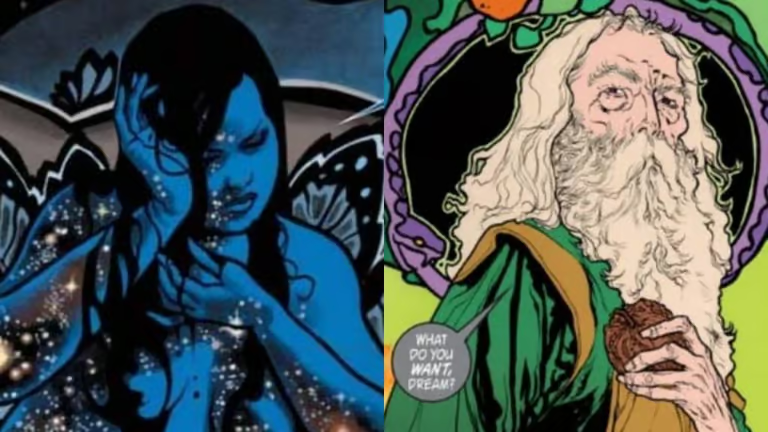
The mythological “parents” of the Endless, Night and Time, represent even deeper frameworks underlying conscious and unconscious thought.
Night is the primordial unconscious, the ancient strata of inherited collective experience and the timeless swirl of fluid associations. She is the mother of the Endless, the unbounded space out of which their more defined psychic forms emerge. Time is the sequential, irreversible flow in which consciousness arranges itself. It is the forward momentum of narrative, the changes of character, the space in which meaning manifests. If Night is the formless background, Time is the story, the point at which the latent unconscious becomes active in the world.
The birth order of the Endless reflects the evolution of human consciousness and civilization. Destiny and Death, the eldest, represent the fundamental realities of existence – the inevitability of fate and the certainty of change. They are the bookends of the human experience, the alpha and omega of consciousness.
Dream, the third-born, embodies the emergence of narrative and meaning-making, the ability to shape the raw material of experience into coherent stories. This reflects the dawn of human culture, the birth of myth and legend as a way of understanding the world.
Destruction and Desire, the middle children, represent the primal drives that shape human behavior – the impulse to create and destroy, the longing for connection and satisfaction. They are the Freudian id, the chaotic undercurrents of the psyche.
Despair and Delirium, the youngest, reflect the mind’s struggle with suffering and madness, the price of consciousness’ complexity. They are the existential challenges that come with self-awareness, the realization of life’s inherent pain and absurdity.
Jungian Analysis and Parental Influence:
Each Endless sibling struggles to integrate opposing forces within their own nature, reflecting the tensions and conflicts that arise as consciousness becomes more complex. These internal struggles are shaped by the archetypal energies they inherit from their parents, Night and Time.
From Night, the Endless inherit the depths of the unconscious, the realm of dreams, instincts, and primal emotions. Night’s influence is most apparent in Dream, Desire, and Delirium, who are deeply connected to the irrational, associative aspects of the psyche.
From Time, the Endless inherit the forward momentum of narrative, the inevitability of change, and the structures of causality. Time’s influence is most evident in Destiny, Death, and Destruction, who embody the linear, irreversible aspects of existence.
The siblings who struggle most are those who inherit contradictory energies from their parents. Dream, for example, is torn between Night’s fluid creativity and Time’s rigid structure. He is the embodiment of the mind’s attempt to impose order on the chaos of the unconscious, a living metaphor for the ego’s heroic struggle.
Destruction, similarly, is caught between the transformative power of Time and the stasis of Night. He represents the mind’s conflicting impulses towards change and stability, the constant negotiation between the comfort of the familiar and the necessity of growth.
These internal conflicts reflect the disagreements that human consciousness has with itself as it evolves. The mind is not a monolith, but a complex ecosystem of competing drives and impulses. The Endless’ struggles mirror the psyche’s constant effort to reconcile these opposing forces and achieve a fragile equilibrium.
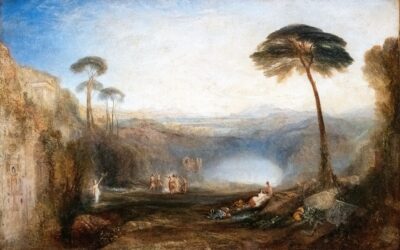
The Sandman and the Evolution of Human Civilization: The Sandman’s mythic representation of the mind’s development parallels the evolution of human civilization. Just as the Endless emerge from the primordial realms of Night and Time, human culture has its roots in the ancient structures of myth and ritual.
Anthropologist Clifford Geertz argued that culture is the web of meaning we spin to make sense of our lives. It is the shared system of symbols, stories, and practices that allow us to interpret our experiences and communicate with each other. In this light, the Endless can be seen as archetypal figures that represent the fundamental patterns of meaning that underlie all human cultures.
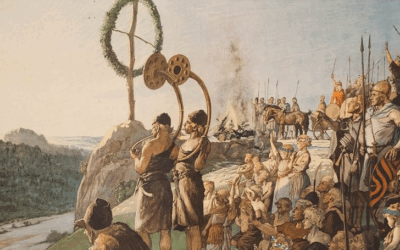
The earliest human societies were dominated by the realm of Night – the world of dreams, spirits, and magic. This is reflected in the Paleolithic figurines like the Venus of Willendorf, which embody the mysterious, generative power of the feminine unconscious.
As human civilization developed, the realm of Time became increasingly important. The birth of agriculture, writing, and organized religion marked the emergence of linear, historical thinking. This is reflected in the rise of the hero archetype, the individual who breaks free from the cyclical patterns of nature and forges their own destiny.
The Endless embody these cultural shifts. Dream, in particular, represents the mind’s increasing ability to shape its own reality through narrative and imagination. His journey from a being of pure impulse to a mature, self-aware entity reflects the development of human consciousness from its primitive, instinctual roots to its modern, rational form.
The other Endless represent the archetypal forces that shape human culture. Desire and Despair are the universal experiences of longing and loss that find expression in art and literature. Delirium is the creative chaos that fuels innovation and change. Destruction is the transformative power that drives history forward.
In this light, the Sandman becomes a mythic map of human civilization’s journey, a symbolic representation of the cultural evolution of consciousness. The conflicts and resolutions of the Endless mirror the tensions and syntheses that define the human story.
Dream as Story Structure and the Necessity of Change:
Among the Endless, Dream plays a particularly crucial role as the embodiment of narrative itself. His realm is the space where the raw material of experience is woven into coherent stories, where the chaos of sensation takes on the shape of meaning. In many ways, Dream is story structure personified.
This idea aligns with the work of cognitive scientists like Mark Turner, who argues that narrative is the fundamental organizing principle of human cognition. We understand our lives and our world through stories, and the brain is essentially a storytelling machine, constantly shaping disparate stimuli into causal, character-driven narratives.
Dream, then, is not just a character, but the very process by which we make sense of reality. His journey is the story of stories themselves, and his struggles reflect the difficulties inherent in imposing order on the chaos of experience. When Dream’s rigidity and need for control cause pain and suffering, it mirrors the ways in which our narrative impulses can become prisons, trapping us in outdated scripts and limiting beliefs.
This is why Dream’s death at the end of the series is so profoundly necessary. For the story to reach its resolution, for the cycle to begin anew, the old structures must die. Dream’s demise is the necessary price of growth, the shattering of calcified narratives to make way for new stories.
This reflects the process of individuation in Jungian psychology, where the ego must continually be transcended for the Self to emerge. It is only by relinquishing our old identities, letting go of the stories we have told about ourselves, that we can evolve into new, more integrated beings.
Dream’s death is also a powerful metaphor for the necessity of change in human culture. Just as individuals must continually reinvent themselves, societies must also adapt and evolve in response to new challenges and opportunities. The stories that once sustained us may become the very things that hold us back, and the price of progress is always the death of the old ways.

0 Comments