

“He seemed perfect,” Sarah said, tears streaming down her face. “Too perfect. David was everything I thought I wanted—confident, successful, charismatic, emotionally intelligent. Everyone loved him. I felt so lucky that someone like that would choose me. But now, six months later, I feel smaller than ever. I’ve lost myself trying to live up to his light.”
Sarah’s story illustrates one of the most painful yet common patterns in relationships: golden shadow projection. While most people understand that we can be attracted to “bad boys” or “toxic” partners who represent our dark shadow, fewer recognize the equally problematic pattern of falling for someone who embodies our positive shadow—the bright, shining qualities we admire but haven’t developed within ourselves.
Carl Jung’s concept of the golden shadow reveals that we can become just as unconsciously obsessed with others’ positive traits as we can with their negative ones. In both cases, we’re avoiding the work of developing these qualities within ourselves.
Understanding the Golden Shadow
The golden shadow consists of all the positive qualities, talents, and potentials that we possess but have never fully developed or claimed. Unlike the dark shadow (which contains traits we judge as negative), the golden shadow contains our unlived greatness—the parts of ourselves that could shine brightly if we had the courage to develop them.
Common Golden Shadow Projections in Relationships:
- Confidence: Attracted to people who seem self-assured while feeling insecure yourself
- Creativity: Drawn to artists or innovators while believing you’re “not creative”
- Emotional Intelligence: Fascinated by people who seem emotionally wise while feeling emotionally confused
- Charisma: Captivated by socially magnetic people while feeling awkward or invisible
- Success: Attracted to accomplished people while feeling like a failure
- Spirituality: Drawn to seemingly enlightened people while feeling spiritually inadequate
The Voice Dialogue Perspective on Golden Shadow
Hal and Sidra Stone’s research shows that golden shadow projections often involve selves we’ve disowned due to family or cultural conditioning. Sarah had developed her “Good Girl Self,” “Responsible Self,” and “Modest Self” while completely disowning her “Confident Self,” “Successful Self,” and “Radiant Self.”
When she met David, who seemed to embody all these disowned selves effortlessly, the attraction was overwhelming. But because she hadn’t developed these qualities within herself, being around David made her feel increasingly inadequate by comparison.
The Stone’s Discovery: We often unconsciously choose partners who will carry our disowned positive selves, allowing us to experience these qualities vicariously without doing the work of developing them ourselves. This creates a dependent dynamic where we need our partner to feel complete, while simultaneously resenting them for having what we lack.
The Beebe Model and Golden Shadow Projections
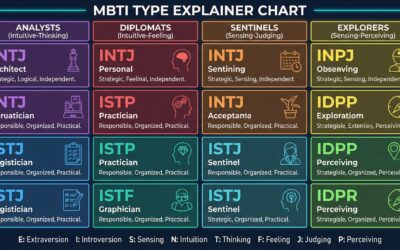
John Beebe’s eight-function model provides precise insights into which golden shadow qualities we’re most likely to project based on our psychological type.
Type-Based Golden Shadow Patterns:
Thinking Types: Often project their underdeveloped feeling function as “emotional wisdom” or “people skills” onto partners. They may be attracted to people who seem naturally empathetic while believing themselves to be “bad with feelings.”
Feeling Types: May project their underdeveloped thinking function as “brilliance” or “logical mastery” onto partners. They’re drawn to people who seem intellectually superior while believing themselves to be “not smart enough.”
Sensing Types: Often project their underdeveloped intuitive function as “vision” or “inspiration” onto partners. They’re attracted to people who seem imaginative and future-focused while seeing themselves as “boring” or “unimaginative.”
Intuitive Types: May project their underdeveloped sensing function as “groundedness” or “practical wisdom” onto partners. They’re drawn to people who seem stable and realistic while viewing themselves as “flaky” or “impractical.”
The Stages of Golden Shadow Relationship Patterns
Stage 1: Enchantment The golden shadow bearer seems almost magical. Their positive qualities feel larger-than-life, and being chosen by them feels like winning the lottery. You may feel “lucky” or “grateful” that someone so amazing would want you.
Stage 2: Comparison and Inadequacy As the relationship progresses, constant comparison with your partner’s golden qualities makes you feel increasingly inadequate. You may start believing you need to “earn” their love or prove you’re worthy of them.
Stage 3: Resentment and Diminishment The initial gratitude turns to resentment. You may feel small, overshadowed, or invisible next to your partner’s brightness. Alternatively, you might become critical of their golden qualities, finding flaws to reduce your feelings of inadequacy.
Stage 4: Loss of Self You may begin abandoning your authentic self to try to match your partner’s golden qualities, or alternatively, you might shrink yourself to avoid competition. Either way, you lose touch with your own unique gifts and potentials.
Reclaiming Your Golden Shadow
The solution to golden shadow projection isn’t to leave your accomplished partner—it’s to develop the very qualities you’ve been projecting onto them.
Sarah’s Integration Journey: Instead of continuing to feel inadequate next to David’s confidence, Sarah began developing her own “Confident Self.” She took public speaking classes, started asserting her opinions at work, and practiced making decisions without seeking approval. As she reclaimed her own confidence, she stopped needing David to be confident for her.
Voice Dialogue Practice: Begin having conversations with your disowned positive selves. Ask your “Creative Self”: “What would you like to create? How can I support your expression?” Listen to your “Confident Self”: “What would you do if you felt completely self-assured?”
Beebe Model Application: Identify which of your psychological functions you’ve been projecting as golden shadow. If you’re a thinking type projecting your feeling function, practice emotional intelligence. If you’re a sensing type projecting your intuitive function, explore creative and visionary activities.
Transforming Golden Shadow Relationships
When both partners understand golden shadow dynamics, relationships can become collaborative workshops for mutual development rather than competitions or dependencies.
Healthy Golden Shadow Integration includes:
- Admiring your partner’s qualities while also developing them within yourself
- Supporting each other’s growth without trying to dim anyone’s light
- Celebrating differences while working on personal wholeness
- Using attraction as information about your own developmental edges
Understanding these dynamics through professional support can accelerate the process of reclaiming your projected golden shadow, especially when deep shadow work is involved.
The goal isn’t to become identical to your partner, but to become complete within yourself—able to appreciate others’ gifts without needing to possess them or diminish yourself in comparison.















0 Comments