
What the 2026 ASWB Exam Changes Mean for Social Workers: A Clinician’s Breakdown
On Monday, August 3, 2026, the test that stands between a social work degree and a social work license changes for the first time since 2018. If you are preparing to sit for the ASWB exam, supervising associates who will, or just trying to understand why the profession is suddenly arguing about its own front door, here is the version that matters to the people doing the work.
The short answer is that the exam is getting shorter, its structure is being reorganized around how social workers practice, and it is moving away from memorized facts toward applied clinical judgment. The longer answer, the one about why a stable national credential is being rebuilt under political pressure, is where it gets interesting, and where it starts to affect your choices.
What Is Changing on August 3, 2026
The single most important thing to know is that your test date, not your application date, determines which exam you take. Anyone testing before August 3 sits for the current 2018 version. Anyone testing on or after that date sits for the new one. ASWB has confirmed the date and the transition rules.
The new exam is built on four structural changes.
First, the blueprint moves from four content areas down to three. The old standalone “Human Development and Diversity” silo is gone as its own category. Diversity, culture, and human development are now folded into assessment and intervention as lenses you apply throughout, rather than a block of abstract knowledge bolted onto the end. ASWB describes this as a consolidation based on its 2024 practice analysis, which drew on input from more than 25,000 practicing social workers.
Second, Values and Ethics is now the most heavily weighted area on every exam level. The profession’s own subject matter experts ranked ethics as more important than it had been in prior studies, and the blueprint follows that judgment. Expect ethics to be the single largest share of your questions.
Third, the exam retires its old “Knowledge, Skills, and Abilities” framework and replaces it with Applied Knowledge Statements. This is the change that should reshape how you study. The old format rewarded recall: knowing the DSM criterion, the developmental milestone, the name of the policy act. The new format asks what you would do with a client when the data conflicts and two ethical obligations pull in opposite directions. It is the difference between knowing the Code of Ethics and reasoning inside it under pressure.
Fourth, the test is physically smaller. It drops from 170 questions to 122, with 110 scored items and 12 unscored pretest items. More of those questions will use three answer options instead of four, replacing some of the four-option items. The four hour window stays the same, which means more time per question and less of the pacing that pushed tired candidates into careless misreads. There is now a scheduled break after question 61, along with other changes aimed at candidate experience.
Because the test is shorter, the passing standard is being reset from scratch. ASWB has convened a panel of more than seventy-five practicing social workers to set the new cut score through a structured judgment process, estimating how a minimally competent candidate would perform on each item. The raw number of correct answers required will be lower, simply because there are fewer questions. The proportional bar, the percentage you need, is designed to hold steady so that the standard of public protection does not move.
Why the Exam Is Being Rebuilt
A credential this stable does not get rebuilt for fun. It gets rebuilt because the ground under it shifted, and it shifted because of data the profession could not unsee.
In 2022, ASWB released its own analysis of exam pass rates going back a decade. The findings were stark and they were not subtle. Pass rates differed sharply by race, by age, and by language. The eventual pass rate for candidates aged 18 to 29 was roughly 91 percent; for candidates 50 and older it fell to about 65 percent. Black candidates passed at substantially lower rates than their white counterparts, a gap ASWB documented across both first-time and eventual outcomes. Legislative testimony in Maryland later put a sharper number on the institutional dimension: first-time pass rates on the master’s exam ran near 32 percent at one historically Black university and near 80 percent at the state’s flagship program.
The profession then split over what those numbers mean. ASWB’s own reading attributes much of the gap to upstream structural inequity, the cumulative weight of unequal schooling, resources, and opportunity that candidates carry to the testing center. Researchers and several state NASW chapters argue the opposite, that bias is encoded in the language and construction of the items themselves, and they point to the sudden 10 to 13 percent drop in pass rates when the 2018 blueprint launched as evidence of an instrument problem rather than a sudden collapse in the quality of social work education. Both readings cannot be fully right, and that is precisely why the fight has been so hard to settle.
The disagreement did not stay academic. Illinois eliminated the exam requirement for its non-clinical Licensed Social Worker credential effective January 2022, while keeping it for clinical licensure. Rhode Island paused its master’s exam and then found, comparing disciplinary records before and after, no increase in board complaints or sanctions. Maryland’s 2025 bill to drop the exam did not pass, but it kept a state workgroup studying whether to keep using the exam at all. Similar moves have surfaced in Colorado, Connecticut, Minnesota, Montana, Oregon, and Utah. Driving all of it is a behavioral health workforce shortage severe enough that every month and every dollar between a degree and a paycheck reads as a barrier to care.
Cutting against that current is the Social Work Licensure Compact, the national framework now being built to let licensed social workers practice across member states through mutual recognition. Its language requires member states to mandate a qualifying national exam. So a state that drops the exam to lower local barriers may quietly lock its own social workers out of multistate mobility and the interstate telehealth market that comes with it. That is the central tension of this whole era: local equity-driven deregulation pulling one way, national standardized reciprocity pulling the other.
There is no villain in this story, which is exactly what makes it hard. A single testing body holds a near-monopoly on a legally required credential, so its instrument carries enormous weight and enormous scrutiny. A workforce shortage makes delay feel like denial of care. A board that licenses a stranger trained in another state needs something defensible to point to. And a profession built on naming structural injustice cannot look at a decade of disparate outcomes and call them neutral. Each of these pressures is reasonable on its own. They do not resolve into agreement.
What This Means for You
If you are sitting for the exam
Your test date decides your blueprint, so choose it deliberately rather than by accident. If your appointment falls on or after August 3 and your prep materials are built on the 2018 four-area structure, get materials aligned to the new three-area, applied-knowledge format. Then change how you practice. Drilling flashcards as your primary strategy will carry you less far than it used to, because the questions now reward reasoning through a scenario and prioritizing among several acceptable actions to find the best one. The shorter test gives you more time per question, which favors patient reading. Be ready for the sectioned format with the break after question 61, and confirm in the 2026 Examination Guidebook whether you can return to earlier questions, since sectioning often limits backtracking.
If you supervise
The entire case for exam-optional pathways rests on a claim about you. It says that accredited education plus supervised hours is a better measure of readiness than a multiple-choice test. Whether or not you agree, both the reforms and the legislation push more of the public-protection burden onto supervision. The exam is being redesigned to test judgment precisely because judgment is what supervision builds. If the test now leans harder on applied ethics, your supervisees are better served by supervision that rehearses real ethical dilemmas, the boundary question, the dual relationship, the mandated-reporting gray area, rather than simply logging hours toward a number.
If you want to practice in more than one state
Watch the Compact closely. If you are licensed in a state that keeps the exam, you remain eligible for multistate mobility as the Compact comes online. If you are in a state that has dropped it, you may have gained a faster local path and lost the national one. For anyone building a telehealth practice across state lines, this is not an abstraction. It is the difference between one caseload and several.
If you care about who becomes a social worker
The disparities are real, and the redesign is a real attempt to remove some of the artificial friction, the excess reading load, the implausible distractors, the fatigue of a four hour marathon, that fell hardest on older candidates, non-native English speakers, and candidates who think relationally rather than in test-bank syntax. What the redesign cannot do is repair the upstream inequities in who gets the preparation, the time, and the financial cushion to pass. A fairer test is worth having. It is not the same thing as a fair pipeline.
Where Alabama Stands
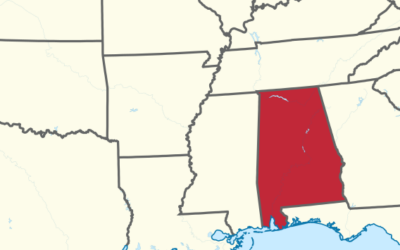
Alabama has not joined the exam-optional movement. The Alabama State Board of Social Work Examiners still requires passing the applicable ASWB exam at every level: the Bachelor’s exam for the LBSW, the Master’s exam for the LMSW, and the Clinical exam for the LICSW. If you are testing in Alabama on or after August 3, you take the new exam. Practically, that also keeps Alabama practitioners on the side of this national divide that preserves access to multistate mobility as the Compact expands. Boards update their rules between sessions, so confirm the current requirements with the board directly before you build a plan around them.
The Question Underneath the Reform
Step back far enough and this stops being a story about a test. It becomes a story about what a number can hold.
Theodore Porter argued that quantification is a technology of distance, a way for institutions to make decisions about people they cannot see and do not trust themselves to judge by hand. A licensing exam exists so that a board in one state can vouch for a stranger trained in another, so that a score can travel where a relationship cannot. That function is real and worth defending. But a number built to travel anywhere has, by design, been stripped of context, and context is most of what clinical work is. The exam abstracts away the very thing the profession most wants to measure in order to measure anything at all.
There is a smaller version of this same pattern in every clinical room. A profession defending its gatekeeping function under threat behaves a great deal like a person defending an identity under threat, reaching for the procedure that feels like protection. The 2026 redesign is an honest attempt to let the instrument hold a little more of the relational, contextual reality it was built to flatten. Whether a multiple-choice test can ever hold that, or whether competence in this work is finally too local to be scored from a distance, is the question the profession has not answered. It has only, for now, built a better number.
For the full policy analysis, including the complete demographic data, the standard-setting math, and the state-by-state legislative picture, read the complete breakdown on the Taproot Therapy Collective blog. It is where I track the licensure, telehealth, and mental health policy changes that actually reach your practice.
Quick Answers
When do the ASWB exam changes take effect?
The new exam launches Monday, August 3, 2026. Your test date, not your application date, determines which version you take.
Is the 2026 exam easier or harder?
Both, in different ways. It is shorter and less fatiguing, with fewer questions, more time per question, and a built-in break, which lowers the logistical strain. It is also more demanding conceptually, because it tests applied reasoning and ethical judgment rather than recall, so rote memorization no longer earns easy points.
Do I need new study materials?
If you are testing on or after August 3 and your materials are built on the 2018 four-area blueprint, yes. Look for prep aligned to the three-area, applied-knowledge format and weighted toward ethics.
Does Alabama still require the ASWB exam?
Yes. The Alabama State Board of Social Work Examiners requires the applicable ASWB exam for the LBSW, LMSW, and LICSW. Alabama has not adopted an exam-optional pathway.
If some states drop the exam, can their social workers still practice elsewhere?
Not easily through the Compact. The Social Work Licensure Compact requires member states to mandate a qualifying national exam, so social workers in exam-optional states may find multistate mobility limited.
Joel Blackstock, LICSW-S, is the clinical director of Taproot Therapy Collective in Birmingham, Alabama, where he supervises clinicians and writes on the policy and psychology of mental health practice. This piece is for professional information and is not legal advice; confirm current requirements with your own licensing board.












0 Comments