

In December, the Drug Enforcement Administration and the Department of Health and Human Services jointly issued what is now being called the Fourth Temporary Extension, a rulemaking that preserves nearly all of the pandemic-era telemedicine flexibilities for controlled substance prescribing through December 31, 2026. The headlines have been straightforward. Patients can continue to receive Schedule II through V controlled substances from a DEA-registered prescriber via audio-video telemedicine without first being seen in person. The “telemedicine cliff” has been postponed. Millions of patients on maintenance therapies for ADHD, panic disorder, complex psychiatric conditions, and opioid use disorder will not be cut off from their medications on January 1.
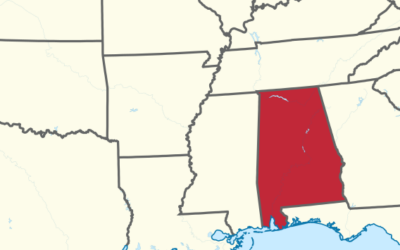
For most of the country, this is accurate. For patients located in Alabama, it is not. The federal extension exists, and it has real legal force, but the actual prescribing experience available to an Alabama patient is governed by Alabama statute, and Alabama statute has not moved with the federal posture. The result is a regulatory geography in which the federal flexibility everyone is reading about in national outlets does not, in practice, reach this state. If you are a clinician in Birmingham, Mobile, Huntsville, or anywhere in between, your patients are operating under a different legal regime than the one being announced in Washington, and the gap between the two has become wide enough to matter clinically.
A note before going further. I am a clinical social worker, not a lawyer or a prescribing physician. The analysis below is policy commentary from a clinical vantage point. Practitioners with specific compliance questions about prescribing, licensure, or controlled substance certification should consult an attorney experienced in Alabama medical regulatory law, and patients with specific access questions should consult their prescriber’s office directly. The purpose of this article is to make the structural picture visible enough that the people inside it can plan.
What the Federal Extension Actually Permits
The Fourth Temporary Extension does three substantial things. First, it authorizes all DEA-registered practitioners to prescribe Schedule II through V controlled substances using interactive audio-video technology without a prior in-person evaluation, applying uniformly to new and established patient relationships through December 31, 2026. Earlier proposals to bifurcate the patient population by establishment date were abandoned after sustained pushback from clinical organizations and electronic health record vendors who pointed out that the bifurcation was administratively impossible. The extension is universal.
Second, a separate but related final rule from the DEA and SAMHSA permanently authorizes audio-only telemedicine for the prescribing of Schedule III through V controlled substances when used to treat opioid use disorder. In practice this means buprenorphine, the partial agonist that anchors most outpatient OUD treatment. The rule allows an initial supply of up to six months delivered via telephone, with a requirement that the prescriber query the relevant state Prescription Drug Monitoring Program during the encounter and a requirement that the dispensing pharmacist verify the patient’s identity with government-issued photo identification at the point of sale. The audio-only carve-out was specifically designed for patients who lack reliable broadband, smartphones, or the digital literacy to navigate video portals, which is to say, the populations most heavily affected by the opioid crisis.
Third, the Centers for Medicare and Medicaid Services in parallel rulemaking permanently designated Marriage and Family Therapists and Mental Health Counselors as eligible distant-site providers under Medicare, removed geographic restrictions for behavioral telehealth originating sites, and suspended the six-month in-person visit requirement for behavioral telehealth through December 31, 2027. The federal architecture, taken as a whole, is the most permissive telemedicine regime the United States has had since the Ryan Haight Act passed in 2008.
None of which the patient in Cullman County will experience, because Alabama law is the law that actually governs their visit.
What Alabama Statute Requires
The controlling statute is Section 34-24-704 of the Code of Alabama. Under that section, a prescription for a controlled substance may be issued through telehealth only when three conditions are simultaneously satisfied. The visit must occur via synchronous audio or audio-visual HIPAA-compliant equipment. The prescriber must have established a legitimate medical purpose for the prescription within the preceding twelve months. And, most consequentially, the prescriber must have had at least one in-person encounter with the patient within the preceding twelve months.
That third clause is where the federal extension dies on contact with Alabama jurisdiction. The DEA’s flexibility permits an audio-video prescribing encounter without any prior in-person visit. Alabama law requires an in-person encounter within the previous year. When state law is more restrictive than federal law in an area where the state retains regulatory authority, which prescribing certainly is, the state law controls. A psychiatrist in California or Massachusetts whose practice operates under the federal flexibility cannot legally prescribe a Schedule II stimulant to a new patient located in Alabama via audio-video alone. To comply with Section 34-24-704, that prescriber would have to either travel to Alabama for the in-person visit, refer the patient to a local Alabama prescriber, or decline to take the case.
The Alabama Board of Medical Examiners reinforces this posture in its administrative rules. Under Ala. Admin. Code r. 540-X-9-.11, the Board’s foundational position is that “the prescriber, when possible, should personally examine the patient” before issuing pharmacological therapy. The Board recognizes narrow exceptions for hospital admission orders, cross-coverage during on-call rotations, short-term emergency continuity before a first appointment, and expedited partner therapy for sexually transmitted infections. The catalog of exceptions is exhaustive rather than illustrative. Anything outside the list is presumptively non-compliant.
Layered on top of these provisions is the Alabama Controlled Substances Certificate, the state-level credential that any prescriber must obtain annually to write controlled substance prescriptions within Alabama, separate from the federal DEA registration. During the early pandemic, when Alabama issued emergency medical licenses to out-of-state providers, the corresponding emergency ACSC explicitly forbade the prescribing of controlled substances via telemedicine. That carve-out is no longer in effect, but it tells you something about the historical posture of the state toward remote prescribing of scheduled medications. The default is no, and the exceptions are narrow.
The Buprenorphine Gap
The most clinically painful application of this dichotomy involves opioid use disorder. The federal final rule permanently authorizes audio-only prescribing of buprenorphine, with a six-month initial supply, specifically because the federal government recognized that the populations most vulnerable to fatal overdose are also the populations least likely to have broadband, transportation, or local addiction specialists. Roughly eighty percent of U.S. counties do not contain a single federally certified Opioid Treatment Program, which makes methadone access functionally impossible for most rural Americans, and which makes audio-only buprenorphine the only realistic outpatient lifeline.
Research mapping the regulatory landscape places Alabama among a small minority of states, alongside Arkansas, Georgia, Indiana, Louisiana, and North Dakota, that have effectively prohibited tele-buprenorphine without physical examination. The federal expansion does not override the state restriction. An OUD patient in rural Walker County or Sumter County who can find an out-of-state addiction medicine provider willing to take the case still cannot legally receive a buprenorphine prescription from that provider without first traveling to that provider for an in-person evaluation, which is precisely the kind of travel the federal rule was designed to eliminate. The harm-reduction logic of the federal policy, which was painstakingly built from epidemiological evidence that the vast majority of illicit buprenorphine use represents desperate self-treatment by people who cannot access legitimate care, simply does not function inside Alabama’s borders.
I want to be clear that I am describing the legal architecture, not making a political claim. There are coherent arguments on the conservative medical side about the value of physical examination, the integrity of the practitioner-patient relationship, and the risk of degraded diagnostic accuracy in audio-only contexts. Those arguments deserve serious engagement. The point here is that whatever one thinks of the state’s posture, the patient in front of you is operating inside that posture, and the federal news cycle is not a reliable guide to what they can actually access.
The August 2024 Guidance Letter
The single most revealing document in this entire regulatory landscape, in my reading, is the guidance letter the Alabama Board of Medical Examiners issued in August 2024. The letter addressed a specific operational problem that had emerged from the literal reading of Section 34-24-704(b)(1)b. The problem was this. A patient seen in person by Physician A in a group practice would, under the strict text of the statute, need a separate in-person encounter with Physician B before Physician B could remotely prescribe them a controlled substance, even when Physician A and Physician B work in the same clinic, share the same electronic medical record, and routinely cross-cover each other on call. The strict statutory reading was paralyzing routine medical operations.
The Board’s response is worth quoting carefully. The Board acknowledged what it called “an apparent conflict” between the statute and “established, safe medical practice.” That phrase is doing extraordinary work. The state’s own medical regulator was officially noting that the state’s anti-telemedicine statute, as written, conflicted with safe medical practice. The Board then issued what it called a “temporary accommodation,” permitting a subsequent prescriber in the same practice or group, with the same or similar specialty, to prescribe via telemedicine on the basis of the original in-person examination conducted by a colleague, provided that all prescribers have unimpeded electronic access to the patient’s records and that formal continuity-of-care protocols are documented.
Read administratively, the guidance is a reasonable accommodation for a real operational problem. Read structurally, it is a state medical board admitting that the statute it enforces is at war with normal clinical operations and that the only way to keep practices functioning is to issue informal workarounds that exist nowhere in the statutory text. The accommodation is a patch on a code base nobody wants to refactor. As long as that patch holds and the Board continues to interpret the statute with operational flexibility, group practices in Alabama can manage. The patch is not law. It is guidance. A future Board could withdraw it. A future enforcement action could test it. Practices that depend on it are depending on the continued goodwill of a regulator rather than the protection of a clear statute, which is a thinner foundation than many clinicians realize they are standing on.
The Telepresenter Problem
One of the federal flexibilities clinicians sometimes hope to deploy is the telepresenter model, in which a different clinician sits with the patient at the originating site during a video call with a remote specialist, effectively allowing the in-person requirement to be satisfied by proxy. The ALBME has closed this door narrowly in Alabama. The Board has ruled that the in-person assistance at the originating site must be provided by a healthcare professional regulated by the Alabama Board of Medical Examiners or the Alabama Board of Nursing. Licensed Professional Counselors and Licensed Clinical Social Workers, despite being licensed mental health professionals practicing within Alabama, do not satisfy the telepresenter requirement.
This rule has direct implications for how community mental health works in this state. A trauma-focused clinic, a community counseling center, a rural church-based counseling ministry, or a private practice staffed by LPCs and LICSWs cannot serve as a credentialed originating site for a remote psychiatrist’s controlled substance prescribing. The behavioral health workforce that actually staffs much of rural and underserved Alabama is not the workforce that the ALBME will accept as a telepresenter. The patient who manages to find their way into a counseling office is still not, by virtue of being there, satisfying the in-person prerequisite for their stimulant or benzodiazepine prescription. The pieces of infrastructure that exist do not interlock.
The Geofencing Effect
One of the predictable second-order effects of any state operating under a substantially stricter telemedicine regime than the federal baseline is that out-of-state digital health platforms will simply geoblock the state. Venture-backed telepsychiatry, OUD treatment, and ADHD management platforms operate on unit economics that depend on rapid patient acquisition and scalable compliance infrastructure. Building a parallel compliance pipeline for Alabama, which requires an Alabama Controlled Substances Certificate, satisfies the twelve-month in-person rule, and accommodates restrictive telepresenter rules, often costs more than the platform expects to earn from the Alabama patient population. The rational business response is to refuse to onboard patients with Alabama IP addresses and Alabama billing addresses.
The clinical consequence is that Alabama patients, particularly those in rural and underserved counties who would benefit most from national telepsychiatry networks, find themselves locked out of the very platforms that are theoretically the largest providers of remote behavioral health care in the country. The state’s restrictive posture, intended to protect Alabama patients from substandard remote prescribing, has the practical effect of leaving many Alabama patients with fewer remote prescribing options than patients in less restrictive states. Whether one regards this as a feature or a bug depends on one’s view of the underlying policy, but the empirical outcome is not contested. Multi-state platforms map their service areas around Alabama, not into it.
The Pharmacy as the Last Gate
Even when an Alabama patient does successfully navigate the legal and platform constraints, one more layer awaits at the pharmacy counter. The federal rule for tele-buprenorphine requires the dispensing pharmacist to verify the patient’s identity with a government-issued photo ID before filling the prescription. The DEA describes this as a routine practice with minimal additional burden. In the real conditions of severe OUD, where patients are frequently unhoused, transient, or without current government identification, the ID requirement becomes the place where the patient who survived everything else gets turned away.
Beyond the federal rule, corporate pharmacy chains have increasingly adopted internal policies of refusing to fill controlled substance prescriptions originating from telehealth platforms entirely, regardless of legality, in part as a defensive posture against DEA audits and ongoing opioid settlement litigation. These corporate policies are not statutes. They are unwritten and inconsistently applied. From the patient’s vantage point, they look like a pharmacy randomly refusing a legal prescription. From a structural vantage point, they represent the displacement of regulatory caution from the prescriber’s office to the pharmacy counter, where the patient has even less recourse and the gatekeeper has even less context.
What This Means in the Clinic
For my own referral practice and for the clinicians I supervise, the operational implications are concrete. Patients in Alabama who need controlled substance management as part of their treatment, whether for ADHD, severe anxiety with appropriate benzodiazepine indication, or OUD, generally need an in-state prescribing relationship that includes at least one in-person encounter within the preceding twelve months, refreshed annually, regardless of what the federal extension permits. National telepsychiatry platforms can sometimes be useful for evaluation, second opinion, and non-controlled medication, but they cannot reliably substitute for the in-state prescribing relationship when controlled substances are part of the plan.
This means that the burden of access falls back onto Alabama’s existing in-state prescribing infrastructure, which is already strained, particularly in rural counties. The mental health professional shortage areas designated by federal Health Resources and Services Administration data cover a significant portion of the state, and those designations were not built assuming that the national telemedicine workforce would be largely unavailable to Alabama patients. The state’s regulatory posture, in effect, transfers the workforce shortage from a problem that telemedicine partially solves elsewhere into a problem that Alabama’s in-state prescribers carry alone.
For clinicians, the practical recommendations are restrained. Confirm that the prescribers your patients work with hold current ACSCs and document compliance with the twelve-month in-person requirement. Coordinate carefully with prescribers when patients move, travel for extended periods, or shift between Alabama and other states for work or family reasons, because the twelve-month clock continues to run regardless of the patient’s location. For OUD patients specifically, identify which Alabama-based prescribers are actually willing to take new buprenorphine patients, because the federal expansion does not change the local supply. Pay attention to ALBME guidance letters as they emerge, because much of what currently makes the system work in this state lives in guidance rather than in statute, and guidance can move.
It is tempting to read the gap between federal flexibility and Alabama restriction as simply a policy disagreement that will sort itself out as the rest of the country normalizes telemedicine. I would not assume that. The Alabama posture has been remarkably stable across the pandemic and post-pandemic eras, and the political coalition that supports it does not appear to be weakening. The realistic horizon for clinicians is that the gap continues, that the federal regime keeps expanding the theoretical possibilities, and that Alabama patients continue to encounter only the state-law version of those possibilities. The work, as always, is to know what is actually available to the person sitting in front of you and to refuse to let the national headline obscure the local reality.
Joel Blackstock is an LICSW-S and Clinical Director of Taproot Therapy Collective in Birmingham, Alabama, where the practice specializes in complex trauma and depth psychotherapy. This article is policy commentary from a clinical perspective and is not legal or medical advice. Prescribers with compliance questions should consult an attorney experienced in Alabama medical regulatory law. Patients with access questions should consult their prescriber’s office.


















0 Comments