

An exploration of the dark laboratories where psychology, paranoia, and national security collided—and what these forgotten experiments reveal about the ethics of the therapeutic profession.
The Fever Dream of Cold War Psychology
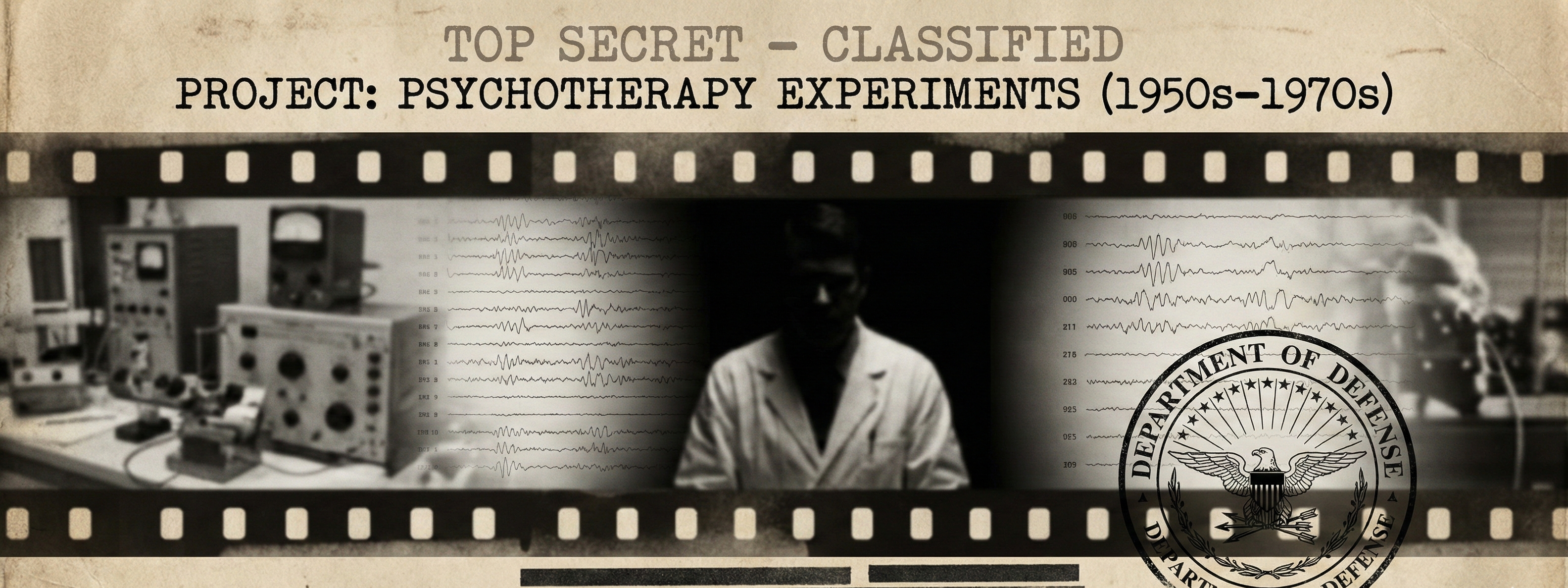
For those of us who practice psychotherapy today, there exists a troubling lineage we rarely discuss. The techniques we use—hypnosis, behavioral conditioning, pharmacological intervention—were not developed solely in the peaceful halls of academia. Many were forged in classified laboratories where the boundary between healing and harm dissolved entirely. Between 1950 and 1975, the United States government conducted some of the most ethically catastrophic psychological experiments in human history, driven by a paranoid conviction that the human mind was simply another territory to be conquered in the Cold War.
To understand this era, one must first appreciate the psychological climate that gave birth to it. The Cold War was not merely a geopolitical standoff; it was a contest of ideologies that extended into the most intimate domain imaginable—human consciousness itself. When American prisoners of war returned from Korea in 1953 seemingly converted to communism, speaking in strange new ideological tongues, the intelligence community became convinced that the Soviets and Chinese had cracked the code of the mind. The term “brainwashing” entered the American lexicon, derived from the Chinese xǐ năo (洗脑), and with it came a desperate race to understand—and replicate—this apparent technology of mental control.
What followed was a twenty-five year period of experimentation that reads like the case notes of a patient in the grip of paranoid delusion. Except this patient controlled the resources of the world’s most powerful nation. The experiments detailed here are not conspiracy theories; they are documented in congressional testimony, National Archives records, and declassified documents available through the CIA’s Freedom of Information Act Reading Room. For the modern clinician, they serve as both cautionary tale and professional origin story.
Part I: The Pharmacological Reconstruction of the Self
MKUltra Subproject 68: Dr. Ewen Cameron and the Erasure of Memory
If one experiment encapsulates the full horror of Cold War psychology, it is the work conducted at the Allan Memorial Institute in Montreal, Canada, under the direction of Dr. Ewen Cameron. Cameron was no fringe figure—he had served as president of both the American Psychiatric Association and the World Psychiatric Association. He testified at the Nuremberg trials, evaluating the mental fitness of Nazi defendants. Yet between 1957 and 1964, Cameron transformed his psychiatric ward into a laboratory for experiments that would have been at home in the very regime he had helped prosecute.
Cameron operated under a radicalized interpretation of the tabula rasa—the philosophical concept, dating to John Locke, that the human mind begins as a blank slate. Cameron believed this slate could be wiped clean again in adulthood. Mental illness, he theorized, was merely faulty “patterning” in the brain’s neural pathways. If one could induce complete amnesia and regression to an infantile state—a process he termed “depatterning”—the diseased personality could be annihilated. Once the psychological slate was erased, a new, healthy personality could be installed through what he called “psychic driving.”
The CIA, through a front organization called the Society for the Investigation of Human Ecology, provided funding without Cameron’s patients ever being informed they were subjects in a classified intelligence program. The techniques Cameron employed represent a systematic assault on every aspect of consciousness. Patients seeking treatment for conditions as mundane as postpartum depression or anxiety were placed into drug-induced comas lasting weeks or months. Cameron used a “sleep cocktail” combining chlorpromazine (Thorazine), barbiturates including Nembutal and Seconal, and antihistamines—administered three times daily to maintain a vegetative twilight state.
While the patient lay in this pharmaceutical stupor, Cameron administered electroconvulsive therapy at dosages that would horrify modern practitioners. Standard ECT treatment of that era involved a single controlled shock; Cameron’s “Page-Russell” method delivered six shocks in rapid succession, administered two to three times daily, at voltages twenty to forty times higher than therapeutic standards. This bombardment continued for weeks, explicitly designed to shatter the patient’s memory and sense of self. According to research published in the National Institutes of Health’s PubMed Central, Cameron’s techniques represent one of the most extreme applications of ECT ever documented.
Once “depatterned”—often rendered incontinent, unable to speak, and lacking knowledge of their own identity—the patient entered the “repatterning” phase. They were placed in isolation cells where speakers mounted under their pillows or inside modified football helmets strapped to their heads played looped recordings for sixteen hours daily. First came negative messages designed to break any residual psychological resistance (“You are a bad mother”), followed by positive “driving” messages intended to reconstruct the personality (“You are confident and loved”). Some messages were repeated up to half a million times over the course of treatment.
The experiment was a catastrophic failure by any scientific measure, yet the damage it inflicted was catastrophically real. Cameron demonstrated definitively that he could destroy a personality—his patients emerged with retrograde amnesia spanning decades, unable to recognize spouses or children, some having forgotten how to use basic utensils or toilets. But the “repatterning” never took hold. The mind proved not to be a tape recorder that could be erased and rewritten at will. The CIA ultimately concluded that while the mind is fragile, it is not programmable in the mechanical sense they had hoped.
The human cost extended far beyond the laboratory. Val Orlikow, wife of Canadian Member of Parliament David Orlikow, was among Cameron’s unwitting subjects. She sought treatment for depression following her husband’s infidelity and emerged a psychological shell, spending the rest of her life unable to fully recover what Cameron had taken from her. The Canadian government issued a formal apology and established a compensation fund in 1992, though The Canadian Encyclopedia notes that many victims received inadequate restitution for what they endured.
Operation Midnight Climax: The Voyeurism of the State
While Cameron conducted his experiments in the clinical sterility of a psychiatric hospital, another arm of MKUltra operated in the seedy underbelly of American cities. Operation Midnight Climax, overseen by CIA officer George Hunter White, was designed to test the effects of LSD and other psychoactive substances in “real-world” social situations—specifically those involving sex, vulnerability, and interrogation.
White, a former Bureau of Narcotics agent with a reputation for unorthodox methods, established safe houses in San Francisco’s Telegraph Hill neighborhood and New York’s Greenwich Village during the late 1950s and early 1960s. These locations were decorated to resemble what White imagined a seductive bachelor pad might look like—velvet drapes, French pornographic prints on the walls, elaborate furniture designed to create an atmosphere of decadent intimacy. The theoretical assumption underlying the project was that sexual vulnerability would create unique psychological openings; a seduced target, under the influence of LSD, would be unable to withhold secrets.
The methodology would be laughable if its human cost were not so serious. White recruited sex workers and placed them on the CIA payroll. Their assignment was to lure men back to the safe houses and spike their drinks with LSD without their knowledge or consent. Behind two-way mirrors, White and his colleagues observed the resulting chaos, ostensibly taking notes on behavior, suggestibility, and any “confessions” that emerged from the chemically induced psychological breakdown.
From any legitimate research standpoint, Midnight Climax was a farce. There were no control groups, no standardized dosages, no objective data collection protocols. The “subjects” were chosen not for scientific suitability but for their expendability—often marginalized men or clients of sex workers who could not complain to police without incriminating themselves. The “data” consisted largely of the prurient observations of intoxicated intelligence officers. As documented in The New York Times coverage of the 1977 congressional hearings, the program revealed more about the agency’s lack of oversight than about any principles of mind control.
The CIA’s Inspector General eventually terminated the operation in the mid-1960s, determining that the risk of public scandal outweighed any intelligence value. The project’s primary finding was inadvertently useful: LSD proved to be an agent of chaos rather than precision. It made subjects paranoid, delirious, or ecstatic—but not compliant in any predictable way. The dream of a reliable “truth serum” remained exactly that.
The Edgewood Arsenal: Searching for “Humane” Warfare
At the Edgewood Arsenal in Maryland, the U.S. Army Chemical Corps pursued a different vision of the future—one in which war could be waged without death. Between 1955 and 1975, according to Military Health System records, over 7,000 American soldiers were recruited for experiments involving “incapacitating agents.” The pitch to military planners was seductive: imagine spraying enemy troops with psychochemicals that would render them helpless without killing them. A drugged enemy—giddy, asleep, or lost in hallucination—could be disarmed and captured without a single casualty. This was marketed as “humane warfare.”
The experiments were vast in scope and reckless in execution. Soldiers were given LSD and ordered to perform drill formations, march in units, or operate equipment. The results were predictable: military discipline dissolved into laughter, confusion, and occasionally panic. But the primary focus was on 3-Quinuclidinyl benzilate, known by its military designation BZ, a potent anticholinergic deliriant that produces effects qualitatively different from psychedelics like LSD.
Understanding this distinction is crucial for appreciating why BZ terrified even the researchers who studied it. LSD produces what clinicians call “pseudohallucinations”—visual distortions and perceptual shifts that the user typically recognizes as drug-induced rather than real. BZ, by contrast, produces true delirium. Subjects dosed with the compound would spend days in a stupor, holding earnest conversations with people who weren’t there, smoking phantom cigarettes, picking at imaginary insects on their skin—a behavior researchers clinically termed “wool-gathering.” Unlike an LSD trip, which typically resolves within twelve hours, BZ intoxication could last three to four days, with effects persisting for weeks afterward.
The program succeeded in proving these chemicals could incapacitate soldiers—but the operational problems were insurmountable. BZ was too potent and unpredictable for battlefield deployment; a shift in wind could gas friendly troops or civilian populations, leaving them delirious for days. More troublingly, an enemy on BZ was not “pacified” in any useful sense—they were unpredictable. A soldier hallucinating demons might drop his weapon, or he might fire it blindly into the darkness. The dream of bloodless victory through chemistry proved to be exactly that. Congressional hearings in 1975 exposed the program and the long-term trauma inflicted on the “volunteer” subjects, many of whom had not been fully informed of the risks they faced. The program was terminated.
Project MKNAOMI: The Technology of Untraceable Death
While MKUltra explored the vulnerabilities of the mind, its sister project MKNAOMI explored the vulnerabilities of the body—specifically, how to exploit them in ways that would leave no evidence. This joint CIA-Army Special Operations Division initiative, documented in National Archives records, aimed to develop and maintain a stockpile of biological agents and delivery systems for covert assassination.
The operating assumption was grimly practical: political assassinations needed to appear natural to prevent the creation of martyrs or international incidents. The agency needed weapons that left no ballistic evidence and poisons that would vanish from autopsy examination. The result was what became known during the 1975 Church Committee hearings as the “heart attack gun”—a modified pistol that fired a dart made of frozen water containing shellfish toxin (saxitoxin). The dart, approximately the width of a human hair, would penetrate skin without causing significant pain—feeling like a mosquito bite—and melt instantly upon impact. The toxin would induce cardiac arrest within moments. A pathologist performing an autopsy would find no bullet, no wound channel, and no chemical trace that existing forensic technology could detect.
When CIA Director William Colby testified before the Church Committee—the Senate Select Committee to Study Governmental Operations with Respect to Intelligence Activities—and displayed this weapon, the moment crystallized something essential about the era. The existence of such a device represented the ultimate psychopathic approach to statecraft: the reduction of human life to a biological switch that could be silently flicked off without consequence or accountability.
Part II: The Esoteric Frontier and the Bureaucratization of the Occult
Project Stargate: When the Pentagon Hired Psychics
In the early 1970s, intelligence officials became genuinely alarmed by reports that the Soviet Union was investing heavily in “psychotronics”—research into paranormal phenomena for military applications. The American response was Project Stargate and its precursor programs (GONDOLA WISH, GRILL FLAME, CENTER LANE, SUN STREAK), a twenty-year effort to weaponize what was termed “remote viewing”—the alleged ability to perceive distant locations through psychic means alone.
The theoretical framework for this research came from physicists Hal Puthoff and Russell Targ at the Stanford Research Institute (SRI). Their argument drew from interpretations of quantum mechanics that were, to put it charitably, creative. They proposed that the universe operated non-locally, functioning like a hologram where every part contained information about the whole. Human consciousness, they theorized, was not confined to the brain but could access this “universal holographic matrix” to perceive any coordinate in space-time. If this sounds like the plot of a science fiction novel, that is because the boundary between speculative physics and science fiction had, within these classified programs, essentially dissolved.
The military recruited individuals with purported psychic abilities—often soldiers or civilians who had demonstrated what seemed like anomalous perceptual capabilities—to sit in controlled rooms and attempt to sketch or describe targets based solely on geographic coordinates provided by handlers. The declassified documents available through the CIA’s reading room reveal both the scope of the program and the striking credulity with which results were sometimes interpreted.
One famous case involved the psychic Ingo Swann, who in 1973 claimed to “view” the planet Jupiter before the Voyager probes arrived. He described a ring around the planet—and when the probe later confirmed the existence of Jupiter’s ring system (previously unknown to astronomy), program advocates saw this as validation of their entire theoretical framework. Skeptics noted the many failed predictions that were quietly forgotten, the confirmation bias inherent in evaluating vague psychic impressions, and the absence of controlled methodology that would have made such results scientifically meaningful.
For two decades, generals made tactical decisions partially informed by sketches produced by individuals in trance states. Remote viewers were tasked with locating Soviet submarines, identifying the contents of buildings, and even investigating potential hostage situations. While practitioners sometimes produced strikingly accurate drawings of structures or locations, the “signal-to-noise ratio” was hopelessly poor. A viewer might correctly perceive a “red structure” that turned out to be a Coca-Cola bottling plant miles away from the missile installation they were meant to locate. The program was terminated in 1995 after an external review determined that while “anomalous cognition” might exist at a statistically significant level, it was functionally useless for actionable intelligence. The phenomena, whatever their nature, could not be controlled, directed, or reliably interpreted.
The Mars Exploration Session: Archaeological Speculation Through Psychic Means
Perhaps no single session in the remote viewing program better illustrates the speculative extremes to which government resources were devoted than an experiment conducted on May 22, 1984. A remote viewer—believed to be Joseph McMoneagle, one of the program’s most respected practitioners—was given an envelope containing coordinates. Unknown to the viewer, these coordinates corresponded to a location on the planet Mars, with a temporal instruction that pushed the boundaries of credulity: “The time of interest is approximately 1 million years B.C.”
The declassified transcript of this session reads like a screenplay for a 1970s science fiction film. Without being told the nature or location of the target, the viewer described “very large” pyramidal structures and obelisks on a dying world wracked by violent storms and dust. When the monitor directed the viewer to attempt contact with any inhabitants, the viewer reported perceiving “very tall, thin people” wearing “strange clothes,” an “ancient people” who were “dying” and awaiting the return of a party that would transport them to a new home.
The implications of this session reveal something profound about the mindset within the program’s inner circles. The handlers were not merely searching for Soviet military installations—they were actively using government resources to investigate what might charitably be called the “ancient aliens” hypothesis, apparently assuming that remote viewing could function as a form of time travel to validate alternative archaeology. Whether this represents bureaucratic mission creep, genuine belief, or some combination remains unclear from the declassified record.
Project MKOFTEN: The Department of Witchcraft
While MKUltra achieved notoriety, its stranger sibling program MKOFTEN (also rendered as MK-OFTEN) has remained largely in the shadows. Launched in the late 1960s, this project explored the potential tactical applications of occult practices—what internal documents apparently referred to as the investigation of “black magic,” sorcery, and related phenomena.
The CIA and Army actively scouted the occult undergrounds of New York and San Francisco, recruiting tarot readers, palmists, and self-proclaimed practitioners of witchcraft. The logic, such as it was, followed probability theory to a peculiar conclusion: if ninety-nine percent of occult claims were fraudulent, that remaining one percent represented a catastrophic national security variable that demanded investigation. Better to fund research into the impossible than risk being caught off-guard by an enemy who had unlocked secrets that conventional science dismissed.
The specific details of MKOFTEN remain heavily redacted, but information that has emerged through leaks, Freedom of Information requests, and interviews with former participants suggests several avenues of investigation. Researchers reportedly analyzed the chemical properties of herbs and compounds used in Voudou and witchcraft traditions to determine whether they possessed unknown biological effects that could be weaponized. There was apparently investigation into whether a “curse”—presumably operating through psychosomatic mechanisms—could induce illness in a target who believed themselves hexed. Most remarkably, the program reportedly consulted with practicing demonologists to understand the “hierarchy” of entities described in occult traditions, treating them as potential psychological warfare assets or, at minimum, themes that could be exploited for intimidation purposes.
The ethical problems with this research extended beyond the obvious waste of resources. The program legitimized and exploited the beliefs of individuals who were often psychologically vulnerable, treating the spiritual practices of fringe communities purely as vectors for manipulation and harm. It represents, in miniature, the entire pathology of Cold War intelligence: the conviction that anything—including the human capacity for faith and meaning—could be weaponized if approached with sufficient ingenuity.
The Gateway Process: Military Instructions for Transcending Spacetime
In 1983, Lieutenant Colonel Wayne M. McDonnell of the U.S. Army Intelligence and Security Command (INSCOM) submitted a classified report that stands as perhaps the most metaphysically dense document ever produced by a government bureaucracy. Titled “Analysis and Assessment of Gateway Process,” the full text is available through the CIA’s declassified archives and merits careful reading for anyone interested in the strange places where military pragmatism and mystical speculation intersected during this period.
The “Gateway Experience” was a meditation technique developed by the Monroe Institute, a private organization founded by Robert Monroe, whose books on out-of-body experiences had attracted significant attention in New Age circles. The technique used “Hemi-Sync”—binaural beats played through headphones to synchronize activity between the brain’s hemispheres—combined with guided meditation to induce altered states of consciousness. The Army’s interest was nakedly practical: they wanted to know whether this technique could produce operationally useful out-of-body experiences that would allow soldiers to gather intelligence without physical presence.
McDonnell’s report attempts to provide a scientific framework for understanding how such phenomena might work. Drawing on quantum mechanics, holographic theory, and concepts from Eastern mysticism, the document argues that the universe functions as a “Cosmic Egg” or torus of energy, that matter represents merely condensed energy, and that consciousness operates holographically rather than being confined to individual brains. By lowering brainwave frequency to the theta range (4-7 Hz), the report suggests, a trained practitioner could “click out” of physical reality and access what it terms “the Absolute”—a state of infinite energy existing outside conventional spacetime.
For the military, this was not about enlightenment. The report explicitly considers the intelligence applications: a soldier who could reliably project their consciousness could theoretically observe any location on Earth without detection, access information from any time period, or verify claims about existence after death. The document concludes—remarkably, for an official military assessment—that the technique is “plausible” in terms of physical science, representing an extraordinary endorsement of mysticism by an arm of the United States military apparatus.
Part III: Interspecies Communication and the Zoology of Intelligence
Dr. John Lilly, LSD, and the Dolphins of the Virgin Islands
Dr. John Cunningham Lilly was a brilliant neuroscientist whose early career included pioneering work on brain stimulation and the development of the isolation tank. His research, funded by NASA and the Navy, eventually spiraled into one of the most notorious episodes in the history of science—and one that reveals the era’s peculiar fusion of legitimate inquiry, chemical experimentation, and extraterrestrial speculation.
Lilly was associated with a group of scientists, including the young Carl Sagan, who called themselves the “Order of the Dolphin.” Their shared conviction was that dolphins represented a non-human intelligence of sophistication comparable to or exceeding human consciousness—essentially, as Lilly put it, “aliens on Earth.” The reasoning followed a practical logic: if humanity hoped to communicate with extraterrestrial intelligence when contact eventually occurred, practicing with another high-intelligence species on our own planet would be invaluable preparation. The dolphin was to serve as humanity’s training partner for the cosmic conversation to come.
At a facility in the U.S. Virgin Islands, Lilly constructed what he called the “Dolphinarium”—a partially flooded house where a human researcher could live in continuous contact with a dolphin subject around the clock. Margaret Howe Lovatt, a young researcher, agreed to share this space with an adolescent male dolphin named Peter. For ten weeks, Lovatt slept on a suspended bed while Peter swam in the water beneath her. The goal was total immersion language acquisition—the same principle underlying human language learning in infancy.
When progress proved slow, Lilly introduced LSD into the program. Having experimented with the substance himself and observed its effects on his own cognition, he theorized that the psychedelic state might “depattern” the dolphin’s mind (echoing, disturbingly, Dr. Cameron’s terminology) and create openings for non-verbal or telepathic communication. Lilly noted that dolphins under the influence of LSD became extremely vocal, “talking” approximately seventy percent of the time compared to their baseline behavior.
The experiment encountered a problem that revealed its fundamental confusion of categories. Peter, an adolescent male, had sexual needs that increasingly interrupted the research sessions. In a pragmatic but ethically indefensible decision, Lovatt began manually relieving the dolphin to maintain his focus on the language lessons. When this detail eventually leaked to the press through Hustler magazine, the scientific community’s reaction was swift and devastating. Funding evaporated, and Lilly found himself increasingly marginalized.
The aftermath was tragic on multiple levels. Lilly retreated into Ketamine addiction and increasingly untethered speculation. Peter, separated from Lovatt and transported to a small tank at a Miami facility, apparently committed suicide—dolphins, being conscious breathers, can choose to stop respiring—within weeks of the separation. The experiment stands as a cautionary tale about what happens when legitimate scientific questions become contaminated by grandiose theoretical frameworks and ethical corners are cut in pursuit of revolutionary findings that never materialize.
Operation Acoustic Kitty: The Twenty-Million-Dollar Cat
Sometimes the most absurd programs are also the most revealing. In the early 1960s, the CIA’s Directorate of Science and Technology spent approximately five years and an estimated twenty million dollars developing what would become known as “Acoustic Kitty”—a project to transform a house cat into a mobile surveillance platform.
The concept had a certain logic. Cats are ubiquitous in urban environments; they go places humans cannot and attract little suspicion. If a cat could be trained to approach a surveillance target and equipped with recording equipment, it would represent an espionage asset of unique capability. The National Security Archive at George Washington University has published declassified documents revealing the program’s technical details and ultimate fate.
The procedure was elaborate and, from an animal welfare perspective, deeply disturbing. Veterinary surgeons implanted a battery in the cat’s chest, a radio transmitter at the base of its skull, and a microphone in its ear canal. A wire antenna was woven through the cat’s fur along the length of its tail. The animal was essentially converted into a biological cyborg, a living platform for surveillance electronics.
The first field test occurred in a park in Washington, D.C. The cat was tasked with approaching two men seated on a bench. The operational assumption—that the cat would function as a programmable asset following its handlers’ directions—collided immediately with biological reality. The cat, apparently overwhelmed by the urban environment or simply behaving as cats naturally do, wandered into the street and was struck and killed by a taxi.
The program was cancelled. The final assessment, as quoted in declassified documents, concluded that “environmental and security factors” forced the acknowledgment that “for our purposes, it would not be practical.” The project stands as perhaps the purest example of the era’s fundamental error: the assumption that living systems—whether feline, cetacean, or human—could be instrumentalized and controlled with the same precision as mechanical devices.
The Bat Bombs of World War II
While chronologically earlier than the Cold War programs that form the focus of this analysis, Project X-Ray deserves mention for what it reveals about the military’s long-standing interest in weaponizing animal behavior. The program was proposed in 1942 by a Pennsylvania dentist named Lytle S. Adams, a personal friend of Eleanor Roosevelt who had recently visited the bat colonies at Carlsbad Caverns in New Mexico.
Adams’s concept was ingeniously mad. Japanese cities of the era were constructed largely of wood and paper. Bats naturally seek out dark, elevated spaces—attics, eaves, the spaces behind walls. If the United States could deploy thousands of bats, each equipped with a small incendiary device on a timer, the creatures would disperse across a Japanese city, roost in precisely the spaces most vulnerable to fire, and ignite simultaneously at dawn. The program received approval from the National Defense Research Committee, and testing commenced at facilities in Texas and New Mexico.
The tests proved the concept’s viability in the most unexpected way. At the Carlsbad Army Airfield auxiliary base, armed bats were accidentally released before the scheduled experiment. The creatures did exactly what they had been engineered to do—they sought out dark, sheltered spaces, finding them under the fuel tanks and within the wooden barracks of the American base. When the timers triggered, the incendiary devices set the Army’s own facilities ablaze. The base burned to the ground.
The program was not cancelled because it failed; it was cancelled because it worked too well, and because by 1944 the Manhattan Project offered what military planners considered a more manageable form of mass destruction. The National WWII Museum maintains records of this and other unconventional weapons programs, serving as a reminder that the Cold War’s strangeness had deep roots in earlier military experimentation.
Part IV: Psychological Warfare and the Weaponization of Perception
Operation Wandering Soul: The Ghosts of Vietnam
The Vietnam War served as a laboratory for psychological operations that exploited the cultural and spiritual beliefs of the Vietnamese people in ways that remain deeply troubling to examine. Among the most striking was Operation Wandering Soul, conducted by the U.S. Army’s 6th Psychological Operations Battalion—a campaign that weaponized Vietnamese religious beliefs about the afterlife.
Vietnamese Buddhist and folk traditions hold that the spirits of those who die far from home, or whose bodies are not properly buried in their ancestral land, are condemned to wander the earth in eternal torment. This belief in “wandering souls” (vong) represented, to military planners, an exploitable vulnerability. If Vietnamese soldiers could be made to believe that death in battle would condemn them to this terrible fate, perhaps they could be demoralized into surrender or desertion.
Army engineers spent weeks in recording studios creating what became known as “Ghost Tape Number 10.” The production was elaborate: spooky music, distorted voices, the cries of a child calling “Daddy, daddy, come home!” over and over. A voice purporting to be a deceased Viet Cong soldier moaned about the torments of hell: “I am dead… I am in hell… It was a senseless death… Go home, my friends, before it is too late!”
Helicopters equipped with massive speaker systems flew over the jungle at night, broadcasting this audio horror show toward suspected enemy positions. The psychological operations community has preserved records and audio from these missions, which remain available for historical study.
The results were not what planners hoped. The campaign proved too effective at generating rage rather than fear. Vietnamese soldiers, recognizing the recordings as American psychological manipulation, often focused their fire on the helicopters producing the sound. Rather than causing mass surrender, the operation generated mass anger at what many perceived as spiritual terrorism—the desecration of sacred beliefs for military advantage. The program revealed both the military’s willingness to exploit any vulnerability, however intimate, and the limits of psychological manipulation when it violates cultural red lines so egregiously that it generates resistance rather than compliance.
Operation Nifty Package: The Playlist of Siege
In December 1989, following the U.S. invasion of Panama, military dictator Manuel Noriega sought refuge in the Vatican Embassy, requesting asylum. American forces surrounded the compound, and psychological operations planners devised a solution to the diplomatic impasse: acoustic harassment through sustained exposure to rock music.
The Army set up a wall of speakers and broadcast American rock music continuously, twenty-four hours a day. The playlist was curated with darkly humorous attention to lyrical content: “Welcome to the Jungle” by Guns N’ Roses, “Panama” by Van Halen, “I Fought the Law” by The Clash, “Voodoo Child” by Jimi Hendrix, and “Paranoid” by Black Sabbath, among others. The operation was covered extensively by international media, with journalists documenting the surreal spectacle of American soldiers conducting psychological warfare through classic rock.
Noriega, reportedly an opera enthusiast, was indeed miserable. But the Papal Nuncio—the Vatican’s ambassador—proved to be the operation’s breaking point; the elderly diplomat threatened to leave the embassy entirely if the noise did not stop, which would have created a diplomatic catastrophe. After ten days, Noriega surrendered.
The operation established a precedent for “musical torture” that would resurface in darker contexts during the War on Terror, when prisoners at detention facilities were reportedly subjected to days of exposure to the children’s television theme from “Barney” or to heavy metal at extreme volumes, techniques designed to break psychological resistance through sensory overload. The journey from a somewhat absurd siege in Panama to the interrogation rooms of Guantánamo Bay illustrates how techniques developed in one context can metastasize into more systematically cruel applications.
The Face of Allah: The Hologram That Never Was
During the planning phases of the Gulf War, the U.S. Air Force secretly commissioned a feasibility study for a weapon system that reveals the era’s peculiar blend of technological hubris and cultural ignorance. The proposal: to project a massive three-dimensional hologram of the “Face of Allah” over Baghdad, which would broadcast messages urging the Iraqi people to overthrow Saddam Hussein.
The concept suffered from two fatal flaws, one technical and one theological. On the technical side, projecting a three-dimensional hologram into the sky requires a projection medium that did not exist—and still does not exist in any practical military application. Clouds might theoretically serve this purpose, but cloud coverage is unpredictable, and the resolution would be poor at best.
The theological error was more fundamental and revealed a catastrophic deficit in cultural intelligence. Islam is strictly aniconic—meaning that Allah has no physical form and cannot be depicted. A giant face appearing in the sky over a Muslim city would not be interpreted as a miracle requiring obedience. It would be interpreted as the Dajjal—the Islamic equivalent of the Antichrist—or as a demonic deception. Rather than inspiring the population to overthrow their government, such an apparition would likely have unified them in opposition to whatever diabolical force was responsible.
The project was scrapped, but it stands as testament to the military’s recurrent faith in what might be called “techno-miracles”—the conviction that sufficiently advanced technology could simulate divinity and control religious fervor. This assumption has proven wrong repeatedly, yet it resurfaces in each generation’s planning documents.
The “Gay Bomb” Proposal
In 1994, the Wright Laboratory of the U.S. Air Force submitted a request for $7.5 million to fund research into “Harassing, Annoying, and Bad Guy Identifying Chemicals.” Among the proposals in this document was a weapon that would release a powerful aphrodisiac over enemy troops, which the researchers claimed would make the soldiers “sexually irresistible to one another.” The theory—if it can be called that—was that the affected unit would dissolve into homosexual activity, destroying military discipline and morale.
The proposal, when it became public, was so manifestly absurd that it won an Ig Nobel Prize—the satirical award given for research that “makes people laugh, then think.” The fundamental scientific error was obvious: sexual orientation is not a chemical toggle that can be switched by external agents. There is no “gay pheromone” that could produce the hypothesized effect.
Beyond the scientific illiteracy, the proposal revealed troubling assumptions about sexuality, gender, and military effectiveness that were embedded in defense culture of the era. The implicit premises—that homosexuality was incompatible with military discipline, that it could be induced chemically, and that sexual activity between men would automatically constitute unit breakdown—reflected prejudices that would take another two decades to be formally addressed through the repeal of “Don’t Ask, Don’t Tell.”
Voice to Skull: The Invasion of the Inner Monologue
Following the collapse of the Soviet Union, American military researchers gained access to former Soviet research programs, including investigations into what the Russians called “Acoustic Psycho-Correction”—the study of how commands might be transmitted directly into the human subconscious through audio frequencies or electromagnetic pulses.
American research into “Voice to Skull” (V2K) technology built on earlier discoveries of the microwave auditory effect—the phenomenon, first documented in the 1960s, that pulsed microwave radiation can create the sensation of sound directly in the auditory cortex, bypassing the ears entirely. The FDA and other regulatory bodies have documented this effect in the context of radar exposure, where workers occasionally reported hearing clicks or buzzing sounds in the presence of strong microwave fields.
The military application was conceptually straightforward: if microwaves could create perceived sound, then perhaps a “Voice of God” could be beamed directly into an enemy soldier’s consciousness. Commands to surrender, warnings of divine punishment, or simply disorienting noise might be delivered with no external source that the target could identify. The soldier would experience the voice as coming from inside their own head—a profoundly unsettling experience that might be interpreted as divine intervention, mental breakdown, or supernatural attack.
The extent to which this technology has been operationally deployed remains classified. What is known suggests that practical applications face significant technical challenges in terms of range, precision, and the clarity of transmitted audio. Nevertheless, the research represents perhaps the ultimate boundary violation in the history of psychological operations: the state’s attempt to enter the private sanctuary of internal thought itself, treating the subconscious mind as a “backdoor” that could be hacked with the right frequency.
Part V: The Human Raw Material
Project 100,000: McNamara’s Cruel Experiment
In 1966, facing troop shortages for the Vietnam War, Secretary of Defense Robert McNamara initiated what was called Project 100,000—a program that lowered military induction standards to recruit men who had previously been rejected as intellectually unsuited for service. The program’s euphemistic language—participants were called “New Standards Men”—masked what was in reality a social engineering experiment conducted on some of the most vulnerable members of American society.
Between 1966 and 1971, over 354,000 men with IQ scores between 62 and 80—the so-called “Category IV” recruits—were inducted into the armed forces. The assumption underlying the program was that with proper training, including “audio-visual tapes” and structured instruction, cognitive deficits could be overcome. It represented a weaponization of what would later be called the “growth mindset”—the belief that abilities are malleable rather than fixed—applied in a context where failure meant death.
The experiment failed on its own terms and succeeded horribly in producing casualties. The National Archives and Department of Veterans Affairs records document the outcomes. Project 100,000 recruits could not learn the technical skills required for modern warfare—the operation of complex weapons systems, navigation, radio communication. Consequently, they were disproportionately assigned to infantry units, where the cognitive demands were perceived as simpler but the physical danger was highest.
The casualty statistics are damning. Project 100,000 soldiers died at rates three times higher than their normally-inducted counterparts. Many were killed by friendly fire—unable to read maps or understand radio coordinates, they called in artillery strikes on their own positions or wandered into zones marked as kill boxes. Others were captured because they could not follow extraction procedures, or died from preventable causes because they could not understand safety protocols.
The program was terminated in 1971, but its legacy persisted. Tens of thousands of men who survived their service returned home with PTSD, traumatic brain injuries, and the knowledge that their government had sent them to war knowing they were likely to die. Hamilton Gregory’s book McNamara’s Folly documents the program in extensive detail, drawing on interviews with survivors and analysis of military records to construct a damning portrait of policy rationalized as compassion.
The Persistence of Magical Thinking
Reviewing these twenty experiments—and recognizing that they represent merely a sample of the larger research apparatus—a pattern emerges that is as consistent as it is disturbing. Faced with the existential anxieties of the Cold War, the American intelligence and military establishment repeatedly abandoned empirical discipline in favor of what can only be called magical thinking.
They believed that drugs could rewrite the human personality like software, that psychics could navigate across galaxies, that chemicals could toggle sexual orientation, that technology could simulate divinity. In every case, the fundamental error was the same: the assumption of control. The government treated the human mind, the animal kingdom, and even the laws of physics as systems that could be hacked, exploited, and instrumentalized with the same precision applied to mechanical devices.
What they discovered, repeatedly and at enormous cost in human suffering, was that living systems resist such treatment. The mind is not a tape recorder to be erased and rewritten. Cats do not obey operational directives. Dolphins do not learn English, with or without LSD. Vietnamese soldiers do not surrender because ghosts tell them to. The universe, for all our technological cleverness, retains properties that exceed our capacity for manipulation.
For those of us who practice psychotherapy today, these experiments constitute a dark professional inheritance that demands acknowledgment. The techniques we employ—hypnosis, behavioral modification, pharmacological intervention, even the basic dynamics of the therapeutic relationship—were refined in these classified laboratories. The understanding of trauma that informs our work was partially developed by researchers who were simultaneously inflicting trauma in the name of national security. We practice in the shadow of Dr. Cameron’s soundproofed rooms.
The lesson is not that psychological knowledge is inherently dangerous, but that it becomes dangerous when ethics are subordinated to expediency. When the human being in front of you becomes a “subject” rather than a person, when therapeutic technique becomes a technology of control rather than an instrument of healing, when the vulnerability that makes therapy possible is exploited rather than protected—these are the conditions under which psychology ceases to be a helping profession and becomes an instrument of state violence.
These programs ended not because the government developed a conscience, but because they failed to produce useful results, because oversight eventually caught up with excess, and because the very people these programs were meant to protect became their victims. The soldiers burned by bat bombs at Carlsbad, the “New Standards Men” who died at three times the normal rate in Vietnam, the patients who lost their memories and their identities in Cameron’s ward—they were Americans, harmed by their own government’s pursuit of an impossible dream of total control.
The clandestine history documented here serves, finally, as a reminder that the mind is not a territory to be conquered. It is the ground of being, the source of meaning, the foundation of everything we hold sacred. When institutions forget this—when they treat consciousness as just another resource to be exploited—the result is not power but catastrophe, not security but the destruction of the very humanity that security was meant to protect.
This article draws on declassified government documents, congressional testimony, and peer-reviewed historical research. For those interested in further reading, the National Security Archive at George Washington University, the CIA FOIA Reading Room, and the National Archives maintain extensive collections of primary source materials. The Senate Select Committee on Intelligence historical records provide crucial congressional oversight documentation of these programs.
If you or someone you know is struggling with the effects of trauma, evidence-based treatments including EMDR, Somatic Experiencing, and other modalities can help. The therapeutic relationship, practiced ethically and with full informed consent, remains one of the most powerful tools available for healing psychological wounds—including those inflicted when the helping professions lost their way.






















0 Comments