

The Psychology of Recurring Conflicts
“We’re having the same fight again,” Jessica said, exhaustion evident in her voice. “It doesn’t matter what we start arguing about—money, household chores, time with friends—it always ends up in the exact same place. I’m the ‘needy’ one who wants more connection, and Mark’s the ‘selfish’ one who doesn’t care about my feelings. We’ve been repeating this pattern for three years.”
Jessica and Mark’s story illustrates one of the most frustrating aspects of intimate relationships: recurring conflicts that seem impossible to resolve. Despite good intentions, therapy sessions, and relationship books, many couples find themselves trapped in the same argumentative cycles, wondering why they can’t break free.
The answer lies not in the surface content of these fights, but in the deeper psychological dynamics that Jung called projection and shadow work. Modern developments in Voice Dialogue and psychological type theory have given us even more precise tools for understanding and transforming these patterns.
The Anatomy of a Recurring Fight
Most recurring relationship conflicts follow a predictable structure:
- The Trigger: Something seemingly minor happens
- The Escalation: Both partners react disproportionately to the trigger
- The Polarization: Each person takes an extreme position
- The Blame Cycle: Both partners focus on what the other is doing wrong
- The Stalemate: No resolution is reached, and the pattern waits to repeat
What makes these conflicts so persistent is that they’re not really about the surface issues at all. They’re about unconscious projections—parts of ourselves we’ve disowned and now see (and fight with) in our partners.
The Shadow Dancing in Your Arguments
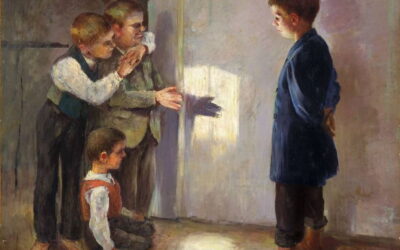
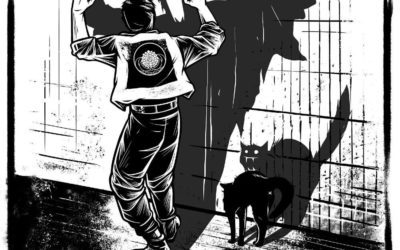
Carl Jung discovered that we unconsciously project our own rejected qualities onto others, especially intimate partners. In recurring fights, couples are often battling aspects of themselves they can’t accept, using their partner as the target for their own internal conflicts.
Jessica’s Shadow Dynamic: Jessica had learned early in life that her emotional needs were “too much.” To survive in her family, she developed a strong “Independent Self” while completely disowning her “Needy Self.” When Mark would want space or time alone, it triggered her disowned neediness—but instead of recognizing this as her own, she projected it onto the relationship, insisting that Mark was being “selfish” for not meeting needs she couldn’t even acknowledge as her own.
Mark’s Shadow Dynamic: Mark grew up in a family where emotional expression was seen as weak and manipulative. He developed a powerful “Rational Self” and “Autonomous Self” while disowning his “Caring Self” and “Connected Self.” When Jessica expressed emotional needs, it triggered his own disowned longing for connection—but instead of recognizing this, he projected his “needy” parts onto Jessica, seeing her as the one with the problem.
The result? Each person fighting against their own disowned self, using their partner as the battleground.
Voice Dialogue: Understanding Your Internal Cast of Characters
Hal and Sidra Stone’s Voice Dialogue work reveals that we all contain multiple “selves” or subpersonalities within our psyche. Most of us develop only a few of these selves while completely disowning others. In relationships, we often unconsciously arrange for our partner to carry our disowned selves.
Common Disowned Self Patterns in Relationships:
- The Responsible One vs. The Free Spirit: One partner carries all the responsibility while the other embodies spontaneity and freedom
- The Rational One vs. The Emotional One: One partner becomes the logical problem-solver while the other expresses all the feelings
- The Giver vs. The Receiver: One partner does all the caretaking while the other is seen as selfish or needy
- The Strong One vs. The Vulnerable One: One partner appears invulnerable while the other carries all the sensitivity
Jessica and Mark’s Pattern: Jessica had disowned her “Independent Self” and “Self-Sufficient Self,” while Mark had disowned his “Vulnerable Self” and “Needy Self.” They unconsciously chose each other because Jessica could live her independence through Mark, and Mark could experience his emotional needs through Jessica. But this arrangement also ensured they would fight whenever these disowned selves demanded attention.
The Beebe Model: How Psychological Type Creates Predictable Conflicts
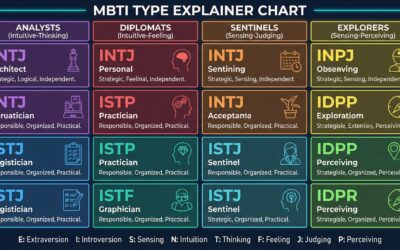
John Beebe’s groundbreaking work on the eight-function model shows that our psychological type structure creates predictable patterns of projection and conflict in relationships.
Type-Based Conflict Patterns:
Thinking vs. Feeling Conflicts: When a thinking type partners with a feeling type, the thinking person often projects their underdeveloped feeling function onto their partner. They may see their partner as “too emotional” while secretly envying their emotional intelligence. The feeling type may project their underdeveloped thinking function, seeing their partner as “cold” or “logical” while secretly admiring their analytical abilities.
Sensing vs. Intuitive Conflicts: Sensing types may project their underdeveloped intuition onto intuitive partners, simultaneously being attracted to their vision while criticizing them as “unrealistic.” Intuitive types may project their underdeveloped sensing function, being drawn to their partner’s groundedness while dismissing them as “boring” or “unimaginative.”
Jessica and Mark’s Type Dynamic: Jessica was an intuitive feeling type who had never developed her thinking function. Mark was a thinking sensing type who had suppressed his feeling function. Their fights were actually their shadow functions trying to emerge and be integrated—but instead of doing the internal work, they projected these functions onto each other and fought about them.
Breaking the Cycle: From Projection to Integration
Step 1: Identify Your Disowned Selves
Look at the qualities you most criticize in your partner during fights. These often represent your own disowned selves. If you constantly accuse your partner of being “needy,” ask yourself: “How might I be needy in ways I don’t recognize?” If you see them as “selfish,” explore: “What would it look like for me to be more selfish in healthy ways?”
Voice Dialogue Exercise: Have a conversation with your disowned self. If you’ve disowned your “Needy Self,” sit quietly and ask: “Needy Self, what do you want me to know? What do you need from me?” Listen without judgment to what emerges.
Step 2: Practice “Catching” Projections in Real Time
During conflicts, ask yourself: “What am I seeing in my partner that might actually belong to me?” This doesn’t mean taking responsibility for their behavior, but recognizing when you’re fighting with your own disowned qualities.
Step 3: Develop Your Disowned Functions
Instead of seeking these qualities in your partner, begin developing them within yourself. Understanding your psychological type structure helps you identify which functions you need to develop most.
Transforming Jessica and Mark’s Pattern
After learning about Voice Dialogue and psychological type, Jessica and Mark began to transform their recurring conflict:
Jessica’s Work: She began developing her “Independent Self” and “Thinking Self” instead of projecting them onto Mark. She practiced making decisions without his input and developed her analytical abilities. As she became more self-sufficient, her neediness decreased naturally.
Mark’s Work: He started dialoguing with his “Vulnerable Self” and “Connection Self” instead of projecting them onto Jessica. He practiced expressing his own emotional needs directly rather than dismissing Jessica’s feelings as “too much.”
The Result: Their conflicts shifted from blame cycles to collaborative problem-solving. When triggers arose, they could recognize their projections and work with them internally before they escalated into fights.
The goal isn’t to eliminate all conflict—healthy relationships need disagreement and differentiation. The goal is to transform unconscious conflicts (projections) into conscious collaboration.
Working with a Jungian-trained therapist can provide expert guidance through this complex process of projection withdrawal and self-integration, especially when shadow work involves deep family-of-origin patterns.














0 Comments