The Hidden Spring: Mark Solms, the Conscious Id, and the Biological Reclamation of the Soul

by | Jan 3, 2026 | 0 comments

The Ghost in the Machine Found

For over a century, the sciences of the mind have been divided by a seemingly unbridgeable chasm. On one side stood psychoanalysis, the domain of subjective depth, unconscious drives, and the messy, symbolic language of the soul. On the other stood neuroscience, the domain of objective anatomy, neurotransmitters, and the rigid, mechanistic mapping of the brain.

Sigmund Freud himself, a neurologist by training, abandoned his “Project for a Scientific Psychology” in 1895, despairing that the technology of his time could never bridge the gap between neurons and neuroses. For the next hundred years, therapists talked about feelings while biologists looked at slides, and rarely did the two meet.

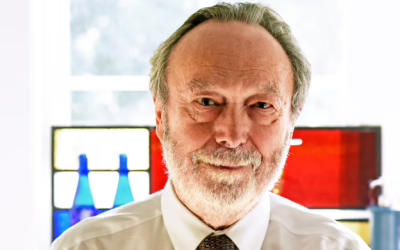
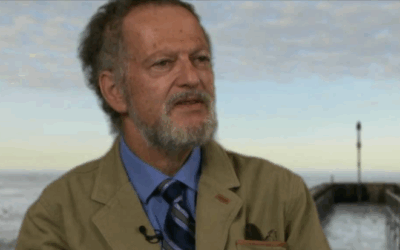
Enter Mark Solms. A South African psychoanalyst and neuropsychologist, Solms has spent the last three decades building that bridge. He is the founder of Neuropsychoanalysis, a discipline that does not seek to “reduce” the mind to the brain, but to map the subjective descriptions of Freud onto the objective hardware of modern biology.

Solms’ work culminates in a radical inversion of our understanding of consciousness. His thesis, elaborated in his magnum opus The Hidden Spring (2021), challenges the central dogma of both neuroscience and classical psychoanalysis. He argues that consciousness does not reside in the sophisticated, human cerebral cortex. Instead, it wells up from the deepest, most ancient parts of the brainstem. We are not thinking machines that feel; we are feeling machines that think.


The Cortical Fallacy and the Conscious Id

To understand the magnitude of Solms’ revolution, we must first understand the dogma he overturned. The classical view, held by both Freud and modern cognitive science, was that the Cortex—the wrinkled, outer layer of the brain—was the seat of consciousness. The primitive brainstem was viewed merely as an autopilot for vegetative functions like breathing and heart rate.

Solms dismantled this view using a piece of clinical evidence that is as tragic as it is undeniable: Hydranencephaly.

Children born with hydranencephaly have almost no cerebral cortex. Due to in-utero strokes or malformations, their craniums are largely filled with cerebrospinal fluid. According to the “Cortical View” of consciousness, these children should be vegetative zombies—capable of reflexes, but devoid of an inner life.

They are not. As Solms details in his research published in Behavioral and Brain Sciences, these children smile, cry, show preference for specific caregivers, and express distinct emotional states. They react with joy to music and with anger to frustration. They are undeniably conscious, even if they lack the cognitive machinery to reflect on that consciousness in words.

Solms concluded that the brainstem—specifically the Reticular Activating System (RAS) and the Periaqueductal Gray (PAG)—is the true seat of consciousness. This led to his most provocative theoretical revision: The Conscious Id.

Freud was wrong about the location of the light. The Id (the brainstem/limbic system) is the fount of all consciousness. It is affective (emotional) consciousness. The Ego (the cortex), conversely, is intrinsically unconscious. It is a hard drive of memories and predictions that only becomes conscious when the Id illuminates it with feeling. This reverses the entire goal of depth psychology: The rational Ego does not shine a light into the dark Id; the blazing, conscious Id shines a light onto the dark, stabilizing Ego.


The Physics of Feeling: Entropy and the Free Energy Principle

If consciousness comes from the brainstem, why does it exist? Why did evolution bother to make us feel things?

To answer this, Solms collaborated with the theoretical neuroscientist Karl Friston to link psychology to the laws of thermodynamics. They utilize the Free Energy Principle (FEP).

All living things must resist entropy (disorder). To survive, an organism must stay within a narrow range of viable states—body temperature must be 98.6°F, glucose must be stable, hydration must be maintained. Deviation from this range is death. To maintain this homeostasis, the brain builds a model of the world. It constantly predicts what will happen next to keep the organism safe.

Friston calls the difference between what you expected and what actually happened “Free Energy” (or prediction error). Here is Solms’ breakthrough: Consciousness is the subjective experience of Free Energy.

  • Homeostasis (Safety): When your predictions work and your needs are met, you feel Pleasure.
  • Entropy (Threat): When your predictions fail or a biological need is unmet, you feel Unpleasure (Affect).

“Feeling” is not a luxury; it is a survival signal. A robot can detect low battery power without feeling it. But a biological organism must feel hunger to be motivated to move. Consciousness arises from the existential urgency of survival. It is the alarm bell that rings when the automatic systems of the Ego fail to manage the environment.


The Seven Drives: Revising the Map of the Soul

Solms does not stop at anatomy; he fundamentally revises Freud’s Drive Theory using the affective neuroscience of Jaak Panksepp. Freud believed there were two drives: Eros (Libido) and Thanatos (Death). Solms argues this is biologically incorrect.

Research into mammalian neurochemistry reveals seven primary emotional drives hardwired into the brainstem. Each is a specific “prediction error” system:

  1. SEEKING (Dopamine): The drive to explore and make sense of the world. This is the “default” drive of the brain, linking directly to our understanding of addiction and desire.
  2. LUST (Testosterone/Oxytocin): Reproductive urges and sexual drive.
  3. CARE (Oxytocin/Opioids): Nurturing, attachment, and the maternal instinct.
  4. PLAY (Opioids/BDNF): Social joy and boundary testing, critical for developmental learning.
  5. FEAR (Amygdala/Glutamate): The physical threat response (freezing/fleeing).
  6. RAGE (Hypothalamus/Substance P): The response to restriction or frustration (fighting).
  7. PANIC/GRIEF (Mu-opioid withdrawal): The pain of social separation. This is the biological root of Attachment Trauma.

Solms argues that the “Death Drive” is a misunderstanding of the Nirvana Principle. The brain does want to reduce stimulation (Free Energy) to zero—but that is the state of perfect prediction, not death. The goal of the mind is to resolve uncertainty, effectively “automating” life so that we don’t have to feel the pain of learning.


Clinical Implications: The Talking Cure 2.0

What does this mean for the therapist in the room? If the Id is conscious (affective) and the Ego is unconscious (predictive), the goal of therapy shifts.

The classical goal was to “Make the unconscious conscious” (uncover repressed memories). The Neuropsychoanalytic goal is to “Consolidate the Conscious.”

The patient comes to therapy because they are suffering from Affect (Anxiety, Depression, Rage). This means their current Ego-predictions are failing to manage their needs. Their brainstem is screaming (Conscious Id), and their cortex (Unconscious Ego) has no plan to solve it. This state of failed prediction is what we often call Complex Trauma.

In this model, the therapist acts as an auxiliary cortex. They help the patient:

  1. Identify the Feeling: “You are feeling PANIC (Separation Distress).”
  2. Locate the Prediction Error: “You feel this because your internal model predicts abandonment whenever you set a boundary.”
  3. Update the Model: “How can we build a new prediction (Ego structure) that meets this need without the error?”

Therapy is the process of helping the mute, uncomprehending Ego understand the screaming, feeling Id. We do not “tame” the beast; we teach the rider how to listen to the horse. This aligns perfectly with Somatic Experiencing, which prioritizes the bottom-up signals of the body over the top-down narratives of the mind.


The Reclamation of the Subject

Mark Solms’ work is a vindication of the subjective experience. For decades, science tried to explain away the “ghost in the machine” as an illusion of the wiring. Solms has shown us that the wiring exists to serve the ghost.

The brain is not a computer processing information; it is a living entity fighting for its existence. Our feelings—our joy, our terror, our grief—are not mistakes. They are the fundamental fabric of our being, the “Hidden Spring” from which all thought, creativity, and connection flow. By reuniting the brainstem with the couch, Solms has given psychoanalysis its body back, and neuroscience its soul.

Is your “internal model” failing to predict the safety you need? Contact GetTherapyBirmingham.com to work with a therapist who understands the biology of the soul.

 

Explore the Other Articles by Categories on Our Blog 

Hardy Micronutrition is clinically proven to IMPROVE FOCUS and reduce the effects of autism, anxiety, ADHD, and depression in adults and children without drugsWatch Interview With HardyVisit GetHardy.com and use offer code TAPROOT for 15% off

Bill O’Hanlon: The Therapist Who Asked “How Do People Get Happy?”

Bill O’Hanlon: The Therapist Who Asked “How Do People Get Happy?”

Bill O’Hanlon, MS, LMFT, studied with Milton Erickson as his only work/study student (serving as Erickson’s gardener) before co-founding Solution-Oriented/Possibility Therapy in the 1980s. Author of nearly 40 books including the Oprah-featured “Do One Thing Different” and foundational “In Search of Solutions” with Michele Weiner-Davis, O’Hanlon delivered over 3,700 presentations worldwide teaching his collaborative, non-pathologizing approach asking “How do people get happy?” rather than “What’s wrong?” He retired from clinical practice in 2020 to pursue professional songwriting from Santa Fe, New Mexico.

Diane Poole Heller: From Trauma Survivor to Pioneer of Attachment Healing

Diane Poole Heller: From Trauma Survivor to Pioneer of Attachment Healing

Diane Poole Heller, PhD, transformed her own 1988 traumatic car accident into a pioneering career developing DARe (Dynamic Attachment Re-patterning experience), a somatic approach integrating attachment theory and trauma resolution now taught worldwide. After 25 years as Senior Faculty for Peter Levine’s Somatic Experiencing Institute, she created Trauma Solutions and authored The Power of Attachment, teaching that regardless of childhood history, people can develop Secure Attachment Skills through attuned relationships, body-based interventions, and recognizing we’re all biologically hardwired for connection and healing.

Laurence Heller: The Clinical Psychologist Who Mapped How Developmental Trauma Distorts Identity

Laurence Heller: The Clinical Psychologist Who Mapped How Developmental Trauma Distorts Identity

Laurence Heller, PhD, spent over 40 years in private practice recognizing that developmental trauma creates not just nervous system dysregulation but fundamental identity distortions—pervasive shame, self-judgment, and disconnection from authentic self. He developed the NeuroAffective Relational Model (NARM), now taught worldwide, mapping five adaptive survival styles arising from disrupted developmental needs (Connection, Attunement, Trust, Autonomy, Love-Sexuality) and providing framework for healing through disidentification from survival-based identities while working simultaneously with psychology and physiology within attuned therapeutic relationships.

Bruce Perry: From Branch Davidian Waco to “What Happened to You?” – Three Decades Translating Neuroscience into Healing for Maltreated Children

Bruce Perry: From Branch Davidian Waco to “What Happened to You?” – Three Decades Translating Neuroscience into Healing for Maltreated Children

Bruce Perry developed the Neurosequential Model after treating children who survived the 1993 Branch Davidian siege in Waco. His three decades translating neuroscience into practical trauma treatment culminated in the #1 bestseller What Happened to You? with Oprah Winfrey. Perry’s fundamental insight: childhood behavior reflects developmental adaptation to environment rather than defect requiring correction, revolutionizing how thousands of professionals understand trauma.

Judith Herman: The Psychiatrist Who Named Complex Trauma and Challenged a Field’s Convenient Amnesia

Judith Herman: The Psychiatrist Who Named Complex Trauma and Challenged a Field’s Convenient Amnesia

Judith Herman, Harvard psychiatrist, transformed trauma treatment by distinguishing complex PTSD from single-incident trauma and articulating the three-stage recovery model emphasizing safety, remembrance, and reconnection. Her 1992 Trauma and Recovery challenged psychiatry’s “convenient amnesia” about sexual violence, while 2023’s Truth and Repair reimagines justice as healing rather than punishment, asking what survivors actually need: acknowledgment, validation, and community witness rather than retribution.

Gabor Maté: From Budapest Ghetto to Voice of Compassion in Addiction’s Darkest Corners

Gabor Maté: From Budapest Ghetto to Voice of Compassion in Addiction’s Darkest Corners

Gabor Maté, Holocaust survivor turned physician, spent twelve years treating severe addictions in Vancouver’s poorest neighborhood, asking “why the pain?” rather than “why the addiction?” His revolutionary recognition that addiction serves to escape unbearable emotions rooted in childhood trauma, detailed in bestseller In the Realm of Hungry Ghosts, transformed understanding of substance abuse from moral failing to developmental injury.

David Grand: From EMDR Trainer to Brainspotting Pioneer Through a Champion Skater’s Frozen Gaze

David Grand: From EMDR Trainer to Brainspotting Pioneer Through a Champion Skater’s Frozen Gaze

David Grand discovered brainspotting in 2003 when a figure skater’s eye wobble revealed where trauma was stored in her brain. By maintaining fixed eye position on that “brainspot” rather than using bilateral movement, processing accelerated dramatically. His development of this approach, now used by 13,000+ therapists worldwide, demonstrates how careful clinical observation combined with willingness to deviate from protocol can produce genuine therapeutic innovation for treating trauma, the yips, and performance blocks.

Richard Schwartz: From Failed Bulimia Study to Discovering the Internal Family System

Richard Schwartz: From Failed Bulimia Study to Discovering the Internal Family System

Richard Schwartz discovered Internal Family Systems in 1982 when bulimic clients described distinct “parts” battling inside them, leading him to recognize the mind’s natural multiplicity. His development of IFS therapy, which helps Self lead an internal family of managers protecting against exiled pain and firefighters dousing emotional flames, has revolutionized how millions understand their inner conflicts. From failed outcome study to global therapeutic movement, Schwartz demonstrated that beneath protective parts, everyone possesses undamaged Self capable of healing.

Francine Shapiro: From Cancer Diagnosis to Revolutionary Trauma Treatment Through Eye Movements

Francine Shapiro: From Cancer Diagnosis to Revolutionary Trauma Treatment Through Eye Movements

Francine Shapiro discovered EMDR during a walk in 1987 when she noticed eye movements reduced disturbing thoughts. Her development of Eye Movement Desensitization and Reprocessing revolutionized trauma treatment, creating the first therapy to demonstrate rapid resolution of PTSD through bilateral stimulation activating the brain’s adaptive information processing system. Now recommended by WHO and DOD, EMDR has helped millions worldwide process traumatic memories that talking therapy couldn’t reach.

Janina Fisher: Revolutionizing Trauma Treatment Through Structural Dissociation and Parts Work

Janina Fisher: Revolutionizing Trauma Treatment Through Structural Dissociation and Parts Work

Janina Fisher revolutionized complex trauma treatment by integrating structural dissociation theory with parts work and somatic interventions. Discover her Trauma-Informed Stabilization Treatment (TIST) approach showing how recognizing fragmented selves as protective adaptations rather than pathology transforms healing for clients with treatment-resistant symptoms including self-harm, addiction, and chronic suicidality.

Peter Levine: The Biophysicist Who Taught Trauma to Speak Through the Body

Peter Levine: The Biophysicist Who Taught Trauma to Speak Through the Body

Peter Levine revolutionized trauma treatment through Somatic Experiencing, proving trauma lives in the body’s nervous system. Discover how his work on completing frozen defensive responses, titration, and the SIBAM model provides somatic grounding for Jungian depth psychology and transforms PTSD healing.

Who Was James Hillman?

Who Was James Hillman?

An in-depth look at James Hillman, the founder of Archetypal Psychology, exploring his “Acorn Theory,” his critique of modern therapy, and his enduring influence on soul-centered practice.

Murray Stein: The Architect of Individuation

Murray Stein: The Architect of Individuation

A comprehensive profile of Murray Stein, the leading modern voice in Jungian psychology. Explore his “Map of the Soul,” his insights on the midlife crisis, and his role in bringing depth psychology to the 21st century.

The Giants of Behavioral Psychology Lives Legacies and Clinical Foundations

The Giants of Behavioral Psychology Lives Legacies and Clinical Foundations

Explore the lives discoveries and lasting influence of the six giants of behavioral psychology including Pavlov Thorndike Watson Skinner Wolpe and Bandura. Learn how their groundbreaking research on classical conditioning operant conditioning systematic desensitization and social learning theory shaped modern evidence-based psychotherapy and continues to inform clinical practice today.

Albert Bandura: The Psychologist Who Revealed the Power of Observation and Belief

Albert Bandura: The Psychologist Who Revealed the Power of Observation and Belief

Explore the life and transformative contributions of Albert Bandura, the Canadian-American psychologist whose Bobo doll experiments and self-efficacy theory revolutionized our understanding of how people learn and change. Discover how his research on observational learning, social cognitive theory, and beliefs about personal capability continues to shape psychotherapy, education, health behavior, and our understanding of human potential.

0 Comments

Submit a Comment

Your email address will not be published. Required fields are marked *