
What Are Myths?
How to use Mythology in Therapy?
Myths are not just entertaining stories – they are powerful narratives that shape how we understand ourselves and navigate the world. At the heart of mythic tales are archetypes, the universal patterns of human behavior and experience that transcend cultures and time periods (Jung, 1980). By connecting us to something greater than our individual egos, archetypes imbue our lives with deeper meaning and purpose.
This article will explore how archetypes from different cultural mythologies influence identity formation and the therapeutic process. It will draw upon insights from key thinkers in analytical psychology, anthropology, philosophy, and religious studies, including Carl Jung, Joseph Campbell, Mircea Eliade, Claude Lévi-Strauss, Ernst Cassirer, and others. Understanding how archetypes operate across cultures can enrich clinical practice and help people integrate the timeless wisdom of myth into their modern lives.
Archetypes: The Universal Patterns
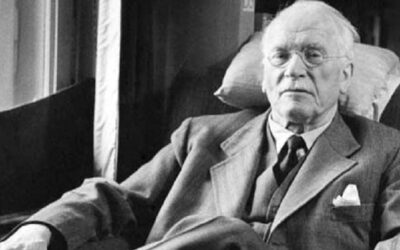
The concept of archetypes was pioneered by Swiss psychiatrist Carl Jung. He proposed that archetypes are innate, universal prototypes for ideas that reside in the collective unconscious, the part of the psyche all humans share (Jung, 1980). Archetypes manifest as symbols, images, and motifs in dreams, art, literature, and religion across all cultures.
Some examples of Jungian archetypes include the Hero, the Lover, the Sage, the Innocent, and the Trickster (Jung, 1980). While the specific characters and narratives vary, these archetypes embody fundamental human drives, challenges, and aspirations that are instantly recognizable. Engaging with them, whether through art, ritual, or inner work, helps the ego navigate life’s key transitions and connect to transpersonal meaning (Hollis, 2020).
The Monomyth: Archetypes of the Hero’s Journey
One of the most well-known archetypal patterns is the Hero’s Journey. Mythologist Joseph Campbell (2008) referred to this as the “monomyth” – the universal tale of the hero who ventures forth from the ordinary world, faces trials and temptations, gains new knowledge and power, and returns home transformed.
Campbell (2008) identified key archetypal figures and motifs in the monomyth, such as the wise old man, the goddess, the shapeshifter, and the shadow. These characters represent psychological energies the hero must face to achieve wholeness. For instance, the wise old man symbolizes the Self, the ordering principle of the psyche (von Franz, 1980). The goddess signifies life-giving and destructive feminine power (Neumann, 2015). Integrating these disparate aspects of the psyche is the true prize of the hero’s quest.
Anthropologist David Leeming (1998) has documented the monomyth’s global presence, from the Epic of Gilgamesh to the Ramayana to King Arthur. He argues these hero tales serve vital psychological functions by modeling how to attain mature adulthood. Similarly, psychoanalyst Otto Rank (2015) views hero myths as expressions of the ego’s heroic struggle to separate from the maternal matrix and establish an autonomous identity.
In therapy, the hero’s journey provides a valuable map of the individuation process (Bolen, 2004). Clients often begin in an unconscious, dependent state before some crisis thrusts them into a disequilibrium. With the therapist’s guidance, they gradually confront their inner demons, reconnect with buried potentials, and emerge into the world with greater self-knowledge and purpose. Understanding this monomythic arc normalizes the challenges of growth and encourages clients to view suffering as a call to adventure rather than a personal failing.
Archetypes and Cultural Variation
While archetypes manifest across cultures, they take on the unique flavor of each society. For anthropologist Claude Lévi-Strauss (1963), myths are structured by universal patterns of binary oppositions (e.g., raw/cooked, nature/culture) that the human mind uses to create meaning. However, the specific content of the myths and the privileged term in each binary varies based on the culture’s environment, history, and social structure.
Similarly, religious historian Mircea Eliade (1998) holds that all cultures share a longing for the sacred, which they access through culturally-specific “hierophanies” or manifestations of the divine. For example, the World Tree is a common archetypal hierophany symbolizing the cosmos’ regenerative power. But it takes distinct forms like the Norse Yggdrasil, the Mayan Ceiba tree, and the Biblical Tree of Life (Eliade, 1998).
According to philosopher Ernst Cassirer (1955), myths and archetypes reveal each culture’s unique “symbolic forms” or modes of knowing, feeling, and creating. Just as physical forms evolve to fit their ecosystem, symbolic forms adapt to meet the existential needs of the culture. Therapists must therefore attune to the specific inflections and transformations of archetypes within each client’s cultural matrix.
However, focusing only on cultural differences risks overlooking the profound unity of the human experience. The study of myth, religious experience, and altered states has revealed cross-cultural “perennial” themes like the unity of Being, the sacredness of nature, and the centrality of love (Huxley, 2009). By connecting cultural symbols to these deeper meanings, therapists can help clients access the universal while affirming the particular genius of their cultural heritage.
Archetypes are not dead relics of a primitive past but living psychic realities that continue to shape identity and give meaning to life. By understanding how these universal patterns manifest across cultures, therapists can better empathize with diverse clients and draw upon the wisdom of the world’s mythic heritage. Ultimately, engagement with myth and archetype is a powerful way to facilitate healing, self-discovery, and connection to the larger web of Being.
Bibliography
Bolen, J. S. (2004). Goddesses in Everywoman: Powerful Archetypes in Women’s Lives. HarperCollins.
Campbell, J. (2008). The Hero with a Thousand Faces (3rd ed.). New World Library.
Cassirer, E. (1955). The Philosophy of Symbolic Forms, Volume 2: Mythical Thought. Yale University Press.
Eliade, M. (1998). Myth and Reality. Waveland Press.
Hollis, J. (2020). Living Between Worlds: Finding Personal Resilience in Changing Times. Sounds True.
Huxley, A. (2009). The Perennial Philosophy. HarperCollins.
Jung, C.G. (1980). The Archetypes and the Collective Unconscious. Princeton University Press.
Leeming, D. A. (1998). Mythology: The Voyage of the Hero. Oxford University Press.
Lévi-Strauss, C. (1963). Structural Anthropology. Basic Books.
Neumann, E. (2015). The Great Mother: An Analysis of the Archetype. Princeton University Press.
Rank, O. (2015). The Myth of the Birth of the Hero. Johns Hopkins University Press.
von Franz, M.L. (1980). Projection and Re-Collection in Jungian Psychology: Reflections of the Soul. Open Court.









0 Comments