
The Empress of the Psyche
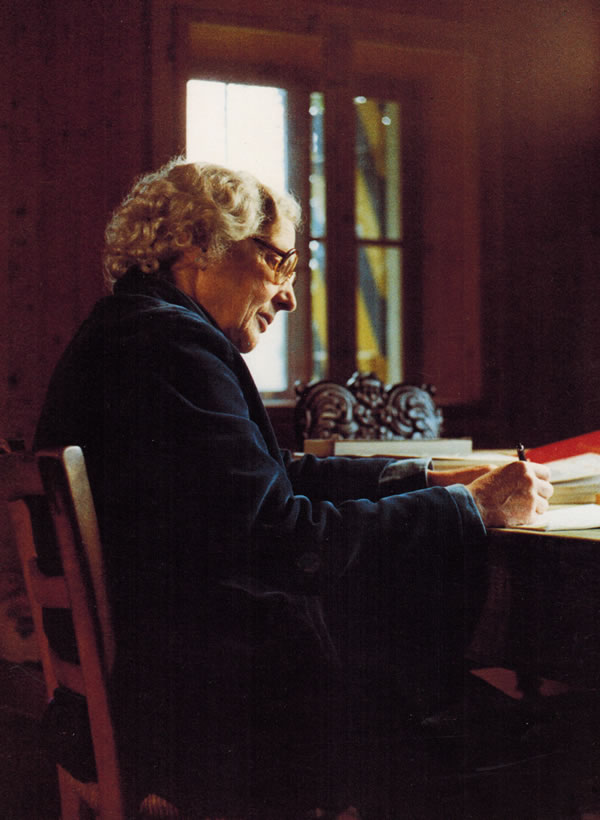
In the constellation of analytical psychology, Carl Jung is the sun, but Marie-Louise von Franz (1915–1998) is the moon who illuminated the darkest corners of the night. A brilliant scholar, linguist, and analyst, von Franz was not merely Jung’s “primary student”; she was his intellectual partner for over 30 years. She is responsible for translating the alchemical texts that became the foundation of Jung’s later work.
Von Franz’s genius lay in her ability to ground the ethereal concepts of depth psychology into the “hard earth” of reality. She argued that the Objective Psyche (the collective unconscious) is not a philosophical abstraction, but a biological fact that predates the ego by millions of years. Her work on fairy tales, number symbolism, and the “inferior function” remains the most practical guide for anyone attempting to navigate the individuation process.
Biography & Timeline: Marie-Louise von Franz (1915–1998)
Born in Munich to an Austrian baron, von Franz met Carl Jung when she was just 18 years old. She was a classical philologist by training, fluent in Latin and Greek, which made her indispensable to Jung’s research into alchemy. While Jung was the intuitive visionary, von Franz was the sensation type who did the rigorous work of translating the ancient manuscripts.
She lived a quiet, ascetic life in Küsnacht, Switzerland, dedicating herself to analysis and writing. She was fierce, unsentimental, and deeply skeptical of “academic” psychology that ignored the reality of the soul. She famously said, “The unconscious is not a friendly place; it is nature, and nature is indifferent to your ego.”
Key Milestones in the Life of Marie-Louise von Franz
| Year | Event / Publication |
| 1915 | Born in Munich, Germany. |
| 1933 | Meets Carl Jung at Bollingen Tower; begins analysis and collaboration. |
| 1940 | Receives Doctorate in Classical Philology. |
| 1948 | Founding member of the C.G. Jung Institute Zurich. |
| 1970 | Publishes The Interpretation of Fairy Tales, her seminal work on the archetypes in folklore. |
| 1974 | Publishes Number and Time, linking depth psychology with physics and mathematics. |
| 1998 | Dies in Küsnacht, Switzerland. |
Major Concepts: The Hard Reality of the Psyche
The Objective Psyche
Von Franz insisted that the unconscious is “Objective.” It is not a closet for our repressed memories (Freud), but a world as real and autonomous as the physical environment.
Clinical Application: We must treat dreams not as “my” dreams, but as messages from nature. The psyche has an agenda that is often different from the ego’s desires.
The Inferior Function as the Doorway
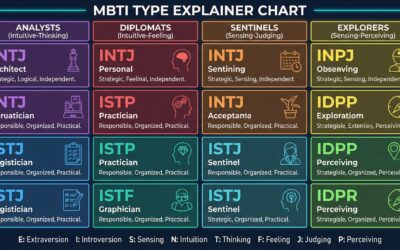
While Jung defined the four functions (Thinking, Feeling, Sensation, Intuition), von Franz focused on the Inferior Function—the weakest part of our personality. She argued that the inferior function is the bridge to the unconscious.
The Trap: We cannot use our superior function to heal ourselves. A thinker cannot “think” their way out of a crisis; they must learn to feel. The inferior function is where the ego is humiliated, and therefore, where the Self enters.
Fairy Tales as Anatomical Maps
Von Franz viewed fairy tales as the purest expression of the collective unconscious because they are less culturally specific than myths.
The Structure: Every fairy tale is a map of a specific psychological problem (e.g., the “Dummling” who succeeds where the clever brothers fail represents the need for naiveté over intellect).
The Conceptualization of Trauma: The Puer Aeternus
One of von Franz’s most critical contributions to trauma theory is her work on the Puer Aeternus (Eternal Boy/Girl). This is the individual who refuses to grow up, often due to a “negative mother complex” or early emotional abandonment.
The Provisional Life
The traumatized Puer lives a “provisional life.” They feel that real life has not yet begun. They are always waiting for the “big break” or the “perfect partner.” This is a defense mechanism against the pain of being in a finite, imperfect world.
Healing: Von Franz argued that the cure for the Puer is work. Not grandiose work, but humble, boring, repetitive labor. This grounds the spirit in matter and reconnects the individual to time.
The Shadow of Evil
In her analysis of fairy tales, she noted that trauma often activates the “Shadow.” Unlike modern therapies that try to “integrate” everything, von Franz warned that some aspects of the archetypal shadow are absolute evil and cannot be integrated—they must be cut off (the “Bluebeard” energy). This provides a vital clinical distinction between what can be healed and what must be rejected.
Legacy: The Bridge Between Psyche and Matter
Towards the end of her life, von Franz focused on the relationship between psychology and physics (unus mundus). She believed that the next great step in human consciousness would be the realization that matter and mind are two aspects of the same reality.
Her legacy is one of uncompromising depth. She teaches us that the path to wholeness is not a flight into the light, but a descent into the mud—where the gold is hidden.
Further Reading & Resources
- Marie-Louise von Franz Center: Archives and Research.
- Shambhala Publications: The Interpretation of Fairy Tales.
- Inner City Books: Publisher of Jungian Classics.
Explore More on Jungian Psychology
- Jolande Jacobi and the Complex
- Understanding The Red Book
- Introduction to Jungian Dream Interpretation












0 Comments