
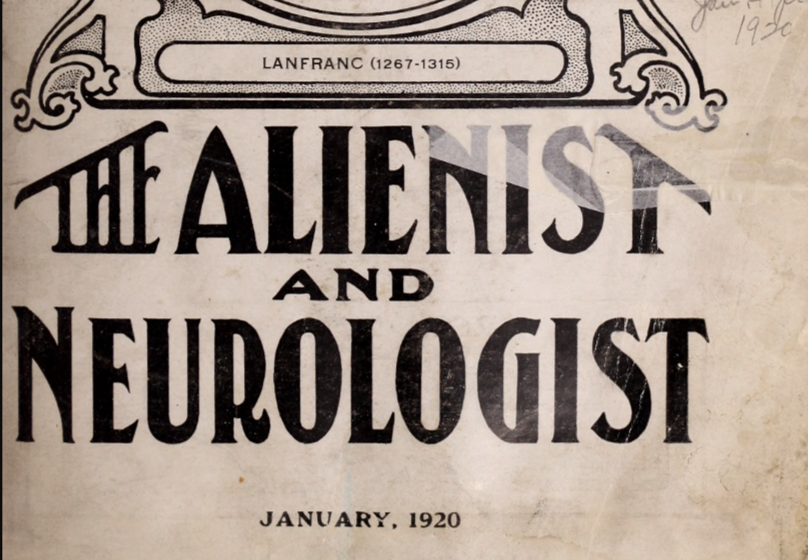
You may have heard the term “alienist” in period dramas or novels, most famously in Caleb Carr’s novel The Alienist. It sounds foreign, even unsettling. Yet, this antiquated job title represents one of the most important turning points in the history of mental health: the moment we stopped seeing “madness” as a moral failing or demonic possession and began to see it as a medical condition. So, what is an alienist? An alienist was a physician, prominent in the 19th and early 20th centuries, who specialized in the study and treatment of mental illness. They were the direct precursors to modern-day psychiatrists and neurologists, and their work, both their humanitarian triumphs and their profound errors, created the foundation for all modern psychotherapy. This article explores the world of the alienist, who they were, the conditions they treated, their revolutionary theories, and how their imperfect, often strange, methods laid the essential groundwork for the mental health care we know today.
The origin of the term “alienist” has a fascinating and compassionate root. It was adopted from the French legal and medical term aliéniste. This, in turn, came from the French word aliéné, meaning “insane” or “alienated.” To the 19th-century mind, a person suffering from severe mental illness was not “evil” but was “alienated” from their true self, their reason, their personality, and their place in society. Therefore, the alienist was the physician whose job was to help the patient end this period of “alienation” and return to their rational mind. This concept alone was a revolutionary leap forward, reframing the patient as a victim of an affliction, not a perpetrator of sin.
To understand why the alienist was so revolutionary, we must first look at the brutal world they replaced. For centuries, severe mental illness was not a medical concept. Before the Enlightenment, “madness” was understood through a lens of superstition, religion, and folk theory. Early conceptions of “madness” used terms like “madness,” “lunacy,” “melancholia,” “frenzy,” and “demonic possession” to describe what we now see as a spectrum of disorders. The term “lunacy” was quite literal, stemming from the Latin lunaticus (“moon-struck”), as it was widely believed that the phases of the moon could induce episodes of insanity. “Melancholia,” one of the “four humors” described by Hippocrates, was an excess of “black bile” thought to cause deep, unshakable sadness.
The perceived causes of madness were terrifying and guided the “treatments.” A “wandering womb” (Hysteria) in women, demonic possession, or divine punishment were all seen as likely culprits. If possessed, the “treatment” was exorcism. If it was a humoral imbalance, treatments included bloodletting, purging, and blistering. For the unmanageable, the solution was confinement. Places like London’s infamous Bethlem Royal Hospital (or “Bedlam”) were not hospitals. They were prisons, designed to protect society from the insane, not to treat them. Inmates were often chained, kept in squalor, and even put on display for a paying public.
The alienist emerged from the humanistic ideals of the Age of Enlightenment in the late 18th and early 19th centuries. This cultural trend, which championed reason, observation, and human dignity, created the space for a new idea: what if these “mad” people were not beasts, but sick humans in need of care? The most pivotal figure in this shift was Philippe Pinel (1745-1826), a French physician. After being appointed to the Bicêtre Hospital in Paris in 1793, Pinel was horrified by the conditions. In a legendary (and possibly embellished) act, he began unchaining the inmates. Pinel’s core idea was “moral treatment.” This did not mean “moral” in a religious sense, but in an emotional and psychological one. He argued that mental illness was often caused by environmental and psychological stress, and that patients could recover their reason through humane care, routine, structured work, and respectful interaction. The physician’s greatest tool was compassionate observation. This was the birth of the asylum as a place of asylum (sanctuary) and the birth of the alienist as its medical director.
Across the Atlantic, Benjamin Rush (1746-1813), a signer of the Declaration of Independence, was applying a similar (though more medical) model in America. Rush firmly believed that mental illnesses were diseases of the brain’s blood vessels. While his preferred treatments (bloodletting, mercury, and his notorious “spinning chair” designed to reduce brain congestion) seem barbaric now, his central premise was revolutionary: mental illness is a physical disease of the brain. Pinel and Rush established the two pillars of the 19th-century alienist: the psychological (Pinel) and the biological (Rush). This tension between “mind” and “brain” would come to define the field for the next 200 years.
The 19th century was the golden age of the alienist. It was an era of profound scientific optimism, driven by the Industrial Revolution and a cultural belief in order, classification, and institution-building. Just as botanists classified plants, alienists believed they could create a definitive “botany of the mind.” They built large, state-funded asylums, which were often designed as self-contained, pastoral communities intended to be the primary tool of “moral treatment.” Their terms for mental health issues show their early attempts to group symptoms based on observation. “Dementia Praecox” was the term (later refined by Emil Kraepelin) for what we now know as schizophrenia. It was seen as a “premature dementia” that struck young people and led to inevitable decline. “Melancholia” was still used for severe depression, especially what we would now call “melancholic depression,” often with psychotic features or a complete inability to function, known as melancholia attonita. “Mania” was characterized by “morbid exaltation,” frenzied energy, and grandiose delusions. Alienists would later group this with melancholia to form “manic-depressive insanity.”
A key 19th-century concept was “monomania,” where a person was “mad” on only one subject. They could be perfectly rational in all other areas of life but hold a single, fixed delusion, for example, that they were royalty, or that they were being persecuted by a new technology like the telegraph. “Hysteria” was a catch-all, overwhelmingly diagnosed in women, for a huge range of symptoms: anxiety, fainting, paralysis, seizures, and emotional outbursts. Its cause was infamously (and incorrectly) attributed to a “wandering womb” or a weak nervous constitution.
Alienists believed in a mix of “moral” and “physical” causes. Their case files are a window into the anxieties of the Victorian era. “Heredity & Degeneracy” was the number one suspected cause. Alienists believed that “insane” traits were passed down, and families could “degenerate” over generations, a fear that dovetailed with the rise of Darwinism and early eugenics. “Moral Causes” were lifestyle factors believed to lead to mental collapse. The most commonly cited cause was masturbation, which was thought to drain the nervous system. Other “moral” causes included overwork, religious fanaticism, grief, “novel-reading” (believed to over-stimulate women’s minds), and fright. A more concrete culprit was “Physical Causes,” such as blows to the head or alcohol (intemperance). The most critical discovery of the era was the link between syphilis and “general paresis of the insane.” The realization that this devastating psychotic condition was actually the final stage of a sexually transmitted infection was a landmark moment. It was the first unassailable proof that a specific biological agent could cause a complex “madness,” validating Benjamin Rush’s biological model and paving the way for the field of neurology.
With the asylum as their laboratory, alienists developed a wide range of treatments. The primary “treatment” was the environment itself, clean air, hard work, no stress, and a rigid daily schedule. This was supplemented by hydrotherapy, a major component of asylum treatment. Patients were subjected to hours-long “continuous baths” at a neutral temperature to soothe them, or “showered” with high-pressure jets of cold water as a shock. While Pinel had removed chains, “humane” restraints like straitjackets and padded rooms were key tools. The alienist’s pharmacy was limited, but opium (as Laudanum), morphine, bromides, and chloral hydrate were used heavily to manage agitation and insomnia.
So why did we stop using the term “alienist”? By the late 19th century, the field began to specialize and fracture. The massive, overcrowded asylums were failing, becoming the “madhouses” they were meant to replace. A profound split emerged between physicians studying the physical brain and those studying the mind. This schism, born in a Paris hospital, would define the 20th century. The key figure in this split was Jean-Martin Charcot (1825-1893), the “Napoleon of the neuroses.” An alienist at the massive Salpêtrière hospital in Paris, Charcot was a master of observation. He identified and described numerous physical nervous system disorders, including multiple sclerosis (MS) and amyotrophic lateral sclerosis (ALS). He and his followers became the first true neurologists, physicians who specialized in the physical and organic diseases of the brain and nerves.
But Charcot was also obsessed with hysteria. In dramatic, theatrical public lectures, he used hypnosis to induce and relieve the physical symptoms of hysteria (like paralysis or blindness) in his female patients. His goal was to prove that hysteria was not just “malingering” (faking) but a real, functional disorder of the nervous system, one that could be triggered by a psychological shock or trauma. He believed, however, that only those with a hereditary “neuropathic” weakness could develop it.
In 1885, a young, ambitious Viennese neurologist named Sigmund Freud won a grant to study with the great Charcot. Freud was mesmerized by Charcot’s demonstrations. He had witnessed a powerful idea in action: that a psychological idea or trauma could cause a real physical symptom, and that this symptom could be cured by a “talking” intervention (hypnosis). This was the seed of psychoanalysis. Freud returned to Vienna and, working with his colleague Josef Breuer, began to develop his own “talking cure.” He soon abandoned Charcot’s hypnosis, finding that he could achieve better, more lasting results by having patients talk freely about their past. He also broke with Charcot’s theory of hereditary weakness. Based on his work with patients like “Anna O.,” Freud proposed a radical new theory: that hysterical symptoms were not caused by a weak brain, but by repressed memories of real (or, as he would later argue, fantasized) sexual trauma. The “alienated” part of the self wasn’t just alienated from reason, it was an active, unconscious mind containing forbidden wishes and painful memories that were being forcefully held back, leaking out as symptoms.
This entire origin story, of course, is the “Freudian legend.” As critics like Frederick Crews have meticulously argued in books such as Freud: The Making of an Illusion, this narrative is deeply flawed. Crews suggests that Freud dramatically misinterpreted Charcot’s work and that the evidence for his foundational “seduction theory” was non-existent. He argues that Freud was not a dispassionate scientist discovering a hidden unconscious, but a brilliant, ambitious storyteller who “led” his patients, planted suggestions, and constructed a compelling myth that told the secularizing, post-Victorian world exactly what it wanted to hear about itself.
While Freud was in his Vienna consulting room building the new field of psychoanalysis for the “walking well,” the old alienists in the asylums were also evolving. The term “psychiatry,” coined in 1808 by Johann Christian Reil from the Greek psyche (mind) and iatros (healer), began to replace “alienist.” It sounded more medical and scientific. The leader of this new biological psychiatry was Emil Kraepelin. Working in Germany, Kraepelin applied the alienist’s tool of long-term observation and classification. He is the one who separated the severe mental illnesses into two great categories: dementia praecox (schizophrenia), which he saw as a degenerative brain disease, and manic-depressive insanity (bipolar disorder), an episodic mood illness. His work became the absolute foundation of modern psychiatric diagnosis and, ultimately, the Diagnostic and Statistical Manual of Mental Disorders (DSM).
These two new worlds, Freud’s psychoanalysis and Kraepelin’s biological psychiatry, briefly collided in one man: Carl Gustav Jung. Jung was a practicing psychiatrist at the famous Burghölzli asylum in Switzerland, working under Eugen Bleuler (who actually coined the term “schizophrenia”). Jung was using word-association tests to prove Freud’s theories of the unconscious experimentally. He was, for a time, Freud’s chosen son and heir, the one who would carry psychoanalysis into the scientific, psychiatric mainstream. But Jung, like Freud, eventually broke away. He could not accept Freud’s insistence on sexuality as the primary driver of all neurosis. Jung felt the human psyche was far broader and more mysterious. He proposed that beyond Freud’s “personal unconscious” (our own repressed memories), there lay a deeper, transpersonal layer: the Collective Unconscious. This, he argued, was a shared inheritance of archetypal images, myths, and symbols that formed the very structure of the human mind. With this, Jung founded analytical (or “depth”) psychology, re-integrating the very mythological and spiritual dimensions that Pinel, Freud, and Kraepelin had worked so hard to eject from their scientific “medicine of the mind.”
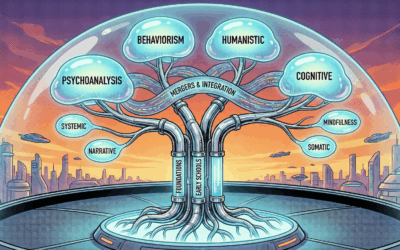
This historical timeline shows the conceptualization of mental health professionals clearly. In the Ancient World (around 400 BCE), Hippocrates reframed “madness” not as a curse, but as a disease caused by an imbalance of the four humors. During the Middle Ages (around 1300-1600), the roles split between physicians and exorcists. “Melancholia” was seen as a physical, humoral problem, while “madness” and “frenzy” were often seen as spiritual or demonic, requiring an exorcist. In the “Madhouse” era (around 1600-1800), the primary “professional” was the keeper or warden of a “madhouse” or “bedlam,” whose job was confinement, not treatment. The Enlightenment (around 1790s-1840s) saw the rise of the Alienist. Physicians like Philippe Pinel and Benjamin Rush created the specialty. They were medical doctors who ran asylums with the goal of “moral treatment.” During the Mid-19th Century (around 1850s-1890s), the terms Alienist, Asylum Superintendent, and Medical Psychologist were used interchangeably. This was the peak of the alienist’s power, driven by scientific classification and the asylum system. The discovery of syphilis’s link to general paresis solidified the biological model. The Late 19th Century (around 1880s-1910s) brought the Great Split. The Neurologist, following the “brain” path like Jean-Martin Charcot, focused on the organic, physical structures of the nervous system. The Psychiatrist, following the biological asylum path like Emil Kraepelin, classified severe mental illnesses (dementia praecox, manic-depressive insanity), creating the basis for the DSM. The Psychoanalyst, following the “mind” path like Sigmund Freud, studied with Charcot but broke away, proposing the unconscious mind, repressed memories, and the “talking cure” for his private-practice patients. Finally, in the 20th Century, the term “alienist” fell completely out of use by the 1920s. Carl Jung broke with Freud to create analytical psychology. The field was now permanently split between biological psychiatry (leading to psychopharmacology) and the “talking cures” of psychoanalysis and depth psychology.
The alienist was the crucial, imperfect bridge from superstition to science. Their theories on “moral” causes may seem absurd, and their treatments (like spinning chairs and ice-water showers) seem like torture. But they were the very first medical professionals to look at a deeply disturbed person and say: “This is a patient, not a monster. This is an illness, not a sin. This person is alienated from themselves, and it is my job to help them find their way back.” That single, noble idea laid the foundation for every mental health professional today. The alienist’s legacy is complex and fractured. Their biological-classification path led directly to Kraepelin, the modern DSM, and the development of psychopharmacology. Their psychological-observation path, started by Pinel, led to Charcot, which then split into the profound, revolutionary, and deeply controversial “talking cures” of Sigmund Freud and Carl Jung. Every therapist, psychiatrist, and neurologist is, in some way, an heir to the ambitious, flawed, and humane world of the alienist.
















0 Comments