
Discover Your Love Language: Improving Communication and Intimacy in Relationships

by | Aug 9, 2024 | 0 comments

Executive Summary: Why We Feel Misunderstood

The Core Conflict: Feeling “misunderstood” by a spouse is rarely about the surface-level argument (the dishes, the money, the time). It is almost always a mismatch in Attachment Signals and Nervous System Regulation.

Key Drivers of Disconnection:

  • Attachment Mismatch: An Anxious partner perceives silence as abandonment; an Avoidant partner perceives questions as intrusion. They speak different emotional dialects.
  • Nervous System Shutdown: When a partner is in a “Fight or Flight” state, their biological ability to process language and empathy shuts down. They literally cannot understand you in that moment.
  • Projection: We often project our internal “Parts” onto our partners, seeing them as critical parents or demanding children rather than who they actually are.

Why Doesn’t My Wife or Husband Understand Me? The Psychology of Connection and Missed Signals

Couples Therapy and Communication Breakdown

“We just don’t speak the same language.” This is the most common complaint in couples therapy. You say one thing, but your partner hears something completely different. You try to show love, but it doesn’t land. Over time, this lack of understanding calcifies into resentment, loneliness, and the “Roommate Phase.”

While Dr. Gary Chapman’s Five Love Languages provides a useful starting point, deep chronic misunderstanding usually stems from deeper roots. It involves your Attachment Style, your Nervous System, and your Unconscious Projections. This guide explores the layers of disconnection and how to bridge them using Brain-Based Medicine and Depth Psychology.


Level I: The Surface – Love Languages

At the most basic level, we often miss each other because we are broadcasting on different frequencies. If you express love by fixing the car (Acts of Service) but your wife feels loved when you sit and talk (Quality Time), your effort is wasted energy. It is like trying to pay for dinner in Euros when the restaurant only takes Yen.

The Five Languages:

  • Words of Affirmation: “I appreciate you.” (Validation).
  • Acts of Service: “I did the dishes so you can rest.” (Support).
  • Receiving Gifts: “I saw this and thought of you.” (Thoughtfulness).
  • Quality Time: “I am putting my phone away to listen.” (Presence).
  • Physical Touch: “I need a hug to feel safe.” (Intimacy).

The Fix: Stop giving the love you want to receive, and start giving the love they can absorb.


Level II: The Blueprint – Attachment Styles

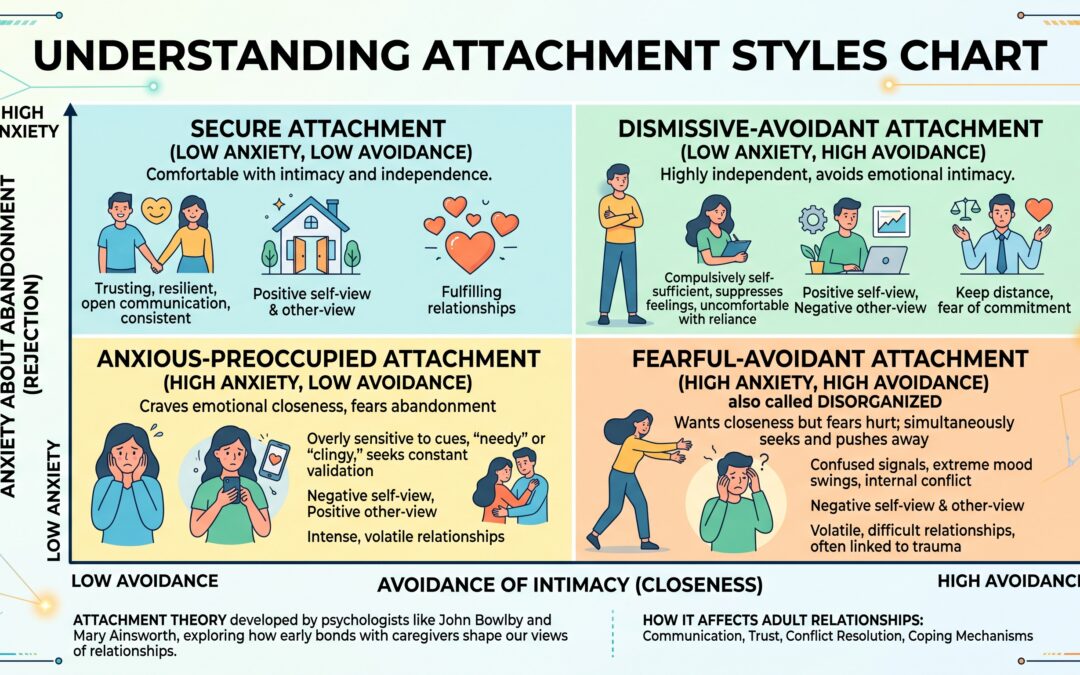
Often, “You don’t understand me” actually means “You aren’t making me feel safe.” This is the domain of Attachment Theory. Your attachment style creates a filter through which you interpret your partner’s actions.

If you have an Anxious-Preoccupied style, you might interpret your husband’s need for quiet time as a rejection. You pursue him for reassurance (“Are we okay?”), which he perceives as criticism.
Conversely, if you have a Dismissive-Avoidant style, you might interpret your wife’s desire for emotional intimacy as “suffocating.” You withdraw to protect your autonomy, which she perceives as coldness.

To solve this, you must first understand your own biological wiring.

Read More: How to Know Your Attachment Style: The Neuroscience of Love. By identifying whether you are the “Pursuer” or the “Distancer,” you can stop blaming your partner for their wiring and start negotiating safety.


Level III: The Biology – Nervous System Regulation

Why do fights spiral out of control? Why does your partner stare at you blankly when you are crying? This is often a biological issue, not a character flaw.
According to Polyvagal Theory, when a human being feels attacked or overwhelmed, they drop into a survival state:

  • Sympathetic (Fight/Flight): They yell, blame, or interrupt. They are too mobilized to listen.
  • Dorsal Vagal (Freeze): They shut down, go numb, or look away. They are biologically incapable of empathy in this state.

You cannot communicate with a nervous system in survival mode. Many couples try to “talk it out” when they should be trying to “regulate.” Therapies like Somatic Experiencing focus on helping partners co-regulate their bodies so they can actually hear each other again.


Level IV: The Shadow – Projection and Parts

Sometimes, the person we are fighting isn’t even in the room. In Jungian Therapy, we explore the concept of Projection. We often marry people who trigger our childhood wounds so we can try to heal them. You might be projecting your critical mother onto your wife, hearing judgment where there is none.

Similarly, Internal Family Systems (Parts Work) suggests that a “Protector Part” of you might be attacking your partner to keep you safe from vulnerability. Until you understand these internal parts, you will keep having the same argument with different words.

Read More: Parts Based Therapy: Understanding Your Internal System.


Level V: The Toxic Distortion – DARVO and Manipulation

It is important to distinguish between misunderstanding and manipulation. In abusive or highly narcissistic relationships, a partner may intentionally misunderstand you to maintain control.
This tactic is known as **DARVO** (Deny, Attack, Reverse Victim and Offender). If you express a hurt, and suddenly you end up apologizing for hurting them, this is not a communication issue; it is a power issue.

Read More: Understanding DARVO: Recognizing Abuse Tactics.


How to Bridge the Gap

If you feel chronically misunderstood, talk therapy might not be enough. You may need to bypass the “story” and work with the brain and body directly.

1. Clear the Trauma

If past betrayals are preventing you from trusting your partner today, therapies like EMDR or Brainspotting can help metabolize those old memories so you aren’t reacting to ghosts.

2. Heal the Timeline

Lifespan Integration Therapy is powerful for couples because it helps you see your partner’s behavior in the context of their entire life history, fostering deep empathy rather than judgment.

3. Learn to Regulate

Using tools like Neurofeedback can help stabilize high-conflict brains, reducing the impulsivity and rage that block understanding.

Understanding is not a gift; it is a skill. It requires the courage to look at your own attachment, the discipline to regulate your own body, and the wisdom to see your partner as they are, not as you fear them to be.


Explore Relationship & Attachment Support

Taproot Therapy Collective Podcast

Understanding Your Dynamic

How to Know Your Attachment Style

Internal Family Systems: Who is Fighting?

Jungian Therapy: Projection & The Shadow

Tools for Connection

Somatic Experiencing: Regulating Conflict

Mindfulness: Listening with Presence

ETT: Emotional Connection

Healing Past Wounds

Lifespan Integration: Seeing the Whole Person

EMDR: Clearing Relational Trauma

DARVO: Identifying Toxicity

Explore the Other Articles by Categories on Our Blog 

Hardy Micronutrition is clinically proven to IMPROVE FOCUS and reduce the effects of autism, anxiety, ADHD, and depression in adults and children without drugsWatch Interview With HardyVisit GetHardy.com and use offer code TAPROOT for 15% off

The Hidden Dynamics of Executive Leadership

The Hidden Dynamics of Executive Leadership

The Psychic Infrastructure of Power The modern boardroom is not merely a place of financial calculation; it is a ritual space where the unconscious forces of the collective psyche play out in high definition. While MBA programs teach strategy, they rarely address the...

What is Monotropism? New Tools to Understand Autism

What is Monotropism? New Tools to Understand Autism

Written by the clinical team at Taproot Therapy Collective, a Birmingham psychotherapy practice specializing in neurodivergent-affirming care. Our clinicians work daily with autistic adults, ADHDers, and AuDHD clients navigating a world built for different brains. If...

A short History Of All Types of Family Therapy

A short History Of All Types of Family Therapy

A comprehensive analysis of family systems therapy models from Bowen to Narrative, including clinical applications, techniques, evidence base, and modern integrative approaches for conduct disorders, eating disorders, and trauma.

Anxiety Therapist Near Me: Beyond Basic Breathing Exercises”

Anxiety Therapist Near Me: Beyond Basic Breathing Exercises”

Your heart is racing at 3 AM again. You've tried the breathing exercises – in for four, hold for four, out for four. You've downloaded the meditation apps. You've done the yoga, cut the caffeine, exercised regularly. Hell, you could probably teach a masterclass on...

Counselor Near Me: Why the Best Match Isn’t About Reviews

Counselor Near Me: Why the Best Match Isn’t About Reviews

You're sitting in your car after another sleepless night, phone in hand, typing "counselor near me" into Google for the fifth time this week. The results are overwhelming – dozens of smiling faces, all promising to help, most with 4.8 stars or higher. You click on the...

Nobody Wants Your Whiny Baby: A DBT Exercise That Actually Gets It

Nobody Wants Your Whiny Baby: A DBT Exercise That Actually Gets It

There's this exercise in DBT with a name that makes people laugh nervously when they first hear it: "Nobody Wants Your Whiny Baby." The name is perfect because it captures something we all know but rarely talk about directly. Here's what happens in a lot of therapy,...

The Complete Alabama LPC Licensing Guide:

The Complete Alabama LPC Licensing Guide:

Everything You Need to Know About ALC, LPC, and Private Practice Professional counseling in Alabama operates under a two-tiered licensing system overseen by the Alabama Board of Examiners in Counseling (ABEC), requiring all counselors to begin as Associate Licensed...

Free Activities in Hoover and Birmingham Metro:

Free Activities in Hoover and Birmingham Metro:

Whether you're a business professional in Hoover transitioning to a new phase of life, relocating to the Birmingham metro area, or seeking meaningful community connections throughout Jefferson and Shelby Counties, finding the right spaces and activities can transform...

Is My Friend or Business Partner a Con Artist?

Is My Friend or Business Partner a Con Artist?

Understanding the Psychology Behind Deception and Emotional Manipulation Have you ever wondered if your business partner is a con artist? Perhaps you've noticed a pattern where their stories don't quite add up, where their accomplishments seem to exist only in...

Joseph LeDoux and the Revolution in Trauma Therapy:

Joseph LeDoux and the Revolution in Trauma Therapy:

 Understanding Memory Reconsolidation and the Neuroscience Behind Experiential Healing  A Paradigm Shift in Understanding Emotional Memory For decades, the field of psychology operated under the assumption that emotional memories, particularly traumatic ones, were...

Teyber’s Interpersonal Process in Therapy:

Teyber’s Interpersonal Process in Therapy:

Buy the Book  How Edward Teyber's Revolutionary Approach Transformed My Journey from Anxious Student to Confident Therapist I still remember sitting in my social work school classroom, frantically taking notes on CBT protocols and DBT worksheets, feeling increasingly...

Trauma and The Double Bind: Learned Helplessness

Trauma and The Double Bind: Learned Helplessness

Understanding the Lasting Impacts of Toxic Relationships The double bind theory, first proposed by Gregory Bateson and his colleagues in the 1950s, describes a type of dysfunctional communication and relationship pattern that can have devastating psychological...

The Healing Power of Humor: Finding Light in the Darkness of Trauma

The Healing Power of Humor: Finding Light in the Darkness of Trauma

The Counterintuitive Role of Humor in Trauma Recovery There exists a seeming paradox in the realm of trauma therapy: the juxtaposition of humor against the backdrop of suffering. For those grappling with PTSD and the horrific aspects of life that create it, the idea...

0 Comments

Submit a Comment

Your email address will not be published. Required fields are marked *