
The Matriarch of American Jungianism
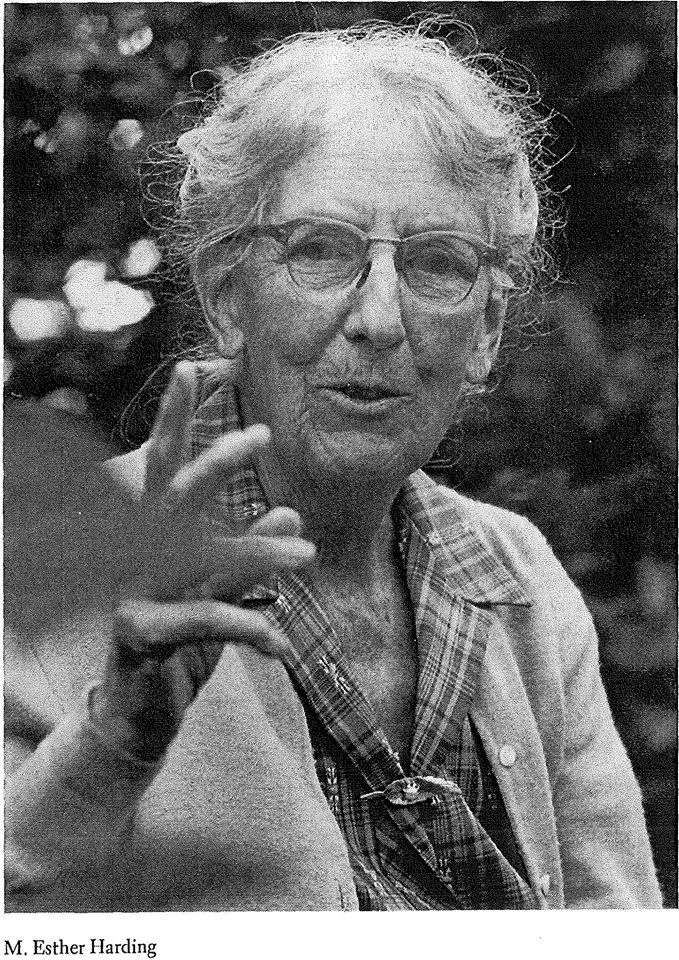
In the 1920s, a British doctor traveled to Zurich to meet Carl Jung. She was seeking a cure for her own depression, but what she found was a vocation. M. Esther Harding (1888–1971) became one of Jung’s most important students and the primary force behind the establishment of Analytical Psychology in the United States.
Harding was a feminist before the term was popular. She realized that Jung’s theories, while brilliant, were often male-centric. She dedicated her life to exploring the feminine principle (Eros) and how modern women could navigate the path of individuation without imitating men. Her book The Way of All Women remains a classic guide to feminine psychology.
Biography & Timeline: Esther Harding
Born in Shropshire, England, Harding trained as a medical doctor, a rare achievement for a woman in the early 20th century. After her analysis with Jung, she moved to New York City, where she became the center of a vibrant Jungian community. She co-founded the C.G. Jung Foundation of New York and the Analytical Psychology Club.
She never married, devoting her life to her work and her deep, lifelong friendship with fellow analyst Eleanor Bertine. Together, they established the first Jungian training program in America. Harding was known for her sharp intellect, her clinical rigor, and her insistence that the “inner work” was not a luxury but a necessity for the survival of civilization.
Key Milestones in the Life of Esther Harding
| Year | Event / Publication |
| 1888 | Born in Shropshire, England. |
| 1922 | Travels to Zurich to begin analysis with C.G. Jung. |
| 1924 | Moves to New York City and begins analytic practice. |
| 1933 | Publishes The Way of All Women, a bestseller translated into many languages. |
| 1935 | Publishes Woman’s Mysteries: Ancient and Modern. |
| 1947 | Publishes Psychic Energy: Its Source and Its Transformation. |
| 1971 | Dies in London while on holiday. |
Major Concepts: The Virgin and the Moon
Virginity as Psychological wholeness
Harding redefined the concept of “virginity.” In ancient times, a “virgin” goddess was not a woman who abstained from sex, but a woman who was one-in-herself. She did not belong to a husband or father.
The Insight: For modern women, recovering “psychological virginity” means reclaiming the parts of the soul that have been given away to relationships or social expectations. It is the capacity to be whole regardless of relationship status.
Moon Myths and Feminine Cycles
In Woman’s Mysteries, Harding explored the symbolism of the Moon. Unlike the Sun (which is constant and heroic), the Moon changes. It waxes and wanes. Harding argued that feminine consciousness is cyclical, governed by rhythm rather than linear progress. Understanding this helps women honor their changing moods and energies as natural tides rather than pathology.
The Conceptualization of Trauma: The Loss of Instinct
Harding viewed neurosis as a loss of connection to instinct. In her book Psychic Energy, she explained that trauma dams up the natural flow of libido (life energy). The energy does not disappear; it regresses into the unconscious and activates archaic, infantile patterns.
Transformation of Instinct
Healing involves re-contacting these dammed-up energies. However, we cannot simply “let them out” (which would be chaos). We must transform them through symbols. For example, rage can be transformed into creative power; lust can be transformed into relationship. This is the alchemical work of psychotherapy.
Legacy: The Foundation of Community
Esther Harding did more than write books; she built institutions. She ensured that Jungian psychology in America had a home, a library, and a training program. She was the “introvert” who built an extraverted structure to hold the work.
Her legacy teaches us that individuation is not a selfish act. By becoming whole, we become capable of true relationship and community building. As she wrote, “The creation of a new consciousness is the task of the individual, but the fruit of that task belongs to the world.”
Bibliography
- Harding, M. E. (1933). The Way of All Women. Longmans, Green and Co.
- Harding, M. E. (1935). Woman’s Mysteries: Ancient and Modern. Longmans, Green and Co.
- Harding, M. E. (1947). Psychic Energy: Its Source and Its Transformation. Pantheon Books.
- Harding, M. E. (1965). The “I” and the “Not-I”: A Study in the Development of Consciousness. Bollingen Series.














0 Comments