James Hollis and the Psychodynamics of the Self

by | Jul 9, 2024 | 0 comments

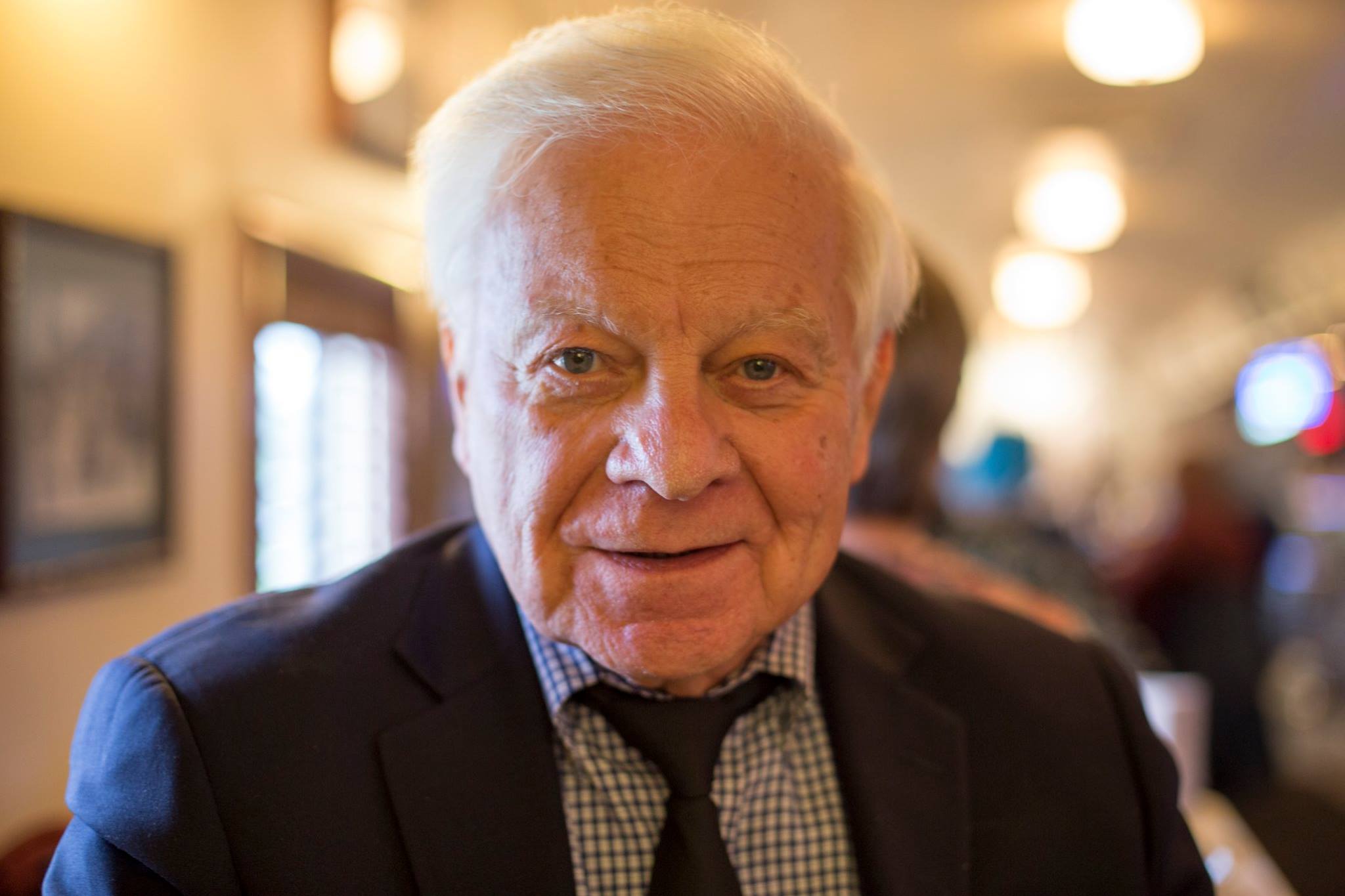
James Hollis Jungian Analyst

The Guide through the Middle Passage

In the first half of life, we are driven by the ego’s need for achievement, validation, and security. But often, somewhere around age 40, the “program” stops working. A sense of emptiness, depression, or panic sets in. This is not a mistake; it is an invitation.

James Hollis (b. 1940) is the preeminent guide for this terrain. A Jungian analyst and prolific author, Hollis reframed the “Midlife Crisis” as the Middle Passage—a necessary spiritual transition from the “Provisional Personality” (who we thought we were) to the “True Self.” His work is less about fixing symptoms and more about answering the soul’s summons to grow up.

Biography & Timeline: James Hollis

Born in Springfield, Illinois, Hollis began his career as a professor of Humanities. This background in literature and philosophy deeply informs his psychology; he treats life as a text to be read for meaning, not a problem to be solved. He retrained as a Jungian analyst in Zurich at the age of 40—his own Middle Passage.

Hollis served as the Executive Director of the Jung Educational Center in Houston and later the Jung Society of Washington. He is the author of over 16 books, including the classic The Middle Passage (1993), which has become a handbook for navigating adult life.

Key Milestones in the Life of James Hollis

Year Event / Publication
1940 Born in Springfield, Illinois.
1967 Receives Ph.D. in Literature from Drew University.
1977-1982 Undergoes training analysis at the C.G. Jung Institute in Zurich.
1993 Publishes The Middle Passage: From Misery to Meaning in Midlife.
2001 Publishes Creating a Life: Finding Your Individual Path.
2020 Publishes Living Between Worlds: Finding Personal Resilience in Changing Times.

Major Concepts: The Second Half of Life

The Provisional Personality

In childhood, we create a “Provisional Personality” to survive. We learn what gets us love and what gets us punished. We become the “Good Boy,” the “Rebel,” or the “Caretaker.”

The Crisis: In midlife, this personality becomes a prison. The depression we feel is the soul revolting against this outdated costume.

The Middle Passage

This is the turbulent transition between the First Adulthood (ego-building) and the Second Adulthood (soul-making).

Symptoms: Boredom, infidelity, addiction, or a sudden realization of mortality. Hollis argues that we should not medicate these symptoms away; we must ask, “What does this symptom want from me?”

The Magical Other

In his book The Eden Project, Hollis explores the fantasy of the “Magical Other”—the idea that a romantic partner will save us from loneliness and complete us.

The Reality: No human can carry the weight of our soul. Mature love requires withdrawing our projections and taking responsibility for our own happiness.

The Conceptualization of Trauma: The Shadow of the Parent

Hollis focuses heavily on the “parental imago”—the internalized voice of the parent that continues to rule us long after we leave home.

The Unlived Life of the Parent

Jung famously said, “Nothing has a stronger influence psychologically on their children than the unlived life of the parents.” Hollis expands on this. Trauma is often the burden of living out the parent’s unfulfilled dreams or unresolved grief.

Therapy: The goal is to separate one’s own destiny from the family fate. This requires a “psychological divorce” from the parents, even if they are deceased.

Meaning vs. Happiness

Hollis challenges the American obsession with “happiness.” He argues that the goal of life is not happiness (which is fleeting), but meaning. Trauma strips away happiness, but it can deepen meaning. The survivor asks, “Given that I have suffered this, what does my life ask of me now?”

Legacy: The Psychology of Resilience

James Hollis is the philosopher of resilience. He teaches that we are stronger than we think, but only if we are willing to face the truth.

His work is a call to courage. He asks the fundamental question of the second half of life: “Does this path make me larger or smaller?” If it makes you smaller, you must leave it, no matter the cost.


Further Reading & Resources

Explore More on Jungian Life Stages

Explore the Other Articles by Categories on Our Blog 

Hardy Micronutrition is clinically proven to IMPROVE FOCUS and reduce the effects of autism, anxiety, ADHD, and depression in adults and children without drugsWatch Interview With HardyVisit GetHardy.com and use offer code TAPROOT for 15% off

What the Ancient Mysteries Knew About Healing Trauma

What the Ancient Mysteries Knew About Healing Trauma

The Eleusinian, Mithraic, and Dionysian mysteries weren’t religious observances. They were orchestrated psychodramas designed to shatter the ego and rebuild the self. Modern trauma therapy has inadvertently reconstructed their methods.

Naomi Quenk’s Work on the Inferior Function

Naomi Quenk’s Work on the Inferior Function

You've had the experience. You're usually calm, but suddenly you're screaming at your partner over dishes. You're normally logical, but you're sobbing uncontrollably about something that "shouldn't" matter. You're typically easygoing, but you've become rigidly fixated...

Understanding How the Different Types of Therapy Fit Together

Understanding How the Different Types of Therapy Fit Together

You've tried therapy before. Maybe it helped a little. Maybe you spent months talking about your childhood without anything changing. Maybe you learned coping skills that worked until they didn't. Maybe the therapist was nice but you left each session feeling like...

David Bohm: The Physicist Who Saw Mind in Matter

David Bohm: The Physicist Who Saw Mind in Matter

The Heretic of Copenhagen David Bohm (1917-1992) committed what many physicists considered an unforgivable sin: he took quantum mechanics seriously as a description of reality, not just a calculation tool. While the Copenhagen interpretation (Bohr, Heisenberg)...

Who Is Johnjoe McFadden?

Who Is Johnjoe McFadden?

Explore Johnjoe McFadden’s CEMI field theory, which proposes that consciousness arises from the brain’s electromagnetic field, solving the binding problem and explaining free will.

Bill O’Hanlon: The Therapist Who Asked “How Do People Get Happy?”

Bill O’Hanlon: The Therapist Who Asked “How Do People Get Happy?”

Bill O’Hanlon, MS, LMFT, studied with Milton Erickson as his only work/study student (serving as Erickson’s gardener) before co-founding Solution-Oriented/Possibility Therapy in the 1980s. Author of nearly 40 books including the Oprah-featured “Do One Thing Different” and foundational “In Search of Solutions” with Michele Weiner-Davis, O’Hanlon delivered over 3,700 presentations worldwide teaching his collaborative, non-pathologizing approach asking “How do people get happy?” rather than “What’s wrong?” He retired from clinical practice in 2020 to pursue professional songwriting from Santa Fe, New Mexico.

Diane Poole Heller: From Trauma Survivor to Pioneer of Attachment Healing

Diane Poole Heller: From Trauma Survivor to Pioneer of Attachment Healing

Diane Poole Heller, PhD, transformed her own 1988 traumatic car accident into a pioneering career developing DARe (Dynamic Attachment Re-patterning experience), a somatic approach integrating attachment theory and trauma resolution now taught worldwide. After 25 years as Senior Faculty for Peter Levine’s Somatic Experiencing Institute, she created Trauma Solutions and authored The Power of Attachment, teaching that regardless of childhood history, people can develop Secure Attachment Skills through attuned relationships, body-based interventions, and recognizing we’re all biologically hardwired for connection and healing.

Laurence Heller: The Clinical Psychologist Who Mapped How Developmental Trauma Distorts Identity

Laurence Heller: The Clinical Psychologist Who Mapped How Developmental Trauma Distorts Identity

Laurence Heller, PhD, spent over 40 years in private practice recognizing that developmental trauma creates not just nervous system dysregulation but fundamental identity distortions—pervasive shame, self-judgment, and disconnection from authentic self. He developed the NeuroAffective Relational Model (NARM), now taught worldwide, mapping five adaptive survival styles arising from disrupted developmental needs (Connection, Attunement, Trust, Autonomy, Love-Sexuality) and providing framework for healing through disidentification from survival-based identities while working simultaneously with psychology and physiology within attuned therapeutic relationships.

Bruce Perry: From Branch Davidian Waco to “What Happened to You?” – Three Decades Translating Neuroscience into Healing for Maltreated Children

Bruce Perry: From Branch Davidian Waco to “What Happened to You?” – Three Decades Translating Neuroscience into Healing for Maltreated Children

Bruce Perry developed the Neurosequential Model after treating children who survived the 1993 Branch Davidian siege in Waco. His three decades translating neuroscience into practical trauma treatment culminated in the #1 bestseller What Happened to You? with Oprah Winfrey. Perry’s fundamental insight: childhood behavior reflects developmental adaptation to environment rather than defect requiring correction, revolutionizing how thousands of professionals understand trauma.

Judith Herman: The Psychiatrist Who Named Complex Trauma and Challenged a Field’s Convenient Amnesia

Judith Herman: The Psychiatrist Who Named Complex Trauma and Challenged a Field’s Convenient Amnesia

Judith Herman, Harvard psychiatrist, transformed trauma treatment by distinguishing complex PTSD from single-incident trauma and articulating the three-stage recovery model emphasizing safety, remembrance, and reconnection. Her 1992 Trauma and Recovery challenged psychiatry’s “convenient amnesia” about sexual violence, while 2023’s Truth and Repair reimagines justice as healing rather than punishment, asking what survivors actually need: acknowledgment, validation, and community witness rather than retribution.

Gabor Maté: From Budapest Ghetto to Voice of Compassion in Addiction’s Darkest Corners

Gabor Maté: From Budapest Ghetto to Voice of Compassion in Addiction’s Darkest Corners

Gabor Maté, Holocaust survivor turned physician, spent twelve years treating severe addictions in Vancouver’s poorest neighborhood, asking “why the pain?” rather than “why the addiction?” His revolutionary recognition that addiction serves to escape unbearable emotions rooted in childhood trauma, detailed in bestseller In the Realm of Hungry Ghosts, transformed understanding of substance abuse from moral failing to developmental injury.

0 Comments

Submit a Comment

Your email address will not be published. Required fields are marked *