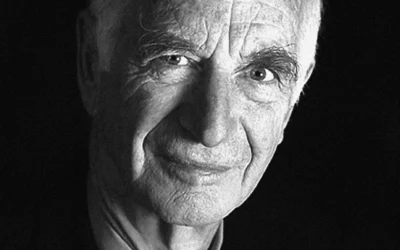
Ludwig Mies van der Rohe: Architect of the Modern Age

by | Sep 5, 2024 | 0 comments

Who was Ludwig Mies van der Rohe?

Ludwig Mies van der Rohe (1886-1969) was a towering figure in the history of modern architecture, whose influence continues to shape the built environment well into the 21st century. Over a career spanning more than half a century, Mies developed a distinctive vision of structural clarity and spatial poetry that redefined the very language of building. From his early experiments in European modernism to his iconic American skyscrapers, Mies pursued an architecture of essential forms and rigorous simplicity, an architecture that sought to embody the spirit of the modern age. His famous dictum “less is more” became a rallying cry for generations of architects, while his masterworks – the Barcelona Pavilion, the Farnsworth House, the Seagram Building – stand as enduring monuments to the power of distilled perfection in design.

The Evolution of a Modernist

Born in Aachen, Germany, in 1886, Mies began his career as a draftsman and designer in the thriving industrial city of Berlin. His early mentors included Bruno Paul and Peter Behrens, pioneers of the German modernist movement who instilled in Mies a deep appreciation for craft, technology, and industrial materials.

In the 1920s, Mies began to develop his own distinctive architectural language, characterized by stark geometric forms, open flexible plans, and a ruthless reduction of structure to its bare essentials. Projects like the unbuilt Brick Country House (1924) and the German Pavilion at the Barcelona Exposition (1929) showcased Mies’s evolving philosophy of “skin and bones” architecture, in which the building is stripped down to its core elements of enclosure and support.

These early European works established Mies as a leading figure of the avant-garde, a visionary who sought to harness the potential of modern industry to create a new architecture of clarity, simplicity, and structural honesty. Throughout the 1920s and ’30s, Mies continued to refine his minimalist aesthetic in a series of remarkable houses, apartment blocks, and campus buildings, all characterized by their fluid open spaces, precise detailing, and elegant use of steel and glass.

The American Master

In 1937, with the rise of the Nazi regime, Mies emigrated to the United States, where he became the head of the architecture school at the Illinois Institute of Technology (IIT) in Chicago. There he developed his mature style, a refined distillation of his earlier European work adapted to the scale and technology of the American city.

At IIT, Mies created a master plan and a series of buildings that embodied his vision of an architecture for the modern era. The campus’s stark rectilinear forms, expressed in steel and brick, created a powerful sense of order and clarity, while the buildings’ open plans and flexible spaces reflected Mies’s belief in architecture as a framework for living and learning.

In the postwar decades, Mies continued to refine his signature style in a series of iconic commissions, including the Farnsworth House (1951), the Seagram Building (1958), and the National Gallery in Berlin (1968). These masterworks showcased Mies’s unparalleled mastery of proportion, detail, and the expressive potential of industrial materials. With their precise grids, soaring glass walls, and exquisite detailing, they seem to distill the very essence of the modern age into pure tectonic form.

The Poetics of Structure

At the heart of Mies’s architecture was a profound belief in the poetics of structure, in the inherent beauty and expressive power of the skeleton that gives a building its form and strength. For Mies, the structure was not merely a means to an end, but an end in itself, a thing to be celebrated and elevated through masterful design.

This reverence for the clarity of the frame is evident in all of Mies’s major works, from the early Barcelona Pavilion to the late Neue Nationalgalerie. In these buildings, the structural elements – the slender steel columns, the cantilevered slabs, the precisely framed glass walls – are never hidden or obscured, but rather exposed and exalted as the very essence of the architectural expression.

Mies’s famous aphorism “God is in the details” reflects this obsessive focus on the articulation of the joint, the connection, the precise meeting of materials that turns mere construction into art. For Mies, every detail, no matter how small, was an opportunity to express the building’s underlying order and integrity, to elevate the humble elements of structure into objects of sublime beauty.

The Legacy of Less

Half a century after his death, Mies’s influence continues to reverberate through the world of architecture and design. His vision of an architecture stripped down to its essential elements, of a building as a clear and honest expression of its structure and function, has become a touchstone for generations of architects seeking to create spaces of simplicity, clarity, and enduring beauty.

But Mies’s legacy extends far beyond the individual buildings he created. His work embodied a fundamental shift in the way we think about architecture and its relationship to the modern world. Mies showed us that the inherent properties of industrial materials – the strength of steel, the transparency of glass, the plasticity of concrete – could be harnessed to create a new architecture of unprecedented lightness, openness, and flexibility. He taught us that less could indeed be more, that by distilling a building down to its essence, we could create spaces of profound beauty and poetry.

In an age of ever-increasing complexity and chaos, Mies’s architecture stands as a testament to the enduring power of simplicity and clarity in design. It reminds us that even in the midst of constant change and upheaval, it is possible to create spaces of stillness, order, and transcendent calm. As we navigate the challenges and possibilities of the 21st century, Mies’s legacy continues to inspire and guide us, pointing the way towards an architecture that is at once timeless and utterly of its time.

Ludwig Mies van der Rohe: Architect of Modern Simplicity

Meta Description: Explore the life and iconic works of Ludwig Mies van der Rohe, the influential modernist architect who shaped 20th-century architecture with his “less is more” philosophy.

Slug: ludwig-mies-van-der-rohe-modernist-architect-legacy

Tags: Ludwig Mies van der Rohe, Modernist architecture, Bauhaus, International Style, Minimalism, Farnsworth House, Seagram Building, Barcelona Pavilion, Less is more, Structural clarity

Category: Architecture History

[Original content remains the same]

Mies and the Bauhaus Movement

Mies van der Rohe’s involvement with the Bauhaus school played a crucial role in shaping his architectural philosophy. He served as the last director of the Bauhaus from 1930 until its closure in 1933 under pressure from the Nazi regime. During his tenure, Mies emphasized a more practical, industry-oriented approach to design education, focusing on architecture and industrial design.

The Bauhaus ethos of uniting art, craft, and technology deeply influenced Mies’s work. His designs embodied the Bauhaus principle of form following function, with every element serving a purpose and nothing superfluous. This approach is evident in iconic works like the Barcelona Chair, designed for the German Pavilion at the 1929 International Exposition.

Influence on Corporate Architecture

Mies van der Rohe’s impact on corporate architecture cannot be overstated. His design for the Seagram Building in New York City (1958) set a new standard for office tower design and urban planning. The building’s sleek glass and bronze exterior, combined with its plaza setback from the street, created a model that countless skyscrapers would emulate in the following decades.

Mies’s approach to office design prioritized flexible, open floor plans that could adapt to changing corporate needs. This concept revolutionized workplace design and continues to influence modern office layouts. His use of modular systems and standardized components also made his style particularly appealing to corporate clients, as it allowed for efficient construction and maintenance.

Technological Innovations

Mies van der Rohe was at the forefront of incorporating new technologies and materials into architecture. His pioneering use of plate glass and steel frames allowed for the creation of his signature transparent facades. The curtain wall system, which Mies perfected in buildings like 860–880 Lake Shore Drive Apartments in Chicago, became a hallmark of modern architecture.

Mies also innovated in climate control and building systems. The Farnsworth House, for example, featured a raised floor that housed heating and cooling systems, keeping the main living space uncluttered. His attention to integrating technology seamlessly into design set new standards for modern building practices.

Criticism and Controversies

Despite his immense influence, Mies van der Rohe’s work was not without its critics. Some argued that his minimalist aesthetic led to a sterile, impersonal architecture lacking in human warmth. The Farnsworth House, while celebrated as an architectural masterpiece, was criticized by its client, Dr. Edith Farnsworth, for being impractical as a living space.

Others have pointed out that the widespread adoption of Mies’s style in corporate architecture led to a certain homogeneity in urban landscapes. The “glass box” skyscraper, inspired by Mies’s designs, became so ubiquitous that it sparked a backlash against modernist architecture in the latter part of the 20th century.

Mies’s Enduring Relevance

In the 21st century, Mies van der Rohe’s principles continue to resonate with architects and designers. His emphasis on simplicity, clarity, and the honest expression of materials aligns well with contemporary concerns about sustainability and efficient use of resources. The flexibility and adaptability of his designs also speak to current needs for versatile spaces in both residential and commercial architecture.

Moreover, as society grapples with information overload and visual clutter, Mies’s famous dictum “less is more” has found new relevance. His pursuit of essential forms and spaces offers a counterpoint to the complexity of modern life, providing a template for creating calm, focused environments in a chaotic world.

Bibliography

Blake, Peter. The Master Builders: Le Corbusier, Mies Van Der Rohe, Frank Lloyd Wright. New York: Norton, 1996.

Carter, Peter. Mies Van Der Rohe at Work. London: Phaidon, 1999.

Cohen, Jean-Louis. Ludwig Mies Van Der Rohe. Basel: Birkhäuser, 2007.

Daza, Ricardo. Looking for Mies. Barcelona: Actar, 2000.

Lambert, Phyllis, ed. Mies in America. New York: Harry N. Abrams, 2001.

Mies van der Rohe, Ludwig. The Mies van der Rohe Archive. New York: Garland, 1986-1992.

Mies van der Rohe, Ludwig, and Phyllis Lambert. Mies in America. Montréal: Canadian Centre for Architecture, 2001.

Neumeyer, Fritz. The Artless Word: Mies Van Der Rohe on the Building Art. Cambridge, MA: MIT Press, 1991.

Schulze, Franz. Mies Van Der Rohe: A Critical Biography. Chicago: University of Chicago Press, 1985.

Spaeth, David. Mies Van Der Rohe. New York: Rizzoli, 1985.

Tegethoff, Wolf. Mies Van Der Rohe: The Villas and Country Houses. New York: Museum of Modern Art, 1985.

Zimmerman, Claire. Mies Van Der Rohe, 1886-1969: The Structure of Space. Köln: Taschen, 2006.

Artists and Designers
 

Hans Wegner

Arne Jacobsen

Friedrich Holderlin

The Psychology of Architecture

Frank Lloyd Wright

The Eames

Leon Krier

Andres Duany

Alvar Aalto

Mies van der Rohe

Explore the Other Articles by Categories on Our Blog 

Hardy Micronutrition is clinically proven to IMPROVE FOCUS and reduce the effects of autism, anxiety, ADHD, and depression in adults and children without drugsWatch Interview With HardyVisit GetHardy.com and use offer code TAPROOT for 15% off

Fractal Fluency: Why Your Nervous System Hates Minimalism

Fractal Fluency: Why Your Nervous System Hates Minimalism

Discover fractal fluency—the neuroscience of why natural patterns calm the brain while minimalist architecture stresses it. Learn how to create a “visual diet” for trauma recovery by designing environments with the right fractal dimension (D=1.3-1.5) to passively regulate the nervous system.

Bill O’Hanlon: The Therapist Who Asked “How Do People Get Happy?”

Bill O’Hanlon: The Therapist Who Asked “How Do People Get Happy?”

Bill O’Hanlon, MS, LMFT, studied with Milton Erickson as his only work/study student (serving as Erickson’s gardener) before co-founding Solution-Oriented/Possibility Therapy in the 1980s. Author of nearly 40 books including the Oprah-featured “Do One Thing Different” and foundational “In Search of Solutions” with Michele Weiner-Davis, O’Hanlon delivered over 3,700 presentations worldwide teaching his collaborative, non-pathologizing approach asking “How do people get happy?” rather than “What’s wrong?” He retired from clinical practice in 2020 to pursue professional songwriting from Santa Fe, New Mexico.

Diane Poole Heller: From Trauma Survivor to Pioneer of Attachment Healing

Diane Poole Heller: From Trauma Survivor to Pioneer of Attachment Healing

Diane Poole Heller, PhD, transformed her own 1988 traumatic car accident into a pioneering career developing DARe (Dynamic Attachment Re-patterning experience), a somatic approach integrating attachment theory and trauma resolution now taught worldwide. After 25 years as Senior Faculty for Peter Levine’s Somatic Experiencing Institute, she created Trauma Solutions and authored The Power of Attachment, teaching that regardless of childhood history, people can develop Secure Attachment Skills through attuned relationships, body-based interventions, and recognizing we’re all biologically hardwired for connection and healing.

Laurence Heller: The Clinical Psychologist Who Mapped How Developmental Trauma Distorts Identity

Laurence Heller: The Clinical Psychologist Who Mapped How Developmental Trauma Distorts Identity

Laurence Heller, PhD, spent over 40 years in private practice recognizing that developmental trauma creates not just nervous system dysregulation but fundamental identity distortions—pervasive shame, self-judgment, and disconnection from authentic self. He developed the NeuroAffective Relational Model (NARM), now taught worldwide, mapping five adaptive survival styles arising from disrupted developmental needs (Connection, Attunement, Trust, Autonomy, Love-Sexuality) and providing framework for healing through disidentification from survival-based identities while working simultaneously with psychology and physiology within attuned therapeutic relationships.

Bruce Perry: From Branch Davidian Waco to “What Happened to You?” – Three Decades Translating Neuroscience into Healing for Maltreated Children

Bruce Perry: From Branch Davidian Waco to “What Happened to You?” – Three Decades Translating Neuroscience into Healing for Maltreated Children

Bruce Perry developed the Neurosequential Model after treating children who survived the 1993 Branch Davidian siege in Waco. His three decades translating neuroscience into practical trauma treatment culminated in the #1 bestseller What Happened to You? with Oprah Winfrey. Perry’s fundamental insight: childhood behavior reflects developmental adaptation to environment rather than defect requiring correction, revolutionizing how thousands of professionals understand trauma.

Judith Herman: The Psychiatrist Who Named Complex Trauma and Challenged a Field’s Convenient Amnesia

Judith Herman: The Psychiatrist Who Named Complex Trauma and Challenged a Field’s Convenient Amnesia

Judith Herman, Harvard psychiatrist, transformed trauma treatment by distinguishing complex PTSD from single-incident trauma and articulating the three-stage recovery model emphasizing safety, remembrance, and reconnection. Her 1992 Trauma and Recovery challenged psychiatry’s “convenient amnesia” about sexual violence, while 2023’s Truth and Repair reimagines justice as healing rather than punishment, asking what survivors actually need: acknowledgment, validation, and community witness rather than retribution.

Gabor Maté: From Budapest Ghetto to Voice of Compassion in Addiction’s Darkest Corners

Gabor Maté: From Budapest Ghetto to Voice of Compassion in Addiction’s Darkest Corners

Gabor Maté, Holocaust survivor turned physician, spent twelve years treating severe addictions in Vancouver’s poorest neighborhood, asking “why the pain?” rather than “why the addiction?” His revolutionary recognition that addiction serves to escape unbearable emotions rooted in childhood trauma, detailed in bestseller In the Realm of Hungry Ghosts, transformed understanding of substance abuse from moral failing to developmental injury.

David Grand: From EMDR Trainer to Brainspotting Pioneer Through a Champion Skater’s Frozen Gaze

David Grand: From EMDR Trainer to Brainspotting Pioneer Through a Champion Skater’s Frozen Gaze

David Grand discovered brainspotting in 2003 when a figure skater’s eye wobble revealed where trauma was stored in her brain. By maintaining fixed eye position on that “brainspot” rather than using bilateral movement, processing accelerated dramatically. His development of this approach, now used by 13,000+ therapists worldwide, demonstrates how careful clinical observation combined with willingness to deviate from protocol can produce genuine therapeutic innovation for treating trauma, the yips, and performance blocks.

Richard Schwartz: From Failed Bulimia Study to Discovering the Internal Family System

Richard Schwartz: From Failed Bulimia Study to Discovering the Internal Family System

Richard Schwartz discovered Internal Family Systems in 1982 when bulimic clients described distinct “parts” battling inside them, leading him to recognize the mind’s natural multiplicity. His development of IFS therapy, which helps Self lead an internal family of managers protecting against exiled pain and firefighters dousing emotional flames, has revolutionized how millions understand their inner conflicts. From failed outcome study to global therapeutic movement, Schwartz demonstrated that beneath protective parts, everyone possesses undamaged Self capable of healing.

Francine Shapiro: From Cancer Diagnosis to Revolutionary Trauma Treatment Through Eye Movements

Francine Shapiro: From Cancer Diagnosis to Revolutionary Trauma Treatment Through Eye Movements

Francine Shapiro discovered EMDR during a walk in 1987 when she noticed eye movements reduced disturbing thoughts. Her development of Eye Movement Desensitization and Reprocessing revolutionized trauma treatment, creating the first therapy to demonstrate rapid resolution of PTSD through bilateral stimulation activating the brain’s adaptive information processing system. Now recommended by WHO and DOD, EMDR has helped millions worldwide process traumatic memories that talking therapy couldn’t reach.

Janina Fisher: Revolutionizing Trauma Treatment Through Structural Dissociation and Parts Work

Janina Fisher: Revolutionizing Trauma Treatment Through Structural Dissociation and Parts Work

Janina Fisher revolutionized complex trauma treatment by integrating structural dissociation theory with parts work and somatic interventions. Discover her Trauma-Informed Stabilization Treatment (TIST) approach showing how recognizing fragmented selves as protective adaptations rather than pathology transforms healing for clients with treatment-resistant symptoms including self-harm, addiction, and chronic suicidality.

Peter Levine: The Biophysicist Who Taught Trauma to Speak Through the Body

Peter Levine: The Biophysicist Who Taught Trauma to Speak Through the Body

Peter Levine revolutionized trauma treatment through Somatic Experiencing, proving trauma lives in the body’s nervous system. Discover how his work on completing frozen defensive responses, titration, and the SIBAM model provides somatic grounding for Jungian depth psychology and transforms PTSD healing.

Who Was James Hillman?

Who Was James Hillman?

An in-depth look at James Hillman, the founder of Archetypal Psychology, exploring his “Acorn Theory,” his critique of modern therapy, and his enduring influence on soul-centered practice.

0 Comments

Submit a Comment

Your email address will not be published. Required fields are marked *