
There is a quiet revolution happening in the field of psychiatry. For decades, the dominant model of mental health was “cerebrocentric”—meaning we believed that depression and anxiety were problems located exclusively above the neck. If you felt sad, it was a lack of serotonin in your synapses. If you felt anxious, it was a firing error in your amygdala. Treatment, therefore, focused on altering brain chemistry through medication or altering thoughts through talk therapy.
But for a significant subset of patients—perhaps as many as 30-40%—these treatments do not work, or they only work partially. These “treatment-resistant” clients often report a constellation of other symptoms: bloating, chronic fatigue, brain fog, and joint pain. Modern neuroscience has finally connected the dots: the brain is not an island. It is intimately connected to the immune system and the gut. The question we are now asking is radical: Is your depression actually an allergic reaction to inflammation?
The “Second Brain”: How Your Gut Talks to Your Head
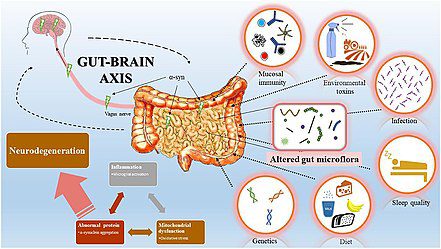
The connection between your digestion and your mood is not metaphorical; it is anatomical. The Gut-Brain Axis is the bi-directional communication highway connecting your Central Nervous System (brain/spine) to your Enteric Nervous System (the “second brain” in your gut). This highway is paved with the Vagus Nerve, but it is trafficked by neurotransmitters and immune cells.
Consider this: 95% of your body’s serotonin—the neurotransmitter responsible for feelings of well-being and safety—is manufactured in your intestines, not your brain. Furthermore, 70% of your immune system resides in the gut lining. This means that every time you eat, you are either feeding your brain or fighting it.
The Mechanism: From Leaky Gut to Leaky Brain
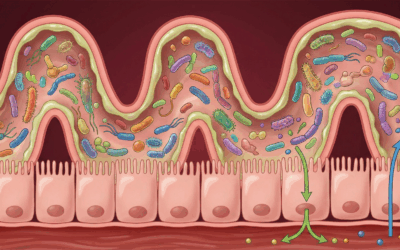
How does a sandwich cause a panic attack? The answer lies in permeability. The lining of your small intestine is only one cell thick. Its job is to act as a gatekeeper, letting nutrients into the bloodstream while keeping out toxins, bacteria, and undigested food particles. This barrier is maintained by “tight junctions.”
However, chronic stress, environmental toxins, and inflammatory foods (specifically gluten) trigger the release of a protein called zonulin. Zonulin signals the tight junctions to open up. This condition is known as Intestinal Permeability, or “Leaky Gut.”
When the gates are open, things escape into the bloodstream that shouldn’t be there (lipopolysaccharides, or LPS). Your immune system detects these invaders and sounds the alarm, releasing inflammatory cytokines. These cytokines travel through the blood and eventually cross the blood-brain barrier. Once inside the brain, they attack the microglia (the brain’s immune cells). This neuroinflammation shuts down the production of serotonin and dopamine and triggers “excitotoxicity” (anxiety) or “shutdown” (depression).
The “Sickness Behavior” Theory of Depression
Evolutionarily, this makes sense. When you have the flu, your body forces you to rest so it can fight the infection. You feel tired, foggy, unmotivated, and you want to withdraw from social contact. This is called Sickness Behavior. It is a survival mechanism.
The problem is that chronic inflammation tricks the brain into thinking it is permanently sick. You feel the lethargy and withdrawal of the flu, but without the fever. We diagnose this as Clinical Depression. But you cannot talk a brain out of being inflamed any more than you can talk a knee out of being swollen. To heal the mind, we must put out the fire in the body.
The Culprits: What is Inflaming Your Brain?
At our Nutritional Psychology clinic, we look for three primary drivers of neuroinflammation:
1. Gluten and Zonulin
For many people, gluten is not just a digestive irritant; it is a neurotoxin. Research shows that gluten triggers zonulin release in everyone, not just those with Celiac disease. For sensitive individuals, this leads to immediate brain fog and anxiety within hours of consumption.
2. Sugar and Dysbiosis
The microbiome (the trillions of bacteria in your gut) regulates your mood. High sugar diets feed pathogenic bacteria (like Candida) and starve beneficial bacteria (like Lactobacillus). This state of imbalance, called dysbiosis, prevents the production of GABA (the anti-anxiety neurotransmitter) and increases cortisol.
3. Micronutrient Deficiencies
You cannot build neurotransmitters out of thin air. You need raw materials. Specifically, the brain is starving for:
Vitamin B12 & Folate: Essential for methylation. A deficiency here mimics severe depression, paranoia, and fatigue.
Zinc: Critical for regulating the stress response. Low zinc is strongly linked to treatment-resistant depression.
Magnesium: The body’s “relaxant.” It blocks excess cortisol from damaging the brain. Most anxious people are severely magnesium deficient.
The Holistic Solution: Feeding the Brain
The good news is that the Gut-Brain Axis works both ways. By healing the gut, you can often lift the “fog” of anxiety and depression in a matter of weeks. This is not about “dieting” for weight loss; it is about eating for sanity.
1. Repair the Barrier
We use specific protocols to heal the gut lining, often involving collagen (bone broth), L-Glutamine, and the removal of inflammatory triggers like gluten and industrial seed oils.
2. Replenish the Deficiencies
We don’t guess; we test. By identifying exactly which nutrients your brain is missing—whether it’s heavy metal toxicity or a simple B12 deficiency—we can supplement with precision using targeted micronutrient therapy.
3. Regulate the Nervous System
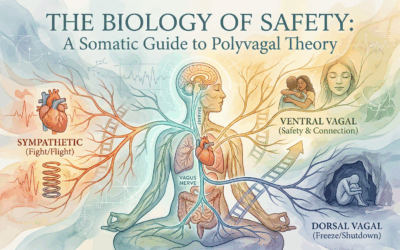
Remember, stress opens the gut barrier too. You cannot heal a leaky gut if you are living in a “Fight or Flight” state. This is why we combine nutritional therapy with somatic work to lower cortisol and allow digestion to turn back on.
Mental health is not just “all in your head.” It is in your stomach, your immune system, and your grocery cart. If you have been treating your depression solely as a psychological issue without success, it may be time to look at the physiological roots. At our clinic, we integrate holistic nutrition with psychotherapy because we know that you cannot build a healthy mind on an inflamed foundation.
Ready to heal your gut and your mind? Schedule a consultation to explore our holistic and nutritional approach to mental wellness.





















0 Comments