Pseudo-Dionysius the Areopagite and the Mystical

by | Jul 5, 2024 | 0 comments

Pseudo-Dionysius the Areopagite

The Mysterious Monk of Divine Darkness

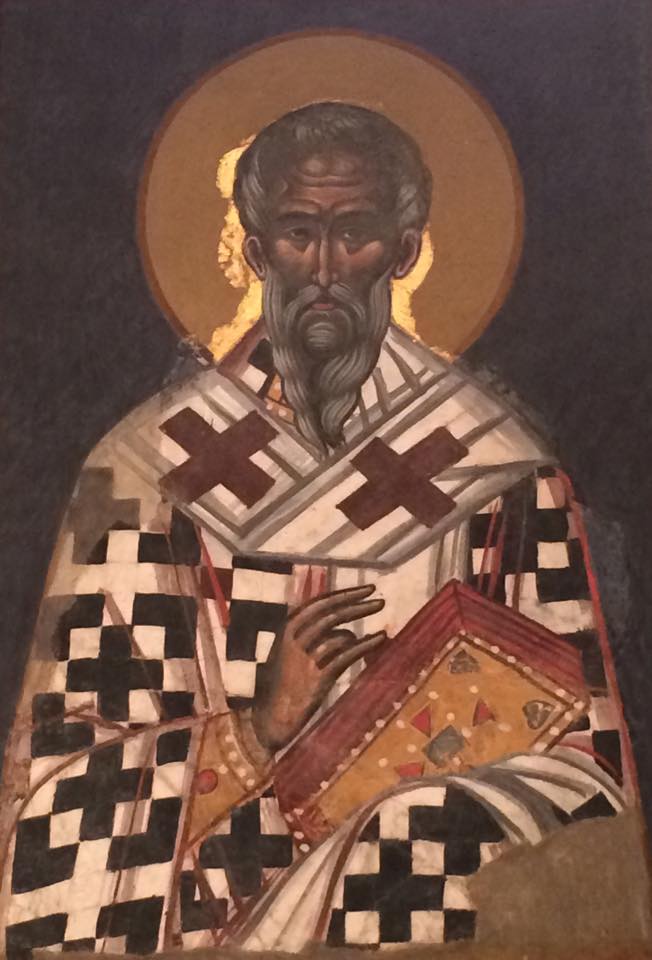
In the history of Western thought, few figures are as enigmatic or as influential as Pseudo-Dionysius the Areopagite. Writing under the pseudonym of a convert of St. Paul mentioned in Acts 17:34, this mysterious 5th or 6th-century Syrian monk created a synthesis of Neoplatonic philosophy and Christian theology that would shape the mystical tradition for a millennium. His writings are not merely historical artifacts; they are profound psychological maps of the soul’s journey into the unknown.
Pseudo-Dionysius is the architect of “Apophatic Theology”—the idea that God (or the ultimate reality) can only be known by what He is not. For the depth psychologist, this mirrors the nature of the Unconscious. It is a realm of “divine darkness” that transcends the categories of the rational ego. By exploring his works, we gain a framework for understanding the ineffable experiences of trauma, transformation, and the numinous.

The Hierarchical Cosmos: A Map of the Psyche

At the core of the Dionysian worldview is a hierarchical and symbolic understanding of reality. He envisions the universe as a “Great Chain of Being,” emanating from the unknowable God (the “Thearchy”) and descending through various levels of celestial beings. In his work The Celestial Hierarchy, he describes nine orders of angels that mediate between the divine and the human.

Psychologically, this hierarchy can be read as a map of the Self. The “angels” are not necessarily literal winged beings, but archetypal structures that mediate between the conscious ego and the deep, nuclear core of the psyche. Jung was deeply influenced by this concept, seeing the celestial hierarchies as a pre-modern attempt to categorize the autonomous complexes and archetypes that populate the collective unconscious. Just as angels transmit divine light, archetypes transmit the energy of the instincts into images the conscious mind can grasp.

The Apophatic Path: Therapy as Unknowing

Pseudo-Dionysius is most famous for his “Negative Theology.” He argues that because the Divine is infinite, no human concept can contain it. Therefore, the soul must ascend by stripping away all concepts, images, and attachments. This is the “Cloud of Unknowing.”

This is remarkably similar to the process of deep psychotherapy. We often come to therapy clinging to rigid narratives about who we are (“I am a victim,” “I am broken”). The process of healing involves a kind of apophasis—a stripping away of these false identifications. We must enter the “darkness” of the unknown to find our true self. As Edward Edinger noted, the encounter with the Self often feels like a defeat for the Ego, a descent into darkness that is actually the precursor to illumination.

Trauma and the Shattered Hierarchy

From a Dionysian perspective, trauma can be viewed as a shattering of the hierarchical order of the psyche. The smooth transmission of “light” (consciousness/energy) from the core of the Self to the Ego is disrupted. The individual feels cut off from the source of their own being, trapped in a “profane” world devoid of meaning.

The path of healing, then, mirrors the Dionysian path of mystical ascent: purification (catharsis of trauma), illumination (insight into patterns), and union (integration of the split-off parts). The therapist acts as a hierarch—a mediator who holds the space for this reconnection. The therapy room becomes a sacred space, a vessel where the fragmented soul can reassemble itself in the presence of an empathetic witness.

The Legacy of the Areopagite

The influence of Pseudo-Dionysius is vast, extending from medieval mystics like Meister Eckhart to modern thinkers like Stanislav Grof. His insistence that we must go beyond the rational mind to encounter the ultimate truth is a vital corrective to the hyper-rationalism of modern psychology.

He reminds us that the psyche is not a machine to be fixed, but a mystery to be entered. Whether we call it the “Divine Darkness” or the “Unconscious,” the path to wholeness requires the courage to let go of what we think we know and surrender to the transformative power of the unknown.


Further Reading & Resources

Explore More on Mysticism & Psychology

Explore the Other Articles by Categories on Our Blog 

Hardy Micronutrition is clinically proven to IMPROVE FOCUS and reduce the effects of autism, anxiety, ADHD, and depression in adults and children without drugsWatch Interview With HardyVisit GetHardy.com and use offer code TAPROOT for 15% off

What the Ancient Mysteries Knew About Healing Trauma

What the Ancient Mysteries Knew About Healing Trauma

The Eleusinian, Mithraic, and Dionysian mysteries weren’t religious observances. They were orchestrated psychodramas designed to shatter the ego and rebuild the self. Modern trauma therapy has inadvertently reconstructed their methods.

Naomi Quenk’s Work on the Inferior Function

Naomi Quenk’s Work on the Inferior Function

You've had the experience. You're usually calm, but suddenly you're screaming at your partner over dishes. You're normally logical, but you're sobbing uncontrollably about something that "shouldn't" matter. You're typically easygoing, but you've become rigidly fixated...

Understanding How the Different Types of Therapy Fit Together

Understanding How the Different Types of Therapy Fit Together

You've tried therapy before. Maybe it helped a little. Maybe you spent months talking about your childhood without anything changing. Maybe you learned coping skills that worked until they didn't. Maybe the therapist was nice but you left each session feeling like...

David Bohm: The Physicist Who Saw Mind in Matter

David Bohm: The Physicist Who Saw Mind in Matter

The Heretic of Copenhagen David Bohm (1917-1992) committed what many physicists considered an unforgivable sin: he took quantum mechanics seriously as a description of reality, not just a calculation tool. While the Copenhagen interpretation (Bohr, Heisenberg)...

Who Is Johnjoe McFadden?

Who Is Johnjoe McFadden?

Explore Johnjoe McFadden’s CEMI field theory, which proposes that consciousness arises from the brain’s electromagnetic field, solving the binding problem and explaining free will.

Bill O’Hanlon: The Therapist Who Asked “How Do People Get Happy?”

Bill O’Hanlon: The Therapist Who Asked “How Do People Get Happy?”

Bill O’Hanlon, MS, LMFT, studied with Milton Erickson as his only work/study student (serving as Erickson’s gardener) before co-founding Solution-Oriented/Possibility Therapy in the 1980s. Author of nearly 40 books including the Oprah-featured “Do One Thing Different” and foundational “In Search of Solutions” with Michele Weiner-Davis, O’Hanlon delivered over 3,700 presentations worldwide teaching his collaborative, non-pathologizing approach asking “How do people get happy?” rather than “What’s wrong?” He retired from clinical practice in 2020 to pursue professional songwriting from Santa Fe, New Mexico.

Diane Poole Heller: From Trauma Survivor to Pioneer of Attachment Healing

Diane Poole Heller: From Trauma Survivor to Pioneer of Attachment Healing

Diane Poole Heller, PhD, transformed her own 1988 traumatic car accident into a pioneering career developing DARe (Dynamic Attachment Re-patterning experience), a somatic approach integrating attachment theory and trauma resolution now taught worldwide. After 25 years as Senior Faculty for Peter Levine’s Somatic Experiencing Institute, she created Trauma Solutions and authored The Power of Attachment, teaching that regardless of childhood history, people can develop Secure Attachment Skills through attuned relationships, body-based interventions, and recognizing we’re all biologically hardwired for connection and healing.

Laurence Heller: The Clinical Psychologist Who Mapped How Developmental Trauma Distorts Identity

Laurence Heller: The Clinical Psychologist Who Mapped How Developmental Trauma Distorts Identity

Laurence Heller, PhD, spent over 40 years in private practice recognizing that developmental trauma creates not just nervous system dysregulation but fundamental identity distortions—pervasive shame, self-judgment, and disconnection from authentic self. He developed the NeuroAffective Relational Model (NARM), now taught worldwide, mapping five adaptive survival styles arising from disrupted developmental needs (Connection, Attunement, Trust, Autonomy, Love-Sexuality) and providing framework for healing through disidentification from survival-based identities while working simultaneously with psychology and physiology within attuned therapeutic relationships.

Bruce Perry: From Branch Davidian Waco to “What Happened to You?” – Three Decades Translating Neuroscience into Healing for Maltreated Children

Bruce Perry: From Branch Davidian Waco to “What Happened to You?” – Three Decades Translating Neuroscience into Healing for Maltreated Children

Bruce Perry developed the Neurosequential Model after treating children who survived the 1993 Branch Davidian siege in Waco. His three decades translating neuroscience into practical trauma treatment culminated in the #1 bestseller What Happened to You? with Oprah Winfrey. Perry’s fundamental insight: childhood behavior reflects developmental adaptation to environment rather than defect requiring correction, revolutionizing how thousands of professionals understand trauma.

Judith Herman: The Psychiatrist Who Named Complex Trauma and Challenged a Field’s Convenient Amnesia

Judith Herman: The Psychiatrist Who Named Complex Trauma and Challenged a Field’s Convenient Amnesia

Judith Herman, Harvard psychiatrist, transformed trauma treatment by distinguishing complex PTSD from single-incident trauma and articulating the three-stage recovery model emphasizing safety, remembrance, and reconnection. Her 1992 Trauma and Recovery challenged psychiatry’s “convenient amnesia” about sexual violence, while 2023’s Truth and Repair reimagines justice as healing rather than punishment, asking what survivors actually need: acknowledgment, validation, and community witness rather than retribution.

Gabor Maté: From Budapest Ghetto to Voice of Compassion in Addiction’s Darkest Corners

Gabor Maté: From Budapest Ghetto to Voice of Compassion in Addiction’s Darkest Corners

Gabor Maté, Holocaust survivor turned physician, spent twelve years treating severe addictions in Vancouver’s poorest neighborhood, asking “why the pain?” rather than “why the addiction?” His revolutionary recognition that addiction serves to escape unbearable emotions rooted in childhood trauma, detailed in bestseller In the Realm of Hungry Ghosts, transformed understanding of substance abuse from moral failing to developmental injury.

0 Comments

Submit a Comment

Your email address will not be published. Required fields are marked *