


Balancing Evidence and Experience: Lessons from the STAR*D Scandal and the Future of Psychotherapy
For decades, **psychotherapy** has walked a tightrope between the worlds of **scientific research** and **clinical practice**. On one side, a growing emphasis on evidence-based models promises therapeutic approaches grounded in objective data. On the other, skilled clinicians rely on hard-earned wisdom, theoretical savvy, and a nuanced reading of each client’s unique needs. Binding these worlds together, we find the raw data of real patient outcomes—stories of recovery and struggle that rarely fit neatly into a research study’s categories.
Maintaining this balance is no easy task, especially in an era that exalts quantitative evidence as the gold standard of care. Many well-meaning therapists, in an earnest attempt to be responsible practitioners, cleave to the research literature like scripture. But as any seasoned clinician knows, real therapy is a far messier affair than a randomized controlled trial. Humans are not lab rats, and what works on average in a study population may utterly fail an individual client.
The Specter of Flawed Science in Mental Health Research
Even more concerning, the very research we rely on to guide our work can be flawed, biased, or outright fraudulent. The ghosts of the **replication crisis** haunt the halls of academia, casting doubt on the reliability of even the most prestigious publications (Open Science Collaboration, 2015). At best, this leads to wasted time and resources chasing dead ends. At worst, it causes direct harm to patients, saddling them with ineffective or even counterproductive treatment.
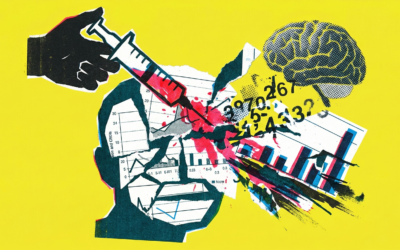
A stark reminder of these risks recently emerged in the form of the **STAR*D scandal**. This influential study, published in 2006, appeared to show that nearly 70% of depressed patients would achieve remission if they simply cycled through different antidepressants (Rush et al., 2006). Guided by these findings, countless psychiatrists and therapists dutifully switched their non-responsive clients from one drug to the next, chasing an elusive promise of relief.
Unraveling the STAR*D Scandal: Misconduct and Inflated Results
But as a shocking re-analysis has revealed, the STAR*D results were dramatically inflated through a combination of scientific misconduct and questionable research practices (Pigott et al., 2023). Patients who didn’t even meet the study’s criteria for depression were included in the analysis. The definition of treatment response was shifted midway through to juice the numbers. Participants who dropped out were excluded from the final tally, painting a misleadingly rosy picture (Levine, 2024).
When these flaws are corrected, the actual remission rate in STAR*D plummets to a mere 35%—no better than what would be expected from a placebo (Pigott et al., 2023). For 17 years, this single study guided the treatment of millions, despite being essentially a work of fiction. Patients endured round after round of medication trials, suffering debilitating side effects, on the false promise of relief just around the corner (Levine, 2024).
Financial Conflicts and the Crisis of Trust
How could such a house of cards have stood unchallenged for so long? Part of the answer lies in the cozy relationship between academic psychiatry and the pharmaceutical industry. The lead STAR*D investigators had extensive financial ties to the manufacturers of the very drugs they were testing (Angell, 2009). These **conflicts of interest**, subtly or not so subtly, shape what questions get asked, what outcomes are measured, and what results see the light of day.
But there’s a deeper issue at play. As a field, we have come to fetishize a narrow conception of evidence that excludes the **lived experience of clinicians and patients**. We dismiss practitioner wisdom as “anecdotal” and patient reports as “subjective.” In our zeal to be rigorous and scientific, we end up disconnected from the ground truth of the consulting room (Shedler, 2018).
Ignoring the Wisdom of Trauma and Dissociation Specialists
Nowhere is this disconnect more glaring than in the treatment of **trauma and dissociation**. For years, trauma therapists and their patients have known that the simplistic, manualized approaches touted by many academics often fail to address the complex realities of healing from profound psychological wounds (van der Kolk, 2014). They have seen firsthand how the neat, linear treatment protocols enshrined in the research literature can fall short in the messy, non-linear process of recovery.
Yet their voices have been largely ignored or dismissed by the psychiatric establishment. The highest paid researchers and thought leaders, ensconced in their ivory towers, have continued to champion treatment models that look good on paper but break down in practice. In the process, they have **gaslit a generation of clinicians and patients**, telling them that their own perceptions and experiences can’t be trusted if they don’t align with the “evidence base.”
Redefining Evidence-Based Practice (EBP) for Real-World Healing
This isn’t to say we should discard the evidence base entirely, retreating into some kind of therapeutic wild west where anything goes. Research is essential for guiding our work and protecting patients from quackery and incompetence (Lilienfeld et al., 2014). But it cannot be the only voice at the table.
We must expand our definition of evidence to include the rich, qualitative data that emerges in actual clinical practice (Levitt et al., 2018). We need to listen to therapists about what they’re actually seeing work, and not work, with real patients. We need to take seriously the outcomes and side effects that clients report, even (perhaps especially) when they diverge from the official study results (Longhofer & Floersch, 2014).
This is particularly crucial for complex, hard-to-study conditions like trauma, dissociation, and personality disorders. Randomized controlled trials, for all their strengths, are ill-equipped to capture the intricate, deeply personal work of healing from these wounds (van der Kolk, 2014). Therapists **in the trenches** with these populations are generating valuable **practice-based evidence** every day—we ignore it at our peril.
The Decline of CBT: A Cautionary Tale of Standardization
The risks of a narrow, dogmatic approach to evidence are not limited to the world of pharmaceuticals. Even psychological treatments can fall prey to a kind of calcification when they become overly standardized and manualized.
Take **cognitive-behavioral therapy (CBT)**, long considered the gold standard of evidence-based practice. Meta-analyses have suggested that its effectiveness has declined in recent years (Johnsen & Friborg, 2015, *but see a revision*). A parsimonious explanation may be that the early success of CBT relied on a diversity of therapeutic techniques that have since been sidelined in the rush to standardization. The pioneers of CBT drew upon a broad repertoire—from psychodynamic therapy to Gestalt—to flexibly adapt CBT to the needs of each patient.
As the field has become more focused on adhering to strict CBT protocols, that **flexibility and creativity has been lost**. We’ve ended up with a kind of paint-by-numbers version of CBT, a rote recitation of techniques that may work in the aggregate but leave many individual patients behind. In our quest for a standardized, “pure” form of CBT, we’ve forgotten that its original power came from its integration with other ways of working.
A Humbler, More Inclusive Approach to Evidence
As the dust settles on the STAR*D scandal, let it be a reminder to hold research findings in perspective and balance. The most meaningful and robust evidence base will emerge from the meeting of **multiple ways of knowing**—quantitative and qualitative, theoretical and applied, nomothetic and idiographic (Safran et al., 2011). It will be grounded in clinical realities, not just rarefied abstractions.
As therapists, our ultimate allegiance must be to our **patients**, not to any particular theoretical model or body of research. That means being willing to question received wisdom, to listen to the stories that don’t fit neatly into our preconceived categories, and to remain ever open to being surprised by the messy, unpredictable process of human change. It’s a daunting challenge, but one that lies at the very heart of effective, ethical work.
Seeking Therapy in Birmingham, AL? We Balance Evidence with Experience.
At **Taproot Therapy Collective** in Birmingham, AL, we believe in a holistic, evidence-informed approach that honors your unique experience. Our clinicians are trained to integrate the best of scientific research with the art of therapy, ensuring you receive personalized care that goes beyond one-size-fits-all protocols. If you’re struggling with complex trauma, depression, or anxiety, reach out today to connect with a therapist who is committed to a sophisticated, ethical practice.
Call us today at [Your Phone Number] or schedule a consultation online.
Read More About Evidence-Informed Practice and Clinical Psychology:
- Lessons from the STAR*D Scandal and Flawed EBP
- The Corporatization of Healthcare and Psychotherapy
- Incentives and Integrity in Evidence-Based Practice
- The Illusion of Progress: How Psychotherapy Lost its Way
- Healing The Modern Soul Series
References
Angell, M. (2009). Drug companies & doctors: A story of corruption. *The New York Review of Books*, 56(1), 8-12. https://www.nybooks.com/articles/archives/2009/jan/15/drug-companies-doctorsa-story-of-corruption/
Johnsen, T. J., & Friborg, O. (2015). The effects of cognitive behavioral therapy as an anti-depressive treatment is falling: A meta-analysis. *Psychological Bulletin*, 141(4), 747-768. https://doi.org/10.1037/bul0000015
Levine, B. (2024, January 17). Scientific Misconduct and Fraud: Psychiatry’s Final Nail in the Antidepressant Coffin. *CounterPunch*. https://www.counterpunch.org/2024/01/17/scientific-misconduct-and-fraud-psychiatrys-final-nail-in-the-antidepressant-coffin/
Levitt, H. M., Bamberg, M., Creswell, J. W., Frost, D. M., Josselson, R., & Suárez-Orozco, C. (2018). Journal article reporting standards for qualitative primary, qualitative meta-analytic, and mixed methods research in psychology: The APA Publications and Communications Board task force report. *American Psychologist*, 73(1), 26-46. https://doi.org/10.1037/amp0000151
Lilienfeld, S. O., Ritschel, L. A., Lynn, S. J., Cautin, R. L., & Latzman, R. D. (2014). Why ineffective psychotherapies appear to work: A taxonomy of causes of spurious therapeutic effectiveness. *Perspectives on Psychological Science*, 9(4), 355-387. https://doi.org/10.1177/1745691614535216
Longhofer, J., & Floersch, J. (2014). Values in a science of social work: Values-informed research and research-informed values. *Research on Social Work Practice*, 24(5), 527-534. https://doi.org/10.1177/1049731513511119
Open Science Collaboration. (2015). Estimating the reproducibility of psychological science. *Science*, 349(6251). https://doi.org/10.1126/science.aac4716
Pigott, E., Leventhal, A., Nierenberg, A., Andrew, J., Sink, K., Nierenberg, A., Jacobson, D., & Baltuch, D. (2023). Star*d: Antidepressant Efficacy Deflated by Scientific Misconduct. *BMJ Evidence-Based Medicine*. https://ebm.bmj.com/content/early/2023/07/12/bmjebm-2023-112306
Rush, A. J., Trivedi, M. H., Wisniewski, S. R., Nierenberg, A. A., Stewart, J. W., Warden, D., Niederehe, G., Thase, M. E., Lavori, P. W., Lebowitz, B. D., McGrath, P. J., Rosenbaum, J. F., Sackeim, H. A., Kupfer, D. J., Luther, J., & Fava, M. (2006). Acute and longer-term outcomes in depressed outpatients requiring one or several treatment steps: A STAR*D report. *American Journal of Psychiatry*, 163(11), 1905-1917. https://doi.org/10.1176/ajp.2006.163.11.1905
Safran, J. D., Abreu, I., Ogilvie, J., & DeMaria, A. (2011). Does psychotherapy research influence the clinical practice of researcher-clinicians? *Clinical Psychology: Science and Practice*, 18(4), 357-371. https://doi.org/10.1111/j.1468-2850.2011.01267.x
Shedler, J. (2018). Where is the evidence for “evidence-based” therapy? *Psychiatric Clinics of North America*, 41(2), 319-329. https://doi.org/10.1016/j.psc.2018.02.001
van der Kolk, B. A. (2014). *The body keeps the score: Brain, mind, and body in the healing of trauma*. Penguin Books. (Linked to the official library catalog/record for verification).














0 Comments