

The Nobel Laureate Who Applied Darwin’s Theory to the Brain
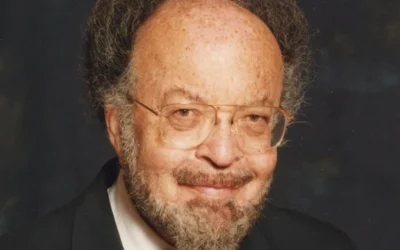
“The brain is wider than the sky.” Emily Dickinson’s words were a favorite of Gerald Edelman, the American neuroscientist and Nobel laureate who spent decades developing a theory of how consciousness emerges from the dynamic selection of neuronal populations. Edelman, who died in 2014, was one of the few scientists to win the Nobel Prize in one field, immunology, and then make major contributions to an entirely different domain, the neuroscience of mind and consciousness.
His Theory of Neuronal Group Selection, also known as Neural Darwinism, proposed that the brain develops and functions not like a computer executing programmed instructions but like an ecosystem undergoing natural selection. Just as species evolve through variation and selection, neuronal populations compete and are selected based on their adaptive value. This profoundly biological view of mind has influenced a generation of consciousness researchers and offers rich perspectives for understanding how experience shapes the brain.
From Antibodies to Brains
Edelman was born in New York City in 1929. After studying at Ursinus College and earning his M.D. at the University of Pennsylvania, he completed a Ph.D. at The Rockefeller Institute. His early research focused on the immune system, specifically the structure of antibodies. In 1972, he shared the Nobel Prize in Physiology or Medicine for discovering the chemical structure of antibody molecules.
This immunological work proved crucial to his later thinking about the brain. The immune system faces a fundamental problem: it must recognize and respond to an enormous variety of antigens, including ones the organism has never encountered before. The solution, as Edelman and others discovered, involves variation and selection. The body produces a vast repertoire of antibodies with different binding specificities, and those that happen to match invading antigens are selected and amplified.
Edelman recognized that the brain faces an analogous problem. The world presents an infinite variety of situations, and the brain must somehow categorize and respond to them appropriately. A purely instructionist model, where the environment directly programs neural connections, seemed inadequate. Instead, Edelman proposed that the brain, like the immune system, operates through selection from preexisting variation.
The Three Tenets of Neural Darwinism
Edelman’s theory rests on three fundamental principles: developmental selection, experiential selection, and reentry.
Developmental selection occurs during the formation of the brain in embryonic development. Genetic factors control the gross anatomy, determining that certain regions will become visual cortex while others become motor cortex. But at the level of individual synaptic connections, there is enormous variation. The precise pattern of connections in any brain is not genetically specified but emerges through competitive processes during development. Neurons that fire together wire together; those that do not lose their connections. The result is that no two brains, even in identical twins, have exactly the same wiring at the synaptic level.
Experiential selection occurs after birth, as the organism interacts with its environment. Some patterns of neural activity prove adaptive, helping the organism navigate its world successfully. These patterns are strengthened through synaptic modifications. Other patterns are weakened or eliminated. Experience sculpts the brain by selecting from the repertoire of connections established during development.
Reentry is perhaps Edelman’s most distinctive contribution. The brain consists of many specialized regions, each processing different aspects of the world. The visual system alone contains over thirty distinct areas. How are these disparate processes unified into coherent perception and action? Edelman proposed that reentrant signaling, the ongoing, recursive exchange of signals between brain regions, binds distributed processes together. Unlike simple feedback, reentry involves parallel, bidirectional connections linking multiple regions simultaneously. This creates dynamic loops that synchronize neural activity across the brain.
Neuronal Groups and Maps
The fundamental unit in Edelman’s theory is not the individual neuron but the neuronal group, a collection of tightly interconnected neurons that tend to fire together. These groups can range from hundreds to thousands of neurons. They form the units upon which selection operates.
Neuronal groups are organized into maps, topographic representations of sensory or motor information. The visual cortex contains retinotopic maps where neighboring neurons respond to neighboring regions of visual space. The motor cortex contains somatotopic maps representing different parts of the body. But unlike the fixed maps of a computer, neural maps are dynamic, constantly being reshaped by experience.
Crucially, Edelman emphasized that neuronal groups are degenerate, meaning that multiple different groups can accomplish the same function. This degeneracy provides robustness. If one group is damaged, others can compensate. It also enables flexible categorization, since the brain can recognize objects and situations despite enormous variation in the specific sensory inputs.
Primary and Higher-Order Consciousness
In his later work, particularly in “The Remembered Present” and “A Universe of Consciousness” (coauthored with Giulio Tononi), Edelman developed an account of how consciousness emerges from neuronal selection and reentry.
He distinguished between primary consciousness and higher-order consciousness. Primary consciousness is the direct, moment-to-moment awareness of the world that many animals likely possess. It is the ongoing “remembered present,” a dynamic scene constructed by integrating current perception with recent memory. Primary consciousness does not require language or a concept of self.
Higher-order consciousness involves awareness of being aware. It requires the capacity to model oneself, to construct concepts of past and future, and typically depends on language. Higher-order consciousness enables self-reflection, planning, and the explicit understanding of one’s own mental states that characterizes human experience.
Edelman proposed that primary consciousness arises when reentrant loops connect perception with value systems and memory. The brain’s value systems, rooted in evolutionary imperatives for survival and reproduction, tag certain experiences as significant. Reentry binds current perception with these values and with traces of past experience, creating a unified scene. Higher-order consciousness emerges when these processes are further integrated with linguistic and conceptual capacities, allowing the organism to become a model of itself.
Naturalizing Phenomenology
Edelman’s approach to consciousness was distinctive in its attempt to naturalize phenomenology. Rather than simply searching for neural correlates of consciousness, brain activities that happen to coincide with conscious states, he sought explanatory mappings between properties of experience and properties of neural dynamics.
Consider the unity of conscious experience. Despite being distributed across many brain regions, perception feels unified. Edelman argued this reflects the integrative power of reentrant signaling. Consider the differentiation of experience, the fact that each moment is distinct from every other. This reflects the enormous repertoire of possible states that can be accessed through neuronal group dynamics. Consider the temporal flow of consciousness, the sense of an ongoing present. This reflects the continuous updating of reentrant activity integrating perception and memory.
This approach influenced the later development of Integrated Information Theory by Giulio Tononi, Edelman’s collaborator, who formalized some of these intuitions mathematically.
Clinical Implications
Neural Darwinism offers valuable perspectives for understanding clinical phenomena.
Trauma can be understood as an experiential selection process that has gone awry. Under conditions of overwhelming stress, certain neuronal groups become strongly selected, encoding threat responses that are triggered by cues associated with the original traumatic experience. These groups may be so strongly potentiated that they dominate perception and response even when the current environment is safe. Treatment may involve weakening these maladaptive groups while strengthening alternative patterns.
Dissociation might involve disruptions to reentrant integration. When the normal binding of perception, emotion, and bodily experience breaks down, aspects of experience that should be unified become fragmented or disconnected.
The plasticity emphasized by Neural Darwinism offers hope for recovery and change. The brain is not hardwired but continuously being reshaped by experience. Therapeutic interventions can be understood as providing the right kinds of experience to select for more adaptive neuronal patterns.
Brainspotting and EMDR may work by engaging the reentrant systems that bind perception, memory, and emotion. By accessing traumatic material under conditions of safety and therapeutic support, these approaches may enable the selection of new patterns that integrate the trauma without the overwhelming activation.
Mindfulness practices can be understood as strengthening the reentrant processes that create integrated, present-centered awareness. By repeatedly selecting for states of calm, focused attention, meditation may shape the repertoire of neuronal groups in beneficial ways.
Selected Publications
Edelman, G. M. (1987). Neural Darwinism: The Theory of Neuronal Group Selection. Basic Books.
Edelman, G. M. (1989). The Remembered Present: A Biological Theory of Consciousness. Basic Books.
Edelman, G. M. (1992). Bright Air, Brilliant Fire: On the Matter of the Mind. Basic Books.
Edelman, G. M., & Tononi, G. (2000). A Universe of Consciousness: How Matter Becomes Imagination. Basic Books.
Edelman, G. M. (2003). Naturalizing consciousness: A theoretical framework. Proceedings of the National Academy of Sciences, 100(9), 5520-5524.
Edelman, G. M. (2004). Wider Than the Sky: The Phenomenal Gift of Consciousness. Yale University Press.
Bibliography
Academic Resources
Nobel Prize Biography: https://www.nobelprize.org/prizes/medicine/1972/edelman/biographical/
Darwin’s Neuroscientist (Obituary by Anil Seth): https://pmc.ncbi.nlm.nih.gov/articles/PMC4132271/
Wikipedia on Neural Darwinism: https://en.wikipedia.org/wiki/Neural_Darwinism
Wikipedia on Gerald Edelman: https://en.wikipedia.org/wiki/Gerald_Edelman
Related Resources
The Neurosciences Institute (archived): https://www.nsi.edu/
Giulio Tononi and Integrated Information Theory: https://www.scholarpedia.org/article/Integrated_information_theory
Interested in how neuroplasticity and brain-based approaches inform trauma therapy? Contact GetTherapyBirmingham.com to learn about our integrative methods for healing.












0 Comments