
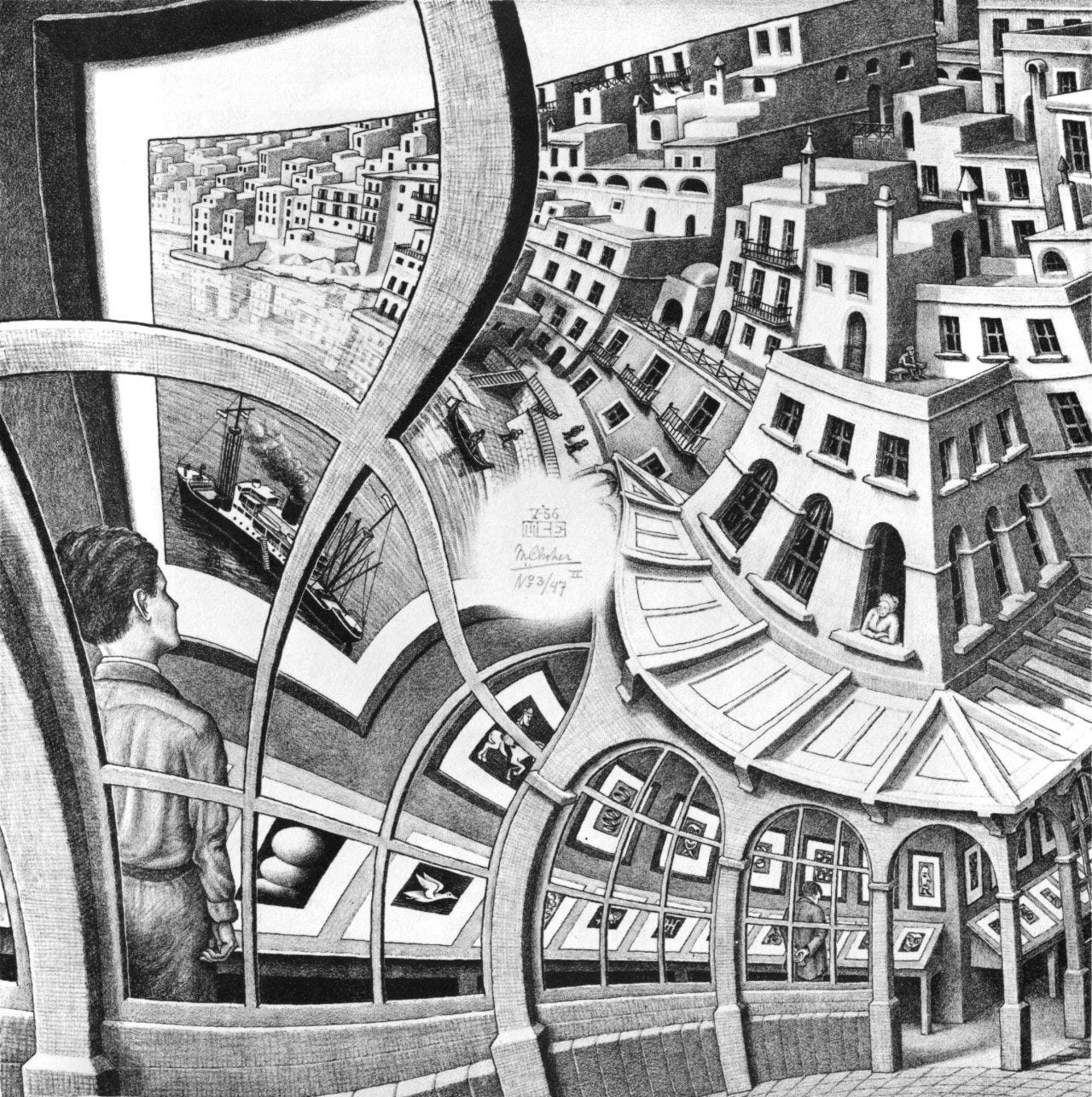
The Dream That Mapped the Mind
In 1909, Carl Jung had a dream that changed psychology forever. He stood on the second floor of a house. It was furnished in a stiff, rococo style—this was his conscious mask (Persona). As he walked down the stairs, the furniture turned medieval and dark—his personal unconscious.
He kept descending. In the cellar, he found Roman ruins. Finally, he discovered a prehistoric cave filled with bones—the Collective Unconscious.
This dream revealed a simple truth: We inhabit ourselves through buildings.
For decades, architects designed for eyes, and psychologists treated minds. They rarely spoke. Today, Neuro-architecture bridges that gap. We now know that ceiling height affects creativity, wall texture changes cortisol levels, and room layout triggers your nervous system’s safety response. Your home is not just a container for your stuff; it is the container for your soul.
The House as Self: Why Walls Matter
The Container of the Psyche
French philosopher Gaston Bachelard argued that the house is the primary tool we use to integrate our thoughts and memories. In The Poetics of Space, he showed that our physical shelter protects our daydreams.
In therapy, we see this constantly. Dream images use space to speak about the mind:
- The Basement: Often holds trauma or the Shadow.
- The Attic: Often represents intellect or the Superego.
- The Secret Room: Represents discovered potential.
If you live in a sterile, white box, you may be unconsciously trying to “sanitize” a messy emotional life. If you hoard, you are building a fortress against loss. The danger of modern “Brutalist” architecture is that it is dis-ensouled. It prioritizes the machine over the human spirit. Jung rejected this; he built his Bollingen Tower by hand to give his soul a stone body.
The Anatomy of Safety: Threshold and Hearth
Christopher Alexander’s A Pattern Language argues that humans need specific “patterns” to feel sane. Two are critical:
1. The Threshold (The Transition)
The Threshold is the porch, the foyer, or the gate. It is the psychological airlock between the Public World (Persona) and the Private World (Self). Modern houses often delete this, dumping you straight from the garage to the kitchen.
Without a threshold, you carry the stress of traffic and work directly into your sanctuary. You have no ritual to take off the mask. As discussed in our piece on Leon Krier and archetypes, we need physical transitions to create psychological safety.
2. The Hearth (The Center)
Every psyche needs a center. In the home, this is the Hearth (fire, kitchen island, or family table). If a home lacks a center—if it is just a series of flowing hallways—the mind drifts. Residents feel scattered and anxious because there is no center of gravity.
Neuro-Architecture: Designing for the Nervous System
Polyvagal Theory in Design
Your body scans a room for safety before your brain even registers the decor. This is Neuroception.
In a therapist’s office (or your living room), certain design choices trigger the “Fight or Flight” response:
- Sharp Corners: The amygdala reads sharp angles as weapons or thorns.
- Exposed Backs: Seating that puts your back to a door triggers hyper-vigilance.
- Harsh Lighting: High-frequency blue/white light mimics the midday sun, signaling “Alert!” to the brain.
To induce a “Ventral Vagal” state (social engagement and safety), we need biophilic elements: curves, plants, and warm light. This is critical for trauma recovery. If the room feels unsafe, the therapy cannot work.
The Glass Self: Privacy in the Digital Age
We are currently building “Glass Homes”—floor-to-ceiling windows, open concepts, and no walls. It looks modern, but it feels like a prison. It mimics the Panopticon.
This architectural transparency parallels the “Glass Self” created by social media. We have dissolved the wall between private and public. As we explored in The Glass Self, the unconscious needs darkness and privacy to incubate. If you are always on display, you cannot have a Shadow, and therefore you cannot be whole.
Practical Fixes: Heal Your Space
You don’t need a renovation to fix your neuro-architecture. Start here:
- Create a “Soft Corner”: Add a round rug or curved chair. Soften the hard edges to calm the amygdala.
- Lower the Lights: Use lamps at eye-level. This mimics the campfire and signals safety to our primal brain.
- Build a Threshold: Put a small table by the door. Make a ritual of putting your keys (and your work stress) there before entering your life.
Timeline of Architectural Psychology
- 1st Century BC: Vitruvius defines good building as “Stability, Utility, Beauty.”
- 1923: Jung builds Bollingen Tower to physically house his psyche.
- 1958: Bachelard publishes The Poetics of Space.
- 1977: Christopher Alexander publishes A Pattern Language.
- 2003: The Academy of Neuroscience for Architecture is founded.
Is your home a sanctuary or a stress box? Contact GetTherapyBirmingham.com to connect with a therapist who understands the environment of the mind.
















0 Comments