
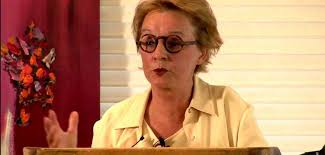
The Psychologist of the Pagan Heart
In the landscape of depth psychology, Ginette Paris (b. 1945) stands as a fierce advocate for a “polytheistic psychology.” While classical psychoanalysis often seeks to unify the self under a single ego, Paris argues that the human psyche is inherently plural. We are not ruled by one God, but by a pantheon of archetypal powers—Aphrodite, Ares, Artemis, Hermes—each with their own needs, logic, and morality.
A French-Canadian psychologist and core faculty member at Pacifica Graduate Institute, Paris is a leading voice in Archetypal Psychology, the movement founded by James Hillman. Her work challenges the monotheistic bias of Western culture, which she believes leads to psychological rigidity and neurosis. She suggests that when we suppress the “pagan” gods of nature, beauty, and war, they do not disappear; they return as symptoms. This suppression often results in what Jungians call the Shadow, where denied energies fester until they erupt.
Biography & Timeline: Ginette Paris
Born in Montreal, Quebec, Paris began her career in academia and clinical practice in Canada before moving to the United States. She holds a Ph.D. in psychology from the University of Montreal. Unlike many analysts who stay strictly within the clinical consulting room, Paris has always been a cultural critic, using myth to diagnose the pathologies of modern society. Her approach mirrors the cultural analysis of Carl Jung, who saw the events of the world as a projection of the collective unconscious.
She taught for many years at the University of Quebec in Montreal and later became a central figure at Pacifica Graduate Institute in Santa Barbara, California. Her work bridges the gap between the clinic, the academy, and the streets, addressing controversial topics like abortion, war, and heartbreak with a mythic lens. She often engages with the same depth of cultural sorrow found in the works of Michael Meade, viewing personal crises as initiations.
Key Milestones in the Life of Ginette Paris
| Year | Event / Publication |
| 1945 | Born in Montreal, Canada. |
| 1986 | Publishes Pagan Meditations, establishing her reputation as a major voice in archetypal psychology. |
| 1990 | Publishes Pagan Grace. |
| 1992 | Publishes The Sacrament of Abortion, a controversial and groundbreaking mythic analysis. |
| 2011 | Publishes Heartbreak: New Approaches to Healing, integrating neuroscience with depth psychology. |
Major Concepts: Pagan Psychology
The Return of the Gods
Paris argues that “the gods have become diseases.” In a culture that only worships productivity (a distorted Apollo) or money (a distorted Hermes), the other gods are neglected. This fragmentation is similar to the “disenchantment” described by David Abram, where we lose contact with the animate powers of the world.
- Aphrodite: When we repress beauty and sensuality, Aphrodite returns as obsession, eating disorders, or pornography. Paris advocates for a “civilized Aphrodite”—a cultivation of aesthetics and love as a spiritual discipline. This resonates with the work of Marion Woodman, who emphasized the need to honor the conscious feminine in the body.
- Ares: When we deny the god of war and aggression, he returns as senseless violence or autoimmune disease. We need healthy conflict to honor Ares.
- Artemis: The goddess of the wild and solitude. Paris highlights the need for women to have a psychology distinct from relationships or motherhood, a theme explored extensively by Jean Shinoda Bolen in her work on the virgin goddesses.
The Sacrament of Abortion
In perhaps her most daring work, Paris reframes abortion not as a medical procedure or a sin, but as a sacrificial act dedicated to Artemis. Artemis is the goddess who protects wild nature by knowing when life must be culled to preserve the whole. By viewing abortion through this mythic lens, Paris offers a way for women to process the grief and gravity of the decision without falling into the trap of Christian guilt or sterile medical language.
The Conceptualization of Trauma: Heartbreak as Initiation
In her later work, Heartbreak, Paris integrates neuroscience with mythology. She argues that severe emotional trauma (like a divorce or sudden loss) actually damages the brain’s neural networks. The sensation of “falling apart” is biologically real. This biological perspective aligns with the work of Allan Schore on affect regulation and the self.
The Three-Day Drop
Paris describes the “Three-Day Drop”—the immediate aftermath of shock where the ego collapses. This is not a pathology to be medicated away instantly; it is a descent into the underworld. Like Inanna or Psyche, the heartbroken person must go down to the bottom to find the resources for a new life. Healing comes not from “getting over it,” but from building a new neural and psychic architecture. This descent is a necessary part of the Hero’s Journey, where the old self must die for the new one to be born.
Legacy: The Wisdom of the Psyche
Ginette Paris teaches us that we are not the masters of our own house. We are the hosts to divine guests (archetypes). Her legacy is a call for Polytheistic consciousness—the ability to recognize which god is active in a given moment and to serve them appropriately. This echoes the sentiments of Thomas Moore, who advocates for a “care of the soul” that honors the sacred in the everyday.
She liberated depth psychology from the heavy, often moralistic tone of early psychoanalysis, injecting it with a Mediterranean sense of beauty, pleasure, and tragedy. She reminds us that psychology is not just about “fixing” the mind, but about finding the right myths to live by, a concept central to the myth of science itself.
Bibliography
- Paris, G. (1986). Pagan Meditations: The Worlds of Aphrodite, Artemis, and Hestia. Spring Publications.
- Paris, G. (1990). Pagan Grace: Dionysos, Hermes, and Goddess Memory in Daily Life. Spring Publications.
- Paris, G. (1992). The Sacrament of Abortion. Spring Publications.
- Paris, G. (1998). Wisdom of the Psyche: Depth Psychology after Neuroscience. Routledge.
- Paris, G. (2011). Heartbreak: New Approaches to Healing. Mill City Press.










0 Comments