

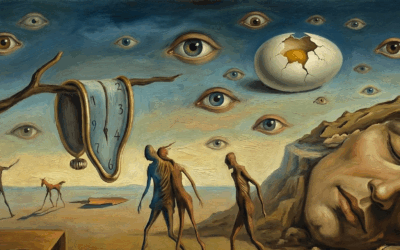
Carl Jung thought that dreams were the way that we use the past to try and conceptualize what the future will be like. When we are on the edge of a big often unavoidable change in our life we begin to dig into our unconscious mind to try to predict the future. Our unconscious uses our past experience and hidden beliefs to make collages of what the future might look like.
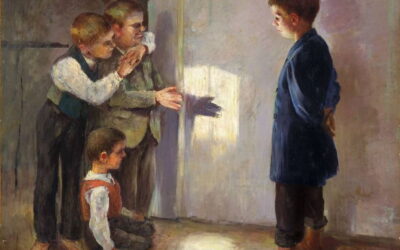
In Jungian psychology our “shadow” is all the parts of yourself that we do not want to examine or accept. This can be memories, behavior, or desires that scare us, but more often it is deep parts of our life journey that we do not want to accept. The shadow is the most recognizable is in our reactions to our shadow in others. When we are disproportionately judgmental, angry, or afraid of others it is likely because they represent to us parts of ourselves that we judge, fear or hate. We are able to see the shadow in others, and tell it what we think of it, where we often cannot see it in ourselves. We force others to hold parts of us that we are not ready to hold ourselves.
In dreams our ego is not active and we are more likely to encounter the shadow directly. The most common ways the shadow appears is as animals. Below are a few of the most common ways that the shadow is encountered as an animal.
The Wolf

A wolf appearing in dreams is one of the oldest and usually earliest ways that the shadow appears. It is as common a feature in children’s dreams as it is in children’s stories. Wolves ae associated with the vast black mystery of nighttime, of the woods, and of the hidden darkest parts of the family. Before children can express what their experiences intellectually they often express them metaphorically and the wolf is often the earliest metaphor. Shadows in the bedroom become wolves, or children hear it in the night time howling.
In little red riding hood a child encounters the wolf in the shadows of the woods. The in the red riding hood story the wolf later hides within the child’s family AND hides the child’s family in its belly. Children often “feel” the wolf is in their family when
The wolf reminds us that there is a something vast and visceral in the darkness with teeth and claws. It reminds us in dreams, even when we are adults, that we are small and that the dark is large and deep and dangerous. The wolf in dreams often means that we are afraid of our environment or large parts of their self. Not only that but it reminds us how dark and impenetrable those parts of ourselves are.
The Snake

The snake is a boundary transgressor. The snake enters sacred places where we do not think that the shadow is allowed to enter. Often it enters gardens, temples, or . The darkness that the wolf represents is a known danger, but the snake appears un expectedly in a previously safe place or suddenly at our feet. In Egyptian mythology and Arthurian legend the snake appears during a perceived peace to create discord.
In dreams the snake is often a trickster. We may not react to it like a threat. instead we talk to it like a salesman that wins our trust. The snake wants to cross a boundary. It wants to come into our homes, our hearts, and our churches. The snake gives no warning. We do not see the snake until we see it, and then it is too late. When you see the snake in dreams, shore up your defenses! This symbol means that one of your boundaries is about to be violated or already has
The Spider

The spider is an old image in arts and culture. Unlike the snake the spider can appear anywhere. The spider is a symbol of disorientation and confusion. In myths and dreams spiders are often teeny tiny or enormous. They walk through wall and appear from nowhere.
What makes this image of the shadow so terrifying is that it reminds you that the rules are changing or that you don’t know what the rules are. Spiders spin webs and lay traps. When they appear in dreams they remind us that we not be as in control as we believe ourselves to be.
If you liked this read the articles on other Jungian topics:
Bibliography:
Jung, C.G. The Archetypes and the Collective Unconscious. Translated by R.F.C. Hull, Routledge, 1991.
Jung, C.G. Memories, Dreams, Reflections. Vintage, 1965.
von Franz, Marie-Louise. Shadow and Evil in Fairy Tales. Shambhala, 1995.
Bly, Robert. A Little Book on the Human Shadow. HarperOne, 1988.
Johnson, Robert A. Owning Your Own Shadow: Understanding the Dark Side of the Psyche. HarperOne, 1993.
Zweig, Connie, and Jeremiah Abrams, editors. Meeting the Shadow: The Hidden Power of the Dark Side of Human Nature. Tarcher, 1991.
Further Reading:
Edinger, Edward F. Ego and Archetype: Individuation and the Religious Function of the Psyche. Shambhala, 1992.
Hollis, James. Finding Meaning in the Second Half of Life: How to Finally, Really Grow Up. Avery, 2005.
Pinkola Estés, Clarissa. Women Who Run With the Wolves: Myths and Stories of the Wild Woman Archetype. Ballantine Books, 1992.
Sandner, Donald, and Steven H. Wong, editors. The Sacred Heritage: The Influence of Shamanism on Analytical Psychology. Routledge, 1997.
Henderson, Joseph L. “Ancient Myths and Modern Man.” Man and His Symbols, edited by Carl G. Jung, Dell, 1964, pp. 104-157.
Sharp, Daryl. Jung Lexicon: A Primer of Terms & Concepts. Inner City Books, 1991.
Campbell, Joseph. The Historical Atlas of World Mythology, Vol. I. Alfred van der Marck Editions, 1988.
Eliade, Mircea. The Sacred and The Profane: The Nature of Religion. Harcourt, 1959.
Von Franz, Marie-Louise. Archetypal Dimensions of the Psyche. Shambhala, 1997.



0 Comments