

Updated November 2026 · By Joel Blackstock, LICSW-S
Brainspotting is a trauma therapy developed in 2003 by David Grand, PhD, a New York psychotherapist who came out of EMDR. You bring a distressing memory or feeling to mind, notice where it registers in your body, and then hold your gaze on one spot in your visual field while the therapist tracks you closely. Most of the work happens quietly, without retelling the story.The claim that sells Brainspotting is that a particular eye position opens a direct line to a trauma stored in the midbrain. Its own authors call that a testable hypothesis, and I can find no study that has tested it. What the method does in the room is easier to describe: it asks a person to stay with body sensation slowly, with a closely attuned clinician beside them. That is the argument of this page. The research on Brainspotting itself is small, early and encouraging, and the parts most likely to be doing the work are parts it shares with better-studied trauma therapies.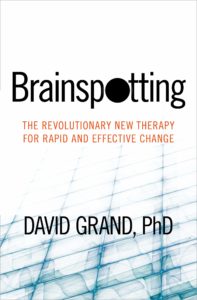
What Brainspotting is and where it came from
Grand was an EMDR (eye movement desensitization and reprocessing) therapist who had already written a book about that method, Emotional Healing at Warp Speed, and had been loosening its protocol into a freer style he called Natural Flow EMDR. In his 2013 book he tells the origin story. A teenage figure skater was stuck on a jump she could no longer land. As her eyes followed his hand back and forth, they wobbled and caught at one point. Grand stopped there instead of continuing the sweep. She stayed with what came up, and, as he tells it, she landed the jump soon afterward.1 That account is the founder's own, and it is an anecdote, but it explains the shape of everything that followed.Grand's working phrase is "where you look affects how you feel." The basic unit is the brainspot: an eye position that seems to line up with the body activation a person feels when they hold a distressing issue in mind.2 Practitioners find one in a few ways. In the outside window, the therapist moves a pointer slowly across the visual field and watches for reflexive signs such as a blink, an eye twitch or wobble, a change in pupil size, a quick breath or a small shift in posture. In the inside window, the client reports where the body sensation feels strongest. Gazespotting uses the places a person's eyes drift to on their own while talking. A resource spot is found the opposite way, from the calmest place in the body, and works as an anchor rather than a doorway into the distress.Two more features matter. Many practitioners play what Grand calls BioLateral sound through headphones, ambient music that pans back and forth between the left and right ears. Grand is the developer of those recordings, a commercial interest worth knowing about. And Grand describes the therapist's stance as dual attunement: tracking the relationship and the client's physiology at the same time, and following the client's process rather than steering it.1What a Brainspotting session involves
A first session is usually a conversation, not processing. You and the therapist go over your history, current stress, sleep, medication and what you want to change, and decide together whether Brainspotting fits at all. Once processing starts, a session tends to run like this:- You choose a focus: a memory, a symptom such as panic, a performance block, or a feeling with no clear story attached.
- You notice where it registers in your body, a tight throat or a weight in the chest, and roughly how strong it is, often on a 0 to 10 scale.
- The therapist moves a pointer slowly along the horizontal and then the vertical line of your visual field, watching your face and asking where the activation is strongest, then holds the pointer at the spot you settle on.
- You keep your eyes there and notice whatever happens: sensations, images, memories, emotion, or not much at all. The therapist stays mostly quiet and checks in now and then.
- Near the end, you check the original activation again, come back into the room and talk over anything that stood out.
The theory: what is hypothesis and what is known
Brainspotting's neuroscience comes mainly from two papers that Frank Corrigan, a clinician at Argyll and Bute Hospital in Scotland, wrote with Grand for Medical Hypotheses, a journal whose purpose is to publish speculative ideas. The 2013 paper proposes that holding attention on a brainspot engages a pathway from the retina to the superior colliculus in the midbrain and on to the pulvinar, the cingulate cortex and regions connected with the insula. It suggests that the healing of altered feeling about the self occurs "in the midbrain at the level of the superior colliculi and the periaqueductal gray."2 The 2015 paper adds that full orientation to a traumatic memory was cut short when the event happened, and that sustained attention lets the brain finish orienting and store the memory again without its old physiological charge.3The authors present these as testable hypotheses, which is the honest framing.2 I am not aware of any brain-imaging study that has checked whether holding a brainspot changes activity in the superior colliculus or the periaqueductal gray. The closest thing to a laboratory test that I could find is a 2026 master's thesis at Carleton University. It recorded EEG during a single session in 19 people without PTSD who brought a triggering memory. Distress fell and two EEG microstate patterns tied to attention and salience shifted, but heart rate variability did not change, and the author states that the biological correlates of Brainspotting are unknown.4Skeptics go further. A post on the Science-Based Medicine blog, "Brainspotting is classic pseudoscience," argues that the anatomy of eye movement is well mapped and gives no reason to think a given gaze direction connects to a given memory, and that the method grew out of a single anecdotal observation. EMDR makes a useful contrast. Its eye movements have a candidate mechanism with laboratory support: a systematic review found reasonable evidence for the working-memory account, in which moving the eyes while holding a memory competes for limited mental resources and makes the memory less vivid and less upsetting.5 Brainspotting holds the eyes still, so that explanation does not obviously carry over.None of this means Brainspotting does nothing. It means the midbrain account is a story for now. Claims that Brainspotting "rewires" the nervous system, or reaches a part of the brain that talk therapy cannot, are not supported. The therapies with the strongest evidence for PTSD, including cognitive processing therapy and prolonged exposure, are heavily verbal and cognitive,6 which is hard to square with the idea that healing requires going around the thinking brain.What the research shows so far
The outcome research is a handful of small studies. Here are the main ones, with what each can and cannot tell you.The EMDR comparison. Anja Hildebrand, Grand and Mark Stemmler collected data from 27 therapists in five countries on 76 adults who sought help after a traumatic event. Each person received three 60-minute sessions of either EMDR (23 people) or Brainspotting (53 people), and was assessed before treatment, just after it, and about six months later. Both groups improved significantly on self-reported PTSD symptoms. From before to after treatment, effect sizes were somewhat larger for EMDR (Cohen's d of 1.19 to 1.76) than for Brainspotting (0.74 to 1.04), but the difference between the groups was not statistically significant at any point, and both groups improved a little further by follow-up.7 Clients chose which therapy they received rather than being randomized, the groups were unequal in size, the outcomes were self-report, and the method's developer was a co-author. You will see this study cited online as showing that Brainspotting beat EMDR at follow-up. The paper does not show that.A within-person laboratory study. In Italy, Fabio D'Antoni and colleagues, working independently of Grand, asked a non-clinical sample of 40 psychologists and physicians to bring four distressing memories. Three of the memories each got a single 40-minute session of EMDR, Brainspotting or body scan meditation, and the fourth got book reading as a control. Distress fell after EMDR, Brainspotting and body scan, and at follow-up the EMDR and Brainspotting memories stayed less distressing than those treated with body scan or reading.8 It is a careful design, but in healthy professionals and single memories, not in PTSD.A randomized comparison with usual care. LeeAnn Horton and colleagues randomly assigned 63 self-referred people who came to a clinic for PTSD treatment to five weeks of either usual therapy (CBT, solution-focused, person-centered or psychodynamic) or Brainspotting, with a follow-up four to six weeks later. Both groups improved. The authors report that usual care was ahead right after treatment and Brainspotting was ahead at follow-up.9 Only 27 of the 63 finished, the analysis covered only those who finished, and one co-author is a Brainspotting trainer. A summary in the VA National Center for PTSD's research bulletin (August 2024) added that it is unclear whether PTSD was confirmed with a validated measure at the start, and that methodologically stronger studies are needed.Brainspotting added to CBT. In a German-language study, Susanne Glantschnig randomized 100 clients in her own Austrian private practice, all seen after a single stressful or traumatic experience and few with a PTSD diagnosis, to receive Brainspotting right away or later within cognitive behavioral therapy. A single therapist treated all of them. The immediate group responded faster, and both groups showed large effects on the Impact of Event Scale by the end of treatment and at a three-month follow-up. The author notes that allegiance effects cannot be ruled out, and writes that the generalizability of the results is clearly limited and that randomized controlled trials are urgently needed.10Pilots and case reports. Researchers at the University of Ottawa gave six Brainspotting sessions to nine patients with PTSD and found a significant drop on the PTSD Checklist, with no control group.11 A 2017 case report followed a survivor of the 2015 Bataclan attack in Paris.12 Studies like these raise questions. They cannot answer them.Put together: I could find no meta-analysis of Brainspotting, it does not appear among the therapies that major PTSD guidelines recommend, and it has nothing like the evidence behind trauma-focused cognitive behavioral therapy and EMDR, which a review of 114 randomized trials recommends as first-line treatments.6 It also has more than nothing. In every controlled comparison so far, people improved with it. Whether that improvement comes from the gaze position or from the slow, attentive structure around it is exactly what no study has yet separated. For the argument that academic psychology has been slow to study methods like this one, see why academic psychology resists Brainspotting. For a practical side-by-side, see Brainspotting vs. EMDR for trauma.Why the relationship carries so much of the weight
If the gaze theory is unproven, what could make Brainspotting help? Look at what a session asks for. You hold one issue in mind. You feel it in the body instead of talking around it. You stay with it at a pace slow enough not to flood you, while another person watches closely and stays steady. Grand's name for the therapist's part, dual attunement, puts the relationship and the physiology on equal footing.1 Seen this way, the fixed gaze may matter less as a neural address than as a place to rest attention long enough for something to shift.Each of those ingredients has support outside Brainspotting. Across 295 studies and more than 30,000 patients, the strength of the working alliance between client and therapist correlates with outcome at about r = .28, and the link holds across treatment approaches.13 Somatic Experiencing, Peter Levine's method, also guides attention to internal body sensation and posture, and aims at the discharge and regulation of excess arousal. Its authors frame the completion of thwarted defensive responses as theory, built on a composite case rather than trial data.14 Many clinicians in this family of therapies borrow the vocabulary of polyvagal theory, which we explore in your nervous system as a storyteller. Physiologists such as Paul Grossman argue that its basic premises are likely wrong, so that language works better as metaphor than as anatomy.15Corrigan has argued, with Alastair Hull, that randomized trials fit complex trauma poorly and that expert-led treatments grounded in affective neuroscience deserve a place even without top-tier evidence.16 That is a fair point about complex presentations, where the tested protocols help many people and leave others behind. It is also an argument any untested therapy can make. So the honest position is the modest one: Brainspotting is a reasonable option inside a good relationship and a poor substitute for one.What this looks like in therapy
At Taproot Therapy Collective in Hoover, Brainspotting is one tool inside a broader treatment, not a program you sign up for. It tends to suit people who have talked about a trauma many times and still feel it in the body, people whose words go flat or disappear as they get close to the material, people with a specific stuck reaction such as panic tied to a car accident or a freeze before performing, and people who prefer a quiet, client-led session to a structured protocol. The research covers PTSD and distressing memories. There are no controlled trials of Brainspotting as a treatment for depression, OCD, chronic pain or insomnia, so when it helps with those, it is as part of treating the stress underneath them, and we say so up front.Most of the clinical judgment goes into pacing. With people who dissociate, we usually start from a resource spot, the gaze position tied to the calmest place in the body, and build the capacity to return to it before going anywhere near the distress. Grand describes this resource approach as a model in its own right, alongside the activation work most people picture.1 For more, see how we Brainspot clients with severe dissociation and our guide to dissociative identity disorder. We also slow down or wait when someone is in active mania or psychosis, still living in an unsafe situation, drinking or using heavily, or having new neurological symptoms that a physician should see first. If you take psychiatric medication, keep taking it as prescribed and talk with your prescriber before changing anything. In the Ottawa pilot, patients' medications stayed the same throughout.11Brainspotting sits comfortably beside other approaches. Parts work helps when one part of a person wants to process and another wants to bolt. The authors of the Bataclan case report describe Brainspotting as combining features of hypnotherapy and EMDR,12 a lineage worth reading about in our piece on clinical hypnosis and Milton Erickson. And when a client wants a more structured eye-movement method, there are options such as EMDR or Accelerated Resolution Therapy. Choosing between them is a conversation, not a sales pitch.Common questions about Brainspotting
Is Brainspotting evidence-based?
Partly. Small controlled studies have found that people with trauma symptoms improve with Brainspotting, but there is no meta-analysis, it is not in the major PTSD guidelines, and its proposed brain mechanism has not been tested. Trauma-focused CBT and EMDR have far stronger evidence.Is Brainspotting better than EMDR?
There is no evidence that it is. In the one direct comparison in trauma survivors, which was not randomized, both helped, EMDR's effect sizes were somewhat larger, and the difference between groups was not statistically significant. EMDR has many more trials behind it. Some people prefer the slower, quieter style of Brainspotting, and that preference is worth taking seriously.How many Brainspotting sessions will I need?
There is no research-based number. Published studies have mostly tested short courses of one to six sessions. A single recent event may need relatively few; long-standing childhood trauma usually calls for longer therapy in which Brainspotting is one tool among several.Can Brainspotting be done online?
Yes. By video, the therapist uses an on-screen pointer or a fixed point in your room. No controlled study has compared online and in-person Brainspotting. Video is not our first choice for severe dissociation or when safety is uncertain.Is Brainspotting safe, and what are the side effects?
I could find no systematic data on adverse effects. People commonly report tiredness, emotional rawness, vivid dreams or stirred-up memories in the days after a session. The main risk is overwhelm, which is why pacing and resource spots matter. Tell your therapist about anything that worries you between sessions.Can I do Brainspotting on myself?
You can notice where your eyes settle when you feel calm and use that spot for grounding. Working through trauma alone is not a good idea, because the method depends on another person tracking you and helping you pace.What training should a Brainspotting therapist have?
Training is run in phases by Brainspotting Trainings, the organization behind brainspotting.com. Under certification standards that took effect November 1, 2025, a certified practitioner has completed Phases 1 and 2 plus one advanced training, documented 50 Brainspotting sessions, and had at least six hours of consultation with one approved consultant or completed a five-day Brainspotting intensive. Certification is not a license, so also check the therapist's Alabama license.What if Brainspotting does not help?
Say so. The focus may be too large, the pace may be off, current stress may be crowding things out, the fit with the therapist may be wrong, or the method may not suit you. Cognitive processing therapy, prolonged exposure and EMDR are well-tested alternatives, and changing course is not failure.The certification details above come from Brainspotting Trainings.17 I have completed Brainspotting Phase 2 myself, and I use it alongside somatic, parts-based and depth work rather than in place of them.If you are in the Birmingham area and wondering whether Brainspotting fits what you are carrying, our page on Brainspotting therapy for trauma in Hoover explains how we use it, and you can contact us with questions before committing to anything.References
- Grand, D. (2013). Brainspotting: The revolutionary new therapy for rapid and effective change. Sounds True.
- Corrigan, F., & Grand, D. (2013). Brainspotting: Recruiting the midbrain for accessing and healing sensorimotor memories of traumatic activation. Medical Hypotheses, 80(6), 759–766. https://doi.org/10.1016/j.mehy.2013.03.005
- Corrigan, F. M., Grand, D., & Raju, R. (2015). Brainspotting: Sustained attention, spinothalamic tracts, thalamocortical processing, and the healing of adaptive orientation truncated by traumatic experience. Medical Hypotheses, 84(4), 384–394. https://doi.org/10.1016/j.mehy.2015.01.028
- Comisso, L. (2026). Processing a triggering memory during a 'Brainspotting' session: Effects on brain microstate features and heart rate variability (Master's thesis, Carleton University). https://doi.org/10.22215/etd/2026-17049
- Landin-Romero, R., Moreno-Alcazar, A., Pagani, M., & Amann, B. L. (2018). How does eye movement desensitization and reprocessing therapy work? A systematic review on suggested mechanisms of action. Frontiers in Psychology, 9, 1395. https://doi.org/10.3389/fpsyg.2018.01395
- Lewis, C., Roberts, N. P., Andrew, M., Starling, E., & Bisson, J. I. (2020). Psychological therapies for post-traumatic stress disorder in adults: Systematic review and meta-analysis. European Journal of Psychotraumatology, 11(1), 1729633. https://doi.org/10.1080/20008198.2020.1729633
- Hildebrand, A., Grand, D., & Stemmler, M. (2017). Brainspotting: The efficacy of a new therapy approach for the treatment of posttraumatic stress disorder in comparison to eye movement desensitization and reprocessing. Mediterranean Journal of Clinical Psychology, 5(1). https://doi.org/10.6092/2282-1619/2017.5.1376
- D'Antoni, F., Matiz, A., Fabbro, F., & Crescentini, C. (2022). Psychotherapeutic techniques for distressing memories: A comparative study between EMDR, Brainspotting, and body scan meditation. International Journal of Environmental Research and Public Health, 19(3), 1142. https://doi.org/10.3390/ijerph19031142
- Horton, L. M., Schwartzberg, C., Goldberg, C. D., Grieve, F. G., & Brdecka, L. E. (2024). Brainspotting: A treatment for posttraumatic stress disorder. International Body Psychotherapy Journal, 22(2), 57–72. ibpj.org
- Glantschnig, S. (2025). Einbettung von Brainspotting in Kognitive Verhaltenstherapie nach singulären belastenden/traumatisierenden Erlebnissen. Psychotherapie Forum, 29(1–2), 59–66. https://doi.org/10.1007/s00729-025-00275-5
- Talbot, J., de la Salle, S., & Jaworska, N. (2023). A paradigm shift in trauma treatment: Converging evidence for a novel adaptation of eye movement desensitization and reprocessing (EMDR). The Canadian Journal of Psychiatry, 68(4), 283–285. https://doi.org/10.1177/07067437221142283
- Masson, J., Bernoussi, A., & Moukouta, C. S. (2017). Brainspotting therapy: About a Bataclan victim. Global Journal of Health Science, 9(7), 103. https://doi.org/10.5539/gjhs.v9n7p103
- Flückiger, C., Del Re, A. C., Wampold, B. E., & Horvath, A. O. (2018). The alliance in adult psychotherapy: A meta-analytic synthesis. Psychotherapy, 55(4), 316–340. https://doi.org/10.1037/pst0000172
- Payne, P., Levine, P. A., & Crane-Godreau, M. A. (2015). Somatic experiencing: Using interoception and proprioception as core elements of trauma therapy. Frontiers in Psychology, 6, 93. https://doi.org/10.3389/fpsyg.2015.00093
- Grossman, P. (2023). Fundamental challenges and likely refutations of the five basic premises of the polyvagal theory. Biological Psychology, 180, 108589. https://doi.org/10.1016/j.biopsycho.2023.108589
- Corrigan, F. M., & Hull, A. M. (2015). Recognition of the neurobiological insults imposed by complex trauma and the implications for psychotherapeutic interventions. BJPsych Bulletin, 39(2), 79–86. https://doi.org/10.1192/pb.bp.114.047134
- Brainspotting Trainings. (n.d.). Get certified in Brainspotting. Retrieved November 8, 2026, from https://brainspotting.com/get-certified/















0 Comments