
Updated November 2026 · By Joel Blackstock, LICSW-S
The best-supported treatments for complex PTSD are still trauma-focused therapies such as cognitive processing therapy, prolonged exposure and EMDR, and they help many people with long trauma histories.1 When they stall, the main alternatives are body-based and parts-based methods: Somatic Experiencing, Internal Family Systems, neurofeedback, Brainspotting and a few others. Their evidence ranges from several small trials to almost none.
Complex PTSD is as much a disorder of regulation as of memory. Many people with it cannot stay present in their bodies long enough to use a protocol built around talking through the worst events. That, more than any failure of cognitive therapy, is why body-first and parts-based methods make clinical sense. Making sense is not the same as being proven. The honest way to choose among the alternatives is to match the method to what is stuck, and to know how strong the evidence is for each one.

What complex PTSD is, and why talking can stall
The World Health Organization added complex PTSD to ICD-11, which took effect in 2022. The diagnosis requires the core PTSD symptoms (re-experiencing, avoidance and a lasting sense of threat) plus three "disturbances in self-organization": trouble regulating emotion, a deeply negative view of oneself, and difficulty staying close to other people. Validation studies support it as a distinct group. People who meet the criteria have more often lived through multiple, prolonged traumas, and they are more impaired than people with PTSD alone.2 The American DSM-5-TR has no separate complex PTSD diagnosis, so in the United States the same picture is usually recorded as PTSD alongside other diagnoses.
An earlier version of this article explained the problem with a tidy picture: talk therapy uses the thinking brain to suppress the amygdala, and trauma lives where words cannot reach. That picture is too simple. Joseph LeDoux, whose laboratory work mapped the amygdala's threat circuits, has argued with psychiatrist Daniel Pine that two systems are involved. One produces the body's defensive reactions. A different set of circuits produces the conscious feeling of fear. They argue that blurring the two has held back treatment development.3 LeDoux's wider work on threat circuits and emotional memory is the subject of Joseph LeDoux and the revolution in trauma therapy. Exposure therapy is not suppression either. It asks a person to approach what they avoid until the body learns something new.
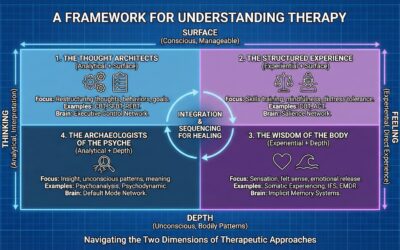
"Top-down" and "bottom-up" are still useful as clinical shorthand. Top-down work starts from meaning: thoughts, beliefs, the story. Bottom-up work starts from state, meaning breath, posture, heart rate and the pull to flee or freeze, and lets meaning follow. In complex trauma the state problem often comes first. A client who dissociates ten minutes into a trauma narrative is unlikely to be learning much in minute eleven. Different kinds of traumatic memory may also call for different tools, a point we take up in rethinking trauma diagnosis through memory systems.
What the standard treatments actually achieve
The earlier version also claimed that cognitive behavioral therapy dominates because insurers like short, manualized treatment, not because it works. That is wrong. The American Psychological Association's 2017 guideline, built on a formal systematic review, strongly recommended CBT, cognitive processing therapy (CPT), cognitive therapy and prolonged exposure (PE). It conditionally recommended EMDR, brief eclectic psychotherapy and narrative exposure therapy.4 The 2025 update names CPT, PE and trauma-focused CBT as first-line and lists EMDR as second-line. EMDR researchers have pointed out that this puts the APA at odds with five other national and international guidelines from the past decade, which give EMDR a stronger place.5
These treatments also work in complex presentations. A 2019 meta-analysis of 51 randomized trials looked at PTSD studies whose participants were likely to have clinically significant complex PTSD symptoms. CBT, exposure and EMDR all outperformed usual care on PTSD symptoms, though EMDR's estimate rested on only four trials. CBT and exposure also improved negative self-concept, and all three helped with relationship problems.1
The limits are real too. In that same meta-analysis, the benefits shrank when the comparison was a non-specific supportive treatment, and trauma that began in childhood was linked to poorer outcomes.1 In military trials of CPT and PE, 49 to 70 percent of participants improved meaningfully, yet about two-thirds still met PTSD criteria at the end of treatment.6 Across PTSD trials, about 16 percent of people drop out, and dropout is higher in trauma-focused therapies.7
The earlier version lumped dialectical behavior therapy in with the talk therapies that fail survivors. In fact, one of the strongest recent complex-trauma trials used it. In 2020, 193 women with PTSD from childhood abuse and borderline personality features were randomized to a trauma-adapted DBT program (DBT-PTSD) or CPT, for up to 45 sessions over a year. Both groups improved. DBT-PTSD did somewhat better, with remission in 58 percent against 41 percent, and fewer people dropped out.8 DBT-PTSD is itself a phase-based program that builds emotion-regulation skills alongside trauma processing.
That raises the longest-running argument in this field. In a 2011 survey of experts for the International Society for Traumatic Stress Studies, 84 percent endorsed a phase-based or sequenced approach, with stabilization coming before trauma work.9 In 2016 a group of leading trauma researchers countered that no rigorous study shows a stabilization phase is necessary, or that standard trauma-focused treatments are too risky for people with complex PTSD or fail to help them.10 The practical upshot is that stabilization should not turn into open-ended avoidance. When a good trauma-focused therapy has genuinely stalled, the methods below are reasonable next steps. They do not replace something that is working.
Body-based and parts-based alternatives
Somatic Experiencing
Peter Levine built Somatic Experiencing (SE) on the observation that wild animals face constant threat yet rarely seem traumatized, and that they appear to discharge the arousal afterward, often by shaking. He set this out in Waking the Tiger (1997).11 It is a starting intuition, not a tested finding about animals. The method works through interoception. The client tracks sensations such as tightness, heat or trembling, and the therapist moves attention back and forth between activation and a place of relative calm, in small doses. The first randomized trial, published in 2017, assigned 63 adults with PTSD to 15 weekly SE sessions or a waitlist and found large effects on PTSD symptoms and moderate to large effects on depression.12 A 2021 scoping review found 16 eligible studies. It judged the evidence preliminary but positive, with mixed study quality, and said unbiased randomized trials are still needed.13 Two Danish trials in people with chronic low back pain and post-traumatic symptoms point in different directions. Adding SE to usual care reduced PTSD symptoms in the first, though the authors called the effect smaller than expected.14 In the second, larger trial, adding SE to physiotherapy brought no extra benefit on any outcome.15 Our page on Somatic Experiencing therapy in Hoover describes how sessions run.
Internal Family Systems
Richard Schwartz described Internal Family Systems (IFS) in 1995.16 The model treats the mind as a system of parts: managers that keep control, firefighters that numb pain quickly, and exiles that carry the original hurt, all organized around a core Self. For complex trauma the appeal is obvious. Self-attack, dissociated states and sabotage get treated as protective parts with their own logic rather than as symptoms to stamp out. The trial evidence is thin but growing. The best-known early study was an uncontrolled pilot of 17 adults with PTSD and multiple childhood traumas, who received sixteen 90-minute sessions. It reported large drops in PTSD symptoms, but it had no control group, and the model's founder was a co-author.17 A randomized trial published in 2026 assigned 60 adults with PTSD to a 16-week online group program based on IFS or to an active control, a nature-based stress-reduction group. Both groups improved on clinician-rated PTSD symptoms, with no significant difference between them, although the IFS group attended more group sessions and reported higher satisfaction.18 See IFS therapy in Birmingham and Hoover for how we use it.
Lifespan Integration
Peggy Pace developed Lifespan Integration (LI) in the early 2000s. The therapist guides the client through a timeline of remembered scenes, roughly one for each year from the traumatic event up to the present, repeated several times. The aim is a felt sense that the event is over and that life went on after it.19 The only randomized trial we found tested a modified, single-session version in Sweden with female participants aged 15 to 65 who had PTSD after one sexual assault. Thirty-six entered the analysis. Three weeks later, among those who completed the study, 72 percent of the treated group no longer scored in the PTSD range, against 6 percent of the waitlist.20 That result is striking, but the trial excluded people with multiple traumas, the group LI is most often promoted for. Follow-up was only three weeks, and one of the trial's therapists was also an author. The claim that LI works especially well for attachment trauma and neglect comes from clinical experience. It has not been tested. Our guide to Lifespan Integration's timeline method covers the protocol in more detail.
Yoga, bodywork and the fascia claim
Yoga has more trials than most body methods. A 2018 meta-analysis of seven small randomized trials, with 284 participants in all, found low-quality evidence of benefit compared with no treatment. It found no clear advantage over attention-control activities, and the authors could make only a weak recommendation for yoga as an add-on.21 The earlier version of this article said trauma is stored in the fascia and that Rolfing or myofascial release can release it. There is no evidence for this. A PubMed search turned up no controlled trials of either method for PTSD. Bodywork can ease muscle tension and feel good, and that is worth something. It is not trauma treatment, and for many survivors touch needs explicit, ongoing consent.
Eye-position, light and brain-based methods
A disclosure first: I am certified in Emotional Transformation Therapy and trained in EMDR and Brainspotting, and Taproot offers most of the methods below. That is a reason to be stricter about the evidence, not looser.
EMDR
EMDR is the best studied of the methods people call alternatives. A 2020 meta-analysis of 76 trials, most of them in PTSD, found a large effect against control conditions. However, only 4 of 27 studies had a low risk of bias, there were signs of publication bias, and EMDR's apparent edge over other therapies disappeared in the better studies. The authors judged study quality too low for definite conclusions.22 Several other national and international guidelines rank it higher than the APA does,5 and it can suit people who do not want to describe their trauma in detail aloud.
Brainspotting
David Grand developed Brainspotting out of his EMDR work in 2003 and described it in a 2013 book.23 The therapist finds a gaze position that goes with a strong felt response and has the client hold it while attending to the body. Grand and psychiatrist Frank Corrigan proposed a midbrain mechanism, but they published it in Medical Hypotheses, and it remains a hypothesis.24 The main outcome study gave 76 clients three 60-minute sessions of either EMDR (23 clients) or Brainspotting (53 clients). Both groups improved, and the within-group effect sizes were larger for EMDR. The groups were unequal, the published abstract does not describe randomization, and Grand was a co-author.25 A 2022 single-session laboratory study tested 40 psychologists and physicians on distressing personal memories. EMDR and Brainspotting each lowered disturbance more than body-scan meditation or reading did.26 That sample was not clinical. The claim that Brainspotting is a more precise version of EMDR has no good head-to-head data behind it. The one direct comparison does not show Brainspotting doing better, and its design cannot settle which method works best. More on our approach is on the Brainspotting therapy for trauma page.
Emotional Transformation Therapy
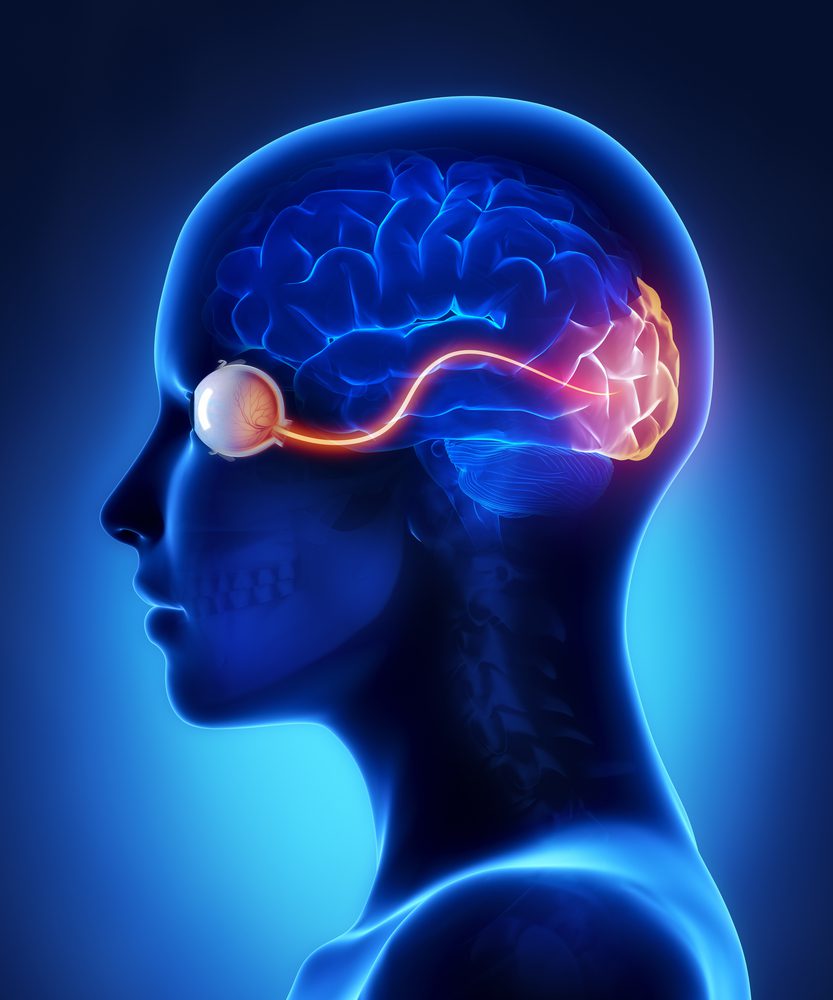
Steven Vazquez's Emotional Transformation Therapy (ETT) combines psychotherapy with colored light and eye movements in specific parts of the visual field.27 The earlier version said that light travels "directly to the hypothalamus." Part of that is true. A small class of retinal ganglion cells is itself sensitive to light. These cells project to the suprachiasmatic nucleus of the hypothalamus and set the body's circadian clock.28 That pathway governs sleep and wake timing. Nothing shows that colored light reaching it can "disrupt" the neural loop of a traumatic memory. The closest controlled evidence for light in PTSD comes from a different method. In a 2022 trial, 69 combat veterans used a bright morning light for four weeks. Bright light produced more treatment responders than a sham device, though nobody fully recovered, and improvement tracked a shift in circadian rhythm.29 We found no controlled trials of ETT itself in PubMed, and most of the published material is Vazquez's own. Rate it as clinical experience, not tested treatment. Anyone with a seizure history or light-triggered migraines should say so before any light-based session. The Emotional Transformation Therapy page explains what a session involves.
QEEG brain mapping and neurofeedback
A quantitative EEG, or brain map, compares a person's recorded brain activity with a reference database. Clinicians use it to choose a neurofeedback protocol and to track change. It is not a scan that diagnoses trauma. A 2015 systematic review of 34 studies found candidate markers of PTSD severity, mostly in alpha rhythms and certain evoked potentials, and the authors said they still needed confirmation.30 The earlier version's claims about trauma showing up as "hyper-coherence" or "hypo-coherence" are not established findings.
Neurofeedback itself has more support. In a 2016 trial of 52 adults with chronic PTSD, 27 percent of the neurofeedback group still met PTSD criteria after treatment, against 68 percent of the waitlist.31 Meta-analyses agree on the direction of the effect and on its fragility. A 2020 review of four trials with 123 participants rated its certainty very low.32 A 2023 review of seven trials with 215 participants found a significant benefit, but the studies were mostly small and varied in quality.33 A 2025 review found a moderate to large effect for EEG neurofeedback against waitlist-type controls, smaller gains in trials that used a sham comparison, and rated its confidence in the findings very low to low.34 Our brain mapping and neurofeedback service describes how the map and the training sessions fit together.
tDCS and tACS
Transcranial direct current stimulation (tDCS) and alternating current stimulation (tACS) pass a weak current through electrodes on the scalp. In a double-blind 2024 trial, 54 veterans received active or sham stimulation during virtual-reality exposure to war scenes. The active group reported larger drops in PTSD symptoms at one month, but quality of life did not differ between groups.35 A 2024 network meta-analysis of 21 trials found symptom reductions from some tDCS and magnetic stimulation protocols at the end of treatment, but the effects were no longer significant at follow-up.36 For tACS, the only sham-controlled PTSD trial we found had 40 patients and was published in 2025.37 These are experimental. In the 2024 tDCS trial, the current was added to exposure work, not used on its own.
The evidence at a glance
| Method | Best evidence so far | Fair summary |
|---|---|---|
| CPT, prolonged exposure, trauma-focused CBT | Many randomized trials; first-line in APA 2025 | Strong, though many people keep symptoms |
| EMDR | Many trials, most at some risk of bias; first-line in several guidelines | Moderate to strong |
| DBT-PTSD | One large trial against CPT in complex PTSD | Promising, well designed |
| Somatic Experiencing | One waitlist-controlled PTSD trial of 63 adults; mixed results in two back-pain trials | Preliminary |
| Neurofeedback | Several small trials; certainty rated very low to low | Preliminary |
| Internal Family Systems | One uncontrolled pilot; one 60-person group trial with no advantage over an active control | Very preliminary |
| Brainspotting | One comparison with EMDR, randomization not described; one single-session lab study | Very preliminary |
| Lifespan Integration | One small trial of a one-session version after a single assault | Untested for complex PTSD |
| tDCS and tACS | Small sham-controlled trials | Experimental |
| Yoga | Seven small trials; weak recommendation as an add-on | Add-on only |
| Emotional Transformation Therapy | No controlled trials found | Clinical experience only |
| Rolfing, myofascial release | No controlled trials for PTSD found | Untested |
What this looks like in therapy
In practice the useful question is less "which brand?" than "what is stuck?" A few patterns guide the choice:
- Avoidance is the main obstacle, and the person can talk about the trauma without flooding. A trauma-focused protocol such as CPT, PE or EMDR is usually the first thing to try, or to try again with a different therapist.
- The person floods or goes numb within minutes. The work starts with state: orienting to the room, tracking sensation, and practicing noticing activation and coming back down. Somatic work, and sometimes neurofeedback, fit here.
- Shame, self-attack or ambivalence about getting better dominates. Parts work gives the client a way to talk to the part that resists rather than fight it.
- The past does not feel past. Timeline methods aim straight at that felt confusion between then and now.
Bottom-up sessions tend to be slower, with more silence. The therapist asks what is happening in the body more often than what the client thinks about it. Some sessions use a pointer for gaze position or a light bar. None of this replaces measurement. Good practice is to track symptoms every few weeks with a standard questionnaire such as the PCL-5, and to change the approach if nothing has moved after a fair trial, instead of adding more of the same.
Medication is a separate decision, and it belongs with a prescriber. The APA's 2017 guideline conditionally recommended four antidepressants for PTSD: fluoxetine, paroxetine, sertraline and venlafaxine.4 Ask your prescriber whether any of them fits your situation, and do not start, stop or change a medication on your own. If you have heard about ketamine, read our look at the status of ketamine therapy for PTSD in Alabama before you raise it with a physician. If you are in crisis, call or text 988, the Suicide and Crisis Lifeline.
Getting help in Birmingham and Hoover
Taproot Therapy Collective is in Hoover, a few minutes from Birmingham. Our clinicians offer several of the approaches above, including Somatic Experiencing, IFS, EMDR, Brainspotting, ETT, Lifespan Integration, and brain mapping with neurofeedback. A first conversation can cover what you have already tried, where it got stuck, and what the evidence says about a sensible next step. We cannot promise an outcome. We can promise to tell you plainly how well each option has been tested. If that sounds useful, contact us to set up a consultation.
References
- Karatzias, T., Murphy, P., Cloitre, M., Bisson, J., Roberts, N., Shevlin, M., Hyland, P., Maercker, A., Ben-Ezra, M., Coventry, P., Mason-Roberts, S., Bradley, A., & Hutton, P. (2019). Psychological interventions for ICD-11 complex PTSD symptoms: Systematic review and meta-analysis. Psychological Medicine, 49(11), 1761–1775. https://doi.org/10.1017/S0033291719000436
- Brewin, C. R., Cloitre, M., Hyland, P., Shevlin, M., Maercker, A., Bryant, R. A., Humayun, A., Jones, L. M., Kagee, A., Rousseau, C., Somasundaram, D., Suzuki, Y., Wessely, S., van Ommeren, M., & Reed, G. M. (2017). A review of current evidence regarding the ICD-11 proposals for diagnosing PTSD and complex PTSD. Clinical Psychology Review, 58, 1–15. https://doi.org/10.1016/j.cpr.2017.09.001
- LeDoux, J. E., & Pine, D. S. (2016). Using neuroscience to help understand fear and anxiety: A two-system framework. American Journal of Psychiatry, 173(11), 1083–1093. https://doi.org/10.1176/appi.ajp.2016.16030353
- Guideline Development Panel for the Treatment of PTSD in Adults, American Psychological Association. (2019). Summary of the clinical practice guideline for the treatment of posttraumatic stress disorder (PTSD) in adults. American Psychologist, 74(5), 596–607. https://doi.org/10.1037/amp0000473
- Lee, C. W., de Jongh, A., Farrell, D., Meysner, L., Dominguez, S., & El-Leithy, S. (2026). A critique of the 2025 American Psychological Association clinical practice guideline for the treatment of posttraumatic stress disorder in adults: Underrating EMDR effectiveness. Journal of EMDR Practice and Research, 20, Article 0034. https://doi.org/10.34133/jemdr.0034
- Steenkamp, M. M., Litz, B. T., Hoge, C. W., & Marmar, C. R. (2015). Psychotherapy for military-related PTSD: A review of randomized clinical trials. JAMA, 314(5), 489–500. https://doi.org/10.1001/jama.2015.8370
- Lewis, C., Roberts, N. P., Gibson, S., & Bisson, J. I. (2020). Dropout from psychological therapies for post-traumatic stress disorder (PTSD) in adults: Systematic review and meta-analysis. European Journal of Psychotraumatology, 11(1), Article 1709709. https://doi.org/10.1080/20008198.2019.1709709
- Bohus, M., Kleindienst, N., Hahn, C., Müller-Engelmann, M., Ludäscher, P., Steil, R., Fydrich, T., Kuehner, C., Resick, P. A., Stiglmayr, C., Schmahl, C., & Priebe, K. (2020). Dialectical behavior therapy for posttraumatic stress disorder (DBT-PTSD) compared with cognitive processing therapy (CPT) in complex presentations of PTSD in women survivors of childhood abuse: A randomized clinical trial. JAMA Psychiatry, 77(12), 1235–1245. https://doi.org/10.1001/jamapsychiatry.2020.2148
- Cloitre, M., Courtois, C. A., Charuvastra, A., Carapezza, R., Stolbach, B. C., & Green, B. L. (2011). Treatment of complex PTSD: Results of the ISTSS expert clinician survey on best practices. Journal of Traumatic Stress, 24(6), 615–627. https://doi.org/10.1002/jts.20697
- De Jongh, A., Resick, P. A., Zoellner, L. A., van Minnen, A., Lee, C. W., Monson, C. M., Foa, E. B., Wheeler, K., ten Broeke, E., Feeny, N., Rauch, S. A., Chard, K. M., Mueser, K. T., Sloan, D. M., van der Gaag, M., Rothbaum, B. O., Neuner, F., de Roos, C., Hehenkamp, L. M., . . . Bicanic, I. A. (2016). Critical analysis of the current treatment guidelines for complex PTSD in adults. Depression and Anxiety, 33(5), 359–369. https://doi.org/10.1002/da.22469
- Levine, P. A. (1997). Waking the tiger: Healing trauma: The innate capacity to transform overwhelming experiences (with A. Frederick). North Atlantic Books.
- Brom, D., Stokar, Y., Lawi, C., Nuriel-Porat, V., Ziv, Y., Lerner, K., & Ross, G. (2017). Somatic experiencing for posttraumatic stress disorder: A randomized controlled outcome study. Journal of Traumatic Stress, 30(3), 304–312. https://doi.org/10.1002/jts.22189
- Kuhfuß, M., Maldei, T., Hetmanek, A., & Baumann, N. (2021). Somatic experiencing: Effectiveness and key factors of a body-oriented trauma therapy: A scoping literature review. European Journal of Psychotraumatology, 12(1), Article 1929023. https://doi.org/10.1080/20008198.2021.1929023
- Andersen, T. E., Lahav, Y., Ellegaard, H., & Manniche, C. (2017). A randomized controlled trial of brief Somatic Experiencing for chronic low back pain and comorbid post-traumatic stress disorder symptoms. European Journal of Psychotraumatology, 8(1), Article 1331108. https://doi.org/10.1080/20008198.2017.1331108
- Andersen, T. E., Ellegaard, H., Schiøttz-Christensen, B., Mejldal, A., & Manniche, C. (2020). Somatic Experiencing® for patients with low back pain and comorbid posttraumatic stress symptoms: A randomised controlled trial. European Journal of Psychotraumatology, 11(1), Article 1797306. https://doi.org/10.1080/20008198.2020.1797306
- Schwartz, R. C. (1995). Internal family systems therapy. Guilford Press.
- Hodgdon, H. B., Anderson, F. G., Southwell, E., Hrubec, W., & Schwartz, R. (2022). Internal family systems (IFS) therapy for posttraumatic stress disorder (PTSD) among survivors of multiple childhood trauma: A pilot effectiveness study. Journal of Aggression, Maltreatment & Trauma, 31(1), 22–43. https://doi.org/10.1080/10926771.2021.2013375
- Joss, D., Comeau, A., Chevannes, R., Parry, G., Rea, H. S., Barria, J., Bumpus, C., Rector, A., Rajan, A., Rosansky, J., Rice, F. K., Ward, M. C., Tobiasz Veltz, L., Ally, D., Rosenberg, L. G., Sweezy, M., Lovas, D., & Schuman-Olivier, Z. (2026). A randomized controlled trial of an online group-based internal family systems treatment for posttraumatic stress disorder: The Program for Alleviating and Resolving Trauma and Stress (PARTS) study. Psychological Trauma: Theory, Research, Practice, and Policy. Advance online publication. https://doi.org/10.1037/tra0002089
- Pace, P. (2015). Lifespan integration: Connecting ego states through time. Eirene Imprint. (Original work published 2003)
- Rajan, G., Wachtler, C., Lee, S., Wändell, P., Philips, B., Wahlström, L., Svedin, C. G., & Carlsson, A. C. (2022). A one-session treatment of PTSD after single sexual assault trauma. A pilot study of the WONSA MLI project: A randomized controlled trial. Journal of Interpersonal Violence, 37(9–10), NP6582–NP6603. https://doi.org/10.1177/0886260520965973
- Cramer, H., Anheyer, D., Saha, F. J., & Dobos, G. (2018). Yoga for posttraumatic stress disorder: A systematic review and meta-analysis. BMC Psychiatry, 18(1), Article 72. https://doi.org/10.1186/s12888-018-1650-x
- Cuijpers, P., van Veen, S. C., Sijbrandij, M., Yoder, W., & Cristea, I. A. (2020). Eye movement desensitization and reprocessing for mental health problems: A systematic review and meta-analysis. Cognitive Behaviour Therapy, 49(3), 165–180. https://doi.org/10.1080/16506073.2019.1703801
- Grand, D. (2013). Brainspotting: The revolutionary new therapy for rapid and effective change. Sounds True.
- Corrigan, F., & Grand, D. (2013). Brainspotting: Recruiting the midbrain for accessing and healing sensorimotor memories of traumatic activation. Medical Hypotheses, 80(6), 759–766. https://doi.org/10.1016/j.mehy.2013.03.005
- Hildebrand, A., Grand, D., & Stemmler, M. (2017). Brainspotting: The efficacy of a new therapy approach for the treatment of posttraumatic stress disorder in comparison to eye movement desensitization and reprocessing. Mediterranean Journal of Clinical Psychology, 5(1). https://doi.org/10.6092/2282-1619/2017.5.1376
- D'Antoni, F., Matiz, A., Fabbro, F., & Crescentini, C. (2022). Psychotherapeutic techniques for distressing memories: A comparative study between EMDR, Brainspotting, and body scan meditation. International Journal of Environmental Research and Public Health, 19(3), Article 1142. https://doi.org/10.3390/ijerph19031142
- Vazquez, S. R. (2012). Emotional transformation therapy: An interactive ecological psychotherapy. Jason Aronson.
- Berson, D. M., Dunn, F. A., & Takao, M. (2002). Phototransduction by retinal ganglion cells that set the circadian clock. Science, 295(5557), 1070–1073. https://doi.org/10.1126/science.1067262
- Youngstedt, S. D., Kline, C. E., Reynolds, A. M., Crowley, S. K., Burch, J. B., Khan, N., & Han, S. (2022). Bright light treatment of combat-related PTSD: A randomized controlled trial. Military Medicine, 187(3–4), e435–e444. https://doi.org/10.1093/milmed/usab014
- Lobo, I., Portugal, L. C., Figueira, I., Volchan, E., David, I., Garcia Pereira, M., & de Oliveira, L. (2015). EEG correlates of the severity of posttraumatic stress symptoms: A systematic review of the dimensional PTSD literature. Journal of Affective Disorders, 183, 210–220. https://doi.org/10.1016/j.jad.2015.05.015
- van der Kolk, B. A., Hodgdon, H., Gapen, M., Musicaro, R., Suvak, M. K., Hamlin, E., & Spinazzola, J. (2016). A randomized controlled study of neurofeedback for chronic PTSD. PLOS ONE, 11(12), Article e0166752. https://doi.org/10.1371/journal.pone.0166752
- Steingrimsson, S., Bilonic, G., Ekelund, A.-C., Larson, T., Stadig, I., Svensson, M., Vukovic, I. S., Wartenberg, C., Wrede, O., & Bernhardsson, S. (2020). Electroencephalography-based neurofeedback as treatment for post-traumatic stress disorder: A systematic review and meta-analysis. European Psychiatry, 63(1), Article e7. https://doi.org/10.1192/j.eurpsy.2019.7
- Askovic, M., Soh, N., Elhindi, J., & Harris, A. W. F. (2023). Neurofeedback for post-traumatic stress disorder: Systematic review and meta-analysis of clinical and neurophysiological outcomes. European Journal of Psychotraumatology, 14(2), Article 2257435. https://doi.org/10.1080/20008066.2023.2257435
- Berman, D. E., Cowansage, K. P., Bellanti, D. M., Nair, R., Boyd, C. C., Beech, E. H., Reddy, M. K., Recker, R. S., Belsher, B. E., & Kelber, M. S. (2025). Systematic review and meta-analysis of neurofeedback training efficacy and neural mechanisms in the treatment of posttraumatic stress disorder. Frontiers in Neuroscience, 19, Article 1658652. https://doi.org/10.3389/fnins.2025.1658652
- van 't Wout-Frank, M., Arulpragasam, A. R., Faucher, C., Aiken, E., Shea, M. T., Jones, R. N., Greenberg, B. D., & Philip, N. S. (2024). Virtual reality and transcranial direct current stimulation for posttraumatic stress disorder: A randomized clinical trial. JAMA Psychiatry, 81(5), 437–446. https://doi.org/10.1001/jamapsychiatry.2023.5661
- Liu, H., Wang, X., Gong, T., Xu, S., Zhang, J., Yan, L., Zeng, Y., Yi, M., & Qian, Y. (2024). Neuromodulation treatments for post-traumatic stress disorder: A systematic review and network meta-analysis covering efficacy, acceptability, and follow-up effects. Journal of Anxiety Disorders, 106, Article 102912. https://doi.org/10.1016/j.janxdis.2024.102912
- Hatef, B., Jahromi, G. P., Khaleghi, A., & Radfar, S. (2025). The therapeutic effect of high-definition 1-Hz transcranial alternating current stimulation in PTSD: A randomized controlled trial. Clinical Psychopharmacology and Neuroscience, 23(4), 601–613. https://doi.org/10.9758/cpn.25.1298













0 Comments