
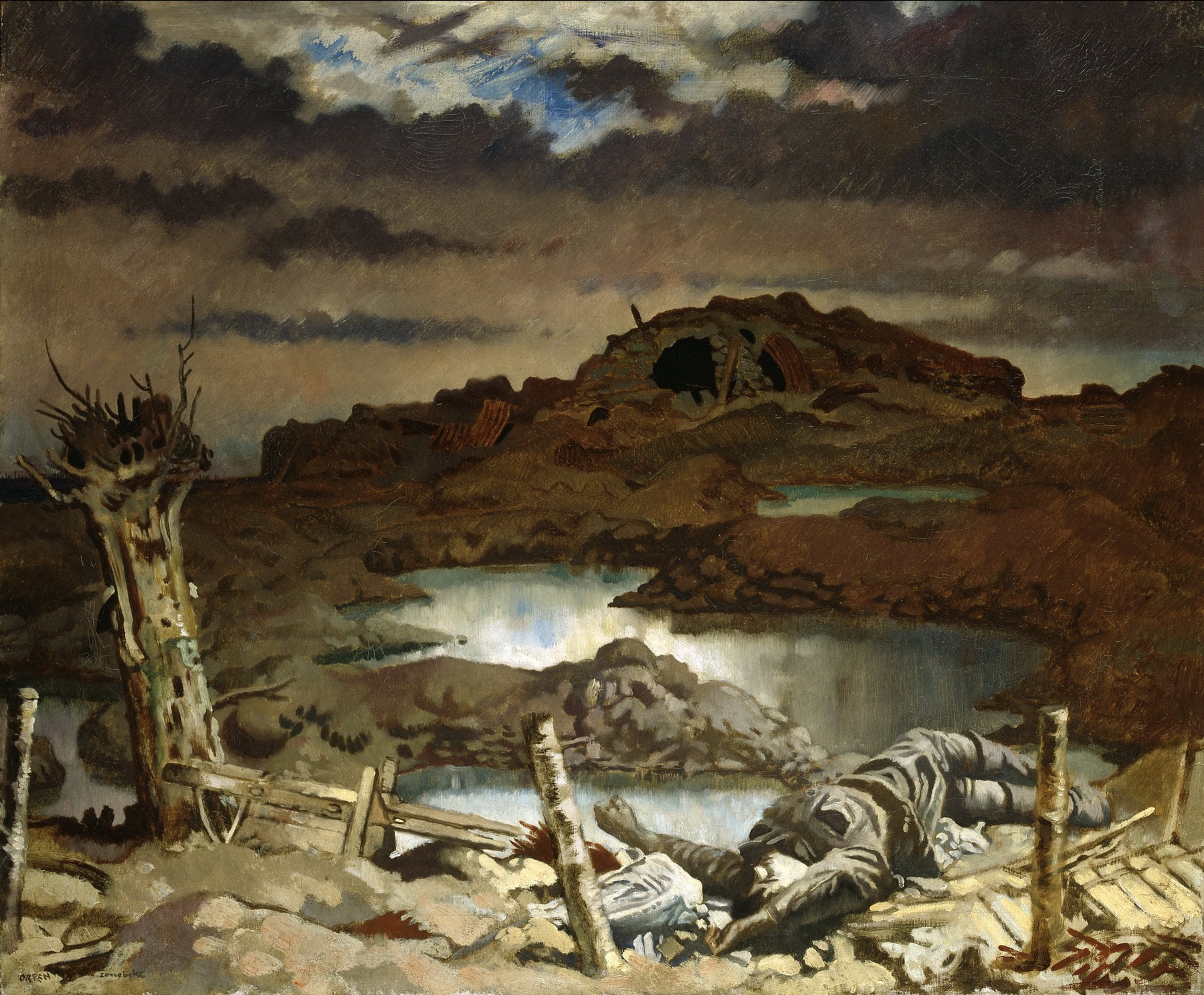
Healing the Modern Soul Part 3 argues that psychotherapy fails people when it teaches them to suffer without screaming: to hide distress so it stops showing, instead of healing what causes it. A culture of hyper-rational simulation cuts us off from felt, implicit experience, and good therapy has to work at that level, through the body, memory and meaning, not only through behavior and words.
Key takeaways
- Therapy fails people when it trains them to suffer without screaming, hiding the signs of distress instead of healing what causes it.
- Baudrillard’s simulacra and Nietzsche’s critique of pure objectivity describe a culture that ranks measurable models above felt experience.
- Models such as ABA that treat the self as observable behavior risk overlooking the inner life and agency of the people they treat.
- Implicit memory is learning expressed without conscious recollection, and relational, visual, kinesthetic and cognitive memory each call for different therapeutic work.
- Frankl argued that suffering changes when it finds meaning, which is the opposite of training pain into silence.
What does it mean to suffer without screaming?
The phrase names a goal that hides inside many treatment plans. A child stops crying when the room is cold. An employee stops mentioning panic attacks and keeps hitting targets. A grieving parent stops talking about the loss because everyone around them seems relieved when they do. In each case the outward signal of pain has gone quiet, and a checklist would score the case a success. Nothing has been asked about what the pain was for, where it lives in the body, or what it means to the person carrying it.
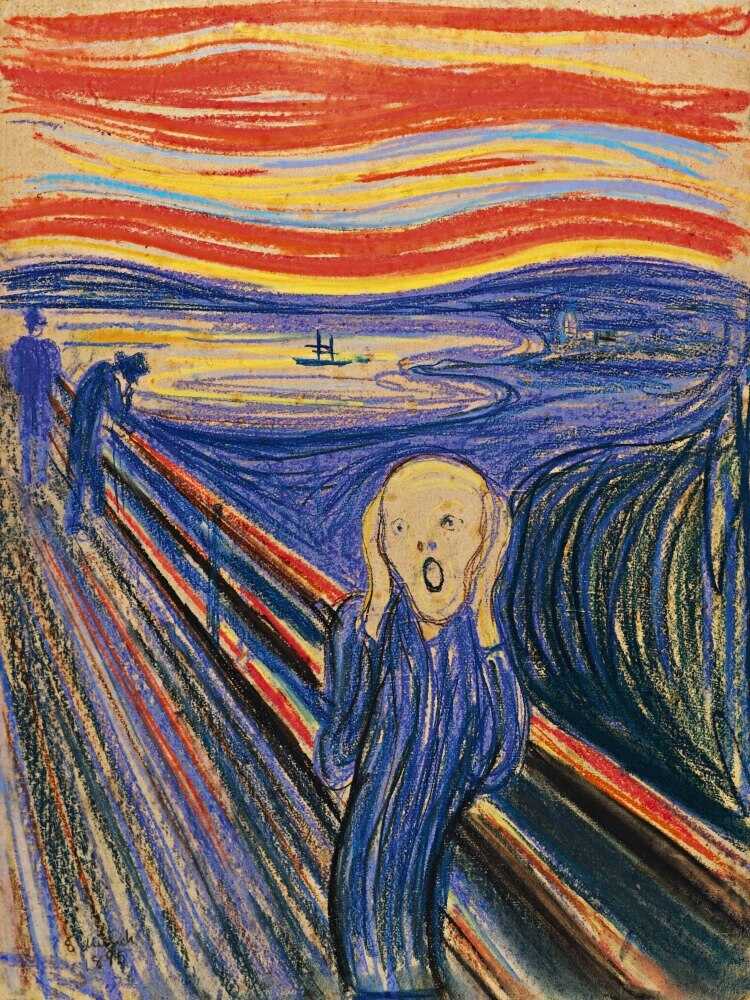
Edvard Munch painted The Scream in 1893, and it became one of the most recognizable images of modern anguish because it shows a feeling that has nowhere to go. Munch described the moment behind it: walking at sunset with two friends, he sensed a vast scream passing through nature, and his friends walked on. The figure on the bridge is in no visible danger. The alarm is inside, and the people beside it do not register it. That gap between a world that looks normal and an inner life in alarm is the ground Part 3 covers.
The series title echoes Carl Jung’s Modern Man in Search of a Soul, a collection of his lectures published in English in 1933.1 Jung argued that the people who came to him in mid-life were rarely ill in a narrow medical sense. They had lost a living relationship with meaning, and no amount of rational adjustment gave it back. The first two parts of the series built on that claim. Part 1 described the modern world as a simulacrum, a copy that has lost its original, and used Friedrich Nietzsche to show how an insistence on perfect logic and objectivity can betray the fears of the people who insist on it. Part 2 argued that any useful therapy model needs a coherent sense of self, and a dialectical relationship between that self and the world of other selves.
Part 3 turns those ideas into practical claims about therapy. The simulacra effect splits the hyper-real outer world from authentic felt experience. Traumatic memory comes in different forms, relational, visual, kinesthetic and cognitive, and each form needs a different kind of help. The unconscious is too complex to be captured by language and conscious models alone. And the corporate wish to make humans as programmable as computers has seeped into some therapy models, with dehumanizing results. Against all of this, therapy has to help people find meaning and stay with the whole of human experience.
William Gibson’s “Memory Palace”
William Gibson, the novelist who coined the word “cyberspace” in the story “Burning Chrome” (1982) and made it famous in Neuromancer (1984),2 wrote the text for “Memory Palace,” a 1992 performance by the Catalan theater group La Fura dels Baus at the Art Futura festival in Barcelona. The text frames the problem from the far end of the technological story. It walks through human history as a long series of representations: stone circles and water clocks, the iron spring that set clockwork running, imagined grid lines laid over the globe, cathedrals as machines for finding the soul, and clock-tower bells stitching together the dreams of sleepers. Human beings, in Gibson’s telling, are the animal that represents, the only makers of maps, and we have always been traveling toward a new place that is no place at all and yet is real.
Gibson names our oldest weakness in the same passage: we confuse the bright colors of the calendar with the actual weather of our days, and the territory drawn on parchment with the land in front of us. The engineer Alfred Korzybski made the same point in 1933 with the phrase “the map is not the territory.” Psychotherapy has its own version of the error. Diagnostic manuals, symptom scales and treatment protocols are maps. They are useful, and they are not the person. When a field forgets that, it begins to treat the map as the patient.
What is the simulacra effect, and why does it disconnect us from felt experience?
The French sociologist Jean Baudrillard set out the idea in Simulacres et simulation (1981), translated into English as Simulacra and Simulation in 1994.3 He opens with Jorge Luis Borges’s fable of an empire whose cartographers draw a map so detailed that it covers the whole territory, and then reverses it: in our world, he says, the map comes first and produces the territory. Simulation, in his words, is “the generation by models of a real without origin or reality: a hyperreal.” Baudrillard’s account of hyperreality traces how an image moves away from what it once pointed to, in four stages:
“It is the reflection of a profound reality; it masks and denatures a profound reality; it masks the absence of a profound reality; it has no relation to any reality whatsoever: it is its own pure simulacrum.”3
The argument of this series is that a culture which ranks hyper-rational, objective thinking above subjective experience speeds that slide along. Life is increasingly lived through dashboards, metrics, feeds and performance reviews, all models that come before the experience they claim to describe. The result feels hyper-real: polished, measurable, apparently normal. Underneath it many people carry a sense that something is wrong, a feeling they find hard to put into words, because the culture has taught them that only what can be measured counts as real.
Nietzsche saw a version of this in philosophy itself. In Beyond Good and Evil (1886) he wrote that philosophers “all pose as though their real opinions had been discovered and attained through the self-evolving of a cold, pure, divinely indifferent dialectic,” when in fact each was defending “their heart’s desire abstracted and refined” with “arguments sought out after the event.”4 Every great philosophy so far, he concluded, had been “the confession of its originator, and a species of involuntary and unconscious auto-biography.”4 For Nietzsche’s psychology, the louder a thinker claims pure objectivity, the more an unexamined personal need is likely to be driving the claim.
The same holds for whole cultures. When everything is presented as rational and data-driven, the feelings that do not fit do not disappear. They go underground, into the body, into sleep, into relationships, into the vague dread many clients describe as “I am fine, but something is off.” The way back runs through what the philosopher and psychotherapist Eugene Gendlin called the felt sense: the bodily, not-yet-verbal sense of a situation that comes before clear thoughts about it. Gendlin’s work on felt sensing grew from research suggesting that clients who could stay with that vague bodily knowing tended to change in therapy, while clients who only talked about themselves tended not to.
Reconnecting with felt experience means taking emotions, intuitions and subjective perceptions seriously even when they contradict the official story of what is rational. Psychotherapy is one of the few places left where that can happen. Its task is to hold the paradoxical relationship between the rational and the subjective without collapsing either side, so that a person can build a more authentic sense of self and a clearer sense of their place in the world.
Why is denying the self dangerous in psychotherapy models?
Part 2 of the series argued that every therapy model carries assumptions about what a self is and what therapy is for. Read through Nietzsche’s critique, some of those assumptions turn out to be dangerous, because a model that does not believe in an inner life will not look after one.
Applied Behavior Analysis (ABA), the most widely funded intervention for autistic children in the United States, is the clearest example. ABA grew out of B. F. Skinner’s operant conditioning, the principle that behavior is shaped by its consequences. Skinner’s operant conditioning explained behavior by its consequences rather than by inner states, leaving the mind what critics of behaviorism called a “black box.” The psychologist Ole Ivar Lovaas applied that logic to autism at UCLA, and his 1987 study reported that young autistic children given around 40 hours a week of one-to-one behavioral training for two years or more were far more likely to reach “normal” educational functioning than controls.5 Lovaas’s early programs also used aversive punishment alongside rewards.
In the ABA model the self is reduced to a set of observable behaviors, with little or no attention to the child’s inner world, emotions or subjective experience. Success is measured by how closely the child’s behavior matches a neurotypical target: eye contact, quiet hands, compliance with instructions. That framework effectively denies a soul or psyche to the very children it treats. By working only on outward behavior and reinforcing “desirable” actions, it overlooks the humanity and agency of the person in front of it.
Autistic adults have been saying this for years, and some research now backs them up. In an online survey of 460 autistic adults and caregivers of autistic children, Henny Kupferstein found that 46 percent of respondents exposed to ABA met the diagnostic threshold for post-traumatic stress disorder, while non-exposed respondents had a 72 percent chance of showing no post-traumatic symptoms at all.6 A model built to remove the signs of distress can, on these reports, leave distress of its own behind.
An ethical model of therapy has to do the opposite. It supports the growth of a coherent self while recognizing that other selves exist and matter. Therapy becomes a dialectical process: a person learns to move between their inner world and the outer reality they share with others, changing and being changed by both. This matters most for people who do not fit the objective, outcome-driven modes of expression and socialization that dominate the culture. Newer accounts of autism, such as monotropism and autistic attention, start from the autistic person’s own experience of attention and overload, and they ask therapy to support that perspective rather than suppress it.
What does neuromodulation offer an autistic child in sensory overwhelm?
Picture an autistic child who becomes overwhelmed and distressed whenever the temperature drops. Sensory over-responsivity of this kind is common enough in autism that the DSM-5, published in 2013, added hyper- or hypo-reactivity to sensory input to the diagnostic criteria. A strict ABA approach would aim to change the child’s behavior through reinforcement, so that the outward signs of distress shrink. That approach leaves untouched the neural and sensory processing that produces the overwhelm in the first place.
A brain-based approach asks a different question: what is the nervous system doing when cold arrives? The thalamus is the brain’s main relay for incoming sensation, and imaging studies have found altered connections between the thalamus and the cortex in autism. Aarti Nair and colleagues, using functional connectivity MRI and diffusion imaging in children and adolescents, found weaker anatomical and functional links between the thalamus and several cortical regions, alongside relatively stronger functional links with the temporal lobe, which houses the hippocampus and much of the brain’s long-term memory machinery.7 Approaches such as QEEG brain mapping look at the electrical patterns behind this kind of processing, and neuromodulation aims to help sensory and memory regions communicate more smoothly, so that a stimulus that once flooded the child can be taken in, integrated and tolerated.
The point of the example is not that one technique replaces another. It is that looking beneath surface behavior, at the interplay of neurology, sensation and emotion, changes what therapy is trying to do. Working on the causes of distress, rather than suppressing its expression, is what builds self-regulation, resilience and well-being.
What is implicit memory, and how does it shape the self?
To meet the complexity of the modern soul, therapy has to deal with implicit memory. The psychologist Daniel Schacter defined it in a classic 1987 review as memory that shows itself when previous experience changes how a person performs, feels or reacts, without any conscious or intentional recollection of that experience.8 Riding a bicycle, flinching at a tone of voice and feeling uneasy in a certain kind of room are all implicit memory at work. Implicit memory overlaps with what depth psychologists call the unconscious, but the two are not the same thing: implicit memory is a measurable kind of learning, while the unconscious, in Freud’s and Jung’s senses, also includes wishes, conflicts and images that were never simply “learned.”
The difference matters because implicit memory is where much of the self is stored. The Boston Change Process Study Group, which included the infant researchers Daniel Stern and Edward Tronick, called one form of it “implicit relational knowing”: procedural knowledge, built from birth onward, about how to be with intimate others. They described this knowing as distinct both from conscious, verbal knowledge and from the dynamic unconscious, and argued that therapy changes it through lived “moments of meeting” between client and therapist rather than through interpretation alone.9 Stern’s The Interpersonal World of the Infant (1985) had already shown how much of an infant’s sense of self forms in wordless exchanges with caregivers, and Peter Fonagy and colleagues, in Affect Regulation, Mentalization, and the Development of the Self (2002), traced how a child comes to understand minds by first being understood by one.
Implicit memories shape behavior, relationships and well-being in ways people struggle to explain. They show up as trauma responses, as repeating patterns in work and love, or as a pervasive sense of being cut off from oneself and others. Because they were never stored as a story, they do not change much when a person tells a better story about them. Effective therapy has to reach and work with implicit memory directly, helping a person process and integrate experience at the level where it was laid down.
Do different types of traumatic memory need different therapies?
A useful clinical map divides memory involved in trauma into four kinds, each of which calls for a different therapeutic approach. The map is a working tool for clinicians rather than a textbook taxonomy, and it draws on research from several fields: Joseph LeDoux’s work on fear circuitry in The Emotional Brain (1996), Antonio Damasio‘s account of emotion and the body in Descartes’ Error (1994), Jaak Panksepp’s Affective Neuroscience (1998), Allan Schore’s research on affect regulation, Stephen Porges‘s polyvagal theory, Daniel Siegel‘s interpersonal neurobiology and Bessel van der Kolk‘s The Body Keeps the Score (2014). Each layer stores trauma in a different kind of memory, and each tends to respond to a different kind of work.
Relational memory
Relational memory holds our assumptions about communication, identity and how we want to be seen by others. It is close to what the Boston group called implicit relational knowing.9 People with attachment trauma or relational trauma carry expectations of others that were learned in unsafe relationships, and those expectations play out in new relationships before any conscious choice is made. Therapies built around attachment, such as emotionally focused therapy (EFT), developed by Sue Johnson and Les Greenberg, and interpersonal psychotherapy (IPT), developed by Gerald Klerman and Myrna Weissman, work at this level. So does the therapeutic relationship itself, which gives a person repeated new experiences of being met.
Visual-spatial memory
Visual-spatial memory is tied to flashbacks and the vivid re-experiencing of traumatic events. Chris Brewin and colleagues describe two kinds of memory representation: flexible, contextual memories that know when and where something happened, and inflexible, sensory-bound memories that replay as images in the present tense. Intrusive images appear across post-traumatic stress, other anxiety disorders, depression, eating disorders and psychosis, and they arise when the sensory and contextual systems fail to work together.10 Not everyone with trauma has vivid flashbacks, but for those who do, the experience is among the most distressing parts of it. EMDR therapy, developed by Francine Shapiro in the late 1980s, works directly with these images, and prolonged exposure therapy is another approach used for them.
Kinesthetic memory
Kinesthetic memory is stored in the body. It concerns how we budget energy and respond to stress: posture, muscle tension, breathing, the urge to run or freeze. The neuroscientist Lisa Feldman Barrett describes one of the brain’s main jobs as running a “body budget,” predicting and allocating energy before needs arise. Somatic therapies work here. Pat Ogden’s sensorimotor psychotherapy uses the body’s own movements and sensations as the entry point to trauma,11 and Peter Levine‘s Somatic Experiencing helps the nervous system complete defensive responses that were cut short. Both help people reconnect with bodily sensation and build self-regulation and resilience under stress.
Cognitive-emotional memory
Cognitive-emotional memory is bound up with self-referential processes: problem-solving, obsessing and rumination. This is the layer that cognitive-behavioral therapy (CBT) and mindfulness-based approaches were built to address, by working with unhelpful thought patterns and encouraging a more flexible relationship with one’s own inner experience. In practice it often rests on the other three layers. A person ruminating about rejection is frequently replaying an older relational memory, and the loop loosens most when that memory is reached.
Understanding which kinds of memory are involved lets a therapist choose interventions that fit the person’s actual problem, rather than applying one method to every kind of suffering.
Why can’t language fully map the unconscious?
Different schools of therapy have different pictures of the unconscious, from Freud’s repressed wishes to Jung’s collective unconscious. The split between Jung and Freud still shapes those debates. Whatever the picture, implicit memory cannot be perfectly mapped or described in words. The unconscious is vast and operates beneath awareness, and every attempt to describe it is limited by language and conscious thought.
Experimental psychology supports that limit. In a well-known 1977 review, Richard Nisbett and Timothy Wilson showed that people often cannot accurately report the causes of their own judgments and actions. When asked, they give confident explanations based on their own theories about what should have influenced them, not on direct access to the mental processes that actually did.12 The conscious mind tells a story about the unconscious; it does not read it out.
One way to picture the relationship is a representative democracy. A population of millions cannot all sit in a parliament, so it elects representatives who make decisions on its behalf using simplified summaries of what the population wants. The conscious mind works the same way. It relies on simplified models of the unconscious to guide thought and behavior, and those models are always partial, sometimes out of date and occasionally wrong.
A computer offers another picture. A central processing unit (CPU) has a small number of powerful cores that handle varied, sequential tasks with a lot of branching logic. A graphics processing unit (GPU) has thousands of simpler cores that run enormous numbers of calculations in parallel, which is why it handles rendering images and processing large datasets so well. The conscious mind resembles the CPU: slow, sequential, flexible, good with novel problems, and the apparent decision-maker. The unconscious resembles the GPU: massively parallel, fast, always running, supplying the raw processing that makes the world navigable at all. Trying to understand the unconscious only through conscious, language-based reasoning is like trying to understand a GPU using only the tools and concepts of CPU programming. The architecture is different, so the methods have to be different too.
How have Silicon Valley and corporate interests shaped mental health care?
This brings the argument to the troubling assumptions underneath certain therapy models, which are tied to wider cultural and economic forces. The influence of Silicon Valley and corporate interests on psychology has produced a growing habit of treating people as programmable entities, like computers or robots, on the belief that with enough data and processing power human behavior can be predicted, controlled and optimized.
The belief is older than Silicon Valley. In Beyond Freedom and Dignity (1971), Skinner argued that the ideas of freedom and dignity stood in the way of a “technology of behavior” that could design a better culture by arranging its consequences.13 Joseph Weizenbaum, the MIT computer scientist who built ELIZA, an early program that imitated a therapist, was alarmed by how quickly people confided in it and by colleagues who proposed automated psychotherapy. In Computer Power and Human Reason (1976) he argued that there are tasks computers should not be given even if they could perform them, because judgment, care and wisdom are human acts.14 Michel Foucault had traced the institutional side of the same shift in Discipline and Punish (1975), describing the “docile bodies” that schools, barracks and prisons produce through observation, measurement and examination.
The same belief now surrounds large language models (LLMs) and other AI systems, which are often presented as able to match or exceed human intelligence and creativity. The claim misreads human consciousness and agency by reducing the mind to algorithms and data points. The hope that machines can be made into people through more computing power is misguided, because it ignores the difference between a living, embodied consciousness and statistical learning, which is why consciousness will not emerge from large language models simply by scaling them. People already form attachments to these systems, a pattern explored in the psychology of AI companionship. The reverse hope, that people can be reduced to machines through behavioral conditioning and programming, is just as dangerous, because it denies the humanity and agency of the people being programmed.
These assumptions shape what counts as evidence. When treatments are judged mainly by measurable symptom change over short periods, the models that win are the ones designed to move those numbers. The STAR*D depression trial, once cited as proof of how well antidepressant protocols work, shows what can go wrong; lessons from the STAR*D scandal trace how its reported results were later challenged. The broken incentives in research and clinical practice reward what is easy to fund, measure and bill, and the illusion of progress in psychotherapy follows from those incentives. None of this can be repaired by technique alone, because psychotherapy is indivisible from philosophy and anthropology.
The deepest problem is not inefficiency. It is that these assumptions are dehumanizing. They rank measurable outcomes and “optimal” functioning above the rich and complex inner lives of individuals. Treating people as objects to be fixed or optimized, rather than as meaning-making beings with their own subjective experience, keeps a culture of alienation, disconnection and suffering going.
What goes wrong when therapy prioritizes quiet suffering over healing?
The autistic child in the cold room raises a larger question about what therapy is for. In a culture that rewards hyper-rationality, objectivity and measurable outcomes, it is easy to reduce human experience to a list of behaviors to change or remove. That leads to a dangerous reversal: the goal of therapy becomes helping a person endure distress without expressing it, rather than understanding and resolving its causes and supporting real growth.
The idea that therapy should help people suffer without screaming is a troubling direction for the profession. It treats a person as an object to be fixed or managed, not as a complex, meaning-making being with worth and dignity of their own. The scream in Munch’s painting is not the illness. It is the one honest signal in the picture.
Viktor Frankl, the Viennese psychiatrist who survived Auschwitz and founded logotherapy, put the alternative plainly. Writing about a widower whose grief eased once he saw that his suffering had spared his wife from the same loss, Frankl concluded: “Suffering ceases to be suffering in some way at the moment it finds a meaning, such as the meaning of a sacrifice.”15 Earlier in the same book he quotes Spinoza’s Ethics: “Emotion, which is suffering, ceases to be suffering as soon as we form a clear and precise picture of it.”15 Neither man promises that pain disappears. Both say that pain changes when it is seen clearly and given meaning, which is the opposite of training it into silence. Existential therapy takes that claim as its starting point. Irvin Yalom’s Existential Psychotherapy (1980), which draws on Heidegger, Sartre and Camus, organizes the tradition around four ultimate concerns: death, freedom, isolation and meaninglessness.
Therapy should therefore offer a safe and supportive space in which a person can explore their experience, understand themselves and their place in the world, and build the resources to meet life’s difficulties with resilience and honesty. That requires a willingness to sit with the whole range of human experience, including the painful, messy and paradoxical parts of the self and the world. It also requires respect for the value and wisdom of each person’s own perspective and life, and a commitment to supporting their growth in line with their own values, needs and hopes.
What does this look like in the therapy room?
In practice the argument changes what a therapist listens for. The first question is not “how do we make this stop?” but “what is this distress carrying, and which kind of memory is it stored in?” A client who says they are fine while their breathing goes shallow is giving the therapist two reports, and the body’s report is often the more accurate one.
At Taproot we work across all four memory layers. For visual and sensory trauma we use EMDR and Brainspotting, which David Grand developed in 2003 from his EMDR work. Brainspotting uses a fixed eye position linked to a felt activation in the body to help the brain process what it has held without words. Emotional Transformation Therapy (ETT), developed by Steven Vazquez, uses light, color and eye movement toward the same aim. For kinesthetic memory we use somatic therapy and somatic therapy, tracking sensation, impulse and settling. For relational memory the relationship itself is the treatment, and parts work such as Internal Family Systems (IFS) helps clients meet the protective parts of themselves that learned to keep the scream inside.
Jungian and existential work hold all of this inside a larger frame. Dreams, images and symptoms are treated as communications from the psyche, not as noise to be removed, and questions of meaning, freedom and death are treated as clinical material rather than as distractions from it. The aim is not a quieter client. It is a person who can feel what they feel, understand where it comes from and choose what to do with it.
Screaming without suffering
The simulacra effect that Baudrillard described, and that Nietzsche anticipated, follows from a culture’s growing emphasis on hyper-rationality, objectivity and the denial of subjective experience. Therapists and the wider society have to resist the pull to reduce the human mind to behaviors or data points, and accept instead the messiness and uncertainty of the human condition.
Reconnecting with felt experience, acknowledging both the self and the other selves in the world, and challenging the dominant models of mental health treatment are how people begin to find authenticity and meaning in an increasingly disconnected world. That work means staying with the contradictions that appear whenever we try to bridge the rational and the subjective, the individual and the collective, the inner world and outer reality. It is difficult and it does not end, but it is necessary if mental health care in the 21st century is to be humane.
Across the series the role of therapy has looked both complex and essential. A therapy that respects the full complexity of human experience helps people develop a sense of self grounded in their own values, experiences and relationships. That process is rarely comfortable, but it is how people resist the forces of hyper-rationality, false objectivity and corporate interest that would reduce human experience to measurable outcomes.
The aim of therapy in the modern world is to help people connect with their own inner wisdom and resilience, find meaning and purpose, and contribute to a more compassionate and authentic society. Healing the wounds of disconnection and alienation is shared work, and it builds a world that honors the full range of human experience.
In the end, it is our capacity for love, empathy and real human connection that carries us through the modern world. Pain and suffering may be inevitable, but the ability to love and be loved gives life its meaning. We can choose love over fear, connection over isolation and authenticity over simulacra, and in doing so we heal ourselves and contribute to the healing of the world around us. Frankl, who knew the worst a modern system could do to a person, named the freedom that makes that choice possible:
“Everything can be taken from a man but one thing: the last of the human freedoms, to choose one’s attitude in any given set of circumstances, to choose one’s own way.”15
Screaming without suffering means letting the signal be heard so the suffering behind it can finally change. At Taproot Therapy Collective in Hoover, our clinicians work with felt experience, implicit memory and meaning through somatic, brain-based, parts and depth approaches. If that is the kind of therapy you are looking for, you can contact Taproot Therapy Collective to begin.
Frequently asked questions
What does suffering without screaming mean in therapy?
Suffering without screaming describes treatment that counts success as the disappearance of visible distress. A person stops crying, complaining or melting down, but the cause of the pain is never addressed. Healing the Modern Soul Part 3 argues that this goal treats people as objects to be managed, and that good therapy works on the sources of distress through the body, memory and meaning.
What is a simulacrum according to Baudrillard?
For Jean Baudrillard, a simulacrum is a copy or model that no longer points to any original reality. In Simulacra and Simulation (1981) he called simulation the generation by models of a real without origin or reality, a hyperreal. Applied to mental health, it describes lives run by metrics and models that come before the experiences they claim to measure.
Why do some autistic adults criticize Applied Behavior Analysis?
Applied Behavior Analysis grew from B. F. Skinner’s operant conditioning and measures success by changes in observable behavior. Many autistic adults say it trained them to mask distress and ignored their inner experience. A 2018 survey by Henny Kupferstein found that 46 percent of ABA-exposed respondents met the threshold for post-traumatic stress disorder.
Is implicit memory the same as the unconscious?
No. Implicit memory, as Daniel Schacter defined it in 1987, is memory that changes how a person reacts or performs without conscious recollection of the original experience. It overlaps with the unconscious of depth psychology, but the Boston Change Process Study Group described implicit relational knowing as distinct from both conscious knowledge and the dynamic unconscious.
Why do different kinds of trauma memory need different therapies?
Trauma can be held as relational expectations, vivid sensory images, bodily tension and energy patterns, or repetitive thought. Each lives in a different memory system. Relational work and attachment-based therapy reach the first, EMDR and Brainspotting work with sensory images, somatic therapies reach the body, and approaches aimed at thought patterns address rumination.
What did Viktor Frankl say about suffering and meaning?
In Man’s Search for Meaning, Viktor Frankl wrote that suffering ceases to be suffering in some way at the moment it finds a meaning, such as the meaning of a sacrifice. He also called the freedom to choose one’s attitude in any circumstances the last of the human freedoms, something no camp or system could take away.
Related reading
- Emanuel Swedenborg’s Mystical Visions and Their Influence on Carl Jung’s Psychology
- The Chrysanthemum and The Sword: Guilt, Shame, and Cultural Trauma in Psychotherapy
- Adult ADHD, ADHD Screener, AuDHD, ADHD and Autism, Neurodiversity, Psychotherapy, Mental Health, Executive Function, ADHD Symptoms, Self-Assessment
- The Great Shift: Why the Market is Moving from CBT to Somatic and Neuro-Experiential Therapies for Trauma
- Jean-Paul Sartre: Existentialism, Freedom, and the Human Condition
- The Influence of Christian Mystics on Jungian Thought:
References
- Jung, C. G. (1933). Modern man in search of a soul (W. S. Dell & C. F. Baynes, Trans.). Harcourt, Brace and Company.
- Gibson, W. (1984). Neuromancer. Ace Books.
- Baudrillard, J. (1994). Simulacra and simulation (S. F. Glaser, Trans.). University of Michigan Press. (Original work published 1981)
- Nietzsche, F. (1917). Beyond good and evil (H. Zimmern, Trans.). Modern Library. (Original work published 1886)
- Lovaas, O. I. (1987). Behavioral treatment and normal educational and intellectual functioning in young autistic children. Journal of Consulting and Clinical Psychology, 55(1), 3-9. https://doi.org/10.1037/0022-006X.55.1.3
- Kupferstein, H. (2018). Evidence of increased PTSD symptoms in autistics exposed to applied behavior analysis. Advances in Autism, 4(1), 19-29. https://doi.org/10.1108/AIA-08-2017-0016
- Nair, A., Treiber, J. M., Shukla, D. K., Shih, P., & Müller, R.-A. (2013). Impaired thalamocortical connectivity in autism spectrum disorder: A study of functional and anatomical connectivity. Brain, 136(6), 1942-1955. https://doi.org/10.1093/brain/awt079
- Schacter, D. L. (1987). Implicit memory: History and current status. Journal of Experimental Psychology: Learning, Memory, and Cognition, 13(3), 501-518. https://doi.org/10.1037/0278-7393.13.3.501
- Lyons-Ruth, K., Bruschweiler-Stern, N., Harrison, A. M., Morgan, A. C., Nahum, J. P., Sander, L., Stern, D. N., & Tronick, E. Z. (1998). Implicit relational knowing: Its role in development and psychoanalytic treatment. Infant Mental Health Journal, 19(3), 282-289. https://doi.org/10.1002/(SICI)1097-0355(199823)19:3<282::AID-IMHJ3>3.0.CO;2-O
- Brewin, C. R., Gregory, J. D., Lipton, M., & Burgess, N. (2010). Intrusive images in psychological disorders: Characteristics, neural mechanisms, and treatment implications. Psychological Review, 117(1), 210-232. https://doi.org/10.1037/a0018113
- Ogden, P., Minton, K., & Pain, C. (2006). Trauma and the body: A sensorimotor approach to psychotherapy. W. W. Norton.
- Nisbett, R. E., & Wilson, T. D. (1977). Telling more than we can know: Verbal reports on mental processes. Psychological Review, 84(3), 231-259. https://doi.org/10.1037/0033-295X.84.3.231
- Skinner, B. F. (1971). Beyond freedom and dignity. Alfred A. Knopf.
- Weizenbaum, J. (1976). Computer power and human reason: From judgment to calculation. W. H. Freeman.
- Frankl, V. E. (1963). Man’s search for meaning: An introduction to logotherapy (I. Lasch, Trans.). Washington Square Press. (Original work published 1946)












0 Comments