
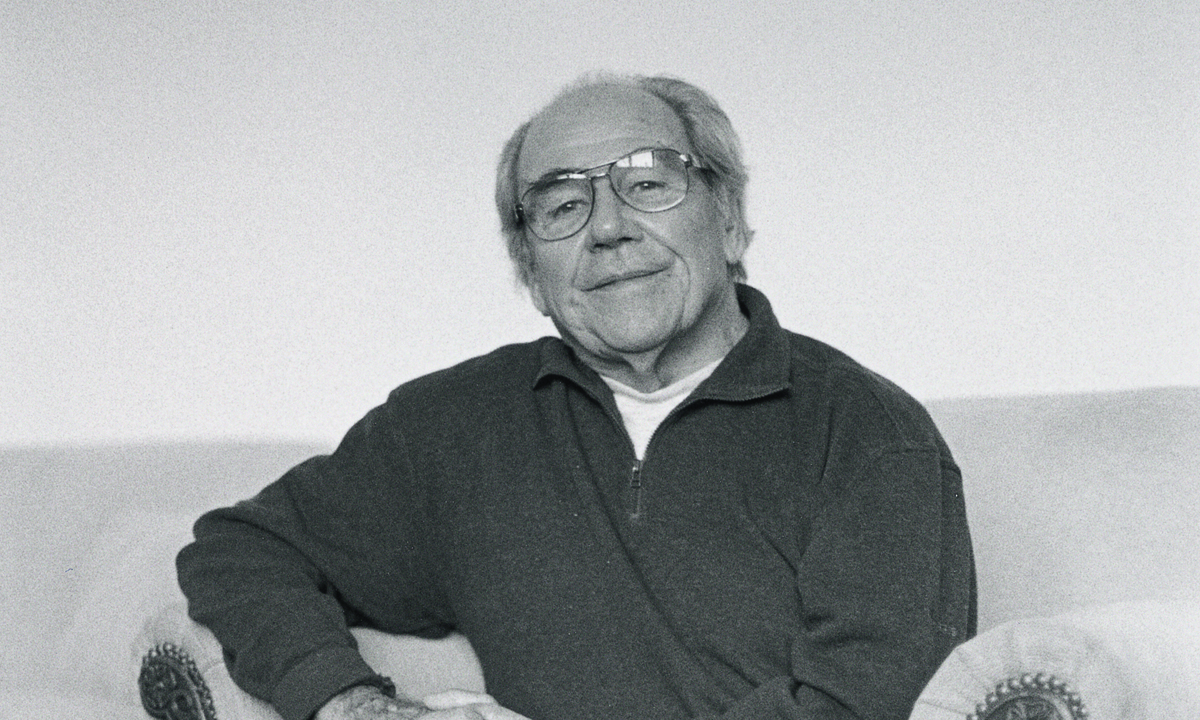
Simulacra and Simulation (1981) is Jean Baudrillard’s argument that media-saturated societies no longer copy reality; they produce it from models. A simulacrum, in his sense, is a sign that has come loose from anything it once pointed to. Hyperreality is the condition in which those signs feel more real than the world they replaced, and what is left behind he called “the desert of the real.”1
The idea matters to a therapist for a reason that has only grown since his death in 2007. His central claim, that the model comes first and the real is made to fit it, now describes how many people relate to their own lives: the profile is the model, and the person tries to catch up with it. Therapy cannot hand anyone an unmediated “real,” and Baudrillard would have mocked the promise. What it can offer is one of the few relationships organized around the unedited version, where the gap between the image and the person becomes material to work with instead of a flaw to fix with better editing.
Who Jean Baudrillard was
Baudrillard was born in Reims on 27 July 1929. He told interviewers that his grandparents were peasants and his parents became civil servants, and that being the first in the family to pursue advanced education opened a rupture with them.2 He studied German, taught it in lycées and translated Peter Weiss, Bertolt Brecht and a book on messianic movements by Wilhelm Mühlmann into French. He also absorbed Henri Lefebvre’s critique of everyday life and Roland Barthes’s semiology.2
In 1966 he became Lefebvre’s assistant at the University of Paris’s new Nanterre campus, defended his doctoral thesis in sociology on the system of objects, and began teaching sociology that October. The March 22 Movement began in Nanterre’s sociology department, and Baudrillard later said he took part in May 1968. The thesis appeared as The System of Objects in 1968, followed by The Consumer Society (1970) and For a Critique of the Political Economy of the Sign (1972).2 He left Nanterre in the late 1980s, wrote for Libération from 1987 to 1997, published more than fifty books and died in Paris on 6 March 2007.
What Simulacra and Simulation argues
The book opens with an epigraph credited to Ecclesiastes: “The simulacrum is never what hides the truth—it is truth that hides the fact that there is none. The simulacrum is true.”1 No such verse exists in Ecclesiastes. Before the argument starts, the reader has accepted a quotation that refers to nothing: the argument in miniature.
The first essay, “The Precession of Simulacra,” starts from a Borges fable about an empire whose map grew as large as its territory; in Baudrillard’s version the territory rots and people live on the map. Simulation, he writes, “is a generation by models of a real without origin or reality: a hyperreal.”1 The key distinction is between pretending and simulating. Quoting the dictionary Littré, he notes that whoever fakes an illness can stay in bed and make everyone believe he is ill, while whoever simulates one “produces in himself some of the symptoms.” Pretending leaves the line between true and false intact; simulation erases it, because the symptoms are real.1
He then sketches four phases of the image. First it reflects a basic reality; then it masks and distorts that reality; then it masks the absence of any reality; finally it bears no relation to reality at all and becomes its own pure simulacrum.1 His best-known example is Disneyland, which “is presented as imaginary in order to make us believe that the rest is real,” when the point, he says, is to hide that all of “real” America is Disneyland. The book’s key phrase names the order of events: “Simulation is characterized by a precession of the model, of all the models based on the merest fact—the models come first.”1 The image of a war can arrive before the war, which is how he would later read the 1991 Gulf War.
Later essays push the point into media: “We live in a world where there is more and more information, and less and less meaning,” he writes in “The Implosion of Meaning in the Media,” written as he was turning to Marshall McLuhan’s media theory.1 The book reached a much wider audience through The Matrix (1999), in which Neo hides contraband in a hollowed-out copy of it. In an interview first published in Le Nouvel Observateur, Baudrillard distanced himself from the film and said it had misread his ideas.3
From sign value to the three orders of simulacra
Baudrillard started as a Marxist sociologist of consumption, not a prophet of the screen. His first books argued that goods are bought and displayed for their sign value, the prestige, style or standing they signal, as much as for their use. A sports car means something only in relation to other cars, as a word does in relation to other words.24 In the late 1960s he worked with the Utopie group, which, in Kellner’s account, combined architecture, everyday life and visions of alternative societies in the spirit of Guy Debord and the Situationist critique of the spectacle.2
Kellner calls what came next a parodic inversion of historical materialism. Marx held that the economic base produces the cultural superstructure; by the mid-1970s Baudrillard argued the reverse, that the model and the code generate the real.2 The three orders of simulacra were laid out in Symbolic Exchange and Death (1976) and revisited in Simulacra and Simulation. The counterfeit dominated from the Renaissance to the Industrial Revolution; production, the endless identical series of the factory, dominated the industrial age; simulation, governed by models and codes, dominates now.5 This is a separate scheme from the four phases of the image, and Baudrillard did not hold it tightly. Asked about the three orders by Sylvère Lotringer in an interview published with Forget Foucault, he said that, without disowning the scheme, he did not believe it held up.6
It is tempting to read Fatal Strategies (1983) as a plan to subvert the system from within. Kellner’s reading is closer to the text: Baudrillard sides with the object over the subject, pushes the system’s values to their extreme in hope of collapse or reversal, and abandons the language of emancipation.2
Hyperreality and the curated self
Applying this to social media is our move, not his, but the fit is close. Kellner summarizes the society of simulation as one in which “identities are constructed by the appropriation of images, and codes and models determine how individuals perceive themselves and relate to other people.”2 In The Ecstasy of Communication the overexposed subject becomes “a pure screen.”7
Self-presentation is not new. Erving Goffman’s The Presentation of Self in Everyday Life (1959) treated ordinary social life as a performance staged for an audience, with a backstage where it is prepared and dropped.8 What changed is that the performance now persists, can be edited and is scored in public, so you can measure yourself against it afterward. That is the precession of the model applied to a single life: the curated version comes first, and the person tries to become it.
The research is more modest than Baudrillard’s prose.
- In one study, curation was common but usually small. Checked against measured height, weight and age, 80 online daters’ profiles showed near-universal but small deviations, and people rated their photographs as the least accurate part.9
- Editing the image may change how the original feels. In one experiment with 130 young women, taking and editing a selfie increased negative mood and facial dissatisfaction, and the more a woman edited, the more her facial dissatisfaction rose.10 Everyone in the study edited, so it cannot separate taking the picture from retouching it, and it is a single small study. If the finding holds, it looks like Littré’s simulator, producing the symptom in himself.
- Upward comparison has a small, consistent cost. A meta-analysis of 48 experimental articles (7,679 participants) found a negative effect on self-evaluations and emotions (g = −0.24), largest for body image.11
- Showing the gap may help. In one experiment, women who viewed “Instagram vs reality” posts, an idealized photo beside an unedited one, reported less body dissatisfaction than those who saw the ideal images alone; long-term effects are unknown.12
- Authentic posting is linked to well-being. Among 10,560 Facebook users, those whose online self-expression matched their self-reported personality reported higher life satisfaction, and a pre-registered experiment found authentic posting raised positive mood within the same person.13
Overall technology use is a weak predictor. Across more than 355,000 adolescents, digital technology use explained at most 0.4% of the variation in well-being, and a meta-analysis of adolescent social media use and depressive symptoms found a small correlation (r = .11) with very high heterogeneity.1415 How a person uses the image of themselves seems to matter more than the hours.
Psychology already has a name for the pain in that gap. In E. Tory Higgins’s self-discrepancy theory, a gap between the actual and ideal self tends to produce dejection, while a gap between the actual self and the self one ought to be tends to produce agitation and fear.16 A curated profile is an ideal self made public, permanent and quantified. Baudrillard’s contribution is to notice that the ideal no longer has to be a private hope; it can be a model that circulates, gets rewarded and pulls the actual person toward it. For more on what media do to perception, see our essays on Vilém Flusser’s philosophy of communication and Lev Manovich’s theory of new media.
What this looks like in therapy
Nobody comes to therapy saying they live in hyperreality. People say they feel like an impostor in their own life, managing a version of themselves for work, family or an audience and unsure who is left when it switches off. They check how a moment will look before they know how it felt, and some describe life as happening to a character they play.
Depth psychology has older words for this. Jung called the social mask the persona, a compromise between the individual and society over how a person should appear; trouble starts when someone identifies with the mask, a problem central to Jungian depth therapy.17 Donald Winnicott described a false self that forms through compliance to protect a more spontaneous true self. In health it is ordinary politeness; when it runs the whole life, the person tends to feel unreal or futile.18 Object relations theory, from Ronald Fairbairn onward, adds that these structures are built in relationships, which is why a relationship is where they can be reworked.
Two cautions keep this clinical. First, Baudrillard’s clinical vocabulary is metaphor. When he says the contemporary subject lives like “the schizophrenic,” he means overexposure to images and information, not psychosis, and his ideas are not a model of hallucinations, flashbacks or dissociation.7 Second, a persistent sense that you or the world are unreal can be depersonalization or derealization, which is a clinical matter. Brief episodes are common: a systematic review put lifetime prevalence of transient symptoms at 26% to 74%, while clinically significant cases run around 1 to 2% in population surveys.19 If that describes you, it deserves an assessment, and dissociation therapy is a better frame than media theory.
Baudrillard would object to the whole enterprise. He mocked a culture in which people “no longer touch each other, but there is contactotherapy,”1 and Victoria Grace argues that Lacanian psychoanalysis itself works as an endlessly recursive simulation model.20 That deserves a straight answer. The therapy hour is artificial: scheduled, paid for and bounded. But it is artificial in the open, the way a stage is, and inside that frame what the feed depends on is missing. There is no audience, no metric and no retake. The therapist responds to the hesitation and the change in breathing as much as to the polished sentence.
The evidence on the therapy relationship fits this, though it is correlational. A meta-analysis of 295 studies with more than 30,000 patients found an alliance–outcome correlation of about r = .28, and a meta-analysis of 21 studies found therapist congruence, or genuineness, correlated with improvement at r = .23.2122 In practice the work is slow and specific: noticing the moment before posting, asking whose eyes the image is for, tracking what the body does when the curated version is praised and the actual one is not, and grieving the discrepancy instead of editing it away. The aim is not to delete the persona. It is to stop living as its copy.
Where Baudrillard overreaches
The sharpest test came in 1991, when he published three essays in Libération, before, during and after the fighting, later collected as The Gulf War Did Not Take Place.23 Christopher Norris’s Uncritical Theory (1992) accused him of a kind of instant revisionism, a denial of the war’s physical reality that followed from his skepticism about reality in general.24 Kellner is blunter: the war took place, and in his judgment the essays help us understand neither the event nor even the media’s role in staging it.2 William Merrin defends him, arguing that Baudrillard was asking whether what happened was really a war or an atrocity presented as one, not denying that bombs fell.25
Others target the method. Alan Sokal and Jean Bricmont criticized his metaphorical use of scientific terminology in Fashionable Nonsense (1998).26 Kellner finds technological determinism and semiological idealism in the work from the mid-1970s on and judges him more useful as a provocateur than as a source of methods.227 The film theorist Vivian Sobchack, responding in Science Fiction Studies in 1991, made the objection a body-oriented therapist would make: his techno-body is thought of only as an object, never lived as a subject, while a person’s own body answers injury not with indifference but with horror, anguish and pain.28
For a clinician, the core survives: models can precede and shape experience. The totalizing tone does not. The research shows small average effects, wide individual differences and some evidence that authentic use goes with better well-being, not a population that has lost contact with reality.
Timeline of key works
French publication years; English translations in parentheses.2
- 1966: doctoral thesis at Nanterre; begins teaching sociology
- 1968: The System of Objects (1996)
- 1970: The Consumer Society (1998)
- 1976: Symbolic Exchange and Death (1993)
- 1979: Seduction (1990)
- 1981: Simulacra and Simulation (1994; some of its material first appeared in English in Simulations, 1983)
- 1983: Fatal Strategies (1990)
- 1986: America (1988)
- 1987: L’Autre par lui-même, published in English as The Ecstasy of Communication (1988)
- 1991: The Gulf War Did Not Take Place (1995)
If the distance between the person you present and the person you are has started to cost you sleep, relationships or the feeling of being present in your own life, therapy can work with that directly. Our existential therapy in Birmingham and Jungian work both start from that gap. When you are ready, you can reach out to Taproot Therapy Collective to talk about whether it is a fit.
References
- Baudrillard, J. (1994). Simulacra and simulation (S. F. Glaser, Trans.). University of Michigan Press. (Original work published 1981)
- Kellner, D. (2019). Jean Baudrillard. In E. N. Zalta (Ed.), The Stanford encyclopedia of philosophy (substantive revision December 18, 2019). Stanford University. https://plato.stanford.edu/entries/baudrillard/
- Baudrillard, J. (2015). The Matrix decoded. In R. G. Smith & D. B. Clarke (Eds.), Jean Baudrillard: From hyperreality to disappearance: Uncollected interviews (pp. 179–181). Edinburgh University Press. https://doi.org/10.1515/9780748694303-022
- Baudrillard, J. (1996). The system of objects (J. Benedict, Trans.). Verso. (Original work published 1968)
- Baudrillard, J. (1993). Symbolic exchange and death (I. H. Grant, Trans.). Sage. (Original work published 1976)
- Baudrillard, J. (1987). Forget Foucault; Forget Baudrillard: An interview with Sylvère Lotringer. Semiotext(e).
- Baudrillard, J. (1988). The ecstasy of communication (B. Schutze & C. Schutze, Trans.; S. Lotringer, Ed.). Semiotext(e). (Original work published 1987)
- Goffman, E. (1959). The presentation of self in everyday life. Doubleday Anchor.
- Toma, C. L., Hancock, J. T., & Ellison, N. B. (2008). Separating fact from fiction: An examination of deceptive self-presentation in online dating profiles. Personality and Social Psychology Bulletin, 34(8), 1023–1036. https://doi.org/10.1177/0146167208318067
- Tiggemann, M., Anderberg, I., & Brown, Z. (2020). Uploading your best self: Selfie editing and body dissatisfaction. Body Image, 33, 175–182. https://doi.org/10.1016/j.bodyim.2020.03.002
- McComb, C. A., Vanman, E. J., & Tobin, S. J. (2023). A meta-analysis of the effects of social media exposure to upward comparison targets on self-evaluations and emotions. Media Psychology, 26(5), 612–635. https://doi.org/10.1080/15213269.2023.2180647
- Tiggemann, M., & Anderberg, I. (2020). Social media is not real: The effect of ‘Instagram vs reality’ images on women’s social comparison and body image. New Media & Society, 22(12), 2183–2199. https://doi.org/10.1177/1461444819888720
- Bailey, E. R., Matz, S. C., Youyou, W., & Iyengar, S. S. (2020). Authentic self-expression on social media is associated with greater subjective well-being. Nature Communications, 11, Article 4889. https://doi.org/10.1038/s41467-020-18539-w
- Orben, A., & Przybylski, A. K. (2019). The association between adolescent well-being and digital technology use. Nature Human Behaviour, 3(2), 173–182. https://doi.org/10.1038/s41562-018-0506-1
- Ivie, E. J., Pettitt, A., Moses, L. J., & Allen, N. B. (2020). A meta-analysis of the association between adolescent social media use and depressive symptoms. Journal of Affective Disorders, 275, 165–174. https://doi.org/10.1016/j.jad.2020.06.014
- Higgins, E. T. (1987). Self-discrepancy: A theory relating self and affect. Psychological Review, 94(3), 319–340. https://doi.org/10.1037/0033-295X.94.3.319
- Jung, C. G. (1972). Two essays on analytical psychology (R. F. C. Hull, Trans.; 2nd ed.; The collected works of C. G. Jung, Vol. 7). Princeton University Press.
- Winnicott, D. W. (2018). Ego distortion in terms of true and false self. In The maturational processes and the facilitating environment (pp. 140–152). Routledge. (Original work published 1960) https://doi.org/10.4324/9780429482410-12
- Hunter, E. C. M., Sierra, M., & David, A. S. (2004). The epidemiology of depersonalisation and derealisation: A systematic review. Social Psychiatry and Psychiatric Epidemiology, 39(1), 9–18. https://doi.org/10.1007/s00127-004-0701-4
- Grace, V. (2022). Baudrillard and Lacanian psychoanalysis. Routledge. https://doi.org/10.4324/9781003120414
- Flückiger, C., Del Re, A. C., Wampold, B. E., & Horvath, A. O. (2018). The alliance in adult psychotherapy: A meta-analytic synthesis. Psychotherapy, 55(4), 316–340. https://doi.org/10.1037/pst0000172
- Kolden, G. G., Wang, C.-C., Austin, S. B., Chang, Y., & Klein, M. H. (2018). Congruence/genuineness: A meta-analysis. Psychotherapy, 55(4), 424–433. https://doi.org/10.1037/pst0000162
- Baudrillard, J. (1995). The Gulf War did not take place (P. Patton, Trans.). Indiana University Press. (Original work published 1991)
- Norris, C. (1992). Uncritical theory: Postmodernism, intellectuals and the Gulf War. University of Massachusetts Press.
- Merrin, W. (2005). Baudrillard and the media: A critical introduction. Polity Press.
- Sokal, A., & Bricmont, J. (1998). Fashionable nonsense: Postmodern intellectuals’ abuse of science. Picador USA.
- Kellner, D. (1989). Jean Baudrillard: From Marxism to postmodernism and beyond. Stanford University Press.
- Hayles, N. K., Porush, D., Landon, B., Sobchack, V., & Ballard, J. G. (1991). In response to Jean Baudrillard. Science Fiction Studies, 18(3), 321–329. https://doi.org/10.1525/sfs.18.3.321


















0 Comments