
 Did you enjoy this article? Checkout the podcast here: https://gettherapybirmingham.podbean.com/
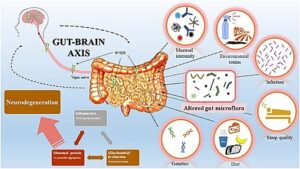
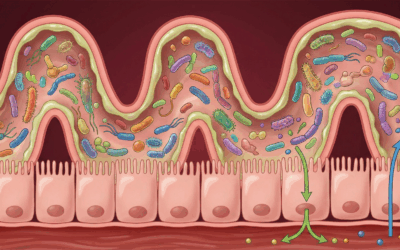
Maintaining a healthy gut microbiome is crucial for overall health and wellbeing. Recent studies have shown that there is a strong connection between gut health and mental health. The gut-brain axis is a complex system that involves communication between the gut microbiota and the brain. Therefore, it is important to pay attention to what we eat and how it affects our gut bacteria.
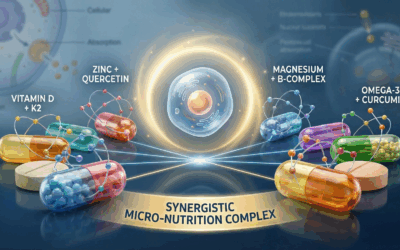
One way to boost gut bacteria is by taking synergistic supplements. These supplements contain a combination of ingredients that work together to improve gut health and promote the growth of beneficial bacteria. Here are some synergistic supplements that can help boost gut bacteria and improve mental health.
Probiotics: Probiotics are live bacteria and yeasts that are beneficial for gut health. They work by restoring the balance of gut bacteria and promoting the growth of beneficial bacteria. Studies have shown that probiotics can help reduce anxiety and depression. Some of the most common strains of probiotics are Lactobacillus and Bifidobacterium.
Prebiotics: Prebiotics are a type of fiber that cannot be digested by the human body. They serve as food for the beneficial bacteria in the gut. Prebiotics can help improve gut health by promoting the growth of beneficial bacteria. They can also help reduce inflammation in the gut, which is linked to mental health disorders. Some of the most common prebiotics are inulin and fructooligosaccharides.
Omega-3 fatty acids: Omega-3 fatty acids are essential fatty acids that are important for brain health. They can also help improve gut health by reducing inflammation in the gut. Studies have shown that omega-3 fatty acids can help reduce symptoms of depression and anxiety. The most common sources of omega-3 fatty acids are fish oil and flaxseed oil.
Vitamin D: Vitamin D is a fat-soluble vitamin that plays an important role in immune function and bone health. It can also help improve gut health by reducing inflammation in the gut. Studies have shown that low levels of vitamin D are linked to an increased risk of depression. The best source of vitamin D is sunlight, but it can also be found in foods like fatty fish and fortified dairy products.
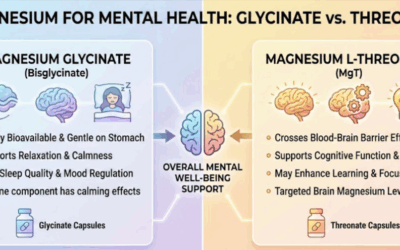
Magnesium: Magnesium is a mineral that is important for many bodily functions, including muscle and nerve function. It can also help improve gut health by reducing inflammation in the gut. Studies have shown that low levels of magnesium are linked to an increased risk of depression. Magnesium can be found in foods like nuts, seeds, and leafy green vegetables.
Quercetin is a flavonoid found in various fruits and vegetables, such as apples, onions, and berries. It has antioxidant and anti-inflammatory properties that can help reduce inflammation in the gut, support the growth of beneficial gut bacteria, and protect against oxidative stress. Quercetin has also been shown to improve cognitive function and reduce anxiety-like behaviors in animal studies. It is available as a dietary supplement in the form of capsules or powders.
Collagen is a protein that is abundant in the human body, particularly in the skin, bones, and connective tissues. It has been shown to support gut health by improving the integrity of the intestinal lining and reducing inflammation in the gut. Collagen supplements are available in the form of powders, capsules, and liquids. Some studies have suggested that collagen supplements may improve mood and cognitive function, although more research is needed in this area.
When taken together, quercetin and collagen may have a synergistic effect on gut health and mental health. Quercetin can help reduce inflammation in the gut and support the growth of beneficial gut bacteria, while collagen can help improve the integrity of the intestinal lining and reduce inflammation in the gut. Both supplements have been shown to have potential benefits for cognitive function and mood, which may further support overall mental health.
In conclusion, maintaining a healthy gut microbiome is important for overall health and wellbeing, including mental health. Synergistic supplements that contain probiotics, prebiotics, omega-3 fatty acids, vitamin D, and magnesium can help improve gut health and promote the growth of beneficial bacteria. It is important to talk to a healthcare provider before starting any new supplements to make sure they are safe and effective for you.
It’s worth noting that supplements alone may not be enough to improve gut health and mental health. A healthy diet rich in fiber, fruits, vegetables, and fermented foods, as well as regular exercise and stress management techniques, can also play a crucial role in supporting gut health and mental health. It’s always a good idea to consult with a healthcare professional before starting any new supplement regimen.
Bibliography:
Ashton, M. (2023). Synergistic Supplements to Boost Gut Bacteria and Improve Mental Health. GetTherapyBirmingham.com.
Cryan, J. F., O’Riordan, K. J., Cowan, C. S., Sandhu, K. V., Bastiaanssen, T. F., Boehme, M., … & Dinan, T. G. (2019). The Microbiota-Gut-Brain Axis. Physiological Reviews, 99(4), 1877-2013. https://doi.org/10.1152/physrev.00018.2018
Dash, S., Clarke, G., Berk, M., & Jacka, F. N. (2015). The Gut Microbiome and Diet in Psychiatry: Focus on Depression. Current Opinion in Psychiatry, 28(1), 1-6. https://doi.org/10.1097/YCO.0000000000000117
Huang, R., Wang, K., & Hu, J. (2016). Effect of Probiotics on Depression: A Systematic Review and Meta-Analysis of Randomized Controlled Trials. Nutrients, 8(8), 483. https://doi.org/10.3390/nu8080483
Kim, C. S., Cha, L., Sim, M., Jung, S., Chun, W. Y., Baik, H. W., & Shin, D. M. (2021). Gut Microbiota-Derived Short-Chain Fatty Acids, T Cells, and Inflammation. Immune Network, 21(1), e4. https://doi.org/10.4110/in.2021.21.e4
Mayer, E. A. (2011). Gut Feelings: The Emerging Biology of Gut–Brain Communication. Nature Reviews Neuroscience, 12(8), 453-466. https://doi.org/10.1038/nrn3071
Sarris, J., Logan, A. C., Akbaraly, T. N., Amminger, G. P., Balanzá-Martínez, V., Freeman, M. P., … & Jacka, F. N. (2015). Nutritional Medicine as Mainstream in Psychiatry. The Lancet Psychiatry, 2(3), 271-274. https://doi.org/10.1016/S2215-0366(14)00051-0
Further Reading:
Bourassa, M. W., Alim, I., Bultman, S. J., & Ratan, R. R. (2016). Butyrate, Neuroepigenetics and the Gut Microbiome: Can a High Fiber Diet Improve Brain Health?. Neuroscience Letters, 625, 56-63. https://doi.org/10.1016/j.neulet.2016.02.009
Dinan, T. G., & Cryan, J. F. (2017). The Microbiome-Gut-Brain Axis in Health and Disease. Gastroenterology Clinics, 46(1), 77-89. https://doi.org/10.1016/j.gtc.2016.09.007
Heiman, M. L., & Greenway, F. L. (2016). A Healthy Gastrointestinal Microbiome is Dependent on Dietary Diversity. Molecular Metabolism, 5(5), 317-320. https://doi.org/10.1016/j.molmet.2016.02.005
Liu, R. T., Walsh, R. F., & Sheehan, A. E. (2019). Prebiotics and Probiotics for Depression and Anxiety: A Systematic Review and Meta-analysis of Controlled Clinical Trials. Neuroscience & Biobehavioral Reviews, 102, 13-23. https://doi.org/10.1016/j.neubiorev.2019.03.023
Rudzki, L., & Szulc, A. (2018). Immune-Based Therapies in Depression. Psychiatria Polska, 52(3), 393-416. https://doi.org/10.12740/PP/OnlineFirst/76863















0 Comments