

Magenta is the color the brain invents. There is no magenta in the rainbow and no single wavelength of light that makes it. You see magenta when your eye catches red and blue-violet light at the same time, from opposite ends of the spectrum, and your brain closes the gap. That makes it a natural symbol for joining opposites.
What does magenta mean in a dream?
Magenta in a dream often points to integration: two parts of your life, two feelings or two people coming together. Images that blend opposites are common, like a flower both deep red and pale, or a sky caught between day and night. These dreams often come during recovery, reconciliation or major transitions.
Magenta can also carry the image of the Great Mother in Jungian work: unconditional care, comfort and safety. Being surrounded by magenta light in a dream can point to a need for self-care and compassion, or to a sense of being held. As with any dream color, start with what magenta means to you. The symbolism of color in dreams explains how to read color alongside your own associations.
The color that is not in the rainbow
Every rainbow color matches a band of wavelengths, from red to violet. Magenta is not on that line. The brain constructs it when the cones that respond to long, red wavelengths and the cones that respond to short, blue-violet wavelengths fire together, while the green-sensitive cones fire less.1 On a color wheel, magenta and the purples fill the gap between violet and red and close the circle. We can see it at all only because of the three-cone color vision that Old World primates, including us, inherited from a gene duplication some 30 to 40 million years ago.2
A short history of magenta
For most of history, strong purple-reds were rare and costly. Tyrian purple, made from sea snails, was reserved for emperors. That changed in the 1850s. In 1856 William Henry Perkin made the first synthetic dye, mauveine, and in 1859 the French chemist François-Emmanuel Verguin made a vivid purple-red aniline dye he called fuchsine. It was soon renamed magenta after the French and Sardinian victory over Austria at the Battle of Magenta in Italy that June.3 Today magenta is one of the three process inks in color printing, alongside cyan and yellow.
Magenta in symbol and myth
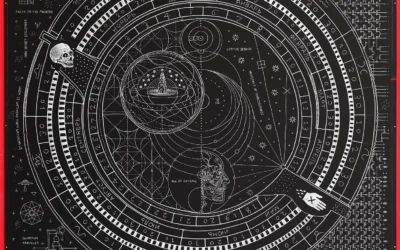
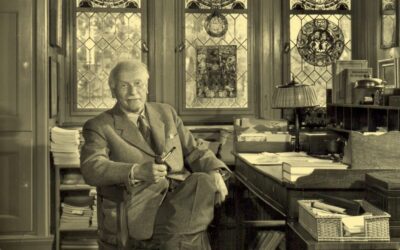
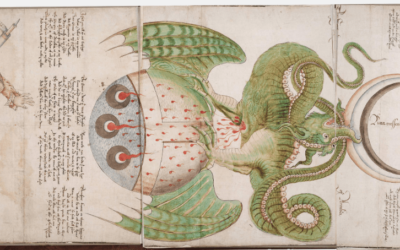
Because it joins the two ends of the spectrum, magenta carries the idea of opposites united. Carl Jung spent the last major work of his life on the coniunctio, the union of opposites the alchemists described as the marriage of the red king and the white queen. He read it as an image of the psyche becoming whole: conscious and unconscious, masculine and feminine, body and spirit held together rather than split apart.4 Magenta looks like that union.
Pinks and magentas have also long been linked with love, tenderness and the feminine. Lotus flowers in Hindu and Buddhist art, roses in Western devotion and the soft light of dawn all share this family of colors.
Magenta in therapy
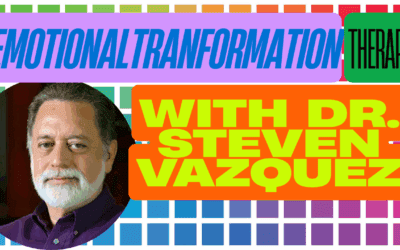
In Emotional Transformation Therapy, magenta is different from every other color. Dr. Steven Vazquez describes it as having no emotional theme of its own. Instead it brings a sense of safety, so that feelings held back because safety was missing can come up and be worked through, and he notes its particular value in trauma work.5 At Taproot we use magenta to lower the intensity of overwhelming emotion, and to help people who have rarely felt safe find enough steadiness to keep going. Some people like it immediately; others are wary at first and then relax.
Magenta also has a place outside ETT:
- Safety. Imagining being surrounded by warm magenta light can be a simple calming exercise between harder pieces of work.
- Integration. After intense sessions, magenta is a good image for bringing the pieces together.
- Attachment. For people who never felt held as children, magenta’s associations with care and comfort can open that work gently.
At Taproot we use color in Emotional Transformation Therapy, a technique developed by Dr. Steven Vazquez that uses color, flicker rate and light direction to change brain states. He describes the method and its applications in his books.56 A 2026 paper in the Journal of Psychological Experience lays out a theoretical framework for how ETT works.7 ETT has not yet been tested in randomized trials; its support comes from the clinical experience of trained practitioners and their patients. To learn more, contact Taproot Therapy Collective in Hoover.
More color psychology
Psychology of Color · Red · Violet · Green · Blue
References
- Palmer, S. E. (1999). Vision science: Photons to phenomenology. MIT Press.
- Jacobs, G. H. (2009). Evolution of colour vision in mammals. Philosophical Transactions of the Royal Society B, 364(1531), 2957–2967. https://doi.org/10.1098/rstb.2009.0039
- Royal Society of Chemistry. (n.d.). The battle for magenta. Education in Chemistry. https://edu.rsc.org/feature/the-battle-for-magenta/2020242.article
- Jung, C. G. (1970). Mysterium coniunctionis (R. F. C. Hull, Trans.; 2nd ed.; Collected Works, Vol. 14). Princeton University Press.
- Vazquez, S. R. (2012). Emotional transformation therapy: An interactive ecological psychotherapy. Jason Aronson. https://doi.org/10.5040/9798216510253
- Vazquez, S. R. (2012). Accelerated ecological psychotherapy: ETT applications for sleep disorders, pain, and addiction. Jason Aronson. https://doi.org/10.5040/9798216510048
- Bruno, J. (2026). Sensory-salience regulation in Emotional Transformation Therapy: A clinical-theoretical framework. Journal of Psychological Experience. https://doi.org/10.64484/jpsyexp-x4s8m0l2c8n1y8z0





0 Comments