
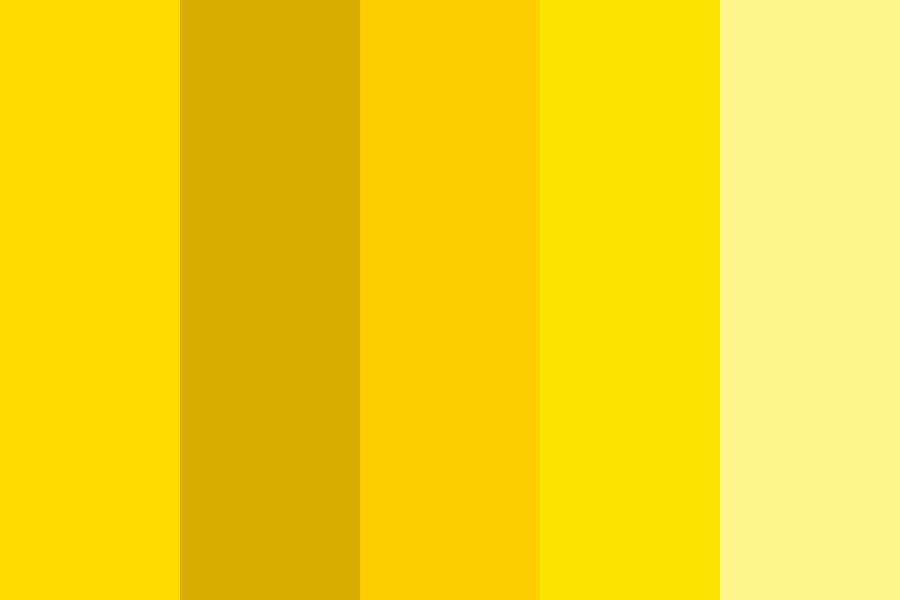
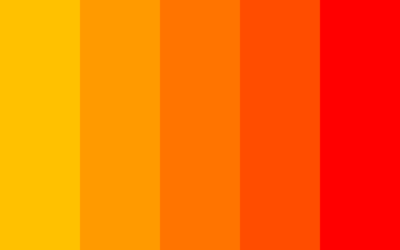
Yellow is the brightest color the eye sees. It is sunlight, a school bus, a caution sign, a field of sunflowers. It can feel cheerful or anxious, warm or harsh, and it carries old associations with the mind, with gold and with power.
What does yellow mean in a dream?
Yellow in a dream often points to the mind: insight, clarity, curiosity, a new idea taking shape. Bright, golden yellow, like sunlight or gold, can signal optimism, confidence and a growing sense of your own power. A dull, sickly or mustard yellow tends to carry anxiety, suspicion, betrayal or indecision.
Yellow also shows up when a dreamer feels trapped or controlled: a yellow room with no door, a yellow light that will not turn green. In Jungian work, yellow connects to the alchemical citrinitas, the yellowing or dawning of insight, a stage on the way to wholeness rather than the end of it. The symbolism of color in dreams explains how to read color alongside your own associations.
Where yellow is felt in the body
People tend to feel yellow in the upper belly, the place that tightens with nerves and knots up under pressure. In chakra traditions this is the solar plexus, Manipura, the center of will and self-confidence. In Emotional Transformation Therapy, Dr. Steven Vazquez associates yellow with anger, hope and control, felt in the upper abdomen.1 Many people remember their stomach “locking up” in situations they could not escape: a strict classroom, a tense dinner table.
What the research says about yellow
Across cultures, yellow is one of the colors most strongly tied to joy. In a study of 6,625 people in 55 countries, people linked yellow with joy more strongly the farther they lived from the equator and the rainier their country, which suggests that scarce sunshine makes yellow feel more precious.2 How bright and saturated a yellow is matters more for its emotional effect than the hue itself.3
Yellow light acts on the body clock more weakly than blue. In 72 volunteers, nighttime melatonin suppression was strongest for blue light and much weaker toward yellow-green.4 What does lift mood is bright light: in a randomized trial in winter depression, bright light therapy worked as well as the antidepressant fluoxetine.5 That effect comes from brightness and timing, not from yellow as a hue, but it fits yellow’s long association with sunlight. Claims that yellow light boosts serotonin or activates specific brain regions for clarity have not been shown and have been removed from this page.
Yellow in myth and symbol
Yellow is the color of the sun and of gold, and so of light, divinity and authority. The Egyptian sun god Ra and the Greek Apollo, god of light and prophecy, were both pictured in gold. Heroes in myth carry golden swords and wear golden armor, symbols of courage and will.6 In many traditions, the wise old guide wears gold.
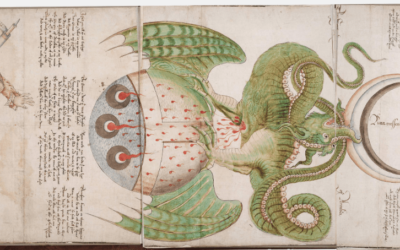
Alchemists described their work as passing through blackening, whitening, yellowing and reddening. Jungians read the yellowing as the dawn of understanding after a long darkness: the moment confusion starts to give way to insight.7 Yellow has a shadow too. In Western art it has stood for cowardice, jealousy and betrayal, and in the 20th century it was used to mark people for persecution. It is a color of power in every sense.
Yellow in therapy
In Emotional Transformation Therapy, yellow is used when the work is about power and control: feeling trapped, controlled, manipulated or helpless, and the anger and rage that answer it. Its healthier side is calm, empowerment and hope. Clinicians report that yellow can be very activating for people with histories of control, whether in a family, a church or an institution.
Yellow also has a place outside ETT:
- Agency. Yellow is a good image for reclaiming choices, especially for people who learned to comply.
- Light and mood. Morning daylight and, when appropriate, light therapy planned with a prescriber can support mood in the darker months.
- Insight. Dreamwork and journaling around yellow images can help clients notice where understanding is starting to dawn.
At Taproot we use color in Emotional Transformation Therapy, a technique developed by Dr. Steven Vazquez that uses color, flicker rate and light direction to change brain states. He describes the method and its applications in his books.18 A 2026 paper in the Journal of Psychological Experience lays out a theoretical framework for how ETT works.9 ETT has not yet been tested in randomized trials; its support comes from the clinical experience of trained practitioners and their patients. To learn more, contact Taproot Therapy Collective in Hoover.
More color psychology
Psychology of Color · Orange · Yellow-Green · Green · Blue
References
- Vazquez, S. R. (2012). Emotional transformation therapy: An interactive ecological psychotherapy. Jason Aronson. https://doi.org/10.5040/9798216510253
- Jonauskaite, D., Abdel-Khalek, A. M., Abu-Akel, A., Al-Rasheed, A. S., Antonietti, J.-P., et al. (2019). The sun is no fun without rain: Physical environments affect how we feel about yellow across 55 countries. Journal of Environmental Psychology, 66, 101350. https://doi.org/10.1016/j.jenvp.2019.101350
- Valdez, P., & Mehrabian, A. (1994). Effects of color on emotions. Journal of Experimental Psychology: General, 123(4), 394–409. https://doi.org/10.1037/0096-3445.123.4.394
- Brainard, G. C., Hanifin, J. P., Greeson, J. M., Byrne, B., Glickman, G., Gerner, E., & Rollag, M. D. (2001). Action spectrum for melatonin regulation in humans: Evidence for a novel circadian photoreceptor. Journal of Neuroscience, 21(16), 6405–6412. https://doi.org/10.1523/JNEUROSCI.21-16-06405.2001
- Lam, R. W., Levitt, A. J., Levitan, R. D., Enns, M. W., Morehouse, R., Michalak, E. E., & Tam, E. M. (2006). The Can-SAD study: A randomized controlled trial of the effectiveness of light therapy and fluoxetine in patients with winter seasonal affective disorder. American Journal of Psychiatry, 163(5), 805–812. https://doi.org/10.1176/appi.ajp.163.5.805
- Campbell, J. (1949). The hero with a thousand faces. Pantheon Books.
- Edinger, E. F. (1985). Anatomy of the psyche: Alchemical symbolism in psychotherapy. Open Court.
- Vazquez, S. R. (2012). Accelerated ecological psychotherapy: ETT applications for sleep disorders, pain, and addiction. Jason Aronson. https://doi.org/10.5040/9798216510048
- Bruno, J. (2026). Sensory-salience regulation in Emotional Transformation Therapy: A clinical-theoretical framework. Journal of Psychological Experience. https://doi.org/10.64484/jpsyexp-x4s8m0l2c8n1y8z0





0 Comments