

Red-orange is the color of fire at its hottest point, lava, a sky just before the sun drops. It sits between the raw instinct of red and the warmth and sociability of orange, and it carries some of both: urgency, heat, change.
What does red-orange mean in a dream?
Red-orange in a dream often marks a threshold. Fire, molten rock and burning sunsets are images of something ending so something else can begin. Dreamers often meet this color during periods of intense change, when an old identity is burning away and a new one has not yet formed. In Jungian terms, that is the heat of individuation: transformation that costs something.
The context decides the tone. Red-orange in a warm, steady fire can mean courage, momentum and confidence to act. Red-orange in a wildfire or an explosion more often points to frustration, impatience or emotion that feels out of control. Ask whether the fire in the dream was fueling something or consuming it. The symbolism of color in dreams explains how to read color alongside your own associations.
Where red-orange is felt in the body
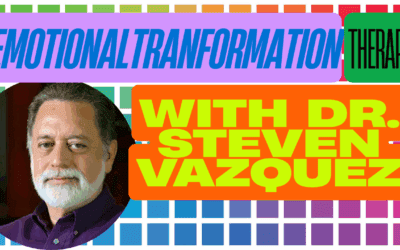
People usually describe red-orange as warm and mobilizing, an energy low in the body that wants to move outward. In Emotional Transformation Therapy, Dr. Steven Vazquez treats red-orange as a color in its own right rather than a blend, and associates it with the boundary between your own feelings and other people’s.1 In ETT it is felt in the lower abdomen, between red and orange. In chakra traditions, the same area belongs to the sacral center, linked with creativity, pleasure and emotion.
What the research says
There is little laboratory research on red-orange as a band of its own. Older studies found that warm, long-wavelength colors are more physiologically arousing than cool ones: in a 1966 study, red produced stronger skin conductance responses than green.2 More recent work shows that how saturated and bright a color is predicts emotional arousal more strongly than its hue, so a vivid red-orange is likely to feel more intense than a muted one.3 And Andrew Elliot and Markus Maier’s review makes the key point: warm colors’ effects depend heavily on context and on what they have come to mean to us.4
Red-orange in myth and religion
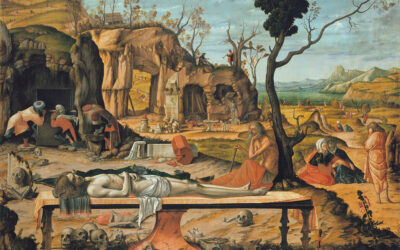
Fire is the oldest symbol of transformation, and red-orange is its color. In Christian art, flames carry the idea of purification, from the tongues of fire at Pentecost to the fires of purgatory, which burn away rather than destroy. In Buddhist traditions, monks’ robes in saffron and ochre tones signal renunciation and the inner discipline of practice.
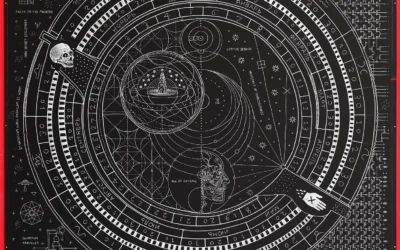
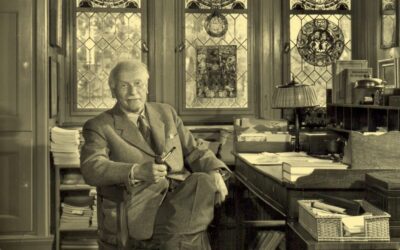
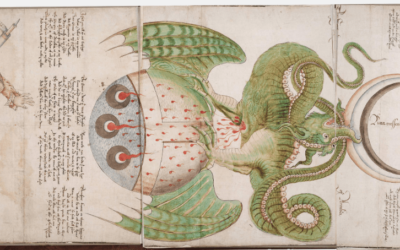
Western alchemy described its work as a series of color changes, ending in the rubedo, the reddening, when the work was complete. Carl Jung read those stages as a map of psychological transformation, with the red stage standing for the union of opposites and the finished, integrated self.5 Red-orange, on the edge of that reddening, is the color of the fire still doing its work.
Red-orange in therapy
In Emotional Transformation Therapy, red-orange is used when the problem is merging: losing track of where your feelings end and someone else’s begin. Clinicians match it to compliance, over-responsibility for others, guilt and shame, and the feeling of having been intruded upon. Its healthier side is self-assurance, playfulness and humor.
Red-orange also has a place outside ETT:
- Intense emotion. Fire imagery can help clients name and contain feelings that seem too hot to touch.
- Boundaries. For people who absorb other people’s moods, red-orange is a useful image for the line between self and other.
- Body work. Body-centered approaches like those Peter Levine describes help discharge the activation that intense experiences leave behind.6
At Taproot we use color in Emotional Transformation Therapy, a technique developed by Dr. Steven Vazquez that uses color, flicker rate and light direction to change brain states. He describes the method and its applications in his books.17 A 2026 paper in the Journal of Psychological Experience lays out a theoretical framework for how ETT works.8 ETT has not yet been tested in randomized trials; its support comes from the clinical experience of trained practitioners and their patients. To learn more, contact Taproot Therapy Collective in Hoover.
More color psychology
Psychology of Color · Red · Orange · Yellow · Green · Magenta
References
- Vazquez, S. R. (2012). Emotional transformation therapy: An interactive ecological psychotherapy. Jason Aronson. https://doi.org/10.5040/9798216510253
- Wilson, G. D. (1966). Arousal properties of red versus green. Perceptual and Motor Skills, 23(3), 947–949. https://doi.org/10.2466/pms.1966.23.3.947
- Valdez, P., & Mehrabian, A. (1994). Effects of color on emotions. Journal of Experimental Psychology: General, 123(4), 394–409. https://doi.org/10.1037/0096-3445.123.4.394
- Elliot, A. J., & Maier, M. A. (2014). Color psychology: Effects of perceiving color on psychological functioning in humans. Annual Review of Psychology, 65, 95–120. https://doi.org/10.1146/annurev-psych-010213-115035
- Jung, C. G. (1970). Mysterium coniunctionis (R. F. C. Hull, Trans.; 2nd ed.; Collected Works, Vol. 14). Princeton University Press.
- Levine, P. A. (1997). Waking the tiger: Healing trauma. North Atlantic Books.
- Vazquez, S. R. (2012). Accelerated ecological psychotherapy: ETT applications for sleep disorders, pain, and addiction. Jason Aronson. https://doi.org/10.5040/9798216510048
- Bruno, J. (2026). Sensory-salience regulation in Emotional Transformation Therapy: A clinical-theoretical framework. Journal of Psychological Experience. https://doi.org/10.64484/jpsyexp-x4s8m0l2c8n1y8z0






0 Comments