

Yellow-green is the color of a leaf just opening, of new grass in March, of chartreuse and lime. It sits between the brightness of yellow and the calm of green, and it carries both: fresh energy, and the steadiness of things that grow.
What does yellow-green mean in a dream?
Yellow-green in a dream usually points to new beginnings and growth in its earliest stage. Bright new foliage, sprouts and spring fields tend to appear when a dreamer is starting something, learning something or coming back to life after a hard season. The dream may be asking you to trust an instinct before you can fully explain it.
Murky or sour yellow-green tells a different story: hesitation, fear of deciding, envy, or feeling stuck between two choices. Yellow-green water can point to uneasy feelings that need sorting out. In Jungian work, this color can carry the trickster or the Fool, the part of us that is willing to step into the unknown before we have all the answers. The symbolism of color in dreams explains how to read color alongside your own associations.
Where yellow-green is felt in the body
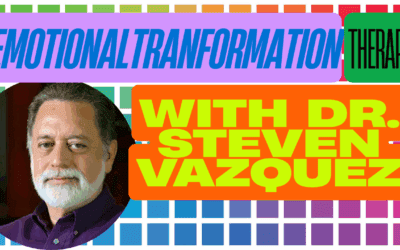
In Emotional Transformation Therapy, Dr. Steven Vazquez treats yellow-green as a color in its own right. He associates it with feeling blocked, perplexed or torn, and with jealousy and envy, and places it at the base of the breastbone, between the gut and the heart.1 People often describe it there: a lump under the sternum when they want to act and cannot work out how. In research on how emotions are felt in the body, envy clusters with disgust, which shows up in the throat and digestive tract.2
What the research says about yellow-green
Yellow-green, around 566 nanometers, sits right at the peak sensitivity of the eye’s long-wavelength cones, about 563 nanometers, and just above the medium-wavelength cones, about 534.3 Comparing those two signals is what lets primates spot young leaves and ripe fruit against foliage, and the light under a forest canopy is rich in these middle wavelengths.4 Yellow-green really is the color our eyes evolved to read in living plants.
It has much less effect on the body clock than blue. The eye’s clock-setting cells respond most to blue, and melatonin suppression is much weaker toward yellow-green.5 Claims that yellow-green light calms the brain’s conflict centers, lowers cortisol or raises alpha waves have not been shown and have been removed from this page. What is supported is that time in green, growing places helps. Nature walks reduced activity in a brain region linked to rumination in a randomized study.6
Yellow-green in myth and symbol
Because it is the color of spring growth, yellow-green belongs to gods and figures of renewal. The Egyptian god Osiris, killed by his brother Set and brought back, was painted with green skin as lord of vegetation.7 The Green Man, a face of leaves carved into medieval European churches, stands for life that keeps returning.8
Yellow-green also carries the idea of two things meeting. Jung saw that kind of meeting of opposites, light and life, thought and feeling, as the heart of individuation, the lifelong work of becoming whole.9 And because so many healing plants are leaves and flowers in these shades, yellow-green has long been tied to herbal medicine and to the idea that our health and the health of the living world are connected.10
Yellow-green in therapy
In Emotional Transformation Therapy, yellow-green is used when a person is stuck: they know something needs to change but cannot see what to do, or they are caught in envy, jealousy or anger and sadness at the same time. Its healthier side is fairness, acceptance and peace. Clinicians report that yellow-green work often ends with clearer boundaries and more acceptance of other people’s differences.
Yellow-green also has a place outside ETT:
- Nature. Plants in the room, a window onto trees or a walking session draw on the nature research.
- Mindfulness. Attending closely to the detail of a living leaf is a simple, grounding practice.
- Getting unstuck. Art and role-play let clients try out the action they have been unable to take.
At Taproot we use color in Emotional Transformation Therapy, a technique developed by Dr. Steven Vazquez that uses color, flicker rate and light direction to change brain states. He describes the method and its applications in his books.111 A 2026 paper in the Journal of Psychological Experience lays out a theoretical framework for how ETT works.12 ETT has not yet been tested in randomized trials; its support comes from the clinical experience of trained practitioners and their patients. To learn more, contact Taproot Therapy Collective in Hoover.
More color psychology
Psychology of Color · Yellow · Green · Blue-Green · Blue
References
- Vazquez, S. R. (2012). Emotional transformation therapy: An interactive ecological psychotherapy. Jason Aronson. https://doi.org/10.5040/9798216510253
- Nummenmaa, L., Glerean, E., Hari, R., & Hietanen, J. K. (2014). Bodily maps of emotions. Proceedings of the National Academy of Sciences, 111(2), 646–651. https://doi.org/10.1073/pnas.1321664111
- Bowmaker, J. K., & Dartnall, H. J. A. (1980). Visual pigments of rods and cones in a human retina. The Journal of Physiology, 298, 501–511. https://doi.org/10.1113/jphysiol.1980.sp013097
- Regan, B. C., Julliot, C., Simmen, B., Viénot, F., Charles-Dominique, P., & Mollon, J. D. (2001). Fruits, foliage and the evolution of primate colour vision. Philosophical Transactions of the Royal Society B, 356(1407), 229–283. https://doi.org/10.1098/rstb.2000.0773
- Brainard, G. C., Hanifin, J. P., Greeson, J. M., Byrne, B., Glickman, G., Gerner, E., & Rollag, M. D. (2001). Action spectrum for melatonin regulation in humans: Evidence for a novel circadian photoreceptor. Journal of Neuroscience, 21(16), 6405–6412. https://doi.org/10.1523/JNEUROSCI.21-16-06405.2001
- Bratman, G. N., Hamilton, J. P., Hahn, K. S., Daily, G. C., & Gross, J. J. (2015). Nature experience reduces rumination and subgenual prefrontal cortex activation. Proceedings of the National Academy of Sciences, 112(28), 8567–8572. https://doi.org/10.1073/pnas.1510459112
- Pinch, G. (2004). Egyptian mythology: A guide to the gods, goddesses, and traditions of ancient Egypt. Oxford University Press.
- Anderson, W. (1990). Green man: The archetype of our oneness with the earth. HarperCollins.
- Jung, C. G. (1971). Psychological types (Collected Works, Vol. 6). Princeton University Press. (Original work published 1921)
- Hatfield, G. (2004). Encyclopedia of folk medicine: Old world and new world traditions. ABC-CLIO.
- Vazquez, S. R. (2012). Accelerated ecological psychotherapy: ETT applications for sleep disorders, pain, and addiction. Jason Aronson. https://doi.org/10.5040/9798216510048
- Bruno, J. (2026). Sensory-salience regulation in Emotional Transformation Therapy: A clinical-theoretical framework. Journal of Psychological Experience. https://doi.org/10.64484/jpsyexp-x4s8m0l2c8n1y8z0







0 Comments