
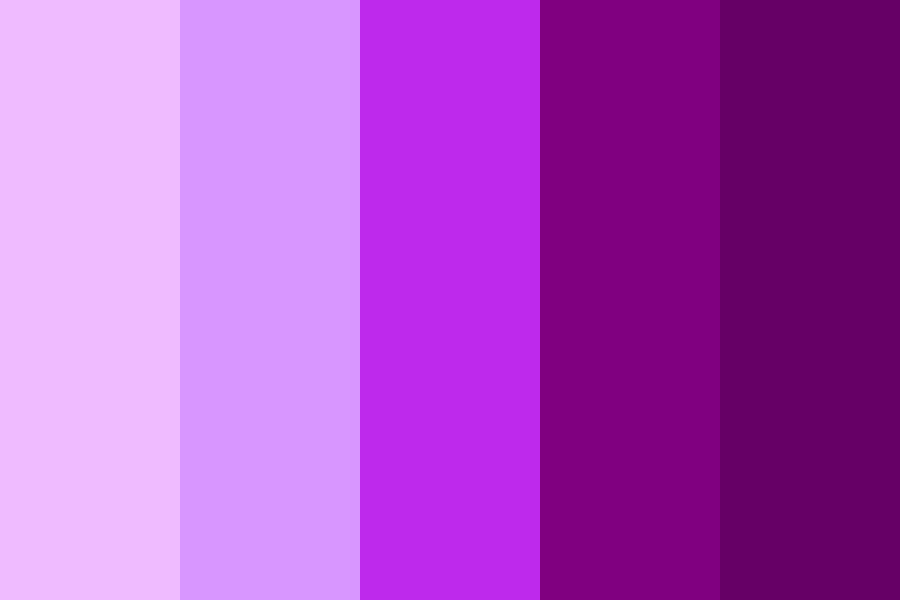
Violet is the last color the eye can see before light disappears into ultraviolet. It is the color of twilight, of amethyst and of the robes of bishops and emperors. It has long stood for the spiritual, the rare and the far edge of things.
What does violet mean in a dream?
Violet in a dream often points to meaning and the spiritual side of life: questions about faith, purpose, death and what lasts. A soft violet light can signal peace, trust or a sense of something larger than yourself. Violet dreams often come during big life transitions, after a loss or when a person is rethinking what they believe.
A cold or unsettling violet can carry a different message: feeling detached from your own life, as if watching it from outside, or suspicion and doubt that will not let go. In Jungian terms, violet sits at the edge of consciousness, where the personal opens onto the spiritual. The symbolism of color in dreams explains how to read color alongside your own associations.
Where violet is felt in the body
People tend to locate violet at the top of the head. In chakra traditions, violet belongs to the crown center, Sahasrara, the center of spiritual connection. In Emotional Transformation Therapy, Dr. Steven Vazquez associates violet with trust and doubt and places it at the top of the head.1 He has also written a book on repairing spiritual damage in therapy, which takes up many of the themes that cluster around this color.2
What the research says about violet
Violet light, roughly 400 to 424 nanometers, is the shortest wavelength we can see. Seeing it depends on an ancient opsin that in early mammals was tuned to ultraviolet and in primates shifted to violet-blue.3 In a brain-imaging study, violet light at 430 nanometers produced weaker responses than blue light in the brain’s alerting regions.4 Beyond that, research on violet’s psychological effects is thin. Its meanings come mostly from culture and history.
Violet in history and symbol
For thousands of years, purple was the rarest dye in the world. Tyrian purple, made from sea snails along the Phoenician coast, took thousands of shells to make a single gram, and in Rome it was reserved for emperors and senators. That rarity made violet and purple the colors of royalty and of the sacred. In the Christian year, violet marks Advent and Lent, seasons of waiting and repentance.
In 1856 an 18-year-old chemist, William Henry Perkin, accidentally made the first synthetic dye, mauveine, while trying to make quinine. Suddenly purple was cheap, and a “mauve mania” swept Victorian fashion. Violet went from the color of emperors to the color of everyone in a single decade.
Violet in therapy
In Emotional Transformation Therapy, violet is used when the work is about trust and meaning. On one side are suspicion, guardedness, stubbornness and mistrust. On the other are magical thinking and feeling spacey or unreal. Its healthier side is trust, relaxation and appreciation, and at its deepest, grace, gratitude and faith. Clinicians find it useful for existential crises, grief, death anxiety and religious or spiritual wounds. Because its shut-down side can include paranoid thinking, violet work is paced carefully with people who have a history of psychosis.
Violet also has a place outside ETT:
- Meaning-making. After trauma or loss, questions about purpose and legacy often need their own space in therapy.
- Spiritual wounds. For people hurt by religion, violet is a neutral image for the spiritual life they may want to reclaim on their own terms.
- Grounding. Spiritual experiences are most helpful when they feed daily life rather than replace it.
At Taproot we use color in Emotional Transformation Therapy, a technique developed by Dr. Steven Vazquez that uses color, flicker rate and light direction to change brain states. He describes the method and its applications in his books.15 A 2026 paper in the Journal of Psychological Experience lays out a theoretical framework for how ETT works.6 ETT has not yet been tested in randomized trials; its support comes from the clinical experience of trained practitioners and their patients. To learn more, contact Taproot Therapy Collective in Hoover.
More color psychology
Psychology of Color · Indigo · Blue · Magenta · Red
References
- Vazquez, S. R. (2012). Emotional transformation therapy: An interactive ecological psychotherapy. Jason Aronson. https://doi.org/10.5040/9798216510253
- Vazquez, S. R. (2017). Spiritually transformative psychotherapy: Repairing spiritual damage and facilitating extreme wellbeing. Rowman & Littlefield.
- Jacobs, G. H. (2009). Evolution of colour vision in mammals. Philosophical Transactions of the Royal Society B, 364(1531), 2957–2967. https://doi.org/10.1098/rstb.2009.0039
- Vandewalle, G., Schmidt, C., Albouy, G., Sterpenich, V., Darsaud, A., Rauchs, G., Berken, P.-Y., Balteau, E., Degueldre, C., Luxen, A., Maquet, P., & Dijk, D.-J. (2007). Brain responses to violet, blue, and green monochromatic light exposures in humans: Prominent role of blue light and the brainstem. PLoS ONE, 2(11), e1247. https://doi.org/10.1371/journal.pone.0001247
- Vazquez, S. R. (2012). Accelerated ecological psychotherapy: ETT applications for sleep disorders, pain, and addiction. Jason Aronson. https://doi.org/10.5040/9798216510048
- Bruno, J. (2026). Sensory-salience regulation in Emotional Transformation Therapy: A clinical-theoretical framework. Journal of Psychological Experience. https://doi.org/10.64484/jpsyexp-x4s8m0l2c8n1y8z0






0 Comments