
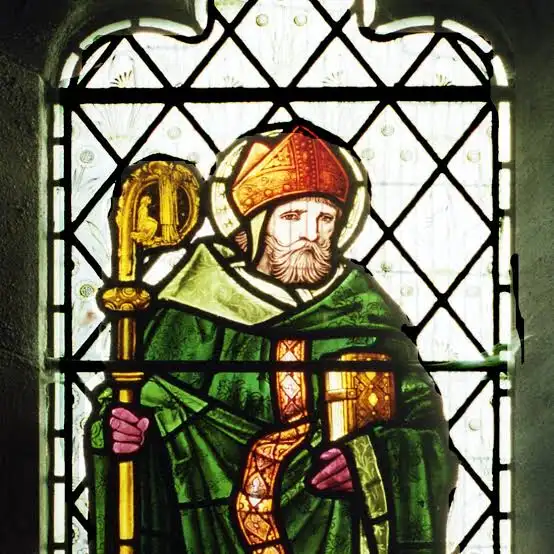
Robert Grosseteste’s light metaphysics is the theory, set out in his treatise De luce (On Light, written about 1225), that light is the first bodily form. A point of light, multiplying itself instantly in every direction, drew shapeless matter out into a sphere and gave the world its three dimensions. The nested spheres of the medieval cosmos then formed as light worked back inward.1,2
Grosseteste used the same image for knowing. The mind, he held, has an inner eye that sees by a light it does not make, and in this life that eye is clouded, partly by what we desire, so it has to work through repeated experience of the world and, when it studies nature, through geometry. That pairing is the part of him worth bringing into a therapy room: intuition taken seriously, then tested. Reading trauma as “fractured light” is a modern metaphor built from his imagery. It can help, but only if we say plainly that it is ours and not his doctrine.
Who Robert Grosseteste was
His surname is Norman French for “big head.” He was born in Suffolk, possibly around 1168. His career before about 1225 is genuinely uncertain. Daniel Callus argued that he acted as Oxford’s first chancellor from about 1214, in function if not in title; Richard Southern argued that his lasting tie to Oxford began only after 1225.1 The title rests on a late thirteenth-century anecdote whose real point is that he was called master of the scholars. What is documented is that in 1229 he became Archdeacon of Leicester, and that from 1229 or 1230 until 1235 he lectured in theology to the Oxford Franciscans as their first lector.1,3
He was among the first Latin scholars to work seriously with Aristotle’s natural philosophy and with Avicenna and Averroes, at a time when that was contested: in 1209 or 1210 ten followers of the Paris teacher Amalric of Bena were burned at Paris, and in 1210 a church synod forbade reading Aristotle’s natural philosophy there, publicly or privately. In 1235 the deadlocked canons of Lincoln elected him bishop as a compromise. From the early 1230s, late in life, he learned Greek with help and directed translations of John of Damascus, Pseudo-Dionysius and Aristotle, including the first surviving complete Latin translation of the Nicomachean Ethics to circulate in the West. He died at Buckden in October 1253.1
What De luce says about light
The treatise opens by identifying light (lux) with the first bodily form, the form that makes matter a body at all. Because the first form has no size, it could give matter three dimensions only by spreading itself instantly in every direction and carrying matter with it, which is exactly what light does: from a single point, a sphere of light is generated at once.1 Finite multiplication of something simple never yields a quantity, but infinite multiplication can. In Neil Lewis’s translation, light “by the infinite multiplication of itself, extends matter into larger and smaller finite dimensions that stand to one another in all ratios, numerical and non-numerical.”2 Grosseteste was probably the first thinker in the Latin West to propose infinities of different sizes.1
At the edge of the expansion, matter stretched as thin as it could go became the firmament, the outermost sphere. That perfected sphere sent light of a second kind, lumen, back toward the centre, compressing the matter below into a second sphere, and so on through nine celestial spheres. The lumen of the lowest, lunar sphere was too weak to perfect what lay beneath it, and the remainder became the changeable spheres of fire, air, water and earth.1,4
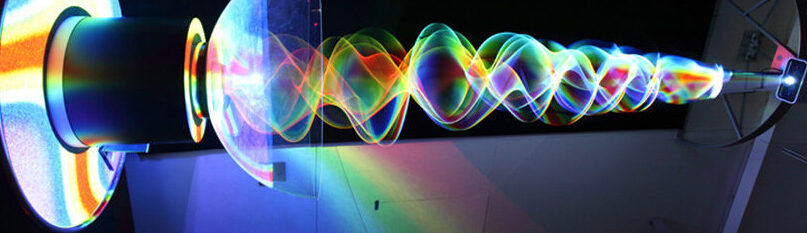
Is this the Big Bang? In 2014 members of the Ordered Universe project, a collaboration of medievalists and scientists based largely at Durham University, rewrote De luce as equations and solved them numerically. The model did produce nested spheres, but only a small range of opacities and starting densities gave a stable universe with nine; the authors call the whole range of outcomes a “medieval multiverse.” They describe the claim that Grosseteste predicted the Big Bang as “misplaced, but thought-provoking,” and say they are not treating his ideas as a precedent for modern cosmology.4 The equations are theirs, not his: De luce argues in words.
He was not alone in building a world out of light. The Persian philosopher Shihab al-Din Suhrawardi (1154–1191), who built on and criticised Avicenna, founded a philosophy of illumination in which everything flows from a Light of Lights in descending degrees of intensity. Henry Corbin studied Suhrawardi’s school of illumination while living in Istanbul during the Second World War. No one has shown that Grosseteste read him; the parallel shows how natural light was, for both, as a model of being and knowing.
The mind’s eye, and why it needs experience
Following Augustine, Grosseteste modelled understanding on sight. In his commentary on Aristotle’s Posterior Analytics, probably from the 1220s, he writes that “there is a spiritual light shed on intelligible things and the mind’s eye, and this light is related to the inner eye and intelligible things in the way the bodily sun is related to bodily eyes and visible bodily things.” In principle the highest part of the soul could see truths directly. In practice that power is “sick” in nearly everyone, darkened and weighed down by the body, its vision clouded by the images the senses supply. This darkening, he says, is the origin of all errors.1
His remedy is not more inner light but more experience. Repeated encounters with the world stir reason awake and lead it to suspect hidden connections between things that keep occurring together; then reason asks whether the connection is real. His example, borrowed from Avicenna, is the claim that the drug scammony purges red bile. To test it, you rule out the other known causes of red-bile discharge, give scammony, and watch. That is how the mind reaches what he calls an experimental universal principle and climbs out of darkness toward its own light.1
He gave a second reason the eye clouds over, and it matters most for therapy. He divided the mind’s powers into aspectus, its capacity to perceive and know, and affectus, its desire and will. Brett Smith, who has traced the pair through his writings, knows of no earlier author who used the terms in this technical way. In at least three works Grosseteste explains why Aristotle could not grasp that the world had a beginning: Aristotle’s affectus was turned toward earthly, temporal things, so his intellectual vision could not rise to eternity.3 What we love steers what we are able to see.
Did he invent the scientific method?
The claim that he did comes mainly from the historian A. C. Crombie, whose 1953 book Robert Grosseteste and the Origins of Experimental Science, 1100–1700 traced an experimental tradition from Grosseteste’s Oxford to the seventeenth century.5 In a 1955 essay, Crombie wrote that Grosseteste “seems to have been the first writer to make systematic use of a method of experimental verification and falsification.”1
He did not. Falsifiability as a principle of science is Karl Popper’s. In Logik der Forschung (1934), later rewritten in English as The Logic of Scientific Discovery, Popper argued that no number of confirming observations can prove a general theory, while a reproducible contrary result can refute it.6 Grosseteste worked inside Aristotle’s ideal of scientia: knowing why something is so by deriving it from true, necessary principles. That is a different project from testing hypotheses against data. Even Crombie’s milder claim is contested. The scammony passage is the only controlled experiment Grosseteste describes, he does not make it the route to scientific principles, and in his own treatises he reasons from authority, everyday observation, thought experiments and metaphysical rules such as the principle that nature acts in the shortest and best way possible.1 Bruce Eastwood’s 1968 study of his optics found the same gap between his theory of experiment and his practice.7
Crombie is on firmer ground about mathematics. Grosseteste insisted that natural philosophy needs geometry, because a natural agent “multiplies its power from itself to what it acts upon,” with a strength that depends on distance, angle and figure. Roger Bacon, often called his student, praised his mathematical expertise and later developed this “multiplication of species” in detail,1 but there is no firm evidence that the two men ever met.
The Ordered Universe team reads his short On Colour as describing an explicitly three-dimensional colour space,8 and used modern knowledge of human colour perception to interpret his account of the rainbow.9 The project’s new editions of his scientific works began appearing in 2019.10
Intuition and measurement, then and now
Modern research on intuition gives Grosseteste’s pairing a sharper form. In 2009 Daniel Kahneman, who studied intuition’s biases, and Gary Klein, who studied expert intuition in natural settings, mapped where their two traditions agreed. An intuitive judgment, they concluded, deserves trust only when the environment is regular enough to be predictable and the person has had a real chance to learn its regularities. “Subjective experience is not a reliable indicator of judgment accuracy.”12 The inner eye can see, but its feeling of certainty proves nothing.
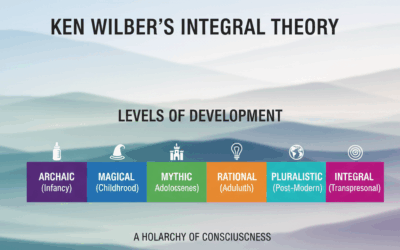
Later projects to make inner seeing systematic meet the same requirement. Rudolf Steiner called anthroposophy a “spiritual science,” and Ken Wilber’s integral approach proposes a “broad science”: specify an experiment, perform it and observe, then check the result with others who have competently done the same.13 Wilber also names a pre/trans fallacy, the confusion of states that come before reason with states that go beyond it. Not every strong feeling of knowing is insight. Richard Tarnas’s narrative history of Western thought tells the longer story between Grosseteste’s century and ours.
Trauma as dimmed light: our metaphor, not his doctrine
Grosseteste never wrote about trauma. His darkened intellect is the ordinary human condition, not an injured mind, so a therapist who calls trauma “fractured light” is borrowing his images. Three are worth borrowing. The first is darkness as a lack rather than a substance, privation as the impurity of light in things:1 the image suggests that a person gone numb or dissociated after trauma has not become someone else, and that their capacities may be obscured rather than gone. The second is the clouded eye, perception skewed by the images the mind already carries. The third is affectus steering aspectus, what we fear deciding what we notice.3
That third image has modern support. A meta-analysis of 172 studies found that anxious people, clinical and non-clinical, children and adults, attend preferentially to threat, while non-anxious people do not; the effect was modest (d = 0.45) and appeared even with threat cues presented outside awareness.14 The research concerns anxiety broadly, not trauma alone, and the dot-probe reaction-time task often treated as the standard measure has repeatedly shown poor reliability.15
The metaphor can also mislead. It implies a pure self waiting under the damage, which is a working assumption of some therapies rather than a finding, and it implies that insight alone will fix things. Grosseteste’s own remedy for a clouded eye was repeated, varied experience. Depth psychology has its own many-lights picture: Jung titled one section of On the Nature of the Psyche “The Unconscious as a Multiple Consciousness,”16 and parts-based therapy, such as Internal Family Systems, treats the mind as a set of relatively distinct subpersonalities. These are models, best held the way Grosseteste held his: as lenses, checked against what actually happens.
What this looks like in therapy
Therapists work partly by intuition: a sense that a story is missing a piece, an image that arrives while a client talks. Read through Grosseteste’s model, these are the mind’s eye at work, and they need checking, because the therapist’s eye is clouded by the therapist’s own affectus: hopes for the client, fatigue, favourite theories.
The research agrees. A review by Terence Tracey, Bruce Wampold and colleagues found no demonstration that therapists grow more accurate with experience, and traced this partly to poor information about their own outcomes.17 In one survey a quarter of mental health professionals rated their skill at the 90th percentile and none rated themselves below average.18 Clinicians rarely predict accurately which clients will not benefit, while in one study a questionnaire with decision rules flagged every client who had deteriorated by the end of treatment.19 Across studies of health and behaviour, formula-based prediction averaged about 10% more accurate than clinical judgment, though in many studies the two were about equally accurate.20 Routine progress feedback helps, modestly: a 2021 meta-analysis of 58 studies found a small effect on symptoms (d = 0.15) and slightly lower dropout.21
In practice the check can be simple: a short rating scale every session or two, or a regular, direct question about whether therapy is helping and what is missing. A hunch is offered tentatively, and a wrong one, offered that way, costs little.
Clients bring their own intuitions, and trauma complicates them. A gut sense of danger can be accurate, or it can be threat-tuned attention presenting itself as insight. Good therapy tells a person neither to trust their gut nor to ignore it. It works more like the scammony test: notice the feeling, ask what it predicts, change one thing, and see what actually happens. Somatic and parts-based approaches try to slow this down enough to notice the feeling in the body before acting on it.
Grosseteste never separated how the world works from what it means, and many people arrive in therapy with the second question pressing: a loss, a mid-life collapse, a faith that no longer fits. In Jungian depth therapy and existential therapy, dreams, images and sudden convictions are taken seriously as material, then examined rather than obeyed.
If you are in Alabama and want therapy that takes your inner life seriously and also checks whether it is working, you can read about our Jungian depth therapy in Hoover or contact Taproot Therapy Collective with questions. Asking any therapist how the two of you will know whether therapy is helping is a reasonable place to start.
References
- Lewis, N., & Polloni, N. (2024). Robert Grosseteste. In E. N. Zalta & U. Nodelman (Eds.), The Stanford encyclopedia of philosophy (substantive revision of September 23, 2024). Metaphysics Research Lab, Stanford University. https://plato.stanford.edu/entries/grosseteste/
- Lewis, N. (2013). Robert Grosseteste’s On Light: An English translation. In J. Flood, J. R. Ginther, & J. W. Goering (Eds.), Robert Grosseteste and his intellectual milieu (pp. 239–247). Pontifical Institute of Mediaeval Studies. https://doi.org/10.1515/9781771103534-015
- Smith, B. W. (2018). “A theme song of his life”: Aspectus and affectus in the writings of Robert Grosseteste. Franciscan Studies, 76(1), 1–22. https://doi.org/10.1353/frc.2018.0000
- Bower, R. G., McLeish, T. C. B., Tanner, B. K., Smithson, H. E., Panti, C., Lewis, N., & Gasper, G. E. M. (2014). A medieval multiverse?: Mathematical modelling of the thirteenth century universe of Robert Grosseteste. Proceedings of the Royal Society A: Mathematical, Physical and Engineering Sciences, 470(2167), Article 20140025. https://doi.org/10.1098/rspa.2014.0025
- Crombie, A. C. (1953). Robert Grosseteste and the origins of experimental science, 1100–1700. Clarendon Press.
- Popper, K. (2005). The logic of scientific discovery. Routledge. https://doi.org/10.4324/9780203994627 (Original work published 1934)
- Eastwood, B. S. (1968). Mediaeval empiricism: The case of Grosseteste’s optics. Speculum, 43(2), 306–321. https://doi.org/10.2307/2855937
- Smithson, H. E., Dinkova-Bruun, G., Gasper, G. E. M., Huxtable, M., McLeish, T. C. B., & Panti, C. (2012). A three-dimensional color space from the 13th century. Journal of the Optical Society of America A, 29(2), A346. https://doi.org/10.1364/JOSAA.29.00A346
- Smithson, H. E., Anderson, P. S., Dinkova-Bruun, G., Fosbury, R. A. E., Gasper, G. E. M., Laven, P., McLeish, T. C. B., Panti, C., & Tanner, B. K. (2014). Color-coordinate system from a 13th-century account of rainbows. Journal of the Optical Society of America A, 31(4), A341. https://doi.org/10.1364/JOSAA.31.00A341
- Grosseteste, R. (2019). The scientific works of Robert Grosseteste: Vol. 1. Knowing and speaking (G. E. M. Gasper, C. Panti, T. C. B. McLeish, & H. E. Smithson, Eds.). Oxford University Press. https://doi.org/10.1093/actrade/9780198805519.book.1
- Rocke, A. J. (2015). It began with a daydream: The 150th anniversary of the Kekulé benzene structure. Angewandte Chemie International Edition, 54(1), 46–50. https://doi.org/10.1002/anie.201408034
- Kahneman, D., & Klein, G. (2009). Conditions for intuitive expertise: A failure to disagree. American Psychologist, 64(6), 515–526. https://doi.org/10.1037/a0016755
- Wilber, K. (1998). The marriage of sense and soul: Integrating science and religion. Broadway Books.
- Bar-Haim, Y., Lamy, D., Pergamin, L., Bakermans-Kranenburg, M. J., & van IJzendoorn, M. H. (2007). Threat-related attentional bias in anxious and nonanxious individuals: A meta-analytic study. Psychological Bulletin, 133(1), 1–24. https://doi.org/10.1037/0033-2909.133.1.1
- Kappenman, E. S., Farrens, J. L., Luck, S. J., & Proudfit, G. H. (2014). Behavioral and ERP measures of attentional bias to threat in the dot-probe task: Poor reliability and lack of correlation with anxiety. Frontiers in Psychology, 5, Article 1368. https://doi.org/10.3389/fpsyg.2014.01368
- Jung, C. G. (2014). On the nature of the psyche. Routledge. https://doi.org/10.4324/9780203164716
- Tracey, T. J. G., Wampold, B. E., Lichtenberg, J. W., & Goodyear, R. K. (2014). Expertise in psychotherapy: An elusive goal? American Psychologist, 69(3), 218–229. https://doi.org/10.1037/a0035099
- Walfish, S., McAlister, B., O’Donnell, P., & Lambert, M. J. (2012). An investigation of self-assessment bias in mental health providers. Psychological Reports, 110(2), 639–644. https://doi.org/10.2466/02.07.17.PR0.110.2.639-644
- Hannan, C., Lambert, M. J., Harmon, C., Nielsen, S. L., Smart, D. W., Shimokawa, K., & Sutton, S. W. (2005). A lab test and algorithms for identifying clients at risk for treatment failure. Journal of Clinical Psychology, 61(2), 155–163. https://doi.org/10.1002/jclp.20108
- Grove, W. M., Zald, D. H., Lebow, B. S., Snitz, B. E., & Nelson, C. (2000). Clinical versus mechanical prediction: A meta-analysis. Psychological Assessment, 12(1), 19–30. https://doi.org/10.1037/1040-3590.12.1.19
- de Jong, K., Conijn, J. M., Gallagher, R. A. V., Reshetnikova, A. S., Heij, M., & Lutz, M. C. (2021). Using progress feedback to improve outcomes and reduce drop-out, treatment duration, and deterioration: A multilevel meta-analysis. Clinical Psychology Review, 85, Article 102002. https://doi.org/10.1016/j.cpr.2021.102002






0 Comments