
Updated November 2026 · By Joel Blackstock, LICSW-S
The vagus nerve exercises with the best evidence are slow breathing with a longer exhale, which has randomized trials for stress and anxiety, and cold water on the face, which reliably slows the heart. Humming probably helps mostly because it stretches the exhale. None of these is an off switch. The effects are modest and mostly short-lived, and claims about ear massage and eye exercises run ahead of the research.
That is the argument of this page. The vagus nerve is a real brake on the heart, and you can lean on it. But an anxiety disorder is not a brake that has stopped working. It is an alarm that has learned to go off at the wrong things, and what retrains an alarm is learning, not a reflex. Used to stay with fear long enough to find out that it passes, vagal exercises are good tools. Used as an escape hatch so that you never have to feel anxious, they can become one more thing that keeps anxiety going. Below is what the nerve does, what each popular exercise actually does, who should be careful, and how this works inside therapy.
What the vagus nerve actually does
The vagus is the tenth of the twelve cranial nerves. Its name is Latin for “wandering,” and it earns it: it leaves the brainstem through the base of the skull and runs down through the neck and chest into the abdomen. In the neck it supplies most of the muscles of the throat and voice box that you use to swallow and speak. In the chest it is the main parasympathetic supply to the heart, and when its signal rises, the heart slows.1
Two corrections to the earlier version of this post. First, the vagus is not the longest nerve in the body. That is the sciatic nerve, which runs from the lower spine down the back of the leg to the foot. Second, the vagus is not a “command center.” Somewhere between 80 and 90 percent of its fibers carry information up to the brain, not down.1 Tracing studies find vagal sensory endings in the esophagus, airways, heart, aorta and the whole digestive tract, with receptors that respond to stretch, chemistry and temperature.2 Most of the vagus is listening. It reports the state of the body to the nucleus of the solitary tract in the brainstem, which passes that information on to regions involved in arousal and emotion, including the locus coeruleus and the amygdala.1
That matters for everything below. You cannot flip the vagus on the way you flip a light. What you can do is change the signals it carries: slow your breathing, cool your face, lengthen your exhale. The brainstem responds by adjusting the brake on the heart. The adjustment is real, and it is temporary.
Vagal tone, heart rate variability and anxiety
Nobody can measure “vagal tone” directly in an ordinary person. What researchers measure is heart rate variability (HRV), and in particular respiratory sinus arrhythmia: the normal rise in heart rate as you breathe in and fall as you breathe out. It is a reasonable index of the vagal brake on the heart, but an imperfect one. Breathing rate and depth, physical activity and sympathetic tone all change it, and the link between HRV and vagal tone is stronger within one person over time than between different people.3 Your watch’s morning HRV number is not a simple reading of vagal tone.
With that caveat, the link with anxiety is real. A 2014 meta-analysis pooled 36 studies comparing 2,086 people with anxiety disorders to 2,294 controls. Resting HRV was lower in panic disorder, PTSD, generalized anxiety disorder and social anxiety disorder, though not in OCD, and the effect was small to moderate.4 Depression shows a similar pattern. In a 2010 meta-analysis, people with major depression had lower HRV than controls, and the more severe the depression, the lower it ran. The same review found that SSRIs did not raise HRV, even in patients whose depression improved.5
In other words, people got better while their HRV stayed where it was. Low HRV goes along with anxiety and depression, but nobody has shown that it causes them, or that raising it is how people recover. The earlier version of this post said that a “dormant” vagus leaves you stuck in panic or collapse. The research supports a weaker and more interesting claim: the vagal brake is one of many systems that run differently in people who are struggling.
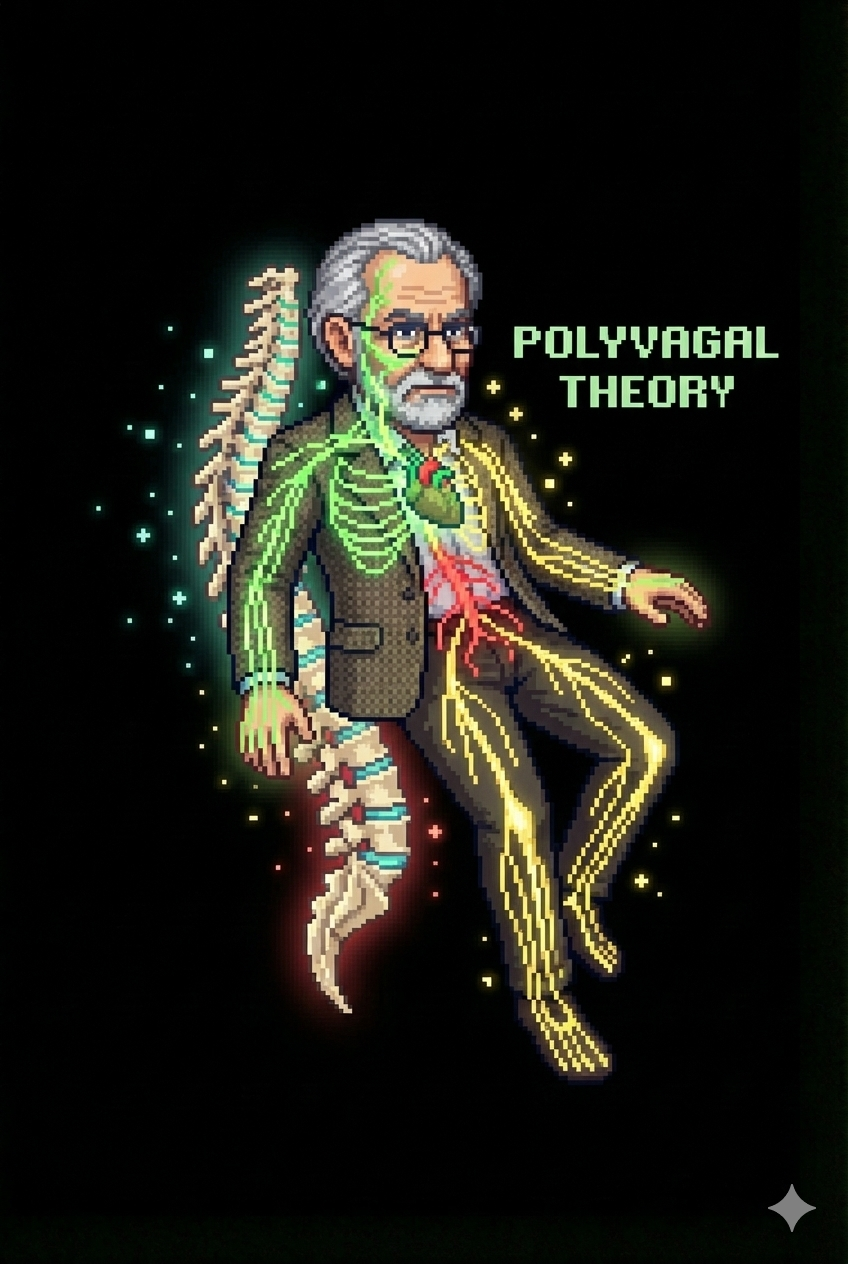
Much of the popular writing on the vagus comes from Stephen Porges’s polyvagal theory, first set out in 1995. It proposes that a newer “ventral vagal” circuit supports safety and social engagement, while an older “dorsal vagal” circuit drives shutdown.6 Many therapists, including us, find that vocabulary useful, and we use it in posts on reading polyvagal theory through myth and on functional freeze and feeling stuck. The physiology is another matter. The psychophysiologist Paul Grossman has argued that each of the theory’s five basic premises is either untenable or highly implausible.7 In 2026, Grossman and 38 co-authors, researchers in vagal physiology, evolution and vertebrate behavior, concluded that the theory is not defensible on current neurophysiological and evolutionary evidence.8 Porges has replied that the critique attacks a version of the theory he does not hold.9 You do not need to settle that debate to use a slow exhale, but “ventral” and “dorsal” are metaphors in a therapy room, not readings from a monitor.
Five popular vagus nerve exercises, checked against the evidence
The earlier version of this post called all five of these exercises evidence-based. Here they are reordered from most to least support.
Slow breathing with a longer exhale
Because heart rate falls on the out-breath, slowing your breathing and stretching the exhale gives the vagal brake more time to act. A 2022 meta-analysis of 223 studies found that voluntary slow breathing raised vagally mediated HRV during practice, right after a single session, and after programs lasting several sessions.10 The exhale seems to matter on its own. In a Belgian study, 30 people felt more relaxed when they breathed with a short inhale and a long exhale than the reverse, and at six breaths a minute the long-exhale pattern also produced more high-frequency HRV.11 In a Toronto study, 28 adults kept their usual breathing rate but tried to make the exhale twice as long as the inhale. HRV rose and stayed higher for about four minutes afterward.12 Whether higher HRV is how anxiety improves has not been established, so treat a rising number as a sign that you are practicing, not as the goal.
Does that translate into less anxiety? Somewhat. A 2023 meta-analysis of randomized trials found that breathwork lowered self-reported stress and anxiety by small-to-medium amounts compared with controls, and the authors warned that most trials carried a moderate risk of bias.13 Heart rate variability biofeedback, where people practice slow breathing while watching their heart rhythm on a screen, has a larger pooled effect on self-reported stress and anxiety across 24 studies, though its authors also called for better-controlled trials.14 In a 2023 Stanford trial, 108 adults did one of three breathing patterns or mindfulness meditation for five minutes a day for a month. Cyclic sighing (a slow inhale, a second short inhale to top off the lungs, then a long, slow exhale) improved positive mood more than meditation did. State anxiety fell with breathwork and with meditation alike, and daily HRV did not change in any group.15
To try it, breathe in through your nose for a count of about four, then out slowly through pursed lips, as if through a straw, for six to eight. Keep it gentle. You are not trying to empty your lungs. Five minutes is plenty. The earlier version included a four-count breath hold; skip it if it leaves you air hungry, because for some people with panic, the feeling of not getting enough air is itself a trigger.
One more caution for panic disorder specifically. A 2003 review of nine studies found the evidence for breathing training in panic not strong enough to say whether it helps.16 A 2018 analysis of 72 trials of CBT for panic found that breathing retraining made treatment more acceptable to patients but added little to its effect. Interoceptive exposure, deliberately bringing on the feared body sensations, was linked to better results.17 We come back to why below.
Humming and the “voo” sound
The vagus does supply the muscles of the larynx.1 That is why the most common side effects of an implanted vagus nerve stimulator are hoarseness, voice change and coughing.18 It does not follow that the vibration of a hum does something special to the nerve, and nobody has shown that it does.
The “voo” comes from Somatic Experiencing. In a 2015 paper, Peter Payne, Peter Levine and Mardi Crane-Godreau describe a therapist leading a frightened client through a deep, resonant “vooo” to slow things down. They write that they believe vocalizations like this shift the nervous system toward a parasympathetic state, and the mechanisms they propose are mostly about breathing: a prolonged exhale stretching the diaphragm, a slower breath rhythm with less carbon dioxide lost, and possibly input from vibration in the belly.19 That is a clinicians’ hypothesis, and they present it as one.
The direct research is thin and does not all point the same way. In a 2017 study of 16 healthy volunteers doing five minutes of Bhramari, a yogic humming breath, high-frequency HRV fell during the practice and returned to baseline afterward.20 In a 2023 study of 118 people at an Indian wellness center, HRV during humming peaked at 12 to 14 seconds per breath, about four or five breaths a minute.21 Neither study compared humming with silent breathing at the same pace, so neither shows that the vibration adds anything. Humming is a pleasant, low-risk way to make yourself exhale slowly, and some people find the vibration steadying. Expect what slow breathing gives you, not more.
Cold water on the face
This one is real and fast. Cold on the face, especially with a held breath, triggers the diving response: the heart slows and blood vessels in the limbs constrict, which is thought to conserve oxygen for the heart and brain.22 In the cold face test, a bedside check of this reflex pathway, cold compresses on the face reproduce the effect, and the forehead and eye area, served by the ophthalmic branch of the trigeminal nerve, is the most sensitive spot.23 In one small study the slowing was mainly vagal, and the change in heart rate was clearest when cold water was combined with breath-holding.24 The earlier version said it works instantly. It does not: in healthy controls given cold packs, slowing began after about six seconds on average and peaked at about 36 seconds.25
What we could not find is a trial showing that face immersion stops panic attacks. Dialectical behavior therapy teaches cold water on the face as a crisis skill for intense distress,26 and many people find it works as an interruption. That is a reasonable use. A “hard reset for panic” is not a research finding. Whole-body cold plunges are a different thing again: a 2025 meta-analysis of cold-water immersion in healthy adults found lower stress 12 hours afterward, no effect at other time points, and no change in mood.27
The earlier version also left out the risks. Cold-water submersion can bring on heart rhythm disturbances even in healthy volunteers. Shattock and Tipton propose that the cause is “autonomic conflict”: the cold shock response speeding the heart while the diving response slows it.28 In a 2025 Swedish study of 54 healthy 15- and 16-year-olds doing face immersion in 10 °C water, six had extra beats from the upper chambers of the heart and two had ventricular bigeminy. The authors judged the risk of severe arrhythmia low for brief immersion in healthy teenagers, and likely higher when face submersion and breath-holding are combined.29 Children with long QT syndrome showed longer QT intervals and abnormal T waves during face immersion.30 Anorexia nervosa is associated with slow heart rate and conduction abnormalities.31 Our guide to using the dive response for panic attacks covers how to do it more safely and who should skip it.
Ear massage and the auricular branch
The ear is the one place the vagus sends a branch to the skin. The auricular branch, also called Arnold’s nerve, carries sensation from parts of the outer ear, including the ear canal and the concha, the bowl of the outer ear around the canal opening.32 It is the reason some people cough when the ear canal is touched, a quirk known as Arnold’s reflex. The exact map is less settled than wellness content suggests. Cadaver studies are few, and one of the main ones, published in 2002, dissected 14 ears from seven bodies.33 A 2020 review concluded there is no clear consensus on which parts of the ear are most densely supplied, though the concha and inner tragus are reasonable targets.32
The earlier version said that stimulating this area “can reduce heart rate variability.” The direction was backwards, since the hope is to raise it, and the evidence supports neither version. Researchers stimulate the ear electrically, a technique called transcutaneous auricular vagus nerve stimulation. A living meta-analysis of 16 sham-controlled studies in healthy people found strong evidence that a session of it does not change vagally mediated HRV compared with sham.34 Fingertip massage of the ear has not been tested in any trial we could find. Rubbing your ears while breathing slowly is harmless; the slow breathing is the part with evidence.
Implanted vagus nerve stimulators are a real treatment for other conditions. The FDA approved them for drug-resistant epilepsy in 1997 and for treatment-resistant depression in 2005, and they are placed surgically and programmed by a physician.18 If you are considering a consumer ear-clip device, talk to your doctor first, especially if you have a heart condition or an implanted device. Our clinician’s guide to vagal nerve stimulators and other neuro-tech covers that landscape.
The eye-turning exercise
The earlier version called this exercise “the oculocardiac reflex.” It is not. The oculocardiac reflex, described in 1908 by the physicians Aschner and Dagnini, is a slowing of the heart carried from the trigeminal nerve to the vagus and set off by pressure on the eyeball or tension on an eye muscle. It is mainly a hazard of eye surgery: without preventive medication, the heart rate drops sharply in almost 10 percent of strabismus operations.35 It is not something to try to trigger at home. Do not press on your eyes.
The exercise itself, lying down with your hands behind your head and looking hard to one side until you sigh or swallow, has not been tested in any controlled study we could find. Its rationale, that the eye muscles are “directly connected” to the suboccipital muscles at the base of the skull, is also off. They are not physically attached. They are coordinated by the brain: recordings in people and monkeys show neck muscles starting to activate before the eyes jump to a new target, a pattern likely relayed from the superior colliculus in the midbrain.36 It may feel good, and a sigh or yawn may follow, but a yawn is not proof of a vagal shift. Treat it as a neck and attention exercise, not a nerve hack.
Who should be careful
- Heart conditions. If you have heart disease, an arrhythmia, long QT syndrome, a pacemaker or other implanted device, or a history of fainting, ask your doctor before cold-water face immersion, long breath holds or any electrical stimulation device.
- Heart-slowing medication. If you take a medication that lowers heart rate, such as a beta-blocker, ask your prescriber before using cold water on your face. Do not change or stop any medication in favor of these exercises; talk to your prescriber first.
- Eating disorders. If you have an eating disorder, especially with low weight or purging, skip face immersion unless your medical team has cleared it.31
- Whole-body cold. Never use whole-body cold immersion alone, in open water, or as a panic tool.28
- Breath counting that backfires. If holds or counts make you more anxious, drop them and simply let each exhale run a little longer than the inhale.
- Unexplained symptoms. If you have new chest pain, fainting, or a racing heart you cannot account for, see a doctor before assuming it is anxiety. Thyroid problems, heart rhythm disorders and conditions such as POTS and other forms of dysautonomia can look a lot like panic.
- Crisis. If you are thinking about harming yourself, call or text 988, the Suicide and Crisis Lifeline.
Why there is no off switch
This is where the off-switch idea does harm. In David Clark’s cognitive model of panic, attacks are driven by catastrophic misreadings of ordinary body sensations: a pounding heart becomes “I’m having a heart attack,” and the fear makes the heart pound harder.37 Paul Salkovskis added that what people do to prevent the feared catastrophe can keep the belief alive. When the heart attack never comes, the credit goes to the rescue (sitting down, leaving, gripping something cold) rather than to the fact that the sensation was harmless all along.38
A vagal exercise can slip into that role. If you reach for ice water every time your heart speeds up, you may learn that the cold water saved you, and never learn that a fast heart is survivable. The research is more nuanced than “never use safety behaviors.” Stanley Rachman and colleagues argued that judicious use, especially early in treatment, can help people approach what they fear,39 and a 2016 review found the evidence on safety behaviors during exposure limited and mixed.40 The practical rule is about function. A slow exhale that helps you stay in the grocery line is a bridge. A slow exhale you must perform before you can walk into any store is a crutch.
The treatments that change anxiety over time work through new learning. Michelle Craske and colleagues’ inhibitory learning account of exposure lists ways to strengthen that learning, and one of them is removing safety signals and safety behaviors.41 In panic disorder, interoceptive exposure was among the features of CBT linked to better outcomes: bringing on a racing heart or breathlessness on purpose, in a controlled way, until the sensation stops meaning danger.17 Across anxiety disorders, CBT has moderate effects compared with placebo,42 and in a smaller meta-analysis of six trials in people with diagnosed anxiety or stress-related disorders, exercise reduced symptoms more than control conditions.43 None of these is an off switch either. Exposure works by letting the alarm go off and be proved wrong, so that it learns to stand down.
So the earlier claim that vagal regulation is “the single most effective tool for managing stress without medication” does not hold. Slow breathing is a good tool with modest effects. CBT has stronger evidence for anxiety disorders, exercise has promising early evidence, and the breathing exercises do the most good when they help you do that learning. For more in-the-moment options, our post on the biology of panic and somatic brakes describes several.
What this looks like in therapy
In therapy, vagal exercises usually show up early and then stay in a supporting role.
- Assessment first. We ask about medical history, medications, caffeine, sleep and anything that might need a physician’s look, since a racing heart has more than one possible cause.
- Mapping the alarm. Together we work out what sets your body off, what the first signs feel like, and what you currently do to make the feeling stop. That last question often turns up the habits that keep the cycle going.
- One or two skills, practiced when calm. Usually a slow, long-exhale breath and something orienting, such as naming what you can see. A skill you have only tried in the middle of panic rarely works when you need it.
- Using the skill to stay, not to leave. In exposure work, including interoceptive exposure for panic, the breath helps keep arousal in a range where you can still notice and learn. In somatic work, the therapist helps you move attention between activation and a place in the body that feels steady, in small doses; Somatic Experiencing calls these titration and pendulation.19 In EMDR or Brainspotting, the same skills serve as resources before and between processing.
- Paying attention to relationships. Much of what settles a human nervous system is another person. People whose alarms were set in early relationships often feel it in the body, as our post on attachment styles in the body describes, and the therapy relationship becomes a place to practice being activated without being alone.
Progress usually looks less like never feeling anxious and more like recovering faster, avoiding less, and trusting your body’s signals again. That is a smaller promise than an off switch. It is also one the evidence can back.
If your body’s alarm has been running your days, you do not have to sort out the vagus nerve on your own. Our anxiety and trauma treatment and somatic therapy in Hoover pair body-based regulation with the slower work of changing how the alarm responds. If you would like to talk it through, you can reach us here.
References
- Breit, S., Kupferberg, A., Rogler, G., & Hasler, G. (2018). Vagus nerve as modulator of the brain–gut axis in psychiatric and inflammatory disorders. Frontiers in Psychiatry, 9, 44. https://doi.org/10.3389/fpsyt.2018.00044
- Berthoud, H.-R., & Neuhuber, W. L. (2000). Functional and chemical anatomy of the afferent vagal system. Autonomic Neuroscience, 85(1–3), 1–17. https://doi.org/10.1016/S1566-0702(00)00215-0
- Grossman, P., & Taylor, E. W. (2007). Toward understanding respiratory sinus arrhythmia: Relations to cardiac vagal tone, evolution and biobehavioral functions. Biological Psychology, 74(2), 263–285. https://doi.org/10.1016/j.biopsycho.2005.11.014
- Chalmers, J. A., Quintana, D. S., Abbott, M. J., & Kemp, A. H. (2014). Anxiety disorders are associated with reduced heart rate variability: A meta-analysis. Frontiers in Psychiatry, 5, 80. https://doi.org/10.3389/fpsyt.2014.00080
- Kemp, A. H., Quintana, D. S., Gray, M. A., Felmingham, K. L., Brown, K., & Gatt, J. M. (2010). Impact of depression and antidepressant treatment on heart rate variability: A review and meta-analysis. Biological Psychiatry, 67(11), 1067–1074. https://doi.org/10.1016/j.biopsych.2009.12.012
- Porges, S. W. (1995). Orienting in a defensive world: Mammalian modifications of our evolutionary heritage. A polyvagal theory. Psychophysiology, 32(4), 301–318. https://doi.org/10.1111/j.1469-8986.1995.tb01213.x
- Grossman, P. (2023). Fundamental challenges and likely refutations of the five basic premises of the polyvagal theory. Biological Psychology, 180, 108589. https://doi.org/10.1016/j.biopsycho.2023.108589
- Grossman, P., Ackland, G. L., Allen, A. M., Berntson, G. G., Booth, L. C., Burghardt, G. M., Buron, J., Dinets, V., Doody, J. S., Dutschmann, M., Farmer, D. G. S., Fisher, J. P., Gourine, A. V., Joyner, M. J., Karemaker, J. M., Khalsa, S. S., Lakatta, E. G., Leite, C. A. C., Macefield, V. G., . . . Zucker, I. H. (2026). Why the polyvagal theory is untenable: An international expert evaluation of the polyvagal theory and commentary upon Porges, S. W. (2025). Polyvagal theory: Current status, clinical applications, and future directions. Clin. Neuropsychiatry, 22(3), 169–184. Clinical Neuropsychiatry, 23(1), 100–112. https://doi.org/10.36131/cnfioritieditore20260110
- Porges, S. W. (2026). When a critique becomes untenable: A scholarly response to Grossman et al.’s evaluation of polyvagal theory. Clinical Neuropsychiatry, 23(1), 113–128. https://doi.org/10.36131/cnfioritieditore20260111
- Laborde, S., Allen, M. S., Borges, U., Dosseville, F., Hosang, T. J., Iskra, M., Mosley, E., Salvotti, C., Spolverato, L., Zammit, N., & Javelle, F. (2022). Effects of voluntary slow breathing on heart rate and heart rate variability: A systematic review and a meta-analysis. Neuroscience & Biobehavioral Reviews, 138, 104711. https://doi.org/10.1016/j.neubiorev.2022.104711
- Van Diest, I., Verstappen, K., Aubert, A. E., Widjaja, D., Vansteenwegen, D., & Vlemincx, E. (2014). Inhalation/exhalation ratio modulates the effect of slow breathing on heart rate variability and relaxation. Applied Psychophysiology and Biofeedback, 39(3–4), 171–180. https://doi.org/10.1007/s10484-014-9253-x
- Bae, D., Matthews, J. J. L., Chen, J. J., & Mah, L. (2021). Increased exhalation to inhalation ratio during breathing enhances high-frequency heart rate variability in healthy adults. Psychophysiology, 58(11), e13905. https://doi.org/10.1111/psyp.13905
- Fincham, G. W., Strauss, C., Montero-Marin, J., & Cavanagh, K. (2023). Effect of breathwork on stress and mental health: A meta-analysis of randomised-controlled trials. Scientific Reports, 13, 432. https://doi.org/10.1038/s41598-022-27247-y
- Goessl, V. C., Curtiss, J. E., & Hofmann, S. G. (2017). The effect of heart rate variability biofeedback training on stress and anxiety: A meta-analysis. Psychological Medicine, 47(15), 2578–2586. https://doi.org/10.1017/S0033291717001003
- Balban, M. Y., Neri, E., Kogon, M. M., Weed, L., Nouriani, B., Jo, B., Holl, G., Zeitzer, J. M., Spiegel, D., & Huberman, A. D. (2023). Brief structured respiration practices enhance mood and reduce physiological arousal. Cell Reports Medicine, 4(1), 100895. https://doi.org/10.1016/j.xcrm.2022.100895
- Meuret, A. E., Wilhelm, F. H., Ritz, T., & Roth, W. T. (2003). Breathing training for treating panic disorder: Useful intervention or impediment? Behavior Modification, 27(5), 731–754. https://doi.org/10.1177/0145445503256324
- Pompoli, A., Furukawa, T. A., Efthimiou, O., Imai, H., Tajika, A., & Salanti, G. (2018). Dismantling cognitive-behaviour therapy for panic disorder: A systematic review and component network meta-analysis. Psychological Medicine, 48(12), 1945–1953. https://doi.org/10.1017/S0033291717003919
- Johnson, R. L., & Wilson, C. G. (2018). A review of vagus nerve stimulation as a therapeutic intervention. Journal of Inflammation Research, 11, 203–213. https://doi.org/10.2147/JIR.S163248
- Payne, P., Levine, P. A., & Crane-Godreau, M. A. (2015). Somatic experiencing: Using interoception and proprioception as core elements of trauma therapy. Frontiers in Psychology, 6, 93. https://doi.org/10.3389/fpsyg.2015.00093
- Nivethitha, L., Manjunath, N. K., & Mooventhan, A. (2017). Heart rate variability changes during and after the practice of Bhramari pranayama. International Journal of Yoga, 10(2), 99–102. https://doi.org/10.4103/0973-6131.205518
- Trivedi, G. Y., Kathirvel, S., Sharma, K., & Saboo, B. (2023). Effect of various lengths of respiration on heart rate variability during simple Bhramari (humming). International Journal of Yoga, 16(2), 123–131. https://doi.org/10.4103/ijoy.ijoy_113_23
- Foster, G. E., & Sheel, A. W. (2005). The human diving response, its function, and its control. Scandinavian Journal of Medicine & Science in Sports, 15(1), 3–12. https://doi.org/10.1111/j.1600-0838.2005.00440.x
- Khurana, R. K., Watabiki, S., Hebel, J. R., Toro, R., & Nelson, E. (1980). Cold face test in the assessment of trigeminal-brainstem-vagal function in humans. Annals of Neurology, 7(2), 144–149. https://doi.org/10.1002/ana.410070209
- Kinoshita, T., Nagata, S., Baba, R., Kohmoto, T., & Iwagaki, S. (2006). Cold-water face immersion per se elicits cardiac parasympathetic activity. Circulation Journal, 70(6), 773–776. https://doi.org/10.1253/circj.70.773
- Khurana, R. K., & Wu, R. (2006). The cold face test: A non-baroreflex mediated test of cardiac vagal function. Clinical Autonomic Research, 16(3), 202–207. https://doi.org/10.1007/s10286-006-0332-9
- Linehan, M. M. (2015). DBT skills training manual (2nd ed.). Guilford Press.
- Cain, T., Brinsley, J., Bennett, H., Nelson, M., Maher, C., & Singh, B. (2025). Effects of cold-water immersion on health and wellbeing: A systematic review and meta-analysis. PLOS ONE, 20(1), e0317615. https://doi.org/10.1371/journal.pone.0317615
- Shattock, M. J., & Tipton, M. J. (2012). “Autonomic conflict”: A different way to die during cold water immersion? The Journal of Physiology, 590(14), 3219–3230. https://doi.org/10.1113/jphysiol.2012.229864
- Lundström, A., Karlsson, M., Rydberg, A., & Wiklund, U. (2025). Assessment of arrhythmias and heart rate response in healthy adolescents performing face immersion and body submersion in ice-cold water. Physiological Reports, 13(13), e70430. https://doi.org/10.14814/phy2.70430
- Yoshinaga, M., Kamimura, J., Fukushige, T., Kusubae, R., Shimago, A., Nishi, J., Kono, Y., Nomura, Y., & Miyata, K. (1999). Face immersion in cold water induces prolongation of the QT interval and T-wave changes in children with nonfamilial long QT syndrome. The American Journal of Cardiology, 83(10), 1494–1497. https://doi.org/10.1016/S0002-9149(99)00131-9
- Sachs, K. V., Harnke, B., Mehler, P. S., & Krantz, M. J. (2016). Cardiovascular complications of anorexia nervosa: A systematic review. International Journal of Eating Disorders, 49(3), 238–248. https://doi.org/10.1002/eat.22481
- Butt, M. F., Albusoda, A., Farmer, A. D., & Aziz, Q. (2020). The anatomical basis for transcutaneous auricular vagus nerve stimulation. Journal of Anatomy, 236(4), 588–611. https://doi.org/10.1111/joa.13122
- Peuker, E. T., & Filler, T. J. (2002). The nerve supply of the human auricle. Clinical Anatomy, 15(1), 35–37. https://doi.org/10.1002/ca.1089
- Wolf, V., Kühnel, A., Teckentrup, V., Koenig, J., & Kroemer, N. B. (2021). Does transcutaneous auricular vagus nerve stimulation affect vagally mediated heart rate variability? A living and interactive Bayesian meta-analysis. Psychophysiology, 58(11), e13933. https://doi.org/10.1111/psyp.13933
- Arnold, R. W. (2021). The oculocardiac reflex: A review. Clinical Ophthalmology, 15, 2693–2725. https://doi.org/10.2147/OPTH.S317447
- Goonetilleke, S. C., Katz, L., Wood, D. K., Gu, C., Huk, A. C., & Corneil, B. D. (2015). Cross-species comparison of anticipatory and stimulus-driven neck muscle activity well before saccadic gaze shifts in humans and nonhuman primates. Journal of Neurophysiology, 114(2), 902–913. https://doi.org/10.1152/jn.00230.2015
- Clark, D. M. (1986). A cognitive approach to panic. Behaviour Research and Therapy, 24(4), 461–470. https://doi.org/10.1016/0005-7967(86)90011-2
- Salkovskis, P. M. (1991). The importance of behaviour in the maintenance of anxiety and panic: A cognitive account. Behavioural Psychotherapy, 19(1), 6–19. https://doi.org/10.1017/S0141347300011472
- Rachman, S., Radomsky, A. S., & Shafran, R. (2008). Safety behaviour: A reconsideration. Behaviour Research and Therapy, 46(2), 163–173. https://doi.org/10.1016/j.brat.2007.11.008
- Blakey, S. M., & Abramowitz, J. S. (2016). The effects of safety behaviors during exposure therapy for anxiety: Critical analysis from an inhibitory learning perspective. Clinical Psychology Review, 49, 1–15. https://doi.org/10.1016/j.cpr.2016.07.002
- Craske, M. G., Treanor, M., Conway, C. C., Zbozinek, T., & Vervliet, B. (2014). Maximizing exposure therapy: An inhibitory learning approach. Behaviour Research and Therapy, 58, 10–23. https://doi.org/10.1016/j.brat.2014.04.006
- Carpenter, J. K., Andrews, L. A., Witcraft, S. M., Powers, M. B., Smits, J. A. J., & Hofmann, S. G. (2018). Cognitive behavioral therapy for anxiety and related disorders: A meta-analysis of randomized placebo-controlled trials. Depression and Anxiety, 35(6), 502–514. https://doi.org/10.1002/da.22728
- Stubbs, B., Vancampfort, D., Rosenbaum, S., Firth, J., Cosco, T., Veronese, N., Salum, G. A., & Schuch, F. B. (2017). An examination of the anxiolytic effects of exercise for people with anxiety and stress-related disorders: A meta-analysis. Psychiatry Research, 249, 102–108. https://doi.org/10.1016/j.psychres.2016.12.020








0 Comments