

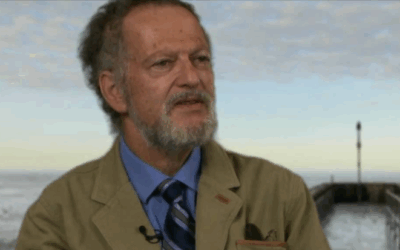
Stuart Hameroff is an American anesthesiologist at the University of Arizona who proposed that consciousness depends on microtubules, protein tubes inside neurons. With physicist Roger Penrose he developed Orchestrated Objective Reduction (Orch OR), a quantum theory of mind, and he founded the Tucson Science of Consciousness conferences. His question matters psychologically: what exactly goes dark when a person loses awareness, and what comes back?
Key takeaways
- Stuart Hameroff is a University of Arizona anesthesiologist who argues that consciousness depends on quantum processes in microtubules inside neurons.
- His 1987 book Ultimate Computing proposed that microtubules process information, and his study of how anesthetics act led him to Roger Penrose.
- With Penrose he developed Orchestrated Objective Reduction (Orch OR), first set out in 1996 and reviewed in Physics of Life Reviews in 2014.
- Hameroff founded the Tucson Science of Consciousness conferences in 1994, where David Chalmers presented the hard problem of consciousness.
- For therapists, his work is a reminder that awareness, dissociation and altered states are still open questions, which favours careful attention to lived experience.
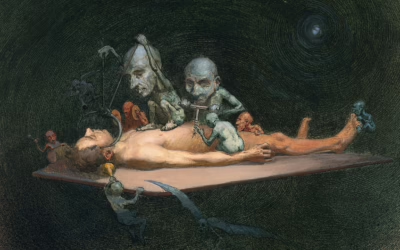
Every day, anesthesiologists make consciousness disappear on purpose. One moment a patient is awake, aware and talking. The next, they are gone, beyond dreaming and beyond memory. When surgery ends, awareness returns, and the return is as hard to explain as the vanishing.
Hameroff spent decades doing this work, and it made him ask a question many of his colleagues had set aside. What exactly are we turning off? What is consciousness, and how do anesthetic drugs erase it so completely? His answers took him from the operating room into quantum physics, into a long partnership with mathematical physicist Roger Penrose, and into one of the most discussed theories in consciousness science.
Who is Stuart Hameroff?
Stuart Hameroff was born on 16 July 1947 in Buffalo, New York. He earned a BS in chemistry at the University of Pittsburgh in 1969 and his MD at Hahnemann Medical College in Philadelphia in 1973. He then moved to Tucson for an internship, trained in anesthesiology at the University of Arizona in the mid-1970s, and joined its anesthesiology faculty in 1977.
He has stayed in Tucson ever since. He is Professor Emeritus of Anesthesiology and Professor of Psychology at the University of Arizona, and director of the university’s Center for Consciousness Studies. Most of his writing has been done alongside a clinical career, which is part of why his theory is built around a clinical fact: anesthesia switches awareness off and on in a predictable way.
Why microtubules caught his attention
What set Hameroff apart from most anesthesiologists was his interest in cell biology, specifically in microtubules. These are hollow cylinders, about 25 nanometres across, built from a protein called tubulin. They form part of the cytoskeleton, the internal scaffolding that gives cells their shape, lets them move and divide, and carries materials along the length of long cells such as neurons.
His interest began in medical school, during a summer in a cancer research laboratory at Hahnemann, where he watched cells divide under the microscope. In mitosis, microtubules assemble into the spindle that pulls the paired chromosomes apart. Hameroff was struck by how organized the process looked. He also noticed that single-celled organisms such as the paramecium swim, avoid obstacles and find food with no neurons at all, steering by structures built from microtubules. If a cell with no nervous system can do that, he reasoned, the cell’s own machinery may be processing information.
Ultimate Computing (1987)
He set out that idea in his first book, Ultimate Computing: Biomolecular Consciousness and NanoTechnology, published by Elsevier North-Holland in 1987.1 Tubulin subunits sit in a regular lattice along the microtubule wall, and each subunit can take more than one shape. Hameroff compared the lattice to a cellular automaton, the grid of switching units used in computer science, and proposed that microtubules compute: they store and pass patterns of tubulin states along their length, far below the level of neurons and synapses that most neuroscientists study.
This was unusual, but it was still a classical theory of biological computation. What pushed Hameroff into more contested territory was his attempt to explain how anesthetics work.
How do anesthetics switch off consciousness?
General anesthetics are chemically diverse. Some are gases, such as nitrous oxide and the noble gas xenon. Others are volatile liquids such as sevoflurane and isoflurane, and others are injected, such as propofol. They have little obvious chemistry in common, yet all of them can remove consciousness while leaving much of the body’s basic regulation running.
The Meyer-Overton clue
Around 1900, the pharmacologists Hans Meyer and Charles Overton independently found that an anesthetic’s potency tracks how readily it dissolves in olive oil, an oily, non-polar medium. For most of the twentieth century this was read as evidence that anesthetics act on the fatty membranes of nerve cells. In 1984 Nicholas Franks and William Lieb showed that anesthetics inhibit a membrane-free protein, firefly luciferase, at concentrations matching their potency in animals.12 That result moved attention from lipids to proteins: anesthetics seemed to act inside small, water-repelling (hydrophobic) pockets within protein molecules, where non-polar amino acids cluster.
Hameroff’s proposal: the target is inside the neuron
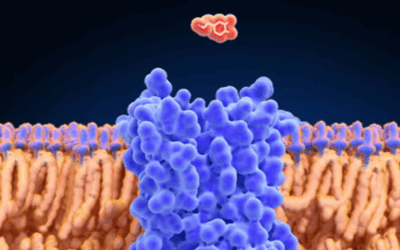
Hameroff took that finding a step further. Tubulin has non-polar pockets of the kind Franks and Lieb described, and it is one of the most abundant proteins in the brain. He argued that anesthetics act at least partly inside neurons, in microtubules, rather than only at receptors and ion channels on the cell surface, which is where most anesthesia research looks. Modelling work by his collaborators later reported that anesthetics damp collective terahertz vibrations in tubulin in proportion to their clinical potency.15
An animal study added weight in 2024. Researchers at Wellesley College gave rats epothilone B, a drug that stabilizes microtubules, and found that the animals took an average of 69 seconds longer to lose consciousness under the gas isoflurane than rats given an inactive injection.11 If anesthetics worked only at the membrane, a drug acting on microtubules should not change the timing.
That left the deeper question. If microtubules were only scaffolding, disturbing them might disrupt cellular housekeeping, but it should not erase awareness. Hameroff began to suspect that microtubules were doing something more fundamental, something tied to consciousness itself.
What did Penrose’s The Emperor’s New Mind add?
In 1989 the English mathematical physicist Roger Penrose published The Emperor’s New Mind with Oxford University Press.2 Penrose argued that human understanding cannot be fully captured by any algorithm. He built the case on Kurt Gödel’s incompleteness theorems, which show that any consistent formal system rich enough for arithmetic contains true statements it cannot prove. A mathematician can see that such a statement is true, Penrose argued, so mathematical insight must involve something beyond computation.
Penrose looked for that something in physics, specifically in the moment when a quantum superposition, a system in several states at once, resolves into one definite state. Standard quantum theory gives no physical account of that event. Penrose proposed that the resolution is a real physical process tied to gravity and to the geometry of spacetime, and that it is non-computable. If brains made use of it, they would not be ordinary computers.
Penrose had the physics but no biological site for it. When Hameroff read the book, he saw the connection to his own work. Microtubules might be information processors; perhaps they were quantum processors, and perhaps the non-polar pockets where anesthetics bind were the places where quantum effects arose. He wrote to Penrose, and the two met in 1992. Penrose added microtubules to his second book on the mind, Shadows of the Mind, published in 1994,3 and the two men then set out their joint theory in papers in 1996.4
What is Orch OR? The theory step by step
Orch OR stands for Orchestrated Objective Reduction. It joins quantum mechanics, general relativity, cell biology and philosophy of mind, and Hameroff and Penrose gave their fullest statement of it in a 2014 review in Physics of Life Reviews.5 Its main claims can be laid out in order.
1. Quantum states in tubulin
Tubulin contains aromatic amino acids, such as tryptophan and phenylalanine, whose ring-shaped structures hold loosely shared (delocalized) electrons. Hameroff and Penrose propose that these electron clouds can enter quantum superpositions and couple with one another along the microtubule lattice. The non-polar pockets are said to shield these states from the warm, watery cell around them for long enough to matter.
2. Objective reduction
In most readings of quantum mechanics a superposition “collapses” when it is measured. Penrose’s alternative, objective reduction, says a superposition collapses by itself once the separated mass distributions differ enough to create an unstable difference in spacetime geometry. The bigger that difference, the sooner collapse happens. Penrose expresses it as a time, roughly Planck’s constant divided by the gravitational self-energy of the superposition. Because the process is set by physics rather than by an algorithm, Penrose holds that it is non-computable.
3. Moments of experience
When an objective reduction happens in an organized network of microtubules, Orch OR says it produces a moment of conscious experience. “Orchestrated” refers to the way neural inputs, synaptic activity and microtubule-associated proteins shape which states form and when they collapse. The pattern of tubulin states selected at collapse corresponds to the content of that moment. Hameroff links these moments to the brain’s rhythms, especially gamma activity around 40 hertz, and proposes that entangled states spread across many neurons through gap junctions, the direct electrical links between cells, giving the unity of experience.
4. How anesthesia fits
Anesthetics, on this account, settle in the non-polar pockets of tubulin and dampen the quantum vibrations that would otherwise build toward conscious moments. That would explain why such different molecules have the same effect: they share a target, not a chemistry. Neural activity continues under anesthesia, which fits the theory’s claim that consciousness depends on a specific process inside neurons rather than on firing alone.
The theory is ambitious. Hameroff and Penrose present consciousness as a feature of physical reality that brains organize, rather than a by-product of neural computation, and they suggest the puzzle of quantum measurement and the puzzle of consciousness may be the same puzzle. That places Orch OR at one end of the range of scientific theories of consciousness, alongside rivals such as Giulio Tononi’s integrated information theory and the electromagnetic field theory of Johnjoe McFadden.
How did Hameroff build the Science of Consciousness conferences?
Before Orch OR was finished, Hameroff saw that consciousness research needed a meeting place where neuroscientists, physicists, philosophers, psychologists and contemplatives could argue in the same room. In April 1994 he and colleagues at the University of Arizona, including the neuropsychologist Alfred Kaszniak and the physicist Alwyn Scott, held the first Toward a Science of Consciousness conference in Tucson. About 300 people came.
The 1994 program shows how much of the field’s later agenda was present at the start. The philosopher David Chalmers gave the talk that set out what he called the “hard problem” of consciousness, the question of why physical processing is accompanied by felt experience at all. His paper “Facing Up to the Problem of Consciousness” appeared the next year and was reprinted in the conference volume Hameroff, Kaszniak and Scott edited for MIT Press in 1996.13 Christof Koch spoke on the search for the neural correlates of consciousness, Benjamin Libet on his experiments on the timing of conscious intention, and Penrose on quantum coherence and consciousness.
The meeting continued, and the name later shortened to The Science of Consciousness. It has met in Tucson every second year since 1994, with meetings in other countries in between, beginning with Ischia, Italy, in 1995. Over the same years cognitive scientist Bernard Baars, author of global workspace theory, helped found a sister society, the Association for the Scientific Study of Consciousness, which holds its own annual meetings. Global workspace ideas were later tested in the laboratory by neuroscientist Stanislas Dehaene and others.
The Center for Consciousness Studies
In the late 1990s the Arizona Board of Regents formally created the Center for Consciousness Studies at the University of Arizona, with a grant from the Fetzer Institute. Its founding faculty were Hameroff, Kaszniak and Scott. Kaszniak directed it first, Chalmers directed it from 1999 to 2004, and Hameroff has led it since 2004. The Center runs the conference series and has supported research and teaching in consciousness science for more than twenty-five years.
These institutional contributions may matter as much as Orch OR itself. Whatever happens to any single theory, Hameroff helped make consciousness a topic serious scientists could study in public. The longer story of how psychology first set consciousness aside and how neuroscience took it up again is told in The Head of the Stream.
What are the main criticisms of Orch OR, and how has Hameroff answered?
Orch OR has drawn sustained criticism from neuroscience, physics and philosophy, and it sits outside the mainstream of both fields. Hameroff has answered each line of attack in print.
Decoherence: Tegmark and the reply
In 2000 the physicist Max Tegmark published calculations in Physical Review E estimating that quantum superpositions in microtubules would decohere, or lose their quantum character, in roughly 10-13 seconds, far too fast to affect neural events that take milliseconds.6 The brain, in this argument, is too warm, wet and noisy for quantum computation.
In 2002 Scott Hagan, Hameroff and Jack Tuszynski replied in the same journal that Tegmark had modelled a different kind of superposition from the one Orch OR proposes, and that shielding, ordered water and other features of the microtubule could extend coherence times by many orders of magnitude, to the range of 10-5 to 10-4 seconds.7 Hameroff has since pointed to quantum biology, where coherent quantum effects have been reported in photosynthesis and proposed for bird navigation, as evidence that living systems can protect quantum states.
The biological evidence: Grush and Churchland
The philosophers Rick Grush and Patricia Churchland, in a 1995 paper titled “Gaps in Penrose’s Toilings,” challenged both the Gödel argument and the biology.8 They argued that the evidence linking microtubules to consciousness was thin, pointing to drugs such as colchicine, which disrupt microtubules without obviously abolishing awareness. Hameroff and Penrose replied in the same journal, Penrose on the logic and Hameroff on the biology, arguing that the critics had misread the colchicine evidence.
The Gödel argument
Many logicians and philosophers dispute the step from Gödel’s theorems to the claim that human understanding is non-computable. This criticism is aimed at Penrose’s side of the theory, and Penrose answered it at length in Shadows of the Mind.3
Testing gravity-related collapse underground
A more recent test came from physics. A team led by Sandro Donadi, Catalina Curceanu and Angelo Bassi, working with Lajos Diósi at the Gran Sasso underground laboratory in Italy, searched for the faint radiation that the simplest version of gravity-related collapse predicts. They found none and published the result in Nature Physics in 2021, ruling out the parameter-free version of the Diósi-Penrose model.9 Penrose has noted that his own formulation differs from the version tested, and Hameroff argues that Orch OR continues to make testable predictions about microtubules and anesthesia. The debate is live.
What does Orch OR mean for therapy?
For clinicians who work with consciousness and its disturbances, Orch OR is useful less as a settled mechanism than as a serious argument that awareness may be more basic than standard neuroscience assumes. If consciousness is something brains tune into or organize, rather than a side effect of firing, then how we think about altered states, trauma and healing changes too.
Altered states and the edges of experience
Hameroff has speculated, mostly in interviews and talks, about phenomena that conventional neuroscience struggles to explain. He has suggested that near-death experiences, with their reported sense of awareness continuing outside the body, might reflect quantum information in microtubules persisting when neural activity falters. He has proposed that psychedelics, many of which are non-polar molecules, might act partly by enhancing microtubule vibrations, the reverse of anesthesia, and that meditation and contemplative practice might influence the same processes. These are his hypotheses, not findings. They still name experiences clients bring to therapy, from altered states of consciousness to spiritual crises, and they take those experiences seriously as data about the mind.
Hameroff has also tested a treatment idea directly. In a 2013 pilot study, he and colleagues applied 8-megahertz transcranial ultrasound, a mechanical vibration in the range he expects microtubules to resonate with, to the scalp over the frontal cortex of chronic pain patients. Patients reported improved mood in the 40 minutes afterward compared with a sham condition.10
Trauma, memory and the body
At Taproot we practise brain-based trauma therapies such as Brainspotting and EMDR therapy. Hameroff’s work raises a useful question about them: when a traumatic memory finally shifts during processing, what changes in the brain? Most explanations point to neural networks and synaptic connections, and research on memory reconsolidation shows that recalled memories become open to revision before they are stored again. Hameroff argues that microtubules also take part in learning and memory inside the neuron, which would make the picture richer than a wiring diagram.
The practical lesson for a therapist is humility about mechanism. We do not need a final theory of consciousness to notice that change often arrives through attention to the body, the eyes and felt sense rather than through argument. That is the core of experiential and somatic therapy: working with experience as it happens, below the level of talk.
Dissociation and the unity of experience
Dissociation, the fragmenting of awareness that often follows trauma, poses a particular puzzle for any theory of consciousness. How does one stream of experience split into several? How do memories, feelings or body states become walled off from awareness? Orch OR treats unity as something the brain actively achieves by binding activity across many neurons, which implies that unity can also fail. That fits what clinicians see when they work with severe dissociation: integration is a process to be supported, gently and at the client’s pace, not a fixed state.
The broader point is that consciousness science is young, and the last word on how awareness arises from matter has not been written. Therapists work at the frontier of human experience, helping people through changes in consciousness that no one fully understands. Some therapists find in quantum ideas a language for what happens in the consulting room, a theme explored in Quantum Physics and the Consulting Room and, historically, in Carl Jung’s dialogue with physics. Openness to unconventional ideas serves that work well.
What has Hameroff done since 2014?
The 2014 review in Physics of Life Reviews looked back over twenty years of criticism and response, revised the theory, and set out a list of predictions that experiments could test.5 The journal published it with commentaries from physicists, biologists and philosophers, for and against, and a reply from the authors.
One line of support Hameroff cites comes from the laboratory of Anirban Bandyopadhyay at the National Institute for Materials Science in Tsukuba, Japan. In 2013 Bandyopadhyay’s group reported that single brain microtubules show sharp electrical resonances at several frequency bands, from kilohertz to gigahertz, and that the water channel at the core of the microtubule shapes those properties.14 Hameroff reads these resonances as the kind of coordinated vibration Orch OR requires. Others read them as classical effects, and the interpretation is still argued.
In 2017 Hameroff co-founded the Penrose Institute with Roger Penrose, James Tagg, Ivette Fuentes and Erik Viirre, to support research building on Penrose’s work in physics, cosmology and consciousness. In 2020 Penrose shared the Nobel Prize in Physics for showing that black hole formation follows from general relativity, work separate from Orch OR but a mark of the standing of Hameroff’s collaborator.
Hameroff continues to write, speak and run the Tucson conferences. The 2024 epothilone study in rats, which he has welcomed as support for a microtubule target of anesthesia, shows his central bet still producing experiments.11 He remains convinced that Orch OR captures something essential about the mind, and his critics remain unconvinced; the argument itself has kept consciousness on the scientific agenda.
Key dates and books
- 1947: born 16 July in Buffalo, New York.
- 1973: MD, Hahnemann Medical College; internship in Tucson.
- 1977: joins the anesthesiology faculty of the University of Arizona after residency there.
- 1987: publishes Ultimate Computing, proposing microtubules as biological information processors.
- 1989: Roger Penrose publishes The Emperor’s New Mind.
- 1992: Hameroff and Penrose meet and begin collaborating.
- 1994: first Toward a Science of Consciousness conference in Tucson; Penrose publishes Shadows of the Mind.
- 1996: first full Orch OR papers; Toward a Science of Consciousness volume from MIT Press.
- 1997-1998: Center for Consciousness Studies founded at the University of Arizona; Hameroff becomes its director in 2004.
- 2000: Max Tegmark publishes his decoherence critique; Hagan, Hameroff and Tuszynski reply in 2002.
- 2014: Orch OR review in Physics of Life Reviews.
- 2017: co-founds the Penrose Institute.
- 2020: Penrose shares the Nobel Prize in Physics.
- 2024: rat study links microtubule stabilization to delayed anesthetic unconsciousness.
The essential reading is Hameroff’s Ultimate Computing, Penrose’s two books on the mind, the 1996 paper in Mathematics and Computers in Simulation and the 2014 review.
Consciousness, anesthesia and the work at Taproot
Hameroff’s starting point was a clinician’s question: what happens to a person when awareness goes and comes back? We ask a version of it every week, with clients who go numb, lose time, or feel that part of their experience has gone somewhere they cannot reach. At Taproot we work with those shifts in awareness directly, through somatic therapy in Birmingham, Brainspotting and depth work. If you want to start that work, you can contact Taproot Therapy Collective.
Frequently asked questions
What is Stuart Hameroff known for?
Stuart Hameroff is known for the Orch OR theory of consciousness, developed with physicist Roger Penrose, which holds that moments of awareness arise from quantum processes in microtubules inside neurons. He is also known for founding the Tucson Science of Consciousness conferences in 1994 and for directing the University of Arizona’s Center for Consciousness Studies.
Why does an anesthesiologist study consciousness?
Anesthesiologists switch consciousness off and on every working day, yet the precise mechanism remains debated. Stuart Hameroff noticed that chemically unrelated anesthetics all erase awareness and seem to act in small non-polar pockets inside proteins, including tubulin in microtubules. That led him to ask whether microtubules are where consciousness itself is generated.
What are microtubules and why would they matter for the mind?
Microtubules are hollow tubes about 25 nanometres wide, built from the protein tubulin, that form part of every cell’s internal skeleton. In neurons they shape the cell and transport materials. Stuart Hameroff proposes that their regular lattice also processes information and supports quantum states, which in Orch OR become the basis of conscious moments.
Did Roger Penrose and Stuart Hameroff work together?
Yes. After reading Penrose’s 1989 book The Emperor’s New Mind, Hameroff wrote to him suggesting microtubules as the brain site for Penrose’s proposed quantum process. They met in 1992, Penrose discussed microtubules in Shadows of the Mind in 1994, and the two published the Orch OR theory together from 1996 onward.
What was Max Tegmark’s objection to Orch OR?
In 2000 physicist Max Tegmark calculated that quantum states in microtubules would decohere in about 10 to the minus 13 seconds, too fast to affect neural events. In 2002 Hagan, Hameroff and Tuszynski replied that Tegmark had modelled the wrong kind of superposition and that shielding inside microtubules could stretch coherence times by many orders of magnitude.
Related reading
- Maria Strømme and the Physics of Universal Consciousness: A New Framework for Understanding Mind
- What is Monotropism? New Tools to Understand Autism
- Who Is Victor Lamme?
- Why We Never Outgrow the Dinosaur
- What Hospital Hacks Mean for Hospital Liability and Patient Rights
- Mind-to-Mind: The Wireless Brain Interface Is Already Here
References
- Hameroff, S. R. (1987). Ultimate computing: Biomolecular consciousness and nanotechnology. Elsevier North-Holland.
- Penrose, R. (1989). The emperor’s new mind: Concerning computers, minds, and the laws of physics. Oxford University Press.
- Penrose, R. (1994). Shadows of the mind: A search for the missing science of consciousness. Oxford University Press.
- Hameroff, S., & Penrose, R. (1996). Orchestrated reduction of quantum coherence in brain microtubules: A model for consciousness. Mathematics and Computers in Simulation, 40(3-4), 453-480. https://doi.org/10.1016/0378-4754(96)80476-9
- Hameroff, S., & Penrose, R. (2014). Consciousness in the universe: A review of the ‘Orch OR’ theory. Physics of Life Reviews, 11(1), 39-78. https://doi.org/10.1016/j.plrev.2013.08.002
- Tegmark, M. (2000). Importance of quantum decoherence in brain processes. Physical Review E, 61(4), 4194-4206. https://doi.org/10.1103/PhysRevE.61.4194
- Hagan, S., Hameroff, S. R., & Tuszyński, J. A. (2002). Quantum computation in brain microtubules: Decoherence and biological feasibility. Physical Review E, 65(6), 061901. https://doi.org/10.1103/PhysRevE.65.061901
- Grush, R., & Churchland, P. S. (1998). Gaps in Penrose’s toilings. In P. M. Churchland & P. S. Churchland, On the contrary: Critical essays, 1987-1997. MIT Press. (Original work published 1995 in Journal of Consciousness Studies.) https://doi.org/10.7551/mitpress/5123.003.0015
- Donadi, S., Piscicchia, K., Curceanu, C., Diósi, L., Laubenstein, M., & Bassi, A. (2021). Underground test of gravity-related wave function collapse. Nature Physics, 17(1), 74-78. https://doi.org/10.1038/s41567-020-1008-4
- Hameroff, S., Trakas, M., Duffield, C., Annabi, E., Gerace, M. B., Boyle, P., Lucas, A., Amos, Q., Buadu, A., & Badal, J. J. (2013). Transcranial ultrasound (TUS) effects on mental states: A pilot study. Brain Stimulation, 6(3), 409-415. https://doi.org/10.1016/j.brs.2012.05.002
- Khan, S., Huang, Y., Timuçin, D., Bailey, S., Lee, S., Lopes, J., Gaunce, E., Mosberger, J., Zhan, M., Abdelrahman, B., Zeng, X., & Wiest, M. C. (2024). Microtubule-stabilizer epothilone B delays anesthetic-induced unconsciousness in rats. eNeuro, 11(8), ENEURO.0291-24.2024. https://doi.org/10.1523/ENEURO.0291-24.2024
- Franks, N. P., & Lieb, W. R. (1984). Do general anaesthetics act by competitive binding to specific receptors? Nature, 310(5978), 599-601. https://doi.org/10.1038/310599a0
- Hameroff, S. R., Kaszniak, A. W., & Scott, A. C. (Eds.). (1996). Toward a science of consciousness: The first Tucson discussions and debates. MIT Press. https://doi.org/10.7551/mitpress/6860.001.0001
- Sahu, S., Ghosh, S., Ghosh, B., Aswani, K., Hirata, K., Fujita, D., & Bandyopadhyay, A. (2013). Atomic water channel controlling remarkable properties of a single brain microtubule: Correlating single protein to its supramolecular assembly. Biosensors and Bioelectronics, 47, 141-148. https://doi.org/10.1016/j.bios.2013.02.050
- Craddock, T. J. A., Kurian, P., Preto, J., Sahu, K., Hameroff, S. R., Klobukowski, M., & Tuszynski, J. A. (2017). Anesthetic alterations of collective terahertz oscillations in tubulin correlate with clinical potency: Implications for anesthetic action and post-operative cognitive dysfunction. Scientific Reports, 7, 9877. https://doi.org/10.1038/s41598-017-09992-7












0 Comments