What is the Difference in QEEG Brain Mapping, Trans Cranial Magnetic Stimulation (TCMS), Neurofeedback (MCNF), Neurostimulation, and Biofeedback?

by | Apr 20, 2023 | 0 comments

Decoding Neuromodulation: QEEG, Neurofeedback, and Neurostimulation Explained

The world of **neuromodulation**—therapies that use technology to change nervous system activity—can be confusing. You may wonder how these advanced modalities differ, what their history is, and how they can potentially help you achieve better mental health and cognitive function.

Did you enjoy this article? Check out the podcast here: https://gettherapybirmingham.podbean.com/

Image of neurostimulation equipment at a therapy center in Alabama


Quantitative Electroencephalogram (qEEG) Brain Mapping: The Diagnostic Roadmap

**Quantitative Electroencephalogram (qEEG) Brain Mapping** is an essential diagnostic tool for evaluating patients with various neurological and psychological challenges. It provides a non-invasive, objective way for skilled clinicians to analyze the brain’s electrical functioning and identify the specific sources of symptoms or dysregulation. By establishing maximally effective neurofeedback and neurostimulation protocols, qEEG guides a highly **personalized approach** to treatment.

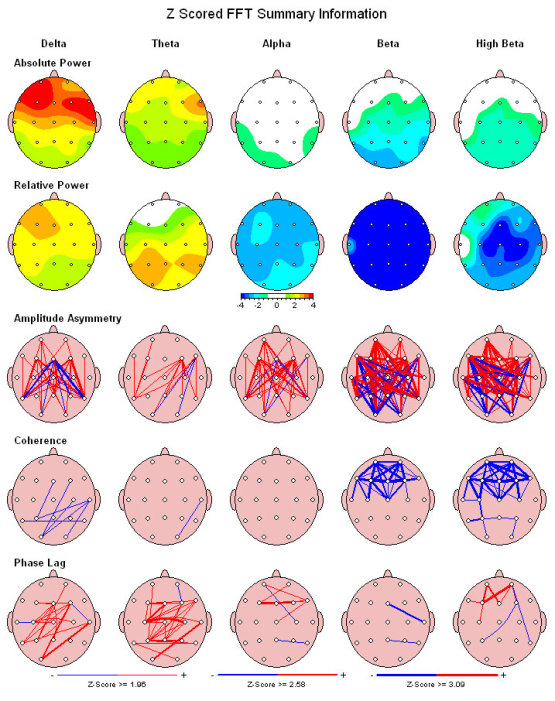
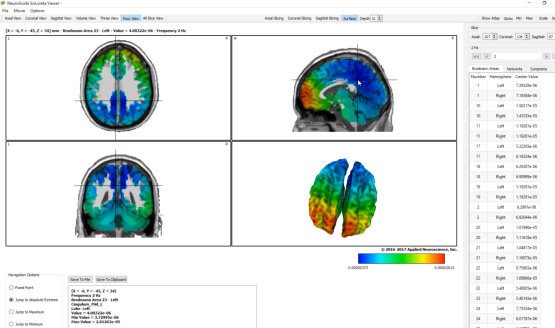
During a qEEG Brain Mapping session, a cap with 19 sensors is placed on the scalp to record the electrical activity (brainwaves) across those 19 areas. This test is non-invasive, painless, and simply records the data for analysis. The recordings are then processed through an **FDA-approved normative database** for comparison against “normal” results, which pinpoints any areas deviating from optimal function that require targeted attention during treatment.

The qEEG process is comparable to a physician performing a lab test to determine the exact nature of an issue before prescribing a treatment. Similarly, the brain map reveals if your symptoms are neurologically based and linked to dysregulated brainwave patterns. When this linkage is identified, there is a high probability of successful intervention using targeted therapies like neurofeedback or neurostimulation.

The qEEG detects whether a brain region is **underactive** (showing excessive slow brain waves like Delta or Theta, which can lead to impaired functioning) or **overstimulated** (showing too many fast brain waves like High Beta, which can cause symptoms like anxiety or ADHD). Either pattern can disrupt optimal functioning and lead to clinical symptoms.

Advanced qEEG analysis also measures **Coherence**, which reflects the health and normalcy of functional communication between different brain regions. This is key because research shows that effective functional connections between regions are critical for optimal brain performance in complex tasks. The qEEG brain map analysis measures “Coherence” between different areas, which indicates the health or normalcy of functional communications between these regions of the brain; in other words, it measures how well the different areas of the brain are communicating with each other to perform complex tasks.

qEEG Brain Mapping is particularly useful for patients with ADHD and Autism Spectrum Disorder. These conditions often result from a misfiring or dysregulation within a specific brain network or the failure of networks to work together to carry out complex mental functioning or behavioral/emotional control. The test helps identify the specific source of the symptoms and provides insights into which treatment protocols will be most effective.


How Does qEEG Inform Your Individualized Treatment?

The detailed analysis of your qEEG brain map provides crucial information about your unique brain function and how it contributes to your symptoms and daily challenges. This data is the foundation for designing your **individualized therapy plan**.

The written summary directly connects your brain function patterns to your symptoms, cognitive profile, and behavioral challenges. By integrating brain mapping into a comprehensive clinical assessment, we can develop a tailored treatment strategy that addresses the **root causes** of your difficulties, significantly enhancing your therapy outcomes. This data-driven approach allows us to monitor brainwave changes and progress over time, ensuring your treatment remains optimally effective.


Understanding Brainwaves and Their Role in Mental Health

Image of Brainspotting therapy

qEEG analysis focuses on five primary types of brain waves, each associated with different frequencies and mental states:

  1. **Delta Waves (0.5–4 Hz):** The slowest waves, typically associated with **deep, dreamless sleep**. Abnormal Delta activity when awake can be linked to conditions like traumatic brain injury or attention issues.
  2. **Theta Waves (4–8 Hz):** Often observed during **light sleep, deep relaxation, or a creative/meditative state**. An increase in Theta waves when trying to focus is frequently associated with **ADHD**.
  3. **Alpha Waves (8–12 Hz):** Present when a person is awake but in a **relaxed, calm state**, often with eyes closed. Decreased Alpha activity can be associated with anxiety, while an increase may signify improved relaxation.
  4. **Beta Waves (12–30 Hz):** Linked to **active thinking, focus, alertness, and problem-solving**. Abnormalities, such as excessive Beta activity, can be associated with anxiety, depression, or insomnia.
  5. **High Beta Waves (30–40 Hz):** The fastest waves, often associated with **intense concentration, high-level processing, or feelings of tension and worry**. Increased High Beta activity may be linked to conditions like OCD or anxiety.

By identifying and retraining abnormalities in these brainwaves, healthcare professionals can develop more targeted and effective treatment plans.


Neurostimulation and Its History

**Neurostimulation** is an umbrella term for medical treatments that use electrical or magnetic energy to directly modulate nervous system activity. While it has recently gained attention for mental health, this technology has a rich history of treating conditions like chronic pain, Parkinson’s disease, and epilepsy.

A Brief History of Neuromodulation

  • **Ancient Roots:** The earliest form of neurostimulation dates back to the ancient Greeks, who used electric fish to treat ailments like headaches.
  • **20th Century Pioneers:** The development of implantable electrodes in the 1960s allowed for more precise stimulation, leading to the first implantable **spinal cord stimulator** in 1967 for chronic pain.
  • **The Rise of DBS:** In the 1980s, Deep Brain Stimulation (DBS) was introduced as an effective treatment for advanced **Parkinson’s disease**, involving the implantation of electrodes deep in the brain to improve motor function.
  • **Non-Invasive Breakthroughs:** The 1990s saw the introduction of **Transcranial Magnetic Stimulation (TMS)**, a key non-invasive alternative that uses magnetic fields to stimulate the brain, proving effective for conditions like major depression.

How Neurostimulation and QEEG Work Together to Promote Neuroplasticity

The true power lies in combining the diagnostic clarity of qEEG with the therapeutic application of neurostimulation. qEEG maps precisely **where** in the brain the dysregulation is occurring; neurostimulation provides a targeted tool to stimulate or normalize activity in that exact location.

This combined approach can:
* **Create New Neural Pathways:** If qEEG shows underactivity in an area, neurostimulation can be used to excite that area, increasing activity and promoting the creation of new, healthy connections (neuroplasticity).
* **Treat Complex Conditions:** They are used together to craft individualized treatment plans for conditions like depression, anxiety, ADHD, and traumatic brain injury, maximizing the therapeutic effect.
* **Enhance Performance:** Beyond clinical use, these technologies are increasingly studied for enhancing cognitive performance in healthy individuals, improving reaction times, memory, and concentration.


Neurofeedback: Brain Training for Self-Regulation

**Neurofeedback therapy**, also known as EEG Biofeedback, is a powerful, non-invasive, and drug-free method for training the brain to regulate its own function more effectively. It is a form of operant conditioning where the brain learns to produce healthier electrical impulses.

During a session, sensors monitor your brain’s electrical activity in real-time. When your brain produces a desired, more optimal brainwave pattern (based on your qEEG), you receive immediate positive feedback, often in the form of bright visuals, a clear movie, or sound. If the brain produces a suboptimal pattern, the video may dim or the sound may decrease. Through this simple process, your brain is encouraged to shift toward healthier self-regulation.

Neurofeedback is a broadly effective treatment for individuals of all ages suffering from **trauma, anxiety, depression, ADHD, migraines, and insomnia**. It helps clients learn self-regulation, offering an innovative, long-lasting alternative to medication alone, with virtually no side effects.


Biofeedback: Mastering Your Body’s Responses

**Biofeedback therapy** is a non-invasive technique that uses sensors to measure and provide real-time information on typically involuntary bodily functions, such as **heart rate, muscle tension, breathing patterns, and skin temperature**. This immediate feedback allows you to become consciously aware of your physiological responses and learn how to control them.

By observing your physiological state on a monitor, a therapist guides you through relaxation or mental exercises. As you successfully manage your stress response (e.g., your heart rate slows or muscle tension decreases), you see the positive change reflected on the screen. This learned control can help treat a variety of conditions, including **anxiety, chronic pain, and high blood pressure**, empowering patients to take an active role in their well-being and reduce reliance on medication.


The Power of Brain and Body Training

Both neurofeedback and biofeedback are forms of body-mind training that can dramatically change cognition. These techniques are rooted in the principle of self-regulation:

  • **Neurofeedback** directly targets brain activity to improve focus, mood, and emotional control.
  • **Biofeedback** focuses on physiological signs of stress (like heart rate or muscle tension), training the mind to manage the body’s physical response to stress and anxiety.

Used together, these methods offer a comprehensive approach, leveraging the brain’s plasticity to create lasting, positive change in both mental and physical health.


Transcranial Magnetic Stimulation (TMS): A Non-Invasive Approach

**Transcranial Magnetic Stimulation (TMS)** is a non-invasive procedure that uses powerful, focused magnetic fields to stimulate nerve cells in the brain. It is primarily used to treat **Major Depressive Disorder** when standard treatments, like medication, have not been effective. The US FDA has also approved TMS for treating **Obsessive-Compulsive Disorder (OCD)** and **migraines**.

During an rTMS (repetitive TMS) session, an electromagnetic coil is placed against the scalp, delivering magnetic pulses to stimulate the specific brain region involved in mood control. This stimulation is thought to ease depression symptoms and improve mood by normalizing the brain’s functional activity.

TMS is generally well-tolerated. For people who have failed to benefit from antidepressants, approximately 50-60% experience a clinically meaningful response, with about one-third achieving full remission. Treatment typically requires sessions five days a week for several weeks.

If you pre-register for neurostimulation services before Peak Neuroscience opens at Taproot Therapy Collective, you will receive $50 off the first 10 appointments.

Learn more about neurostimulation or book an appointment.


Bibliography: Authoritative Resources

This information is grounded in the principles and research of neuroscience and evidence-based practice. Below are the references, with verified DOI links to ensure accessibility and authority:

Ashton, M. (2023). What is the Difference Between Types of Neuromodulation? GetTherapyBirmingham.com.

Demos, J. N. (2005). Getting Started with Neurofeedback. W.W. Norton & Company.

Lefaucheur, J. P., Antal, A., Ayache, S. S., Benninger, D. H., Brunelin, J., Cogiamanian, F., … & Paulus, W. (2017). Evidence-Based Guidelines on the Therapeutic Use of Transcranial Direct Current Stimulation (tDCS). Clinical Neurophysiology, 128(1), 56-92. https://doi.org/10.1016/j.clinph.2016.10.087

Lipov, E., & Kelzenberg, B. (2012). Stellate Ganglion Block May Promote Neuroplasticity in PTSD: A Review of the Evidence. Journal of Trauma & Treatment, 1(4), 1-4. https://doi.org/10.4172/2167-1222.1000149

Megumi, F., Yamashita, A., Kawato, M., & Imamizu, H. (2015). Functional MRI Neurofeedback Training on Connectivity Between Two Regions Induces Long-Lasting Changes in Intrinsic Functional Network. Frontiers in Human Neuroscience, 9, 160. https://doi.org/10.3389/fnhum.2015.00160

Schabus, M., Griessenberger, H., Gnjezda, M. T., Heib, D. P., Wislowska, M., & Hoedlmoser, K. (2017). Better than Sham? A Double-Blind Placebo-Controlled Neurofeedback Study in Primary Insomnia. Brain, 140(4), 1041-1052. https://doi.org/10.1093/brain/awx011

Thibault, R. T., Lifshitz, M., & Raz, A. (2016). The Self-Regulating Brain and Neurofeedback: Experimental Science and Clinical Promise. Cortex, 74, 247-261. https://doi.org/10.1016/j.cortex.2015.10.024


Further Reading: Peer-Reviewed Studies

Arns, M., De Ridder, S., Strehl, U., Breteler, M., & Coenen, A. (2009). Efficacy of Neurofeedback Treatment in ADHD: the Effects on Inattention, Impulsivity and Hyperactivity: a Meta-Analysis. Clinical EEG and Neuroscience, 40(3), 180-189. https://doi.org/10.1177/155005940904000311

Fisher, C. E., Chin, L., & Klitzman, R. (2010). Defining Neuromarketing: Practices and Professional Challenges. Harvard Review of Psychiatry, 18(4), 230-237. https://doi.org/10.3109/10673229.2010.501497

Linden, D. E. (2014). Neurofeedback and Networks of Depression. Dialogues in Clinical Neuroscience, 16(1), 103.

Ros, T., Baars, B. J., Lanius, R. A., & Vuilleumier, P. (2014). Tuning Pathological Brain Oscillations with Neurofeedback: A Systems Neuroscience Framework. Frontiers in Human Neuroscience, 8, 1008. https://doi.org/10.3389/fnhum.2014.01008

Rubin, L. H., Witkiewitz, K., St. Andre, J., & Reilly, S. (2007). Methods for Mediation Analysis in Randomized Clinical Trials. Addiction, 102(11), 1785-1792. https://doi.org/10.1111/j.1360-0443.2007.01882.x

Explore the Other Articles by Categories on Our Blog 

Hardy Micronutrition is clinically proven to IMPROVE FOCUS and reduce the effects of autism, anxiety, ADHD, and depression in adults and children without drugsWatch Interview With HardyVisit GetHardy.com and use offer code TAPROOT for 15% off

Who was Theodore Millon?

Who was Theodore Millon?

The Grand Unifier: Theodore Millon and the Mathematical Architecture of the Self In the fragmented landscape of 20th-century psychology, where clinicians pledged loyalty to competing schools of thought like feudal lords, Theodore Millon (1928–2014) stood as a rare...

What is a Diagnosis Anyway: Is the DSM Dying Part 2

What is a Diagnosis Anyway: Is the DSM Dying Part 2

The Archaeology of a Label: What We Forgot About Diagnosis and Why It Matters Now By Joel Blackstock, LICSW-S | Clinical Director, Taproot Therapy Collective Part II of A Critical Investigation into the Document That Defines American Mental Health Contents...

Is the DSM Dying? Rethinking Suffering

Is the DSM Dying? Rethinking Suffering

A Critical Investigation into the Document That Defines American Mental Health—and Why It May Have Already Failed By Joel Blackstock, LICSW-S | Clinical Director, Taproot Therapy Collective Contents Introduction: The Controversial Bible Part I: The History of a...

What is Dopamine Detox: Social Media Pseudoscience or Self Help?

What is Dopamine Detox: Social Media Pseudoscience or Self Help?

Your feed is full of it: influencers claiming they "detoxed their dopamine" and now feel amazing. Tech bros swearing that 24 hours without screens reset their brain chemistry. Wellness gurus selling dopamine fasting protocols that promise mental clarity, focus, and...

Understanding How the Different Types of Therapy Fit Together

Understanding How the Different Types of Therapy Fit Together

You've tried therapy before. Maybe it helped a little. Maybe you spent months talking about your childhood without anything changing. Maybe you learned coping skills that worked until they didn't. Maybe the therapist was nice but you left each session feeling like...

Why We Recommend Hardy Nutritionals: A Clinical Perspective on the Research That Changed How We Think About Treatment Resistance

Why We Recommend Hardy Nutritionals: A Clinical Perspective on the Research That Changed How We Think About Treatment Resistance

Why Taproot Therapy Collective recommends Hardy Nutritionals Daily Essential Nutrients for treatment-resistant mood disorders, ADHD, and emotional dysregulation. Discovered not through advertising but through patients whose bipolar disorder and other conditions finally responded. Over 40 peer-reviewed studies support the NutraTek chelation technology. Use code TAPROOT at gethardy.com for 15% off for life.

The Second Brain Revolution: How Gut Science Is Rewriting Psychiatric Medicine

The Second Brain Revolution: How Gut Science Is Rewriting Psychiatric Medicine

This 2025 strategic report details the shift from theoretical gut-brain models to clinical applications, analyzing the indole-SK2 channel mechanism in anxiety and the efficacy of oral FMT capsules for refractory depression. It evaluates the diagnostic potential of the gut mycobiome and profiles the pharmaceutical pipelines of key industry players like Kallyope and Bloom Science.

The Metabolic Mind: A 2025 Clinical Update on Nutritional Psychiatry

The Metabolic Mind: A 2025 Clinical Update on Nutritional Psychiatry

A 2025 clinical update on nutritional psychiatry for psychotherapists. Explore the latest research on psychobiotics, vitamin D, magnesium, zinc, omega-3s, amino acid therapies, and herbal interventions—including new safety warnings on ashwagandha and evidence that saffron matches SSRI efficacy for mild depression.

0 Comments

Submit a Comment

Your email address will not be published. Required fields are marked *