Stanley Milgram: Shocking Experiments

by | Jul 20, 2024 | 0 comments

Who was Stanley Milgram?
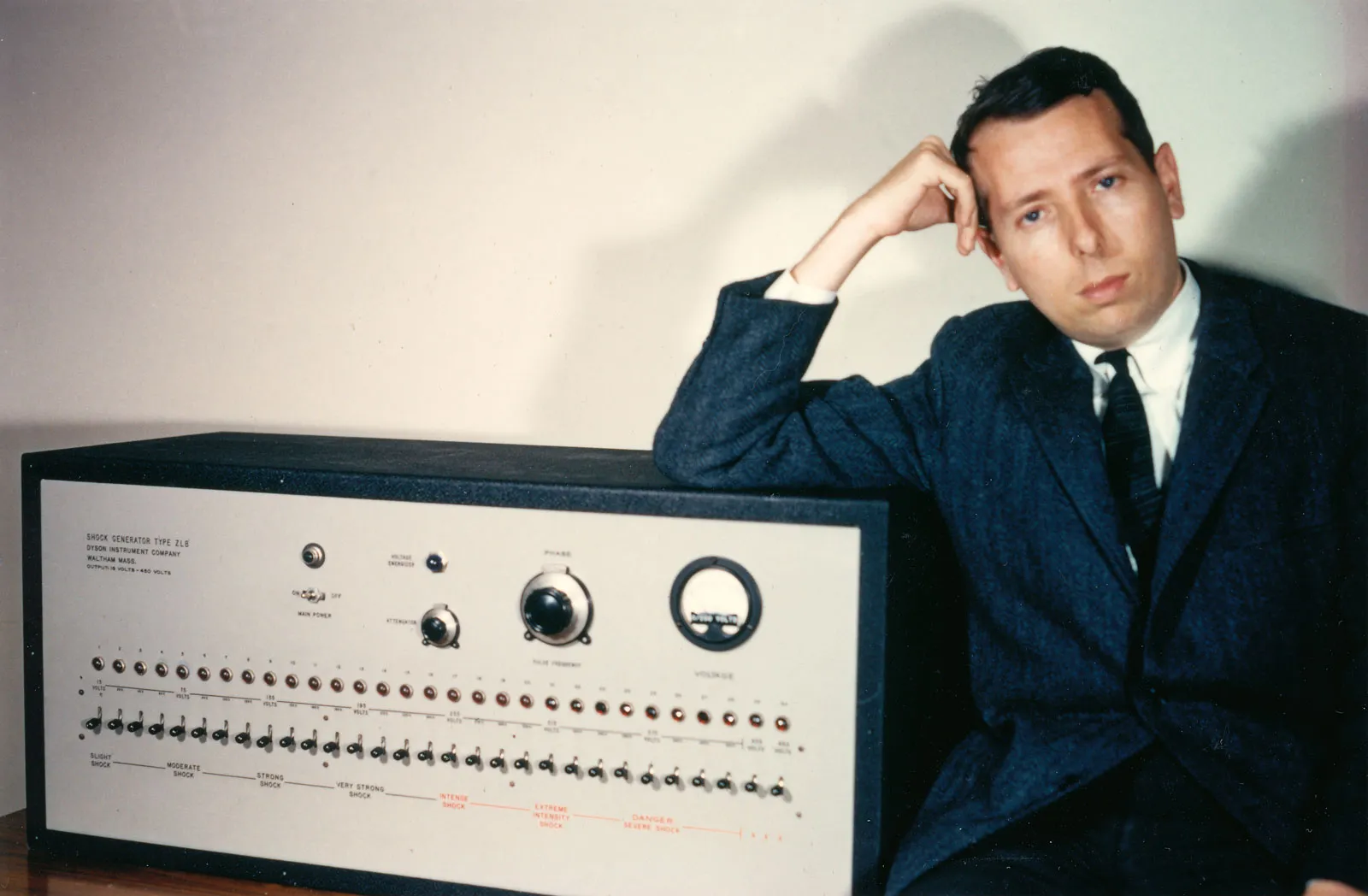
Stanley Milgram stands as one of the most influential and controversial figures in the history of social psychology. His groundbreaking research on obedience to authority not only revolutionized our understanding of human behavior but also raised profound ethical questions about the nature of scientific inquiry. Despite a career cut short by his untimely death, Milgram’s work continues to shape discussions in psychology, ethics, and social science research methodology.

Milgram’s obedience experiments, conducted in the early 1960s, challenged prevailing notions about human nature and the power of situational forces. By demonstrating the extent to which ordinary individuals could be led to inflict apparent harm on others under the guise of scientific authority, Milgram forced a reevaluation of personal responsibility and the potential for evil in everyday life. His research opened up new avenues for exploring the dynamics of authority, conformity, and moral decision-making.

Early Life and Influences

Stanley Milgram was born on August 15, 1933, in the Bronx, New York City, to Eastern European Jewish immigrant parents. Growing up in a working-class neighborhood during the Great Depression and World War II, Milgram was exposed early to the realities of social upheaval and the consequences of authoritarianism.

Milgram’s parents, Samuel and Adele, emphasized the importance of education. His father worked as a baker and his mother as a homemaker. The family’s experiences as Jews in New York during a time of widespread antisemitism likely influenced Milgram’s later interest in issues of conformity and obedience.

As a student at James Monroe High School, Milgram showed an early aptitude for science and a keen interest in human behavior. He was particularly drawn to theater and performed in school plays, an experience that may have informed his later experimental designs, which often involved elaborate staging and role-playing.

Education and Early Career

Milgram entered Queens College in 1950, where he majored in political science. During his undergraduate years, he became increasingly interested in psychology, particularly in understanding the social forces that shape human behavior. After graduating in 1954, Milgram briefly worked as an interviewer at the National Opinion Research Center in Chicago.

In 1954, Milgram began his graduate studies in social psychology at Harvard University. There, he came under the influence of several prominent psychologists, including Gordon Allport and Solomon Asch. Asch’s conformity experiments, which demonstrated how individuals could be swayed to make obviously incorrect judgments under group pressure, had a particularly strong impact on Milgram’s thinking.

Milgram completed his Ph.D. in 1960 with a dissertation on cross-cultural differences in conformity, conducted in Norway and France. This work already hinted at his interest in how social and cultural contexts influence individual behavior, a theme that would become central to his later research.

The Obedience Experiments

Milgram’s most famous and controversial work began shortly after he joined the faculty at Yale University in 1960. Inspired in part by the trial of Nazi war criminal Adolf Eichmann, Milgram set out to investigate the extent to which ordinary individuals would obey orders that conflicted with their personal conscience.

The basic setup of the obedience experiments was deceptively simple:

  1. Participants were told they were taking part in a study on learning and memory.
  2. They were assigned the role of “teacher” and instructed to administer electric shocks to a “learner” (actually a confederate of the experimenter) for incorrect answers.
  3. As the experiment progressed, the intensity of the shocks supposedly increased, with the learner expressing increasing distress.
  4. The experimenter, wearing a lab coat to symbolize scientific authority, urged the participant to continue despite the learner’s protests.

The results were shocking in more ways than one. Contrary to predictions by psychiatrists and laypeople alike, a high proportion of participants (65% in the original study) continued to obey the experimenter’s instructions to the maximum level of 450 volts, despite believing they were causing severe pain to another person.

Milgram’s findings challenged prevailing notions about human nature and the origins of evil. They suggested that ordinary individuals, under certain circumstances, could engage in acts of cruelty not because of any inherent sadism, but due to a profound tendency to obey perceived legitimate authority.

Key Concepts and Findings

Milgram’s obedience studies yielded several important insights:

  1. The power of situation: The experiments demonstrated how situational forces could override individual moral convictions.
  2. Gradual commitment: Participants were more likely to continue obeying as they had already committed to the experiment’s earlier, less severe stages.
  3. Buffers to inhumane behavior: Physical distance from the victim and the presence of institutional authority significantly increased obedience rates.
  4. Peer influence: When participants observed others refusing to obey, their own rates of disobedience increased dramatically.
  5. Strain and conflict: Participants often showed signs of extreme stress, suggesting a conflict between the desire to obey and the urge to stop inflicting apparent harm.

Controversies and Criticisms

Milgram’s work, while groundbreaking, was not without controversy:

  1. Ethical concerns: The experiments raised serious ethical questions about the treatment of human subjects, particularly regarding deception and potential psychological harm.
  2. Ecological validity: Critics questioned whether the artificial laboratory setting could genuinely replicate real-world situations involving obedience to authority.
  3. Demand characteristics: Some argued that participants might have been responding to subtle cues about the experiment’s true purpose rather than genuinely obeying authority.
  4. Generalizability: The initial studies primarily involved male participants from the New Haven area, leading to questions about the universality of the findings.

Other Research and Contributions

While the obedience studies overshadowed much of his other work, Milgram made significant contributions to other areas of social psychology:

  1. Small World Phenomenon: Milgram’s “six degrees of separation” experiments explored the interconnectedness of social networks.
  2. Mental Maps: He studied how people mentally represent their urban environments, contributing to the field of environmental psychology.
  3. The Familiar Stranger: Milgram investigated the phenomenon of people who regularly observe each other but do not interact, such as fellow commuters.
  4. Cyranoids: In his later work, Milgram explored the effects of having people communicate through human “surrogates,” anticipating issues related to online identity and communication.

Legacy and Continuing Influence

Milgram’s work has had a lasting impact on psychology and beyond:

  1. Research Ethics: The controversies surrounding the obedience experiments contributed to the development of more stringent ethical guidelines for human subjects research.
  2. Understanding Evil: Milgram’s findings continue to inform discussions about the origins of genocide, war crimes, and other forms of systemic violence.
  3. Popular Culture: The obedience experiments have been referenced in numerous films, books, and TV shows, entering the popular imagination.
  4. Organizational Psychology: Milgram’s work has implications for understanding and preventing unethical behavior in corporate and institutional settings.
  5. Social Influence: His research laid the groundwork for further studies on conformity, compliance, and social influence.

Influential Psychologists
Sigmund Freud

Ernest Becker

Fritz Perls 

Virginia Satir

JL Moreno 

Albert Ellis

Carl Rogers

Alfred Adler

Wilhelm Reich 

Eugen Bleuer

Herbert Silberer

Pierre Janet

Milton Erickson

Anna Freud

Gordon Alport

Mary Ainsworth

Harry Harlow

John Watson

Stanley Milgram

Donald Winnicott

Lev Semyonovich

B.F. Skinner

Ivan Pavlov

Kurt Lewin

Jean Piaget

Elisabeth Kubler Ross

Erik Erickson

Abraham Maslow

Theodore Millon


Explore the Other Articles by Categories on Our Blog 

Hardy Micronutrition is clinically proven to IMPROVE FOCUS and reduce the effects of autism, anxiety, ADHD, and depression in adults and children without drugsWatch Interview With HardyVisit GetHardy.com and use offer code TAPROOT for 15% off

Who was Theodore Millon?

Who was Theodore Millon?

The Grand Unifier: Theodore Millon and the Mathematical Architecture of the Self In the fragmented landscape of 20th-century psychology, where clinicians pledged loyalty to competing schools of thought like feudal lords, Theodore Millon (1928–2014) stood as a rare...

What is a Diagnosis Anyway: Is the DSM Dying Part 2

What is a Diagnosis Anyway: Is the DSM Dying Part 2

The Archaeology of a Label: What We Forgot About Diagnosis and Why It Matters Now By Joel Blackstock, LICSW-S | Clinical Director, Taproot Therapy Collective Part II of A Critical Investigation into the Document That Defines American Mental Health Contents...

Is the DSM Dying? Rethinking Suffering

Is the DSM Dying? Rethinking Suffering

A Critical Investigation into the Document That Defines American Mental Health—and Why It May Have Already Failed By Joel Blackstock, LICSW-S | Clinical Director, Taproot Therapy Collective Contents Introduction: The Controversial Bible Part I: The History of a...

Understanding How the Different Types of Therapy Fit Together

Understanding How the Different Types of Therapy Fit Together

You've tried therapy before. Maybe it helped a little. Maybe you spent months talking about your childhood without anything changing. Maybe you learned coping skills that worked until they didn't. Maybe the therapist was nice but you left each session feeling like...

Insights into Therapy Through Quantum Neuroscience

Insights into Therapy Through Quantum Neuroscience

Something extraordinary is happening in consciousness research right now. After decades of incremental progress and philosophical stalemate, 2025—designated by the United Nations as the International Year of Quantum Science and Technology—has delivered a cascade of...

The Metamorphosis of the Sufferer: From Neurotic Soul to Digital User

The Metamorphosis of the Sufferer: From Neurotic Soul to Digital User

From “neurotic soul” to “digital user”: How insurance companies, Big Pharma, and Silicon Valley systematically dismantled the depth of psychotherapy—and why the BetterHelp scandal was just the beginning. A critical history for therapists who refuse to become technicians.

The Neuroscience of Disassociation

The Neuroscience of Disassociation

The unitary nature of consciousness is the most persistent intuition of human experience. We feel like a single protagonist in a continuous narrative. Yet, for the trauma survivor, this intuition is often a lie. As therapists, we are often the first to witness the...

Bill O’Hanlon: The Therapist Who Asked “How Do People Get Happy?”

Bill O’Hanlon: The Therapist Who Asked “How Do People Get Happy?”

Bill O’Hanlon, MS, LMFT, studied with Milton Erickson as his only work/study student (serving as Erickson’s gardener) before co-founding Solution-Oriented/Possibility Therapy in the 1980s. Author of nearly 40 books including the Oprah-featured “Do One Thing Different” and foundational “In Search of Solutions” with Michele Weiner-Davis, O’Hanlon delivered over 3,700 presentations worldwide teaching his collaborative, non-pathologizing approach asking “How do people get happy?” rather than “What’s wrong?” He retired from clinical practice in 2020 to pursue professional songwriting from Santa Fe, New Mexico.

Diane Poole Heller: From Trauma Survivor to Pioneer of Attachment Healing

Diane Poole Heller: From Trauma Survivor to Pioneer of Attachment Healing

Diane Poole Heller, PhD, transformed her own 1988 traumatic car accident into a pioneering career developing DARe (Dynamic Attachment Re-patterning experience), a somatic approach integrating attachment theory and trauma resolution now taught worldwide. After 25 years as Senior Faculty for Peter Levine’s Somatic Experiencing Institute, she created Trauma Solutions and authored The Power of Attachment, teaching that regardless of childhood history, people can develop Secure Attachment Skills through attuned relationships, body-based interventions, and recognizing we’re all biologically hardwired for connection and healing.

Laurence Heller: The Clinical Psychologist Who Mapped How Developmental Trauma Distorts Identity

Laurence Heller: The Clinical Psychologist Who Mapped How Developmental Trauma Distorts Identity

Laurence Heller, PhD, spent over 40 years in private practice recognizing that developmental trauma creates not just nervous system dysregulation but fundamental identity distortions—pervasive shame, self-judgment, and disconnection from authentic self. He developed the NeuroAffective Relational Model (NARM), now taught worldwide, mapping five adaptive survival styles arising from disrupted developmental needs (Connection, Attunement, Trust, Autonomy, Love-Sexuality) and providing framework for healing through disidentification from survival-based identities while working simultaneously with psychology and physiology within attuned therapeutic relationships.

Bruce Perry: From Branch Davidian Waco to “What Happened to You?” – Three Decades Translating Neuroscience into Healing for Maltreated Children

Bruce Perry: From Branch Davidian Waco to “What Happened to You?” – Three Decades Translating Neuroscience into Healing for Maltreated Children

Bruce Perry developed the Neurosequential Model after treating children who survived the 1993 Branch Davidian siege in Waco. His three decades translating neuroscience into practical trauma treatment culminated in the #1 bestseller What Happened to You? with Oprah Winfrey. Perry’s fundamental insight: childhood behavior reflects developmental adaptation to environment rather than defect requiring correction, revolutionizing how thousands of professionals understand trauma.

Judith Herman: The Psychiatrist Who Named Complex Trauma and Challenged a Field’s Convenient Amnesia

Judith Herman: The Psychiatrist Who Named Complex Trauma and Challenged a Field’s Convenient Amnesia

Judith Herman, Harvard psychiatrist, transformed trauma treatment by distinguishing complex PTSD from single-incident trauma and articulating the three-stage recovery model emphasizing safety, remembrance, and reconnection. Her 1992 Trauma and Recovery challenged psychiatry’s “convenient amnesia” about sexual violence, while 2023’s Truth and Repair reimagines justice as healing rather than punishment, asking what survivors actually need: acknowledgment, validation, and community witness rather than retribution.

Gabor Maté: From Budapest Ghetto to Voice of Compassion in Addiction’s Darkest Corners

Gabor Maté: From Budapest Ghetto to Voice of Compassion in Addiction’s Darkest Corners

Gabor Maté, Holocaust survivor turned physician, spent twelve years treating severe addictions in Vancouver’s poorest neighborhood, asking “why the pain?” rather than “why the addiction?” His revolutionary recognition that addiction serves to escape unbearable emotions rooted in childhood trauma, detailed in bestseller In the Realm of Hungry Ghosts, transformed understanding of substance abuse from moral failing to developmental injury.

David Grand: From EMDR Trainer to Brainspotting Pioneer Through a Champion Skater’s Frozen Gaze

David Grand: From EMDR Trainer to Brainspotting Pioneer Through a Champion Skater’s Frozen Gaze

David Grand discovered brainspotting in 2003 when a figure skater’s eye wobble revealed where trauma was stored in her brain. By maintaining fixed eye position on that “brainspot” rather than using bilateral movement, processing accelerated dramatically. His development of this approach, now used by 13,000+ therapists worldwide, demonstrates how careful clinical observation combined with willingness to deviate from protocol can produce genuine therapeutic innovation for treating trauma, the yips, and performance blocks.

0 Comments

Submit a Comment

Your email address will not be published. Required fields are marked *