

Discernment counseling is a brief, structured approach for couples in which one partner is leaning toward divorce and the other wants to save the marriage. Developed by William Doherty at the University of Minnesota, it runs for at most five sessions and does not try to fix the relationship. Its aim is clarity and confidence about which direction to take, grounded in each partner seeing their own part in what went wrong.
Key takeaways
- Discernment counseling is a brief model for mixed-agenda couples, where one partner leans toward divorce and the other wants to rebuild the marriage.
- William Doherty and Steven Harris of the University of Minnesota designed it to run for at most five sessions, with most time spent in separate conversations with each partner.
- The goal is clarity and confidence about one of three paths: keep things as they are for now, move toward divorce, or commit to six months of couples therapy with divorce off the table.
- It is not used when there is a danger of domestic violence, when one partner is coercing the other, or when one partner has already made a final decision to divorce.
- In an analysis of 100 consecutive cases, about half of couples chose couples therapy to reconcile and most of the rest chose the divorce path.
What is discernment counseling?
Discernment counseling is built for what Doherty calls the “mixed-agenda” couple. One partner is “leaning out”: unsure the marriage can or should continue, and doubtful that ordinary marriage counseling would help. The other is “leaning in”: frightened, often hurt, and eager to rebuild. Doherty first described the protocol for clinicians in a 2011 Psychotherapy Networker article on treating this kind of couple.1
The approach is short-term by design. At the end of the process the couple chooses one of three paths: keep the marriage as it is for now, move toward separation or divorce, or commit to a serious, time-limited attempt at couples therapy. Each of these is treated as a legitimate outcome. The counselor’s job is not to steer the couple toward one of them, but to help both people decide with their eyes open.2
It sits upstream of ordinary marriage counseling. Couples therapy assumes that both partners want to work on the relationship. Discernment counseling starts from the more honest position that, for many couples who arrive at a therapist’s office, one of them does not yet know whether they want to.
Who developed discernment counseling, and why?
William J. Doherty, PhD, is a professor in the Department of Family Social Science at the University of Minnesota, a licensed marriage and family therapist, and director of the Minnesota Couples on the Brink Project. He developed the model with his colleague Steven M. Harris, and the two set it out in full in their 2017 book for the American Psychological Association, Helping Couples on the Brink of Divorce.3 Doherty’s earlier books for the public, such as Take Back Your Marriage, argued that couples drift apart under everyday pressures rather than through dramatic failures, and that the drift can be noticed and reversed.7
Two observations drove the model. The first came from the consulting room: mixed-agenda couples are common, and standard couples therapy tends to fail them. When one partner is only half in the room, the therapist ends up either pushing a reluctant person to work on change they have not agreed to, or quietly colluding with a slide toward divorce.2
The second came from research. In a survey of 2,484 divorcing parents attending a required parenting class in Minnesota, Doherty and colleagues found that roughly one in four said they believed their marriage could still be saved with hard work, and that in about one couple in ten both spouses expressed interest in reconciliation services.4 The partner who had not initiated the divorce was far more likely to be open to reconciliation. A follow-up analysis found that the most common reasons people gave for divorcing were “growing apart” and “not being able to talk together,” problems that are often workable rather than fatal.5 The team later built a typology of attitudes toward proceeding with divorce, distinguishing parents who were settled on ending the marriage from those who were ambivalent or did not want the divorce at all.6 Ambivalence, in other words, was common even among people already in the legal process, and few services were designed for it.
Doherty’s background in family systems theory shaped the response. He drew on the systemic idea that each person in a relationship contributes to its patterns, on the long clinical tradition of treating ambivalence as something to explore rather than overcome, and on research on commitment and divorce. Since publishing the protocol he and Harris have trained therapists in it through the University of Minnesota and the Doherty Relationship Institute, and the model has continued to develop through clinical use.
What are the core ideas behind it?
Several assumptions run through the whole model.
- Mixed agendas are normal. Many couples on the brink are not both in the same place. One is leaning out while the other is leaning in, and the gap between them is itself the clinical problem.
- Not every couple is ready for couples therapy. Therapy aimed at changing the relationship needs two willing participants. Without that, it stalls.
- Ambivalence deserves time. People facing divorce often feel pulled both ways. They benefit from slowing down, reflecting, and weighing their options before making a decision that will shape the rest of their lives and, often, their children’s.
- The goal is a decision, not a repair. Discernment counseling does not try to solve the couple’s problems. It aims at clarity and confidence about the next step: restoring the marriage, moving toward divorce, or holding steady and deciding later.
- Each partner looks at their own part. The model emphasises individual responsibility. Each person is asked to examine their own contributions to the problems and to possible solutions, rather than building a case for what the other must change.
- It is brief and transitional. The process lasts one to five sessions and is understood as a doorway to couples therapy, to divorce, or to a period of waiting.
How does the discernment counseling process work?
Doherty’s protocol allows a maximum of five sessions. The first usually lasts about two hours and later sessions about an hour and a half. At the end of each session the couple decides whether to come back, so the process can end after one meeting if both people have the clarity they need.3
Each session follows a similar shape: a short joint conversation, then most of the time spent in separate conversations with each partner, then a joint closing in which each person shares, with the counselor’s help, what they have come to understand.2
The first session
- The counselor hears from both partners together about the history of the marriage, what has gone wrong, and why divorce is now on the table.
- In individual time, the counselor learns where each person stands: leaning in, leaning out, or somewhere in between, and how sure they are.
- In the joint closing, the counselor lays out the three paths and asks the couple whether to continue discernment counseling, start couples therapy, move toward separation, or pause.
Later sessions
- Further individual conversations help each partner see more clearly their own contributions to the problems and what they want.
- Joint conversations let each person share new insights, understandings and decisions.
- If the couple chooses to try to reconcile, the counselor refers them to couples therapy or begins it.
- If they choose separation or divorce, the counselor helps them think about how to do it constructively, especially where children are involved.
The three paths
Doherty and Harris name the outcomes plainly. Path 1 is to keep the marriage as it is for now, which in practice means taking a time-out and deciding later. Path 2 is to move toward separation or divorce. Path 3 is to commit to six months of couples therapy with divorce off the table for that period, which also means that any affair must end.3 Path 3 is a real test rather than a vague promise: both people give the relationship their full effort for a defined time, and then reassess.
When is discernment counseling not appropriate?
The model has clear exclusions. Doherty and Harris do not use it when there is a danger of domestic violence, when either partner fears for their safety, or when one partner is coercing the other into the room.3 Joint sessions with a partner who uses intimidation or control can put the other person at risk, and an open-ended exploration of “your part in the problems” is not appropriate for someone being abused. In those situations safety planning and individual support come first.
It is also not the right fit when one partner has already made a final decision to divorce and only wants help telling the other. Discernment counseling depends on at least some genuine uncertainty in the partner who is leaning out.
What techniques does a discernment counselor use?
Discernment counseling borrows from several traditions and adapts them to one narrow goal: helping mixed-agenda couples reach a clear decision.
Individual time with each partner
The separate conversations are the heart of the model. Without the other partner present, each person can speak more openly, and the counselor can understand their dilemma more deeply. The counselor works differently with each. With the leaning-out partner, the counselor respects their doubts, explores how they got there, and asks what, if anything, might change their mind. With the leaning-in partner, the counselor helps them stop pleading or pursuing, which tends to push the other person further away, and instead put their best self forward while looking honestly at their own part.2
Exploring ambivalence
The counselor helps each partner name their mixed feelings about the relationship, about staying or leaving, and about what they want. This draws on the spirit of motivational interviewing, which William Miller developed with Stephen Rollnick as a way of helping people resolve ambivalence through open questions and reflective listening rather than persuasion.8 The counselor does not argue for staying together. Pressure tends to harden a leaning-out partner’s position; curiosity tends to loosen it.
Focusing on the self
Instead of cataloguing what each wants the other to change, the counselor keeps returning to each person’s own contribution. Typical questions are “What would you say your part has been in the problems in this marriage?” and “What would you be willing to work on to make it better?” This mirrors the existential conviction that we are responsible for our choices even inside relationships we did not fully choose, a theme at the centre of Rollo May’s work on freedom and responsibility.
Reflecting on the history of the relationship
The counselor guides the couple through the story of their marriage: how they met, the good years, when things began to go wrong, and what each did as the distance grew. Seeing the arc as a pattern both people built often gives a fresh perspective on problems that had come to feel like one partner’s fault.
Looking concretely at divorce
When a partner is seriously considering divorce, the counselor helps them think through what it would actually involve: the effect on children, finances, living arrangements, co-parenting and day-to-day life afterwards. The point is not to discourage divorce. It is to make sure the decision is made with full awareness rather than in a fog of exhaustion or anger.
Discernment questions
The counselor poses questions that help each partner find their direction. Examples include “What would it take for you to be willing to work wholeheartedly on this marriage for six months?” and “If you gave the relationship another chance, what would have to be different this time?”
Summarizing and highlighting
As each person talks, the counselor offers frequent summaries and highlights the points that seem most important or revealing. In the joint closing, the counselor helps each partner say these things to the other in their own words. This helps the couple track and integrate what is emerging, and lets the leaning-in partner hear something real from the leaning-out partner, often for the first time in months.
What are the goals and outcomes of discernment counseling?
The primary goal is clarity and confidence about a direction for the marriage. In practice that means:
- A deeper understanding by each partner of their own contributions to the problems.
- More clarity about what each would need to see change to be willing to work on the relationship.
- A clearer sense of whether there is enough left to rebuild to make the effort worth trying.
- If the decision is divorce, more confidence that it is the right path and more readiness for what follows.
- If the decision is reconciliation, a better understanding of what each partner will work on in couples therapy.
The first published outcome data come from Doherty, Harris and Wilde’s analysis of 100 consecutive cases. About half of the couples chose to begin couples therapy in order to reconcile, and most of the rest chose the divorce path; the authors also reported longer-term follow-up.2 For a process that lasts at most five sessions and starts with one partner halfway out the door, that is a meaningful result. Doherty and Harris also stress that couples who choose divorce after discernment can approach it with less confusion and more cooperation, which matters a great deal for children.3 Research on high-conflict divorce shows how much damage drawn-out custody disputes can do to families, and how much depends on parents finding a workable way to separate.10
How does discernment counseling fit with other models?
Discernment counseling is a distinct model, but it is usually a front end to other work. Many therapists trained in it use it as the opening phase with mixed-agenda couples and then move into a fuller couples approach if the pair chooses Path 3. Models such as the developmental model of couples therapy or the psychobiological approach to couple therapy (PACT) then take over the work of repair.
It shares principles with several older traditions:
- Personal responsibility. Cognitive and behavioral approaches, including rational emotive behavior therapy, also ask people to look at their own reactions rather than blaming others. Discernment counseling applies the idea relationally rather than as a thought-correction exercise.
- Ambivalence. The exploration of mixed feelings is central to motivational interviewing.8
- Differentiation of self. Murray Bowen’s family systems theory describes differentiation as the capacity to stay emotionally connected while thinking and acting for oneself.9 The leaning-in partner who stops pursuing, and the leaning-out partner who owns their own part, are both practising it. Bowen’s ideas sit within the wider history of family therapy, and the opposite of differentiation is the fusion described in enmeshment in families.
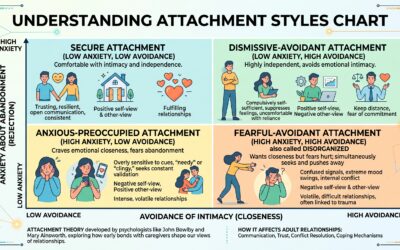
- Family of origin. Psychodynamic approaches attend to how early family life shapes adult love. The counselor often notices how each partner’s family scripts and attachment patterns are playing out in the crisis.
What is unique to discernment counseling is its narrow focus: helping mixed-agenda couples on the brink of divorce reach a decision about the future of the relationship before anyone tries to fix it.
Why does discernment counseling matter in therapy today?
Views of marriage have changed, and divorce is a common outcome of marital distress. Discernment counseling offers therapists a structured way to recognise that couples who come in together do not always want the same thing. It replaces the polite fiction that both partners are there to work on the marriage with an honest conversation about where each one actually stands.
Its principles travel well. The focus on individual responsibility, the respect for ambivalence, and the insistence on self-reflection can be integrated into any therapist’s work with couples. So can the model’s deeper lesson: when facing a decision as large as ending a marriage, slowing down is itself an intervention. As more therapists are trained in it and more outcome research accumulates, discernment counseling is becoming a regular part of the relationship therapist’s toolkit, alongside established couples therapies.
How we work with couples on the brink at Taproot
At Taproot we see the moment of “leaning out” as more than a logistics problem. It often carries old grief, unmet longing, or a part of the person that has been silenced for years. The individual time at the heart of discernment counseling fits naturally with the depth and parts-based work we do. A therapist trained in IFS therapy can help a partner notice that one part wants out while another is terrified of leaving, and let each speak without forcing a verdict too early.
Crises like this are also felt in the body. Partners on the brink often describe a racing heart, numbness, or a collapse into exhaustion when the subject of divorce comes up. Somatic therapy helps people settle enough to think clearly, which is the precondition for any real discernment. When the decision is divorce, individual work can support the grief that follows, which we write about in moving forward after divorce.
Whatever the outcome, the questions discernment raises are existential ones: what do I owe, what do I want, and what kind of life am I choosing. If you are facing that decision in your own marriage, you can contact Taproot Therapy Collective to talk with one of our therapists about where to begin.
Frequently asked questions
How many sessions does discernment counseling take?
Discernment counseling lasts between one and five sessions. In William Doherty’s protocol the first session usually runs about two hours and later sessions about an hour and a half. After each meeting the couple decides whether to return, so some couples reach clarity in a single session while others use all five before choosing a path.
What is the difference between discernment counseling and couples therapy?
Couples therapy assumes both partners want to work on the relationship and aims to repair it. Discernment counseling is for couples where one partner is unsure they want to stay. It does not try to fix the marriage; it helps both people decide whether to try. If they choose to reconcile, couples therapy usually follows.
What are the three paths in discernment counseling?
Discernment counseling ends with a choice among three paths. Path 1 keeps the marriage as it is for now and postpones the decision. Path 2 moves toward separation or divorce. Path 3 is a commitment to six months of couples therapy with divorce off the table during that time, which also means ending any affair.
Who should not do discernment counseling?
Discernment counseling is not appropriate when there is a danger of domestic violence, when either partner fears for their safety, or when one partner is pressuring the other to attend. It is also a poor fit when one partner has already made a final decision to divorce. In those cases individual support and safety come first.
Does discernment counseling try to stop divorce?
No. Discernment counseling treats divorce and reconciliation as equally legitimate outcomes. The counselor helps each partner understand their own part in the problems and look honestly at what each path would involve, so that whichever decision they make is made with clarity and confidence rather than in a rush of exhaustion or anger.
Related reading
- Attachment-Based Family Therapy (ABFT): A Comprehensive Overview
- Holographic Memory Resolution (HMR): A Comprehensive Guide to This Innovative Therapeutic Approach
- Unveiling Systemic Constellations: A Comprehensive Guide to Family Healing Through Generational Insights
- Positive Psychotherapy: Harnessing Strengths for Flourishing
- Understanding NARM Therapy: A Comprehensive Guide to Healing Developmental Trauma
- The Transformative Power of Clean Language and Symbolic Modeling in Psychotherapy
References
- Doherty, W. J. (2011, November/December). In or out? Treating the mixed-agenda couple. Psychotherapy Networker.
- Doherty, W. J., Harris, S. M., & Wilde, J. L. (2016). Discernment counseling for “mixed-agenda” couples. Journal of Marital and Family Therapy, 42(2), 246-255. https://doi.org/10.1111/jmft.12132
- Doherty, W. J., & Harris, S. M. (2017). Helping couples on the brink of divorce: Discernment counseling for troubled relationships. American Psychological Association. https://doi.org/10.1037/0000029-000
- Doherty, W. J., Willoughby, B. J., & Peterson, B. (2011). Interest in marital reconciliation among divorcing parents. Family Court Review, 49(2), 313-321. https://doi.org/10.1111/j.1744-1617.2011.01373.x
- Hawkins, A. J., Willoughby, B. J., & Doherty, W. J. (2012). Reasons for divorce and openness to marital reconciliation. Journal of Divorce & Remarriage, 53(6), 453-463. https://doi.org/10.1080/10502556.2012.682898
- Doherty, W. J., Harris, S. M., & Wickel Didericksen, K. (2016). A typology of attitudes toward proceeding with divorce among parents in the divorce process. Journal of Divorce & Remarriage, 57(1), 1-11. https://doi.org/10.1080/10502556.2015.1092350
- Doherty, W. J. (2013). Take back your marriage: Sticking together in a world that pulls us apart (2nd ed.). Guilford Press.
- Miller, W. R., & Rose, G. S. (2009). Toward a theory of motivational interviewing. American Psychologist, 64(6), 527-537. https://doi.org/10.1037/a0016830
- Kerr, M. E., & Bowen, M. (1988). Family evaluation: An approach based on Bowen theory. W. W. Norton.
- Lebow, J., & Rekart, K. N. (2007). Integrative family therapy for high-conflict divorce with disputes over child custody and visitation. Family Process, 46(1), 79-91. https://doi.org/10.1111/j.1545-5300.2006.00193.x

















0 Comments