
The neuroscience and evolution of justice and fairness is the study of why humans feel unfairness so sharply and where that feeling comes from. Brain imaging shows unfair treatment registering in the anterior insula, a region that maps bodily feeling, while fair treatment engages reward circuits. Infants, children and other cooperative animals show the same sensitivity, which points to an evolved instinct that shapes relationships, institutions and mental health.
Key takeaways
- Unfair treatment activates the anterior insula, a region that maps bodily feelings such as pain and disgust, while fair treatment engages the brain’s reward circuitry.
- Damage to the ventromedial prefrontal cortex makes people reject unfair offers more often, while disrupting the right dorsolateral prefrontal cortex makes them accept unfair offers they still judge unfair.
- Infants in their second year expect resources to be shared equally between people, and by age six children will pay their own resources to punish unfairness done to others.
- Capuchins, chimpanzees, dogs and other cooperative animals protest unequal rewards, pointing to an evolved instinct that protects cooperation from exploitation.
- Perceived injustice is linked to worse chronic pain, depression and moral injury, which is why therapy at Taproot works with the injustice itself and with how it is held in the body.
Why do humans need justice?
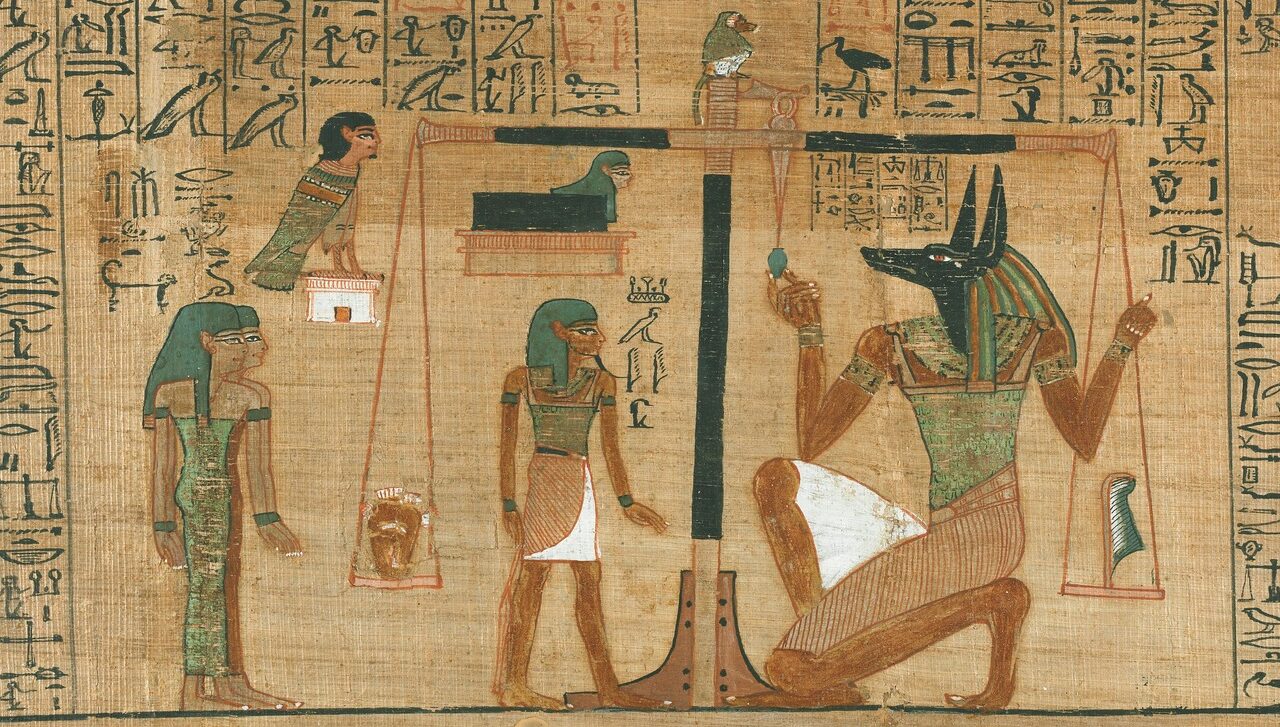
The scene of Anubis at the scales comes from the ancient Egyptian Book of the Dead. Anubis weighs the heart of the dead person against the feather of Ma’at, the goddess of truth, order and justice, while Thoth records the verdict and the devourer Ammit waits beside the scales. More than three thousand years before brain scanners, a civilization pictured justice as a balance that every life must face. The wider cast of gods appears in a dictionary of Egyptian mythology written for depth psychology.
That image of balance still describes how people think. People expect rewards to match effort, punishments to fit the offense and like cases to be treated alike. Economists Ernst Fehr and Klaus Schmidt gave this a formal name in 1999: inequity aversion, the tendency to dislike outcomes that leave us with less than others and, to a lesser degree, outcomes that leave us with more.1 Their model explained why people in experiments routinely give up money to keep a split fair, something a purely self-interested actor would never do.
Fairness is not the same thing as equality. Christina Starmans, Mark Sheskin and Paul Bloom reviewed laboratory and cross-cultural studies in 2017 and concluded that people, children included, prefer fair inequality to unfair equality: they accept that a harder worker earns more, and they object when rewards are handed out without regard to effort or need.2 The instinct is for proportion, the balance on the Egyptian scale, not for identical shares.
This drive shapes friendships, marriages, workplaces, politics and law. The rest of the picture comes from three directions: neuroscience, which shows what unfairness does in the brain; developmental psychology, which shows how early it appears; and evolutionary biology, which shows how widely it is shared and why it would have been selected. Greek tragedy reached the same territory by another road, as a reading of Aeschylus’ Oresteia traces.
What happens in the brain when something is unfair?
The first clear picture came from Alan Sanfey and colleagues in 2003. They scanned people playing the Ultimatum Game, in which one player proposes how to split a sum of money and the other either accepts or rejects it, leaving both with nothing. Unfair offers from human partners activated the anterior insula, the dorsolateral prefrontal cortex and the anterior cingulate cortex. The stronger the insula response, the more likely the person was to reject the offer.3
The insula matters because of what else it does. It receives a running map of the body’s internal state: heartbeat, breathing, gut tension, temperature, pain and disgust. Neuroanatomist A. D. Craig argued that the anterior insula is where these signals become conscious feeling, the place where the body’s condition turns into a sense of how “I” am right now.4 When unfairness lights up the same region that handles nausea and pain, the old phrase that injustice makes us sick looks close to literal. Much trauma-focused thinking about the body rests on this kind of interoceptive processing.
The insula responds to inequity even when the person is not the victim. Ming Hsu, Cedric Anen and Steven Quartz asked people to choose how to distribute meals among children in an orphanage, trading off efficiency (more total meals) against equity (a fairer spread). The putamen tracked efficiency, the insula tracked inequity, and the caudate and subgenual region combined the two into a single value. People who were more averse to inequity showed stronger activity in the inequity regions.5 The authors read this as evidence that a sense of fairness sits close to emotional processing rather than cold calculation.
Fair treatment as a reward
Fairness also feels good in its own right. Golnaz Tabibnia, Ajay Satpute and Matthew Lieberman separated fairness from money by comparing fair and unfair offers that were worth the same amount. Fair offers produced higher happiness ratings and activated several reward regions of the brain, the same circuitry that responds to money, food and other primary rewards. When people accepted unfair offers anyway, the right ventrolateral prefrontal cortex, a region involved in regulating emotion, became more active and the anterior insula quieted, a pattern that resembles suppressing a negative feeling.6
Punishing unfairness can be rewarding too. Dominique de Quervain and colleagues scanned people as they decided whether to punish a partner who had broken trust in an exchange game. Punishment that actually cost the offender activated the dorsal striatum, a region that processes rewards from goal-directed action, and people with stronger striatal activity were willing to pay more to punish.7 The satisfaction of seeing a wrong answered has a neural signature.
The amygdala, often described as the brain’s alarm, belongs in this picture as a salience detector: it flags what matters emotionally, threat and reward alike, and feeds that signal to the regions that decide. In fairness tasks the more consistent signals come from the insula for the sting of unfairness and the striatum for the pleasure of fairness and of justified punishment.
What does the prefrontal cortex do in fairness judgments?
The prefrontal cortex does not simply switch emotion off. Different parts do different jobs, and two lines of evidence show it. Michael Koenigs and Daniel Tranel tested patients with damage to the ventromedial prefrontal cortex, an area that helps modulate emotional reactions. As responders in the Ultimatum Game, these patients rejected the most unfair offers ($7/$3, $8/$2 and $9/$1 splits of ten dollars) more often than comparison groups. Losing this region made people more reactive to unfairness, not less.8
The dorsolateral prefrontal cortex works in the other direction. Daria Knoch, Ernst Fehr and colleagues used low-frequency transcranial magnetic stimulation to disrupt the right dorsolateral prefrontal cortex temporarily. People then accepted intentionally unfair offers more often, even though they still rated those offers as very unfair.9 The region appears to help people act on their sense of fairness and resist the temptation to take the money.
Put together, the findings describe a system in layers. Subcortical and insular regions generate the felt reaction to unfairness, the ventromedial cortex regulates how strongly that reaction drives behavior, and the dorsolateral cortex helps hold a fairness standard against immediate self-interest. That layered view fits the broader account of subcortical and prefrontal processing that informs trauma work. The precise computations in each area remain an active research question.
Do babies have a sense of justice?
Developmental psychologists have pushed the origins of fairness back into the first two years of life, using methods suited to children who cannot talk.
Helpers and hinderers
In a 2007 Nature study, Kiley Hamlin, Karen Wynn and Paul Bloom showed six- and ten-month-old infants a puppet show in which a wooden climber tried to get up a hill. One character pushed the climber up; another pushed it down. When offered both characters, 14 of 16 ten-month-olds and all 12 six-month-olds reached for the helper.10 The study launched a field of research into whether moral evaluation starts before language.
Replication has been mixed. In 2025 the ManyBabies 4 project, a preregistered study run across 37 laboratories on five continents with 567 infants in the final sample, found that 49.34 percent chose the helper, a rate no different from chance.11 Hamlin herself was among the authors. The hill paradigm may be weaker than first estimated, or the preference may develop later, but other measures of early fairness, especially studies of how infants expect resources to be shared, give a steadier picture.
Expecting equal shares
Marco Schmidt and Jessica Sommerville used the violation of expectation method, which treats longer looking as a sign of surprise. Fifteen-month-olds watched films in which an adult divided four crackers, or a pitcher of milk, between two recipients. When the outcome was revealed, infants looked longer at the unequal division (about 10.6 seconds) than the equal one (about 8.1 seconds). When the same food sat in symmetrical or asymmetrical piles with no recipients present, there was no difference, so the reaction was to an unfair distribution between people and not to lopsided arrangements in general.12
The same infants were then given a chance to share a toy. Those most sensitive to the unfair division were more likely to share their preferred toy, which led the authors to argue that fairness expectations and altruistic behavior develop together and are linked from early in life.12 Infant surprise at unfairness is a kind of prediction error: the world did not do what the child’s model said it should.
Stephanie Sloane, Renée Baillargeon and David Premack extended the work in 2012. Nineteen-month-olds expected an experimenter to divide two items equally between two individuals, but had no such expectation when the recipients were replaced by inanimate objects. Twenty-one-month-olds expected an experimenter to reward two helpers equally when both had worked on a chore, but not when one had done all the work while the other played.13 By the end of the second year, then, infants expect equal shares between people and already connect reward to effort.
Infants also track who behaves fairly. Marek Meristo and Luca Surian showed ten-month-olds cartoon donors, one who shared equally and one who gave everything to a single recipient. When a third character then hit or took resources from one of the donors, infants looked longer when the antisocial act was aimed at the unfair donor than when it was aimed at the fair one. They had evaluated the two donors differently on the basis of how each had shared.14
Collaboration adds another layer. Katharina Hamann, Felix Warneken, Michael Tomasello and colleagues found that children around three years old shared rewards much more equally after working together to get them than after a windfall or after working side by side. Chimpanzees in matched tasks did not show this shift.15 The authors suggested that human fairness may have its roots in dividing the spoils of joint effort.
How does the sense of fairness develop through childhood?
Expecting fairness is one thing; giving something up to enforce it is another. J. Keith Murnighan and Michael Saxon ran the Ultimatum Game with kindergartners, older schoolchildren and college students, and found that the youngest children accepted very small offers that older participants were more inclined to refuse.16 Willingness to reject an unfair split for the sake of principle grows with age.
Peter Blake and Katherine McAuliffe made this sharper with the inequity game. One child decided whether to accept or reject a candy allocation for both children; rejecting meant neither got anything. From age four, children rejected allocations that gave them less than their partner. By eight, children also rejected allocations that gave them more, refusing a windfall because, as one child put it in the paper’s title, “I had so much it didn’t seem fair.”17 Aversion to being shortchanged appears early; aversion to unfairly benefiting arrives later.
Several developments drive the change. Children get better at regulating emotion, which lets them weigh an immediate gain against a standard. Their social emotions change as well: Nikolaus Steinbeis and Tania Singer found that age-related changes in envy and Schadenfreude, the pleasure taken in another’s misfortune, predicted how children’s equity-related decisions developed.18 Social context matters from the start. McAuliffe, Blake and colleagues found that four- to nine-year-olds rejected a smaller reward more often when the larger one would go to a peer than when it would go to no one, and that they rejected advantageous splits almost only when a peer was involved.19
Children also take in the norms of the people around them and begin to enforce them, and they start caring about reputation, about being seen as fair. Michael Tomasello and Amrisha Vaish describe a two-step sequence in both ape evolution and child development: first a morality of sympathy and fairness toward particular partners, then an agent-neutral morality in which individuals follow and enforce group-wide norms.20 Each of these steps depends on maturing prefrontal systems and on years of social experience.
Children’s costly punishment
Katherine McAuliffe, Jillian Jordan and Felix Warneken tested whether young children will pay to punish unfairness done to someone else. Five- and six-year-olds were shown proposed divisions of resources between two absent, anonymous children and could either enact a proposal or reject it, which punished the selfish proposer. In some conditions rejecting cost the child their own resources.21
Six-year-olds, but not five-year-olds, rejected unfair proposals more than fair ones. They punished less when it was personally costly, yet still gave up their own resources to intervene. In a second experiment, six-year-olds reacted less to unequal allocations that came from generosity than to those that came from selfishness, which means they were judging intentions and not just outcomes.21 Costly third-party punishment, the behavior that underpins norm enforcement in adults, is present by the first grade.
These results do not deny the role of culture and learning. They suggest that cultural norms of fairness build on intuitions that appear naturally in the developing mind, the kind of inherited readiness that evolutionary thinkers such as Anthony Stevens connected to Jung’s archetypes.
Do animals have a sense of fairness?
The capuchin grape and cucumber test
The best-known evidence comes from Sarah Brosnan and Frans de Waal’s 2003 Nature paper, “Monkeys reject unequal pay.” Brown capuchin monkeys were trained to hand a small rock token to an experimenter in exchange for food. When both monkeys in a pair received cucumber slices, exchanges went smoothly. When one monkey received a grape, a much preferred food, for the same task, its partner often refused the cucumber or the exchange, sometimes throwing the food back at the experimenter. Refusals were strongest when the partner received the grape without having to work for it at all.22
The finding mattered for two reasons. It suggested that monkeys compare their own payoffs with those of others, and it raised the possibility that inequity aversion reaches back tens of millions of years in primate evolution. Critics proposed simpler explanations: perhaps the monkeys were frustrated by seeing a better food, or had recently received grapes and were disappointed. Megan van Wolkenten, Brosnan and de Waal tested thirteen capuchins and ruled out both the greed and the frustration accounts: the negative reaction depended on seeing a partner get the better reward. Effort intensified it, with the lowest performance in the study coming from monkeys who had to work hard while watching their partner receive more.23
Which other animals react to unfairness?
Since 2003, responses to unequal rewards have been studied in many species. Brosnan and de Waal’s 2014 review in Science concluded that protest against receiving less than a partner for the same task is widespread in species that cooperate outside kinship and mating bonds, including chimpanzees, several monkeys, dogs and corvids, while several species that do not cooperate in this way, such as squirrel monkeys, show little sign of it.24 Friederike Range and colleagues found that dogs stopped offering a paw on command when a partner dog was rewarded and they were not, though the dogs did not react to differences in reward quality.25
The ape results depend on context. Brosnan, Hillary Schiff and de Waal found that chimpanzees, like capuchins, reacted to a partner receiving the better reward rather than to the mere presence of it, but the reaction varied a great deal between groups, and the authors linked that variation to factors such as how long a group had lived together, suggesting that tolerance for inequity may grow with social closeness.26 Juliane Bräuer, Josep Call and Tomasello tested chimpanzees, bonobos and orangutans with a refined version of the procedure and found no extra refusals under inequity.27
Birds and other monkeys fill out the picture. Claudia Wascher and Thomas Bugnyar found that crows and ravens exchanged tokens less readily, and refused their reward more often, when a partner got better food or got food as a gift without working.28 Jorg Massen and colleagues found inequity aversion in long-tailed macaques when the task took a small effort but not when it took a very large one.29 Hani Freeman and colleagues found no negative response to unequal outcomes in marmosets, which breed cooperatively, owl monkeys, which raise young in pairs, or squirrel monkeys.30 The pattern fits the link Brosnan and de Waal draw between inequity responses and cooperation outside the family.
The animal evidence is mostly about disadvantageous inequity, getting less than another. There is much less evidence that animals refuse a better reward to equalize outcomes, though Brosnan and de Waal note that this has been documented in humans’ closest relatives, the apes. They argue that this second response, protecting a partner’s satisfaction to keep cooperation going, is what allowed the full human sense of fairness to develop.24
Apes in economic games
Chimpanzees have also played versions of the human economic games. Keith Jensen, Josep Call and Michael Tomasello found that chimpanzees in a mini Ultimatum Game accepted any nonzero offer, behaving as “rational maximizers.”31 Darby Proctor and colleagues later used a token-based Ultimatum Game in which the partner’s cooperation was needed for either player to be paid. Under those conditions both chimpanzees and human children chose the equal split; when the partner was passive, both preferred the selfish option.32 Manfred Milinski’s commentary on the study, titled “Chimps play fair in the ultimatum game,” set it beside the earlier result and asked whether chimpanzees are fair or selfish; the answer appears to depend on whether the partner has a say.33 Chimpanzees also choose collaborators carefully: Alicia Melis, Brian Hare and Tomasello showed that they recruit the partner who has proven more effective in a joint task.34 The shared pattern across species points to a long evolutionary history for the human fairness instinct.
Why did fairness evolve?
Several evolutionary pressures likely favored fairness norms. They overlap, and each is a way of solving the same problem: how unrelated individuals can cooperate without being exploited.
Cooperation
A shared sense of fairness allows unrelated individuals to work together for mutual benefit. The animal pattern supports this: protest against unequal pay appears in species that rely on cooperation outside close kin.24 The child data point the same way, with equal sharing appearing most strongly after joint work.15 Groups that could build trusting, equitable partnerships could hunt, defend and raise children together in ways that less cooperative groups could not.
Protection from exploitation
An aversion to being shortchanged guards against free riders, those who take the benefits of cooperation without paying the costs. Michael Price, Leda Cosmides and John Tooby found that people’s punitive feelings toward free riders in group tasks were best predicted by their own participation: the more someone contributed, the more they wanted non-contributors punished. They argued that punitive sentiment is a psychological device for keeping free riders from gaining an advantage.35
Costly punishment
Punishing unfairness at a personal cost deters would-be exploiters and enforces norms. In Fehr and Simon Gächter’s public goods experiments, people paid to punish those who contributed little, even when they would never meet them again, and cooperation rose sharply when punishment was possible. Negative emotions toward defectors appeared to drive the punishment.36 Samuel Bowles and Herbert Gintis modeled this “strong reciprocity” and showed that groups containing individuals who cooperate and also punish defectors can sustain cooperation under conditions where unconditional cooperators alone would be overrun.37
Reputation building
A known record of fairness makes someone an attractive partner. Martin Nowak and Karl Sigmund showed how indirect reciprocity, helping those with a good reputation, can evolve once individuals track who has helped whom.38 Nicolas Baumard, Jean-Baptiste André and Dan Sperber argued that human fairness evolved through partner choice: when people are free to choose collaborators, those who share fairly get chosen, and those who do not are left out.39 Pat Barclay modeled the competition this creates. In a biological market, where individuals can pick their partners, people compete to be chosen by helping more, and this competitive helping increases with the size of the market and can spread even in a population of defectors.40
What hunter-gatherers show
Anthropology fills in the human side. Christopher Boehm surveyed ethnographic accounts of nomadic foragers and described a “reverse dominance hierarchy”: group members use ridicule, criticism, disobedience and, in extreme cases, exile or execution to stop any individual from bullying, hoarding or taking control.41 Coren Apicella and colleagues mapped the social networks of the Hadza of Tanzania and found that cooperators tended to cluster with other cooperators, a structure that lets cooperation persist.42 In small groups where everyone knows everyone, violating fairness norms would have been a losing strategy. Natural selection likely tuned human minds to be acutely sensitive to justice, a point that Jung’s image of the two-million-year-old patient takes in a psychological direction.
How does fairness shape modern life?
The evolved preference for fairness operates at every scale of modern life. Psychologist Tom Tyler distinguishes distributive justice, the fairness of outcomes, from procedural justice, the fairness of how decisions are made. His research found that people’s willingness to accept decisions and cooperate with authorities depends heavily on whether the procedures felt fair: whether they had a voice, whether they were treated with dignity, whether the decision-maker seemed neutral.43 This explains why people often accept a loss from a process they trust and reject a win from one they do not.
Markets obey the same rules, which is why the psychology of economics keeps returning to fairness. Daniel Kahneman, Jack Knetsch and Richard Thaler showed in 1986 that ordinary people hold firms to fairness standards when they set prices and wages, and that in experiments people would give up money both to share fairly and to avoid dealing with someone who had been unfair.44 When distributive and procedural justice break down, employees disengage, trust in institutions erodes, and political unrest follows. Douglas Cowherd and David Levine studied 102 business units and found that the smaller the pay gap between lower-level employees and top management, the higher the unit’s product quality, which they explained through employees’ greater commitment, effort and cooperation.45 Groups and institutions with strong fairness norms enjoy greater cohesion and legitimacy. Tyler and Steven Blader’s work on cooperation in groups traces how fair procedures strengthen people’s identification with a group and, through it, their willingness to work for its goals.46 When institutions themselves betray that trust, the damage reaches into individual lives, as an account of institutional betrayal in Birmingham describes.
Sensitivity to injustice also varies between people. Some feel unfairness with unusual intensity and find it hard to let go, a trait discussed in a piece on why autistic minds are built for justice.
What do the classic fairness games show?
Much of this research rests on a few simple economic games. Each removes most of real life and leaves one choice about fairness, which is what makes them useful. They are part of the wider use of game theory in psychology.
The Dictator Game
The Dictator Game grew out of experiments by Kahneman, Knetsch and Thaler published in 1986. One player, the dictator, controls a sum and decides how to divide it with a passive recipient who cannot respond. In their original version, students chose between splitting $20 evenly and keeping $18 while giving $2; about three quarters chose the even split.44 Later versions let dictators give any amount.
Rational choice theory predicts that a self-interested dictator gives nothing, since the recipient cannot retaliate. Christoph Engel’s meta-analysis of more than a hundred Dictator Game studies found that dictators give a little over 28 percent of the pie on average. Zero offers are common rather than rare, at roughly a third of dictators, while a sizeable minority split evenly.47 Giving shifts with anonymity, the identity of the recipient, whether the money was earned, and how the choice is framed.47 Group identity is one of the strongest of these influences. Steven Whitt and Rick Wilson ran the Dictator Game with 681 Bosniak, Croat and Serb participants in postwar Bosnia-Herzegovina, varying the ethnicity of the anonymous recipient. Dictators favored their own group, but far less than expected, and the authors concluded that norms of fairness across ethnic lines were remarkably strong.48 James Andreoni’s theory of “warm glow” giving explains part of the generosity: people get satisfaction from the act of giving itself, not only from the recipient’s gain.49
The Ultimatum Game
Werner Güth, Rolf Schmittberger and Bernd Schwarze introduced the Ultimatum Game in 1982. A proposer offers a split; the responder can accept, in which case the split happens, or reject, in which case both get nothing.50 Rational choice predicts that responders accept any nonzero amount and that proposers, expecting this, offer the minimum. In fact, Hessel Oosterbeek and colleagues’ meta-analysis of 75 results found that proposers offer about 40 percent of the pie on average and that about 16 percent of offers are rejected, with low offers rejected far more often than generous ones.51
Responders who reject an unfair offer pay to punish the proposer, and proposers anticipate this, which pushes offers toward fairness. Joseph Henrich and colleagues took the game to 15 small-scale societies, from foragers to herders to small farmers. They found far more variation than in university samples: mean offers ranged from 26 percent among the Machiguenga of Peru to 58 percent among the Lamalera whale hunters of Indonesia. Offers were higher in groups with more market integration and more payoff from cooperation in daily life.52 Every society showed a sense of fairness; what counted as fair was shaped by how each society lived.
The Third-Party Punishment Game
Fehr and Urs Fischbacher’s Third-Party Punishment Game removes self-interest entirely. An allocator divides an endowment with a recipient, and a third player, the observer, sees the split and can spend part of their own endowment to reduce the allocator’s payoff. The observer’s own earnings are untouched by the allocation, yet many observers paid to punish allocators who gave less than half, and punishment grew as transfers fell.53
Third-party punishment matters because it is how norms are enforced beyond the people directly involved. Helen Bernhard, Fischbacher and Fehr found among two groups in Papua New Guinea that third parties punished more harshly when the victim belonged to their own group, a pattern they called parochial altruism.54 Henrich and colleagues ran punishment games in 15 diverse populations and found that every population showed some willingness to pay to punish as allocations grew more unequal, that the amount of punishment varied widely, and that societies with more punishment also showed more altruism.55 Across cultures, Frank Marlowe and colleagues found that people in larger, more complex societies engage in more third-party punishment than people in small-scale societies.56 That fits the idea that punishment by uninvolved strangers becomes essential where groups are too large for reputation to do the work alone.
What does fairness have to do with therapy?
In a therapy room, injustice is rarely abstract. People arrive carrying a parent who played favorites, a workplace that punished the person who spoke up, a divorce settlement that felt like theft, an accident caused by someone else’s carelessness, or abuse that was never acknowledged. The research on fairness explains why these experiences last. Unfairness is processed by the same insular systems that register pain and disgust, it recruits reward and punishment circuitry, and it engages an instinct that appeared in infancy and was shaped by millions of years of selection. It does not resolve because someone tells you to move on.
Clinical research bears this out. Michael Sullivan and colleagues developed the Injustice Experience Questionnaire for people with injuries and chronic pain; its items reflect blame and a sense of irreparable loss. Perceived injustice was strongly correlated with pain severity, depression and catastrophic thinking, and it predicted whether people returned to work a year later.57 For people living with pain, the sense of having been wronged is part of the condition, which is why we attend to it in our chronic pain and chronic illness therapy.
Depression changes the fairness response in a revealing way. Katia Harlé, John Allen and Alan Sanfey found that depressed people reported stronger negative feelings about unfair Ultimatum offers than controls did, yet accepted more of them. Among the depressed participants, acceptance of unfair offers rose with resting cardiac vagal control, a physiological index of emotion regulation.58 The protest is felt but not acted on. Many depressed clients describe exactly this: knowing something is unfair, feeling it in the body, and swallowing it. The vagal finding connects naturally to the nervous-system framework in our somatic guide to polyvagal theory.
Moral injury is injustice turned inward or suffered at the hands of a trusted authority. Brett Litz and colleagues defined it as the lasting harm from perpetrating, failing to prevent, or witnessing acts that transgress deeply held moral beliefs.59 The concept began with combat veterans and now describes healthcare workers, first responders and people betrayed by churches, schools and families. Our post on moral injury and betrayal takes this further.
Childhood matters most. Infants and toddlers already expect fair division and connect reward to effort, so a child raised by a parent whose rewards and punishments are arbitrary learns that the world does not follow rules. That lesson lives in the body as vigilance, a pattern our post on eggshell parenting describes. Anger at injustice is often the healthy part of the picture, the biological “no” described in the wisdom of anger, even when it has gone underground as resentment or self-blame.
How we work with injustice at Taproot
At Taproot we start by taking the injustice seriously. Naming what was unfair, and having another person agree that it was, often brings relief that no amount of reframing provides. We then track where the injustice lives in the body: the clenched jaw, the heat in the chest, the sick feeling in the gut that the insula research would predict. Somatic therapy works directly with these sensations so that the body can complete responses, such as protest or protection, that were cut off when the injustice happened.
Brainspotting uses a fixed eye position linked to the activation a memory produces and holds attention there while the client processes the experience at a deep, often subcortical level. For a client who carries a decades-old sense of betrayal, this can reach the felt layer of the memory that talking about it does not reach. EMDR works in a similar way with bilateral stimulation while the memory is held in mind.
Jungian work adds the symbolic side. The scales of Ma’at and the Furies of the Oresteia, who are transformed from avengers into guardians of a court of law, are images of the same instinct the laboratory measures. They show the psyche’s demand for balance and the long work of turning raw vengeance into something that can be lived with. Many clients find that their sense of justice, once it stops being only a wound, becomes a source of direction.
The sense of fairness is old, bodily and present from the start of life, which is why injustice can shape a person for decades. If an experience of unfairness still sits in your body or your relationships, you can contact Taproot Therapy Collective to talk with one of our therapists about working with it.
Frequently asked questions
What part of the brain processes unfairness?
Unfair offers in the Ultimatum Game reliably activate the anterior insula, along with the anterior cingulate and dorsolateral prefrontal cortex. The insula also handles bodily feelings such as pain, nausea and disgust, so unfairness registers partly as a felt, physical state. Fair treatment, by contrast, activates reward regions such as the ventral striatum, the same circuits that respond to money and food.
What is inequity aversion?
Inequity aversion is the tendency to dislike unequal outcomes, especially getting less than someone else for the same contribution. Economists Ernst Fehr and Klaus Schmidt formalized the idea in 1999 to explain why people give up money to keep a split fair. Children show it from about age four, and capuchin monkeys, chimpanzees and dogs show versions of it too.
What was the capuchin monkey grape and cucumber experiment?
In 2003 Sarah Brosnan and Frans de Waal reported in Nature that capuchin monkeys trained to trade a rock token for food would accept cucumber slices when their partner got the same. When the partner received a grape for the same task, many refused the cucumber, sometimes throwing it back, and reactions were strongest when the partner got a grape without working.
At what age do children understand fairness?
Fairness expectations appear in infancy. Fifteen-month-olds look longer at an unequal division of food between two people, and 21-month-olds expect two people who both worked to be rewarded equally. Children reject getting less than a partner from about age four, reject getting more by about eight, and by six will pay to punish unfairness done to others.
How does injustice affect mental health?
Injustice tends to persist because it engages bodily, emotional and reward systems at once. Research on chronic pain links perceived injustice to worse pain, depression and slower return to work. Depressed people feel unfair treatment strongly yet accept it more often, and moral injury describes the lasting harm when trusted people or institutions violate deeply held moral beliefs.
Related reading
- What is a “Purple Hat Therapy”?
- Timotheus Vermeulen and Robin van den Akker: Integrating Modernity, Postmodernity and the Therapeutic Encounter
- Neurology’s Biggest Feuds: A Historiography of Fracture in Neurology and Consciousness Studies
- The Trial of Carl Jung: Assessing a Legacy
- Clinical Hypnosis: The Neuroscience and Therapeutic Legacy of Milton Erickson
- Naomi Quenk’s Work on the Inferior Function
References
- Fehr, E., & Schmidt, K. M. (1999). A theory of fairness, competition, and cooperation. The Quarterly Journal of Economics, 114(3), 817–868. https://doi.org/10.1162/003355399556151
- Starmans, C., Sheskin, M., & Bloom, P. (2017). Why people prefer unequal societies. Nature Human Behaviour, 1(4), Article 0082. https://doi.org/10.1038/s41562-017-0082
- Sanfey, A. G., Rilling, J. K., Aronson, J. A., Nystrom, L. E., & Cohen, J. D. (2003). The neural basis of economic decision-making in the Ultimatum Game. Science, 300(5626), 1755–1758. https://doi.org/10.1126/science.1082976
- Craig, A. D. (2009). How do you feel, now? The anterior insula and human awareness. Nature Reviews Neuroscience, 10(1), 59–70. https://doi.org/10.1038/nrn2555
- Hsu, M., Anen, C., & Quartz, S. R. (2008). The right and the good: Distributive justice and neural encoding of equity and efficiency. Science, 320(5879), 1092–1095. https://doi.org/10.1126/science.1153651
- Tabibnia, G., Satpute, A. B., & Lieberman, M. D. (2008). The sunny side of fairness: Preference for fairness activates reward circuitry (and disregarding unfairness activates self-control circuitry). Psychological Science, 19(4), 339–347. https://doi.org/10.1111/j.1467-9280.2008.02091.x
- de Quervain, D. J.-F., Fischbacher, U., Treyer, V., Schellhammer, M., Schnyder, U., Buck, A., & Fehr, E. (2004). The neural basis of altruistic punishment. Science, 305(5688), 1254–1258. https://doi.org/10.1126/science.1100735
- Koenigs, M., & Tranel, D. (2007). Irrational economic decision-making after ventromedial prefrontal damage: Evidence from the Ultimatum Game. Journal of Neuroscience, 27(4), 951–956. https://doi.org/10.1523/JNEUROSCI.4606-06.2007
- Knoch, D., Pascual-Leone, A., Meyer, K., Treyer, V., & Fehr, E. (2006). Diminishing reciprocal fairness by disrupting the right prefrontal cortex. Science, 314(5800), 829–832. https://doi.org/10.1126/science.1129156
- Hamlin, J. K., Wynn, K., & Bloom, P. (2007). Social evaluation by preverbal infants. Nature, 450(7169), 557–559. https://doi.org/10.1038/nature06288
- Lucca, K., Yuen, F., Wang, Y., Alessandroni, N., Allison, O., Alvarez, M., … Hamlin, J. K. (2025). Infants’ social evaluation of helpers and hinderers: A large-scale, multi-lab, coordinated replication study. Developmental Science, 28(1), Article e13581. https://doi.org/10.1111/desc.13581
- Schmidt, M. F. H., & Sommerville, J. A. (2011). Fairness expectations and altruistic sharing in 15-month-old human infants. PLoS ONE, 6(10), Article e23223. https://doi.org/10.1371/journal.pone.0023223
- Sloane, S., Baillargeon, R., & Premack, D. (2012). Do infants have a sense of fairness? Psychological Science, 23(2), 196–204. https://doi.org/10.1177/0956797611422072
- Meristo, M., & Surian, L. (2014). Infants distinguish antisocial actions directed towards fair and unfair agents. PLoS ONE, 9(10), Article e110553. https://doi.org/10.1371/journal.pone.0110553
- Hamann, K., Warneken, F., Greenberg, J. R., & Tomasello, M. (2011). Collaboration encourages equal sharing in children but not in chimpanzees. Nature, 476(7360), 328–331. https://doi.org/10.1038/nature10278
- Murnighan, J. K., & Saxon, M. S. (1998). Ultimatum bargaining by children and adults. Journal of Economic Psychology, 19(4), 415–445. https://doi.org/10.1016/S0167-4870(98)00017-8
- Blake, P. R., & McAuliffe, K. (2011). “I had so much it didn’t seem fair”: Eight-year-olds reject two forms of inequity. Cognition, 120(2), 215–224. https://doi.org/10.1016/j.cognition.2011.04.006
- Steinbeis, N., & Singer, T. (2013). The effects of social comparison on social emotions and behavior during childhood: The ontogeny of envy and Schadenfreude predicts developmental changes in equity-related decisions. Journal of Experimental Child Psychology, 115(1), 198–209. https://doi.org/10.1016/j.jecp.2012.11.009
- McAuliffe, K., Blake, P. R., Kim, G., Wrangham, R. W., & Warneken, F. (2013). Social influences on inequity aversion in children. PLoS ONE, 8(12), Article e80966. https://doi.org/10.1371/journal.pone.0080966
- Tomasello, M., & Vaish, A. (2013). Origins of human cooperation and morality. Annual Review of Psychology, 64, 231–255. https://doi.org/10.1146/annurev-psych-113011-143812
- McAuliffe, K., Jordan, J. J., & Warneken, F. (2015). Costly third-party punishment in young children. Cognition, 134, 1–10. https://doi.org/10.1016/j.cognition.2014.08.013
- Brosnan, S. F., & de Waal, F. B. M. (2003). Monkeys reject unequal pay. Nature, 425(6955), 297–299. https://doi.org/10.1038/nature01963
- van Wolkenten, M., Brosnan, S. F., & de Waal, F. B. M. (2007). Inequity responses of monkeys modified by effort. Proceedings of the National Academy of Sciences, 104(47), 18854–18859. https://doi.org/10.1073/pnas.0707182104
- Brosnan, S. F., & de Waal, F. B. M. (2014). Evolution of responses to (un)fairness. Science, 346(6207), Article 1251776. https://doi.org/10.1126/science.1251776
- Range, F., Horn, L., Viranyi, Z., & Huber, L. (2009). The absence of reward induces inequity aversion in dogs. Proceedings of the National Academy of Sciences, 106(1), 340–345. https://doi.org/10.1073/pnas.0810957105
- Brosnan, S. F., Schiff, H. C., & de Waal, F. B. M. (2005). Tolerance for inequity may increase with social closeness in chimpanzees. Proceedings of the Royal Society B: Biological Sciences, 272(1560), 253–258. https://doi.org/10.1098/rspb.2004.2947
- Bräuer, J., Call, J., & Tomasello, M. (2009). Are apes inequity averse? New data on the token-exchange paradigm. American Journal of Primatology, 71(2), 175–181. https://doi.org/10.1002/ajp.20639
- Wascher, C. A. F., & Bugnyar, T. (2013). Behavioral responses to inequity in reward distribution and working effort in crows and ravens. PLoS ONE, 8(2), Article e56885. https://doi.org/10.1371/journal.pone.0056885
- Massen, J. J. M., van den Berg, L. M., Spruijt, B. M., & Sterck, E. H. M. (2012). Inequity aversion in relation to effort and relationship quality in long-tailed macaques (Macaca fascicularis). American Journal of Primatology, 74(2), 145–156. https://doi.org/10.1002/ajp.21014
- Freeman, H. D., Sullivan, J., Hopper, L. M., Talbot, C. F., Holmes, A. N., Schultz-Darken, N., … Brosnan, S. F. (2013). Different responses to reward comparisons by three primate species. PLoS ONE, 8(10), Article e76297. https://doi.org/10.1371/journal.pone.0076297
- Jensen, K., Call, J., & Tomasello, M. (2007). Chimpanzees are rational maximizers in an ultimatum game. Science, 318(5847), 107–109. https://doi.org/10.1126/science.1145850
- Proctor, D., Williamson, R. A., de Waal, F. B. M., & Brosnan, S. F. (2013). Chimpanzees play the ultimatum game. Proceedings of the National Academy of Sciences, 110(6), 2070–2075. https://doi.org/10.1073/pnas.1220806110
- Milinski, M. (2013). Chimps play fair in the ultimatum game. Proceedings of the National Academy of Sciences, 110(6), 1978–1979. https://doi.org/10.1073/pnas.1222132110
- Melis, A. P., Hare, B., & Tomasello, M. (2006). Chimpanzees recruit the best collaborators. Science, 311(5765), 1297–1300. https://doi.org/10.1126/science.1123007
- Price, M. E., Cosmides, L., & Tooby, J. (2002). Punitive sentiment as an anti-free rider psychological device. Evolution and Human Behavior, 23(3), 203–231. https://doi.org/10.1016/S1090-5138(01)00093-9
- Fehr, E., & Gächter, S. (2002). Altruistic punishment in humans. Nature, 415(6868), 137–140. https://doi.org/10.1038/415137a
- Bowles, S., & Gintis, H. (2004). The evolution of strong reciprocity: Cooperation in heterogeneous populations. Theoretical Population Biology, 65(1), 17–28. https://doi.org/10.1016/j.tpb.2003.07.001
- Nowak, M. A., & Sigmund, K. (2005). Evolution of indirect reciprocity. Nature, 437(7063), 1291–1298. https://doi.org/10.1038/nature04131
- Baumard, N., André, J.-B., & Sperber, D. (2013). A mutualistic approach to morality: The evolution of fairness by partner choice. Behavioral and Brain Sciences, 36(1), 59–78. https://doi.org/10.1017/S0140525X11002202
- Barclay, P. (2011). Competitive helping increases with the size of biological markets and invades defection. Journal of Theoretical Biology, 281(1), 47–55. https://doi.org/10.1016/j.jtbi.2011.04.023
- Boehm, C. (1993). Egalitarian behavior and reverse dominance hierarchy. Current Anthropology, 34(3), 227–254. https://doi.org/10.1086/204166
- Apicella, C. L., Marlowe, F. W., Fowler, J. H., & Christakis, N. A. (2012). Social networks and cooperation in hunter-gatherers. Nature, 481(7382), 497–501. https://doi.org/10.1038/nature10736
- Tyler, T. R. (2000). Social justice: Outcome and procedure. International Journal of Psychology, 35(2), 117–125. https://doi.org/10.1080/002075900399411
- Kahneman, D., Knetsch, J. L., & Thaler, R. H. (1986). Fairness and the assumptions of economics. The Journal of Business, 59(4, Pt. 2), S285–S300. https://doi.org/10.1086/296367
- Cowherd, D. M., & Levine, D. I. (1992). Product quality and pay equity between lower-level employees and top management: An investigation of distributive justice theory. Administrative Science Quarterly, 37(2), 302–320. https://doi.org/10.2307/2393226
- Tyler, T. R., & Blader, S. L. (2000). Cooperation in groups: Procedural justice, social identity, and behavioral engagement. Psychology Press.
- Engel, C. (2011). Dictator games: A meta study. Experimental Economics, 14(4), 583–610. https://doi.org/10.1007/s10683-011-9283-7
- Whitt, S., & Wilson, R. K. (2007). The dictator game, fairness and ethnicity in postwar Bosnia. American Journal of Political Science, 51(3), 655–668. https://doi.org/10.1111/j.1540-5907.2007.00273.x
- Andreoni, J. (1990). Impure altruism and donations to public goods: A theory of warm-glow giving. The Economic Journal, 100(401), 464–477. https://doi.org/10.2307/2234133
- Güth, W., Schmittberger, R., & Schwarze, B. (1982). An experimental analysis of ultimatum bargaining. Journal of Economic Behavior & Organization, 3(4), 367–388. https://doi.org/10.1016/0167-2681(82)90011-7
- Oosterbeek, H., Sloof, R., & van de Kuilen, G. (2004). Cultural differences in ultimatum game experiments: Evidence from a meta-analysis. Experimental Economics, 7(2), 171–188. https://doi.org/10.1023/B:EXEC.0000026978.14316.74
- Henrich, J., Boyd, R., Bowles, S., Camerer, C., Fehr, E., Gintis, H., … Tracer, D. (2005). “Economic man” in cross-cultural perspective: Behavioral experiments in 15 small-scale societies. Behavioral and Brain Sciences, 28(6), 795–815. https://doi.org/10.1017/S0140525X05000142
- Fehr, E., & Fischbacher, U. (2004). Third-party punishment and social norms. Evolution and Human Behavior, 25(2), 63–87. https://doi.org/10.1016/S1090-5138(04)00005-4
- Bernhard, H., Fischbacher, U., & Fehr, E. (2006). Parochial altruism in humans. Nature, 442(7105), 912–915. https://doi.org/10.1038/nature04981
- Henrich, J., McElreath, R., Barr, A., Ensminger, J., Barrett, C., Bolyanatz, A., … Ziker, J. (2006). Costly punishment across human societies. Science, 312(5781), 1767–1770. https://doi.org/10.1126/science.1127333
- Marlowe, F. W., Berbesque, J. C., Barr, A., Barrett, C., Bolyanatz, A., Cardenas, J. C., … Tracer, D. (2008). More ‘altruistic’ punishment in larger societies. Proceedings of the Royal Society B: Biological Sciences, 275(1634), 587–592. https://doi.org/10.1098/rspb.2007.1517
- Sullivan, M. J. L., Adams, H., Horan, S., Maher, D., Boland, D., & Gross, R. (2008). The role of perceived injustice in the experience of chronic pain and disability: Scale development and validation. Journal of Occupational Rehabilitation, 18(3), 249–261. https://doi.org/10.1007/s10926-008-9140-5
- Harlé, K. M., Allen, J. J. B., & Sanfey, A. G. (2010). The impact of depression on social economic decision making. Journal of Abnormal Psychology, 119(2), 440–446. https://doi.org/10.1037/a0018612
- Litz, B. T., Stein, N., Delaney, E., Lebowitz, L., Nash, W. P., Silva, C., & Maguen, S. (2009). Moral injury and moral repair in war veterans: A preliminary model and intervention strategy. Clinical Psychology Review, 29(8), 695–706. https://doi.org/10.1016/j.cpr.2009.07.003









0 Comments