Explore Hakwan Lau’s Perceptual Reality Monitoring theory, which explains consciousness as the brain’s mechanism for distinguishing reality from noise, and its implications for treating anxiety.

therapist near me
Welcome to the Taproot Therapy Collective Blog, your deep-dive space into trauma-informed therapy, depth psychology, and the cultural forces shaping mental health today. Our goal is to be a trusted, authoritative resource for individuals and professionals seeking to understand the complex links between the psyche, the body, and society.
As a YMYL (Your Money, Your Life) resource, we prioritize E-E-A-T (Experience, Expertise, Authoritativeness, and Trustworthiness). Every article is authored and clinically reviewed by our team of licensed therapists in Birmingham, Alabama. Our writers share their firsthand clinical experience and deep expertise in fields ranging from Jungian insights and somatic healing to cutting-edge, evidence-based modalities.
Our blog explores the forefront of mental health, including:
While our insights are relevant globally, we are rooted in the Birmingham community. We regularly share resources for therapists and mental health seekers in Alabama. Our writing bridges clinical depth with cultural relevance, designed to help you find articles that resonate and cultivate new possibilities for growth, resilience, and meaningful connection.
Explore Hakwan Lau’s Perceptual Reality Monitoring theory, which explains consciousness as the brain’s mechanism for distinguishing reality from noise, and its implications for treating anxiety.
Discover Giulio Tononi’s Integrated Information Theory, which quantifies consciousness as integration and offers new perspectives on treating trauma and dissociation.
Explore Roger Penrose’s revolutionary Orch OR theory of consciousness, linking quantum physics to the mind and offering new perspectives on trauma therapy.
The Philosopher Who Argued You Are Only Conscious of What You Think You Are Conscious Of What makes a mental state conscious rather than unconscious? This question, which has puzzled philosophers and scientists for centuries, received a provocative answer from David...
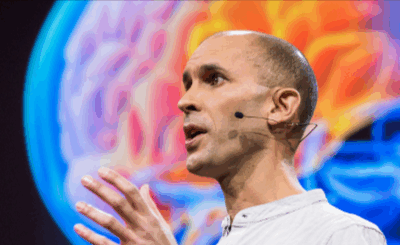
The Neuroscientist Who Showed That Reality Is a Controlled Hallucination Your brain is not a passive receiver of information from the world. It is a prediction machine, constantly generating guesses about what is out there and updating those guesses based on sensory...

The Neuroscientist Who Found Consciousness in the Feedback Loops of the Brain When you look at a face, what happens in your brain? The answer turns out to be surprisingly complex. First, visual information streams forward from your eyes through your visual cortex,...

Explore the work of Stanislas Dehaene and his Global Neuronal Workspace Theory, revealing how brain networks ignite consciousness and why this matters for trauma treatment.
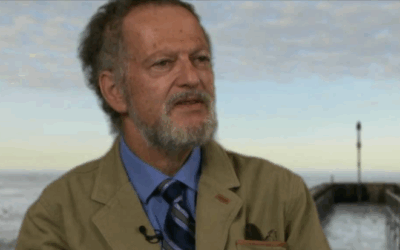
Why Understanding the Architecture of Mind Matters for Therapy Before we explore the life and revolutionary work of Bernard Baars, we need to understand why his ideas matter so profoundly for anyone working in the healing professions. Baars did not merely propose a...

Every day, anesthesiologists perform a kind of magic. They administer drugs that make consciousness disappear. One moment a patient is awake, aware, experiencing the world. The next moment, they are gone, somewhere beyond dreaming, beyond memory, beyond experience...

The Question That Won't Go Away You are reading these words right now. Light is hitting your retina, signals are traveling through your optic nerve, neurons are firing in cascading patterns across your brain. But somewhere in that process, something else is happening....

Who is really in control of your mind? Neuroscientist Karl Friston’s prediction machine meets Michael Gazzaniga’s storytelling interpreter in this deep exploration of consciousness, free will, and why your brain acts before you decide. Learn how Jungian psychology and the basal ganglia’s Believer-Skeptic model explain intuition, trauma responses, and the path to psychological integration.

An in-depth guide to Neuro-architecture and Depth Psychology. Explore how spatial design, from Jung’s Bollingen Tower to modern therapy offices, shapes the unconscious mind.
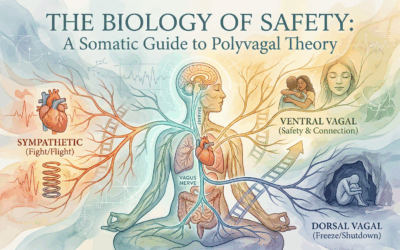
A clinical guide to Polyvagal Theory for trauma recovery. Learn how the Vagus Nerve regulates anxiety, freeze responses, and safety in somatic therapy.
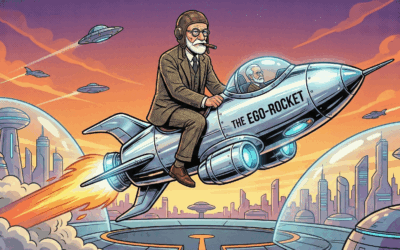
Discover how modern trauma therapy is rediscovering the ancient path of Gnosticism. From the “simulation of self” to the somatic “red pill,” explore how we wake up from the false reality of trauma.
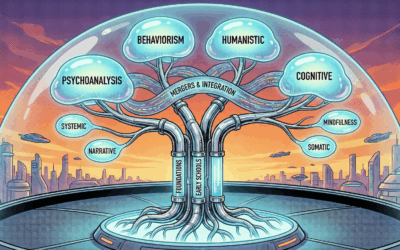
We are living through a shift in human consciousness as profound as the invention of the printing press. But unlike the slow, linear transformation of the Renaissance, this shift is instantaneous, atomized, and hyper-networked. We are moving into a "Radically...
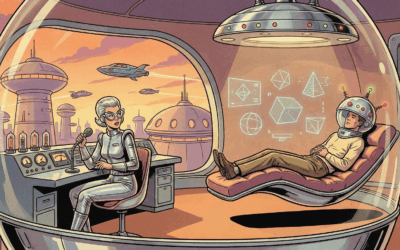
The Primitive Present: How Historians in 2125 Will View the "Golden Age" of Modern Therapy When we look back at the medical practices of the 19th century—bloodletting, mercury cures, and unsterilized surgeries—we shudder. We recognize that those doctors were doing...
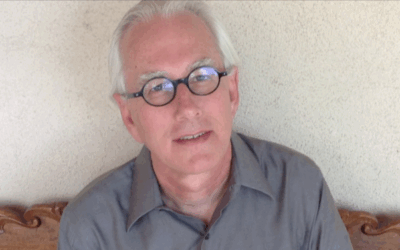
Bill O’Hanlon, MS, LMFT, studied with Milton Erickson as his only work/study student (serving as Erickson’s gardener) before co-founding Solution-Oriented/Possibility Therapy in the 1980s. Author of nearly 40 books including the Oprah-featured “Do One Thing Different” and foundational “In Search of Solutions” with Michele Weiner-Davis, O’Hanlon delivered over 3,700 presentations worldwide teaching his collaborative, non-pathologizing approach asking “How do people get happy?” rather than “What’s wrong?” He retired from clinical practice in 2020 to pursue professional songwriting from Santa Fe, New Mexico.
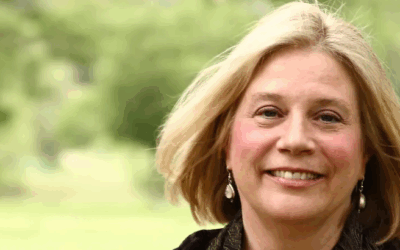
Diane Poole Heller, PhD, transformed her own 1988 traumatic car accident into a pioneering career developing DARe (Dynamic Attachment Re-patterning experience), a somatic approach integrating attachment theory and trauma resolution now taught worldwide. After 25 years as Senior Faculty for Peter Levine’s Somatic Experiencing Institute, she created Trauma Solutions and authored The Power of Attachment, teaching that regardless of childhood history, people can develop Secure Attachment Skills through attuned relationships, body-based interventions, and recognizing we’re all biologically hardwired for connection and healing.
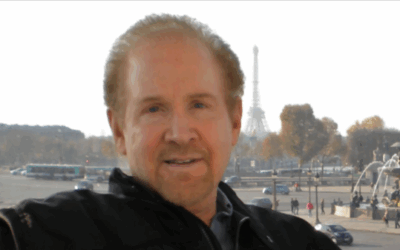
Laurence Heller, PhD, spent over 40 years in private practice recognizing that developmental trauma creates not just nervous system dysregulation but fundamental identity distortions—pervasive shame, self-judgment, and disconnection from authentic self. He developed the NeuroAffective Relational Model (NARM), now taught worldwide, mapping five adaptive survival styles arising from disrupted developmental needs (Connection, Attunement, Trust, Autonomy, Love-Sexuality) and providing framework for healing through disidentification from survival-based identities while working simultaneously with psychology and physiology within attuned therapeutic relationships.

Bruce Perry developed the Neurosequential Model after treating children who survived the 1993 Branch Davidian siege in Waco. His three decades translating neuroscience into practical trauma treatment culminated in the #1 bestseller What Happened to You? with Oprah Winfrey. Perry’s fundamental insight: childhood behavior reflects developmental adaptation to environment rather than defect requiring correction, revolutionizing how thousands of professionals understand trauma.
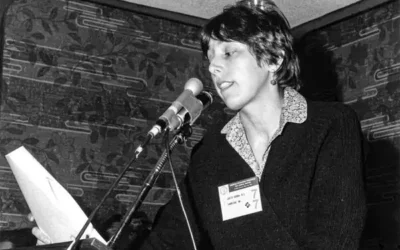
Judith Herman, Harvard psychiatrist, transformed trauma treatment by distinguishing complex PTSD from single-incident trauma and articulating the three-stage recovery model emphasizing safety, remembrance, and reconnection. Her 1992 Trauma and Recovery challenged psychiatry’s “convenient amnesia” about sexual violence, while 2023’s Truth and Repair reimagines justice as healing rather than punishment, asking what survivors actually need: acknowledgment, validation, and community witness rather than retribution.
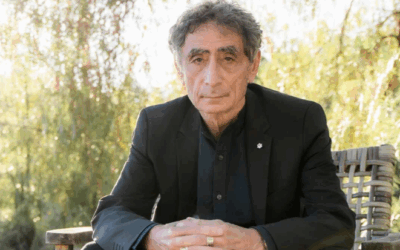
Gabor Maté, Holocaust survivor turned physician, spent twelve years treating severe addictions in Vancouver’s poorest neighborhood, asking “why the pain?” rather than “why the addiction?” His revolutionary recognition that addiction serves to escape unbearable emotions rooted in childhood trauma, detailed in bestseller In the Realm of Hungry Ghosts, transformed understanding of substance abuse from moral failing to developmental injury.

Discover how modern psychotherapy is rediscovering its roots. From Jung’s complexes to the somatic revolution, explore how neuroscience is validating ancient wisdom in the future of mental health treatment.
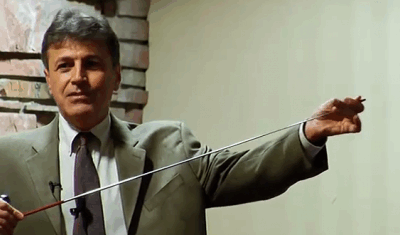
David Grand discovered brainspotting in 2003 when a figure skater’s eye wobble revealed where trauma was stored in her brain. By maintaining fixed eye position on that “brainspot” rather than using bilateral movement, processing accelerated dramatically. His development of this approach, now used by 13,000+ therapists worldwide, demonstrates how careful clinical observation combined with willingness to deviate from protocol can produce genuine therapeutic innovation for treating trauma, the yips, and performance blocks.
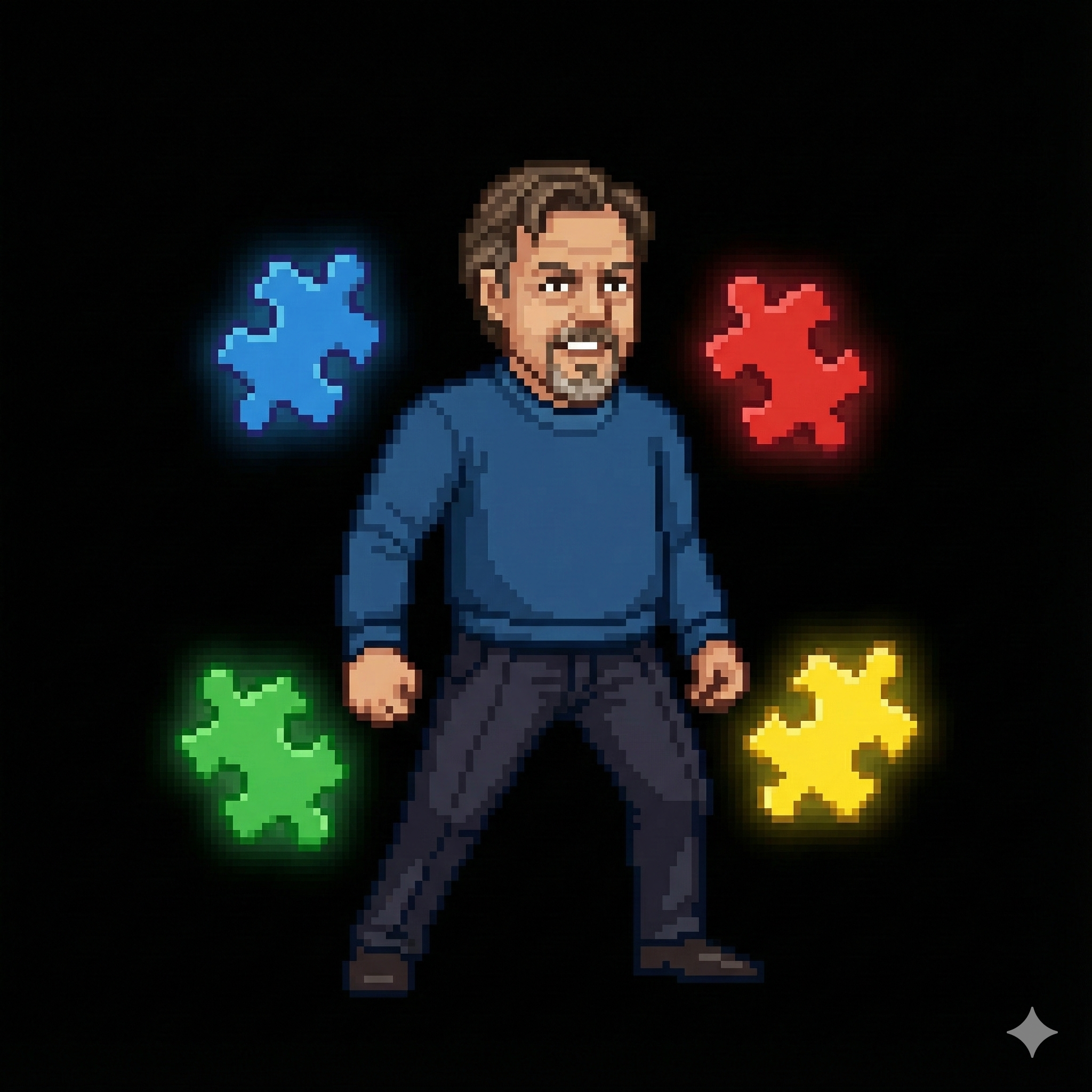
Richard Schwartz discovered Internal Family Systems in 1982 when bulimic clients described distinct “parts” battling inside them, leading him to recognize the mind’s natural multiplicity. His development of IFS therapy, which helps Self lead an internal family of managers protecting against exiled pain and firefighters dousing emotional flames, has revolutionized how millions understand their inner conflicts. From failed outcome study to global therapeutic movement, Schwartz demonstrated that beneath protective parts, everyone possesses undamaged Self capable of healing.
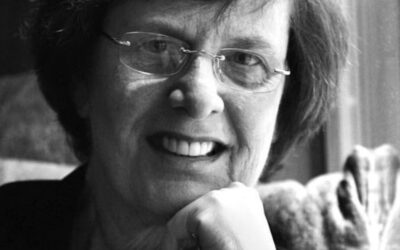
Francine Shapiro discovered EMDR during a walk in 1987 when she noticed eye movements reduced disturbing thoughts. Her development of Eye Movement Desensitization and Reprocessing revolutionized trauma treatment, creating the first therapy to demonstrate rapid resolution of PTSD through bilateral stimulation activating the brain’s adaptive information processing system. Now recommended by WHO and DOD, EMDR has helped millions worldwide process traumatic memories that talking therapy couldn’t reach.

Janina Fisher revolutionized complex trauma treatment by integrating structural dissociation theory with parts work and somatic interventions. Discover her Trauma-Informed Stabilization Treatment (TIST) approach showing how recognizing fragmented selves as protective adaptations rather than pathology transforms healing for clients with treatment-resistant symptoms including self-harm, addiction, and chronic suicidality.

The Geology of the Grotesque The folklore of Birmingham, Alabama, occupies a unique stratum within the broader canon of Southern Gothic narrative. Unlike the coastal haunts of Charleston or Savannah, which are steeped in the aristocratic decay of the antebellum rice...

Joel Blackstock explains why talk therapy fails to heal trauma by using the metaphor of the CPU vs. the GPU. Learn how the brain stem processes reality and why we need somatic approaches to access implicit memory.
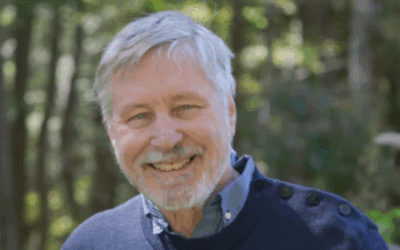
Bessel van der Kolk revolutionized trauma treatment by proving trauma lives in the body. Discover his groundbreaking research on EMDR, yoga, neurofeedback, and MDMA therapy that transformed PTSD treatment and validated somatic approaches to healing developmental trauma.
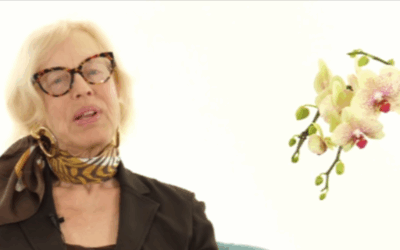
Pat Ogden pioneered Sensorimotor Psychotherapy, revolutionizing trauma treatment by recognizing that traumatic memories encode in the body as physical patterns and defensive responses. Discover how her bottom-up approach uses mindful somatic awareness to heal wounds that talk therapy cannot reach.
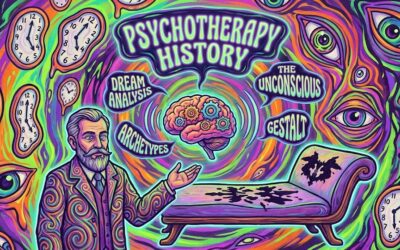
A critical deep dive into the hidden history of psychotherapy, exploring how the personal traumas of founders like Freud and Jung collided with societal forces to shape modern mental health. Drawing on the works of Adam Curtis, James Hillman, and Sonu Shamdasani, this article traces the shift from the “architecture of the soul” to the “technocratization of care,” exposing the impact of profit motives and algorithmic logic while proposing a metamodern path forward for the profession.

Daniel Siegel pioneered interpersonal neurobiology, revealing how integration of differentiated neural systems creates mental health. Discover his groundbreaking work on mindsight, the Wheel of Awareness practice, attachment neuroscience, and how relationships literally shape brain development throughout life.
When Stephen Porges began studying heart rate variability in newborn infants in the early 1970s, he noticed something curious. Babies whose heart rates fluctuated rhythmically with their breathing, a phenomenon called respiratory sinus arrhythmia, responded better to...
Explore the life and legacy of Sándor Ferenczi the pioneer of trauma therapy and relational psychoanalysis. Discover his theories on the confusion of tongues the wise baby and the active technique that revolutionized mental health care.
Peter Levine revolutionized trauma treatment through Somatic Experiencing, proving trauma lives in the body’s nervous system. Discover how his work on completing frozen defensive responses, titration, and the SIBAM model provides somatic grounding for Jungian depth psychology and transforms PTSD healing.
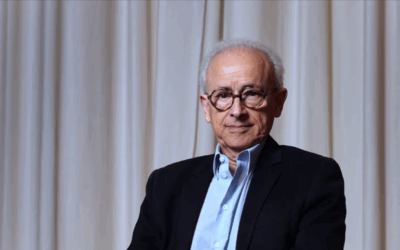
Antonio Damasio revolutionized neuroscience by proving emotions guide rational thought through bodily signals. Discover how his somatic marker hypothesis validates Jung’s depth psychology and transforms trauma therapy through understanding interoception and embodied consciousness.
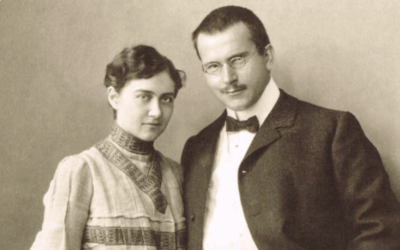
A comprehensive biography of Toni Wolff, the co-architect of Analytical Psychology. Explore her Structural Forms of the Feminine Psyche, her collaboration with Carl Jung, and the clinical relevance of her theories for modern therapy and self-discovery.

The Father Wound creates an ‘armored heart,’ blocking intimacy and vulnerability in adult relationships. Explore how this wound manifests as emotional avoidance or anxious approval-seeking, and how somatic therapy can help melt the defenses.

The Father Wound is a rupture in internal authority, leading to perfectionism, rebellion, or a failure to launch. Explore the archetype of the ‘Absent King,’ how it manifests in career and ambition, and somatic paths to self-initiation.

Does the Mother Wound sabotage your friendships and relationships? Learn 10 ways unhealed childhood trauma creates unfair emotional expectations, and how somatic therapy with Robin Taylor can help you break the pattern.

The ‘Mother Wound’ is a primal rupture in the psyche, leading to perfectionism, addiction, and a feeling of emptiness. Explore the ‘Dead Mother Complex’ and how to heal the void.

Do you feel fundamentally flawed? Toxic shame is a biological ‘freeze’ state, not a character defect. Learn the neuroscience of the shame spiral and somatic tools to heal it.

Explore how technological delusions in psychosis evolved from the 1810 Air Loom to modern simulation theory, revealing deep truths about technology’s impact on the human psyche and offering insights for healing in the digital age.
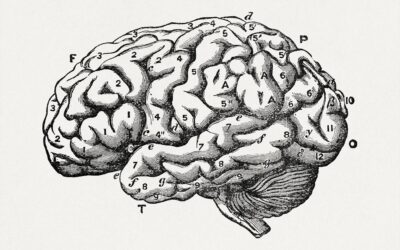
Why don’t wild animals get PTSD? Discover the biological mechanism of ‘Completing the Stress Cycle’ and how somatic exercises can release trapped trauma.
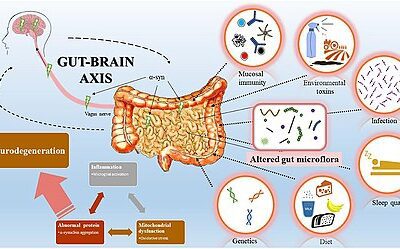
Is your depression actually inflammation? Discover the Gut-Brain Axis, how gluten triggers ‘brain fog,’ and the nutritional psychiatry approach to healing via B12 and Zinc.

Is your attachment style actually a nervous system state? Learn the biology of Anxious (Fight/Flight) and Avoidant (Freeze) attachment and how somatic therapy heals relationships.

Does meditation make you anxious or dissociated? You aren’t doing it wrong. Learn why standard mindfulness can trigger trauma and how to practice safely with ‘Trauma-Informed’ modifications.

Is your depression actually ‘anger turned inward’? Learn why healthy aggression is vital for safety and boundaries, and use somatic tools to reclaim your biological ‘No.’

Stop panic attacks instantly using biology, not willpower. Learn 5 clinical somatic grounding techniques (Cold Water, Voo Sound, Orienting) to reset your nervous system.
A comprehensive exploration of psychology topics spanning the breadth of human experience, from fundamental concepts like memory and emotion to specialized areas like forensic psychology and environmental mental health.
Explore the fascinating world of psychology, from depth psychology and symbolism to cognitive, social, and developmental theories. Uncover the mysteries of the human mind and behavior.
Explore Jungian concepts such as archetypes, the collective unconscious, and individuation. Learn how dream analysis and symbolism facilitate self-awareness and personal growth through the insights of Carl Jung.
Explore the significance of dreams in depth psychology, from Freud’s dream interpretation to Jungian archetypes. Learn how dreams provide insights into the unconscious mind, personal growth, and trauma healing.
Uncover the profound language of symbolism and meaning-making in the human psyche. Explore universal archetypes, myths, and metaphors through depth psychology and the symbolic dimensions of trauma.
Journey into the captivating world of classical mythology, focusing on the rich traditions of ancient Greece and Rome. Explore how myths offer profound insights into the human condition and universal themes.
Explores the frontier of evidence-based practice in psychotherapy, taking a fresh look at the scientific foundations of mental health treatment through the integrative lenses of depth psychology and trauma neurology.
Examines the complex landscape of research-informed therapy while critically evaluating the limitations, biases, and cultural considerations that shape how we apply research findings to real-world clinical practice.
Explore existentialism, metaphysics, ethics, and the philosophy of mind. Discover insights from renowned thinkers and engage in thought-provoking discussions.
Explore phenomenological and existential approaches to understanding human experience and psychological healing, focusing on lived experience, authenticity, freedom, and meaning-making.
Examine how post-postmodern frameworks illuminate contemporary mental health challenges including cultural displacement, narrative fragmentation, authenticity struggles, and the oscillation between hope and despair.
Explore the psychological dimensions of cultural paradigms and their impact on identity, meaning-making, and therapeutic practice.
Delve into the intricate relationship between brain function, trauma, and mental health treatment. Discover insights into innovative therapeutic approaches, neuroplasticity, and the role of emotions in healing.
Explore the hidden dimensions of film and TV through the lenses of depth psychology and trauma neurology. Discover how the moving image reflects and shapes the psyche, both individually and collectively.
Explore the profound psychological and symbolic impact of media and culture on our individual and collective psyche. Uncover the hidden meanings and archetypal themes woven into the fabric of our cultural landscape.
Explore Industrial-Organizational Psychology, focusing on workplace performance, employee well-being, leadership development, and organizational culture.
Explore the psychology of design and architecture, from the emotional impact of spaces to human-centered design. Learn how architecture influences mental health, well-being, and behavior.
Explore how colors influence psychological experience, from the neurological mechanisms behind color perception to practical applications in therapeutic environments and creative healing approaches.
Explore the symbolic significance and psychological undercurrents of historical events through the lens of depth psychology, symbolism, and design psychology.
Examine the psychological dynamics behind conspiracy thinking, critical thinking, and the appeal of alternative narratives in contemporary culture.
Embark on a fascinating journey into the deep history of the human psyche, exploring how anthropology and evolutionary psychology shed light on ancient origins of modern minds, behaviors, and cultures.
Discover the transformative power of Christian mysticism and contemplative spirituality, exploring how practices like centering prayer and lectio divina can heal trauma and facilitate encounters with the deep Self.
Explore the intersection of spirituality and depth psychology to uncover the role of spiritual practices in trauma healing, consciousness, and personal transformation.
Discover the universal quest for meaning, transcendence, and healing across spiritual traditions, exploring key practices and insights from world religions through depth psychology and trauma neurology.
Examine the psychological dimensions of mystical experience and spiritual teaching across various traditions and historical periods.
Explore the shadowy psychodynamics of coercive control, from cults to abusive relationships. Learn to recognize red flags of undue influence and support recovery processes.
Trace the evolution of psychotherapy through the lens of depth psychology and symbolism, from Freudian psychoanalysis to contemporary approaches.
Explore the lives and contributions of influential figures who shaped the field of psychology and psychotherapy.
Explore depth psychology, CBT, humanistic therapies, and more. Discover how various therapeutic approaches promote healing and personal growth.
Discover a deeper approach to health and healing by exploring alternative medicine practices and holistic wellbeing through the lenses of depth psychology and trauma neurology.
Comprehensive collection of guided meditations designed to support mental health, emotional regulation, and spiritual well-being.