
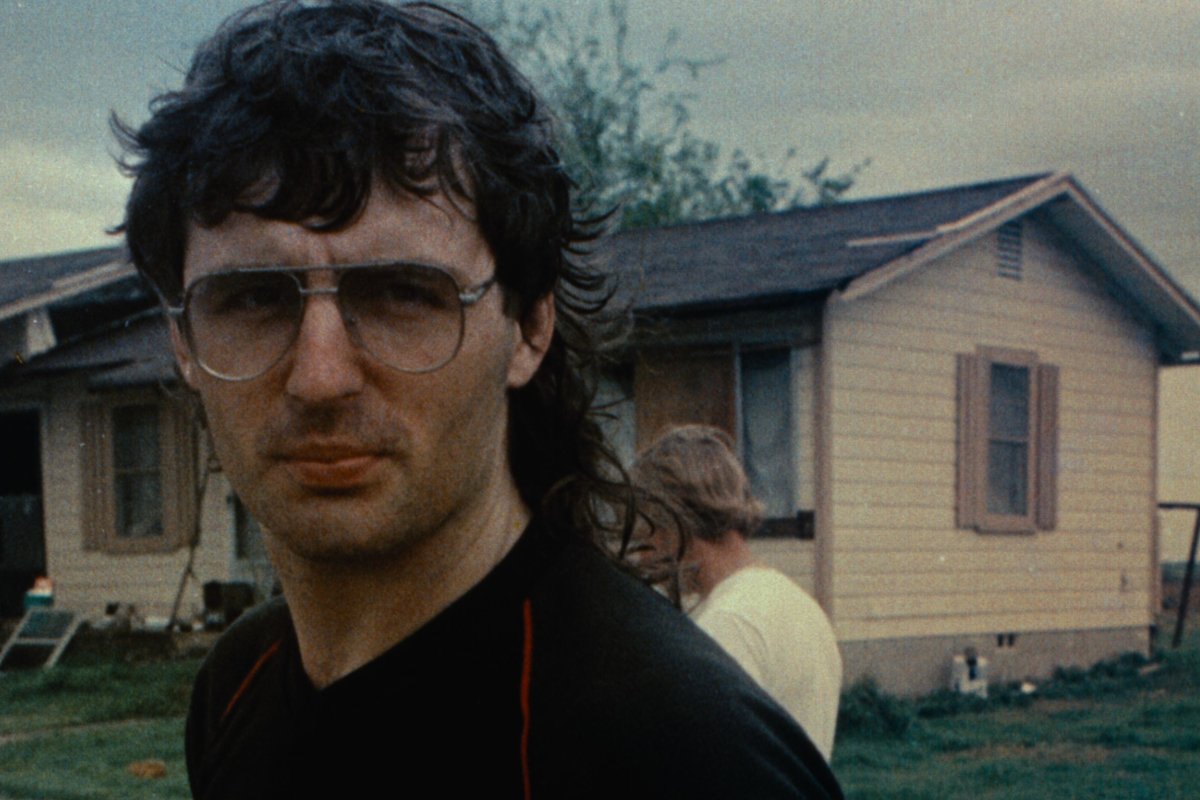
The cult psychology of the Branch Davidians is the story of how David Koresh, a dyslexic Texas drifter who knew the Bible by heart, persuaded about 130 people to treat him as the final prophet, give him their wives and daughters, and stay inside Mount Carmel through a 51-day siege that ended on 19 April 1993 with 76 dead. The same methods of control appear in smaller form wherever people hand over their judgement.
Key takeaways
- David Koresh, born Vernon Howell in 1959, joined the Branch Davidians in 1981 and won control of Mount Carmel after a long struggle with George Roden.
- Koresh claimed to be the Lamb who could open the Seven Seals, and his 1989 New Light teaching gave him sexual access to the group’s women and girls.
- Isolation, sacred doctrine, sexual control and apocalyptic urgency held members, the same patterns found in other high-control groups and abusive relationships.
- The 1993 ATF raid and 51-day FBI siege ended in a fire on 19 April that killed 76 people, including Koresh and more than 20 children.
- Survivors of high-control groups often carry complex trauma, shame and grief, which body-based and depth-oriented therapy can help resolve.
Who was David Koresh?
The Waco siege shocked the world, but the tactics Koresh used to hold his followers were not unique. Isolation, a special identity, sexual control and a deadline set by the end of the world turn up in other high-control groups, in abusive relationships, in manipulative political and religious movements and even in pushy sales. To see why people followed him, it helps to start with his life and with the older apocalyptic tradition he took over.1
Early life
Koresh was born Vernon Wayne Howell in Houston on 17 August 1959. His mother, Bonnie Sue Clark, was 14; his father, Bobby Wayne Howell, was 20 and soon left. Around 1962 his mother moved to Dallas and left him with her mother, who for a time let him believe she was his mother. When Bonnie married Roy Haldeman in 1964 she took her son back, and the household that followed was marked by conflict with his stepfather. Koresh later said he was sexually abused by a male relative in those years.3
At school he struggled with dyslexia, was placed in special education classes and was teased by other children. He left Garland High School before graduating and drifted between jobs. What he did have was the Bible. Raised around his mother’s Seventh-day Adventist faith, he memorized long passages of scripture, and that fluency became the source of his authority. He also loved rock music and played guitar for the rest of his life, and in the 1980s he recruited musicians and seekers in California.3
Joining Mount Carmel
After the local Adventist congregation expelled him, partly over his insistence that God meant him to have the pastor’s teenage daughter, Howell moved to Waco in 1981 and joined the Branch Davidians at the Mount Carmel Center. The group was an offshoot of an offshoot: Victor Houteff had founded the Davidian Seventh-day Adventists in the 1930s, and Benjamin Roden broke from them in 1955 to form the Branch. After Benjamin’s death in 1978 his widow, Lois Roden, led the community. She took Howell under her wing, and by several accounts the two had a sexual relationship when she was in her late sixties. In 1983 she let him begin teaching.13
The struggle with George Roden
Lois’s son George Roden expected to inherit the group and saw Howell as an interloper. In 1984 Howell married Rachel Jones, then 14, and the community split; George Roden drove Howell’s faction off the property at gunpoint. Howell and about 25 followers lived in buses and tents near Palestine, Texas. In 1985 he travelled to Israel, where he said he received a revelation that he was the anointed one of the last days. Lois Roden died in 1986. In November 1987 Howell and seven armed followers went back to Mount Carmel, after Roden had exhumed the body of a long-dead member, Anna Hughes, and challenged Howell to raise her. A gunfight left Roden wounded. At the 1988 trial for attempted murder the seven followers were acquitted and the jury deadlocked on Howell. Roden was jailed for contempt of court, and in 1989 he killed a man with an axe and was found not guilty by reason of insanity. Howell’s group paid the back taxes on Mount Carmel and took over the property.13
A new name and a cosmic role
In 1990 a California court granted Howell’s petition to become David Koresh. David pointed to the line of King David, from which the messiah was to come; Koresh is the Hebrew name of Cyrus, the Persian king whom Isaiah calls God’s anointed. His theology centred on the Book of Revelation. He taught that he was the Lamb of Revelation 5, the only one worthy to open the scroll with Seven Seals, and that opening the seals would unfold the final events of history, with Mount Carmel as the place where they would begin.1
Koresh was not a con man reciting lines he did not believe. Religious studies scholars James Tabor and Eugene Gallagher, who studied his tapes and writings, describe a serious, if idiosyncratic, interpreter of prophecy, which is part of why he was so persuasive to people already steeped in Adventist end-time teaching.1 His charm, apparent humility and command of scripture let him present himself as the only route to meaning, belonging and eternal life.
How did Koresh control his followers?
Robert Jay Lifton’s 1961 study of Chinese thought reform, Thought Reform and the Psychology of Totalism, named eight features of a totalist environment. Several fit Mount Carmel closely.8 The same patterns run through the site’s wider look at the psychology of cults and mind control.
- Milieu control: members lived, worked, ate and studied together on an isolated property, with long Bible studies that could run far into the night, and contact with doubting relatives was discouraged.
- Sacred science: Koresh’s reading of the Seven Seals was treated as final truth, and only he could open it.
- Demand for purity: rules on diet, sex and conduct changed at his word, and failure to keep them was a spiritual failure.
- Doctrine over person: when a member’s own experience, marriage or conscience conflicted with the teaching, the teaching won.
- Dispensing of existence: outsiders belonged to Babylon, the doomed world; leaving meant losing salvation.
Steven Hassan, a former member of the Unification Church who became an exit counsellor, grouped the same pressures into control of behaviour, information, thought and emotion in Combating Cult Mind Control (1988).9 At Mount Carmel all four were present. Behaviour was regulated down to meals; information came mainly through Koresh; thought was shaped by hours of his teaching; and emotion was steered through fear of the end and the hope of being among the chosen.
Sexual control and the House of David
On 5 August 1989 Koresh released the “New Light” tape. In it he said God had told him to father children with the women of the group to build a House of David, a holy lineage that would rule in the coming kingdom. Marriages among members were dissolved in his teaching, the men were to stay celibate, and all the women became potential wives of Koresh. His partners included girls: Rachel’s sister Michele Jones was 12 when she became one of his “wives,” and Kiri Jewell later testified to Congress that he had abused her when she was 10. Koresh acknowledged on a videotape made during the siege that he had fathered children by several women.13
The brazenness was unusual, but the function was familiar. Sexual control binds people to a leader through shame and secrecy, breaks the loyalty between spouses, and gives the leader the only legitimate bond in the community. Abusive partners use the same lever on a smaller scale, as described in the site’s piece on the lasting impact of narcissistic abuse.
Apocalyptic urgency
Doomsday teaching adds a clock. If the end is close and only the leader knows its timing, doubt is a luxury and delay could cost your soul. Catherine Wessinger, who studied Waco alongside Jonestown, Aum Shinrikyo and the Solar Temple, classes the Branch Davidians as an “assaulted” millennial group: one whose expectation of catastrophe made outside pressure feel like confirmation, so that a raid by armed agents seemed to fulfil the prophecies Koresh had been teaching.4
The leader’s grandiosity
Koresh’s sense of being chosen fits what Heinz Kohut’s self psychology calls an unmet need for mirroring: a lonely, shamed child whose worth was rarely reflected back can grow into an adult who needs others to reflect a grand self. Followers who idealize such a leader borrow his certainty to steady their own sense of self. Some writers have also asked whether neurological factors play a part in intense religious leaders, a question taken up in whether Gastaut-Geschwind syndrome lies behind a cult leader.
Branch Davidians timeline
- 1955: Benjamin Roden forms the Branch Davidians after a split among Victor Houteff’s Davidian Seventh-day Adventists.
- 1959: Vernon Wayne Howell is born in Houston to a 14-year-old mother.
- 1981: Howell joins the Branch Davidians at Mount Carmel, then led by Lois Roden.
- 1983: Lois Roden lets Howell teach; her son George Roden opposes him.
- 1984: Howell marries Rachel Jones; George Roden forces Howell’s faction off the property.
- 1985: Howell visits Israel and says he received a revelation of his role.
- 1986: Lois Roden dies.
- 1987: Gunfight at Mount Carmel between Howell’s group and George Roden.
- 1988: Howell’s followers are acquitted and his own trial ends in a hung jury; his group takes control of Mount Carmel.
- 1989: The “New Light” tape claims all women for Koresh; Marc Breault leaves; George Roden kills a man and is ruled insane.
- 1990: Howell legally becomes David Koresh.
- 1992: Texas child protective services investigate abuse claims without result; the ATF investigates illegal weapons.
- 28 February 1993: The ATF raid; four agents and six Branch Davidians die, and the FBI begins a 51-day siege.
- 19 April 1993: The FBI inserts CS gas; fire destroys Mount Carmel, and 76 people die, including Koresh and more than 20 children. Nine escape.
- 1994: A San Antonio jury acquits eleven Branch Davidians of murder and conspiracy to murder; five are convicted of voluntary manslaughter and others on weapons charges, with sentences of up to 40 years, later reduced.
- 2000: The Danforth investigation concludes that people inside the building started the fire and that government agents did not.
The account of the fire’s origin remains disputed by some scholars, notably Stuart Wright, who has criticized the official investigations; most historians, including Kenneth Newport, accept that the fires were set inside.3713
What cultural forces shaped Waco?
In the late 1980s and early 1990s many Americans, as now, felt unmoored. Factory work was disappearing, families and churches had less hold, and the end of the Cold War took away a familiar enemy and a familiar story. Groups that promised escape from a seemingly pointless material world found an audience; Heaven’s Gate, whose 39 members died together in 1997, drew on the same hunger to transcend.
Koresh offered the isolated, disaffected and insecure a place to belong, a special identity as God’s chosen, and a part in the last act of history. His recruits were not fools. Many were educated, devout Adventists from the United States, Britain, Australia and the Caribbean, and his reading of prophecy grew directly out of a tradition they already trusted.12
The early 1990s were also a fertile time for conspiracy fears, from black helicopters and a New World Order to the moral hysteria of the Satanic Panic. The sociologists collected in Stuart Wright’s 1995 volume Armageddon in Waco show how anti-cult campaigners, sensational press coverage and government agencies each built their own story about the group, and how those stories fed one another.2 On Koresh’s side, biblical prophecy gave urgency to fears of a persecuting state, and on the government’s side, the label “cult” made negotiation over theology look pointless.
When armed agents did confront the Branch Davidians, the event confirmed Koresh’s persecution story in the eyes of his followers and of anti-government extremists. Some survivors kept their faith in him for decades. Timothy McVeigh, who visited Waco during the siege, chose the second anniversary of the fire, 19 April 1995, to bomb the federal building in Oklahoma City, killing 168 people. The way a narrative of persecution can be weaponized is the subject of cults, propaganda and lies.
Who left, and why did others stay?
In the 1970s and 1980s, families who lost a relative to a group sometimes hired “deprogrammers” to seize and confront them. That coercive practice gave way to voluntary exit counselling. Rick Ross, a deprogrammer, was consulted by the ATF and the FBI, while Marc Breault’s network of former members supplied much of the information about life inside.2
Marc Breault
Breault, a Bible student from Hawaii who had been one of Koresh’s closest associates and a recruiter, left in 1989 with his wife, Elizabeth Baranyai, after the New Light teaching. From Australia he campaigned against Koresh, persuaded several Australian members to leave, hired private investigators, gave material to journalists and in 1992 testified in a Michigan custody case that kept Kiri Jewell away from Mount Carmel.1
The Bunds family
The Bunds family shows how one household could split. Robyn Bunds bore Koresh a son, then left in 1990 and spoke publicly against him. Her mother, Jeannine Bunds, a nurse who said she had delivered several of Koresh’s children, gave an account that was quoted in the ATF affidavit. Her brother David Bunds also broke with the group, and her father, Donald Bunds, later testified that he had made gun silencers on Koresh’s orders.3
Steve Schneider
Steve Schneider, a Wisconsin-born Adventist who had studied comparative religion at the University of Hawaii, became Koresh’s chief spokesman and spoke with FBI negotiators about as often as Koresh did. Koresh had taken Schneider’s wife, Judy, as one of his wives, and she bore him a daughter. Those close to Schneider describe him as tormented by this, and FBI officials later suggested he shot Koresh and then himself on 19 April. He never left. His story shows how far loyalty can stretch against a person’s own deepest attachments.13
Those who stayed
Thirty-five people came out during the siege, 21 of them children. The rest stayed, many because they read the siege itself as the fulfilment of prophecy. The FBI treated the standoff as a hostage crisis, and negotiators privately dismissed Koresh’s talk as “Bible babble.” Tabor and the scholar Phillip Arnold took another route: in a radio broadcast they engaged Koresh on his own terms, and on 14 April he announced he would come out once he had written his interpretation of the Seven Seals. Five days later, with only the first seal finished, the tanks and gas arrived.1 Survivors such as David Thibodeau and Clive Doyle later wrote memoirs describing life inside with a mix of love, grief and, for Thibodeau, recognition that Koresh had done serious harm.56
What happened to the children of Waco?
The children who left Mount Carmel during the siege were cared for by a team led by the child psychiatrist Bruce Perry. In The Boy Who Was Raised as a Dog (2006), Perry describes children whose bodies were stuck in alarm, with resting heart rates far above normal, and who had been taught that outsiders were enemies and that their parents’ fate was in God’s and Koresh’s hands. What helped most was predictability, steady routines and letting the children approach caring adults at their own pace.10
Perry’s account is a reminder that the psychology of a group lives in nervous systems as well as beliefs. Children raised in such settings often carry fear, shame and confused ideas about sex and authority long after they leave, a pattern described in how childhood religious trauma can go unnoticed.
How do you recognize undue influence?
The violent end of the Branch Davidians was unusual; Koresh’s methods were not. The Peoples Temple, whose story is told in the cult psychology of Jonestown, ended with more than 900 deaths in Guyana in 1978. The Solar Temple lost 74 members in ritual murder-suicides between 1994 and 1997.15 Aum Shinrikyo released sarin on the Tokyo subway in 1995, a case Lifton analysed in Destroying the World to Save It (1999).14 NXIVM, whose founder Keith Raniere was convicted in 2019, used sexual control and secrecy much as Koresh did. Charles Manson’s commune, explored in the cult psychology of the Manson Family, and even a therapy community, the Sullivanian Institute, used isolation, us-versus-them thinking, control of sex and relationships, and financial exploitation.
Abusive partners isolate victims and encourage dependency. Demanding religious groups can discourage outside ties. High-pressure sales relies on scarcity and urgency. Political movements can use persecution stories and apocalyptic language to demand loyalty, which is the theme of how to avoid political cults and cults of personality. A common defensive move in all of these settings, denying, attacking and reversing victim and offender, is often called DARVO.
Healthy leaders and groups work the other way. They welcome questions and disagreement, respect personal boundaries, let members keep outside friendships and family ties, and allow people to leave without being cast as traitors. A useful test is simple: be wary of anyone who asks you to distrust your own judgement and to cut off the people who care about you.
Leaders as extreme as Koresh are rare, but small versions of his playbook are everywhere. Understanding how he held people, and what it cost them, sharpens discernment. The burned ground at Mount Carmel is a grim reminder of what happens when people surrender their autonomy to someone else’s apocalyptic dream.
How does therapy help survivors of high-control groups?
People who leave high-control groups rarely walk out free. A study of 31 former cult members by Morgane Rousselet and colleagues found that membership worked much like an addiction: it brought relief at first, persisted despite harm, filled members’ thoughts and often left them with psychiatric problems and few resources when they left. Contact with someone outside the group was one of the strongest factors in getting out.12 Psychiatrist Judith Herman placed survivors of coercive groups alongside hostages and survivors of domestic abuse, people whose trauma came from prolonged captivity and control rather than from a single event.11 The result is often what clinicians now call complex PTSD.
In practice, that means survivors often arrive with:
- shame and guilt about what they did, saw or allowed while inside;
- a body that still reacts to authority, raised voices or religious language as danger;
- grief for the community, the certainty and sometimes the leader they have lost;
- difficulty trusting their own judgement, since it was the thing they were taught to suspend;
- loaded language from the group that still triggers old thinking.
At Taproot we treat these reactions as stored survival responses, not as weaknesses. With Brainspotting for trauma, EMDR and somatic work, we help the body discharge the alarm left by years of fear and sudden loss, so that a hymn, a sermon or a confident speaker no longer sends a person back inside. Parts work helps clients meet the part of them that loved the group and the part that is furious at it, without forcing either to win. Jungian and existential therapy give room for the larger questions a group answered too neatly: what is sacred, what is my life for, and how do I live with uncertainty.
Recovery from a group like the Branch Davidians is slow because the group answered real needs for meaning and belonging. We aim to help people find those things again on their own terms, with their judgement restored. If that is work you want to begin, you can contact Taproot Therapy Collective.
Frequently asked questions
What did the Branch Davidians believe?
The Branch Davidians were an offshoot of the Davidian Seventh-day Adventists, formed by Benjamin Roden in 1955. Under David Koresh they believed the end of the world was near and that Koresh was the Lamb of Revelation, the only person able to open the Seven Seals and reveal the final events of history, which they expected to begin at Mount Carmel near Waco, Texas.
How many people died at Waco in 1993?
Four ATF agents and six Branch Davidians died in the raid on 28 February 1993. On 19 April 1993, after the FBI inserted CS gas, fire destroyed Mount Carmel and 76 Branch Davidians died, including David Koresh and more than twenty children. Nine people escaped the fire, and 35 had left during the siege.
What was the New Light doctrine?
The New Light was a teaching David Koresh announced on an audiotape on 5 August 1989. He said God had told him to father children with the group’s women to create a holy House of David. Members’ marriages were dissolved, the other men were told to be celibate, and Koresh took wives who included underage girls.
Who left the Branch Davidians before the siege?
Marc Breault, once one of David Koresh’s closest associates, left in 1989 after the New Light teaching and campaigned against him from Australia. Members of the Bunds family, including Robyn Bunds, who had borne Koresh a son, also left and spoke out, and their accounts helped shape the ATF investigation.
Why do people stay in cults like the Branch Davidians?
People stayed with the Branch Davidians because the group met real needs for meaning, belonging and a special role in God’s plan. Isolation, long teaching sessions, sexual control and fear of the coming end made doubt feel dangerous, and the 1993 siege seemed to many members to confirm Koresh’s prophecies rather than refute them.
Related reading
- Positive Psychotherapy: Harnessing Strengths for Flourishing
- The Metamorphosis of the Therapeutic Hour: Why Generation Z Demands a New Psychology
- Radically Open Dialectical Behavior Therapy (RO-DBT): An Innovative Treatment for Disorders of Overcontrol
- City Beautiful Movement: Urban Grandeur and Social Reform
- David Grand: From EMDR Trainer to Brainspotting Pioneer Through a Champion Skater’s Frozen Gaze
- Claude Shannon and Warren Weaver: Architects of Information Theory
References
- Tabor, J. D., & Gallagher, E. V. (1995). Why Waco? Cults and the battle for religious freedom in America. University of California Press.
- Wright, S. A. (Ed.). (1995). Armageddon in Waco: Critical perspectives on the Branch Davidian conflict. University of Chicago Press.
- Newport, K. G. C. (2006). The Branch Davidians of Waco: The history and beliefs of an apocalyptic sect. Oxford University Press.
- Wessinger, C. (2000). How the millennium comes violently: From Jonestown to Heaven’s Gate. Seven Bridges Press.
- Thibodeau, D., & Whiteson, L. (1999). A place called Waco: A survivor’s story. PublicAffairs.
- Doyle, C., Wessinger, C., & Wittmer, M. D. (2012). A journey to Waco: Autobiography of a Branch Davidian. Rowman & Littlefield.
- Danforth, J. C. (2000). Final report to the Deputy Attorney General concerning the 1993 confrontation at the Mt. Carmel Complex, Waco, Texas. Office of Special Counsel.
- Lifton, R. J. (1961). Thought reform and the psychology of totalism: A study of “brainwashing” in China. W. W. Norton.
- Hassan, S. (1988). Combating cult mind control. Park Street Press.
- Perry, B. D., & Szalavitz, M. (2006). The boy who was raised as a dog: And other stories from a child psychiatrist’s notebook. Basic Books.
- Herman, J. L. (1992). Trauma and recovery. Basic Books.
- Rousselet, M., Duretete, O., Hardouin, J. B., & Grall-Bronnec, M. (2017). Cult membership: What factors contribute to joining or leaving? Psychiatry Research, 257, 27-33. https://doi.org/10.1016/j.psychres.2017.07.018
- Wright, S. A. (2009). Revisiting the Branch Davidian mass suicide debate. Nova Religio, 13(2), 4-24. https://doi.org/10.1525/nr.2009.13.2.4
- Lifton, R. J. (1999). Destroying the world to save it: Aum Shinrikyo, apocalyptic violence, and the new global terrorism. Metropolitan Books.
- Mayer, J.-F. (1999). “Our terrestrial journey is coming to an end”: The last voyage of the Solar Temple. Nova Religio, 2(2), 172-196. https://doi.org/10.1525/nr.1999.2.2.172















0 Comments