
The Order of the Solar Temple was a neo-Templar esoteric group founded in Geneva in 1984 by Joseph Di Mambro and Luc Jouret. Between 1994 and 1997, 74 of its members and their children died in murders and ritual suicides in Switzerland, Quebec and France. Its psychology shows how secret knowledge, staged miracles, isolation and apocalyptic fear can lead ordinary, educated people to accept death as a spiritual “transit.”
Key takeaways
- The Order of the Solar Temple was founded in Geneva in 1984 by Joseph Di Mambro and Luc Jouret, drawing on Templar, Rosicrucian, Gnostic and New Age ideas.
- Between 1994 and 1997, 74 members and children died in Switzerland, Quebec and France, including 53 in October 1994.
- Di Mambro controlled money, relationships and access to the Masters, and staged apparitions with lighting and projection equipment.
- Lifton’s totalism criteria, Lalich’s bounded choice and Stark’s coercive control explain how ordinary people came to accept death as a spiritual transit.
- Recovery after a high-control group means honouring the needs that drew a person in while working through the projections, grief and bodily fear left behind.
What was the Order of the Solar Temple?
The group’s French name was the Ordre du Temple Solaire, usually shortened to OTS. It presented itself as the modern continuation of the medieval Knights Templar, guided by invisible spiritual Masters, and it taught that a cycle of history was closing and that a chosen few would be carried to a higher plane. Its members were not drifters. Many were middle-class professionals, civil servants, business owners and their families in Switzerland, France and French-speaking Canada.2
The OTS matters to anyone interested in the psychology of belief because it ended so differently from how it began. For most of its life it looked like one more lodge offering lectures on health, ecology and self-development. The violence of 1994 grew out of a slow inner process: a closed circle, a leader whose authority could not be questioned, and a worldview that turned outside criticism into proof of persecution.1 Historians of religion such as Jean-François Mayer and Massimo Introvigne studied the group closely, and their work, along with the documents the leaders left behind, is the basis of what follows.
What did the Solar Temple borrow from other belief systems?
Scholars describe the OTS as a typical product of what sociologists call the “cultic milieu,” the loose underground of occult, esoteric and alternative ideas from which small groups assemble their teachings. Very little in its doctrine was new. What was distinctive was the way its leaders combined borrowed elements and the purpose they finally gave them.3
Gnostic and Rosicrucian ideas
From the Gnostic tradition came the idea that salvation depends on secret knowledge revealed only to initiates, and that the material world is a kind of exile for a divine spark. Much of the ritual style came from Rosicrucianism: Di Mambro had spent years in the Ancient and Mystical Order Rosae Crucis (AMORC), and its graded lessons, robes and talk of hidden Masters shaped everything he built afterwards.1
The Templar myth
The OTS claimed descent from the Knights Templar, the crusading order suppressed by the papacy in 1312, whose last Grand Master, Jacques de Molay, was burned in Paris in 1314. Belief in a secret Templar survival had circulated in European esotericism since the eighteenth century, and in the twentieth century several “Renewed” or “Sovereign” Templar orders appeared in France. The OTS borrowed their capes, swords, crosses and ascending degrees of initiation, and it organised members into a hierarchy in which each grade received more of the hidden teaching.2
New Age, astrology and natural medicine
Jouret brought the vocabulary of the 1980s New Age: holistic health, homeopathy, ecology, the coming Age of Aquarius. Astrological and numerological symbolism ran through the group’s calendar, and dates of rituals were chosen by solstices and equinoxes. Readers who want to see how astrology can be used thoughtfully as a language of meaning, rather than as a tool of control, can compare Richard Tarnas’s cultural history through astrology. The OTS’s own innovation was a ritual drama of “transit,” a passage through fire and death to a new world, which the leaders developed in the final years.1
It is also worth separating this kind of borrowed esotericism from the serious study of myth and symbol. The confusion of the two is old, and the confusion between Jung and the New Age is a good example of how real psychological ideas get absorbed into spiritual marketing.
Who was Joseph Di Mambro?
Joseph Di Mambro was born on 19 August 1924 in Pont-Saint-Esprit, in southern France. He trained as a jeweller and watchmaker. In the 1950s he joined AMORC, where he absorbed the Rosicrucian model of secret teachings passed down by an invisible hierarchy of Masters. In the early 1970s he was convicted in France of fraud, including posing as a psychologist, and he moved across the border near Geneva.1
He spent the next decade building small communities. In 1973 he founded the Centre for the Preparation of the New Age, and later a community called the Pyramid. On 12 July 1978 he set up the Golden Way Foundation in Geneva, which became the financial and residential core of his movement. Di Mambro claimed contact with the Masters, claimed earlier incarnations, and presented his daughter Emmanuelle, born in 1982, as a “cosmic child” with a special destiny.2
Did Di Mambro have a personality disorder? No clinician ever assessed him, and a responsible writer cannot diagnose a dead man from his biography. What the record does show is a pattern that fits what psychoanalysts call grandiosity: a need to be the indispensable channel between his followers and the divine, extreme sensitivity to challenge, and a willingness to manufacture evidence for his own specialness. In the language of Heinz Kohut’s self psychology, he offered himself as an idealised figure for others to merge with, and he depended on their admiration to hold himself together.10
Luc Jouret, the public face
Luc Jouret was born on 18 October 1947 in Kikwit, in what was then the Belgian Congo. He studied medicine at the Free University of Brussels and practised homeopathy, and by the early 1980s he was a popular lecturer on natural medicine and spirituality in Switzerland, France, Belgium and Quebec. He was not the movement’s banker. The money came from Di Mambro’s foundations and from wealthy members who gave their savings. Jouret’s role was charisma: he was the speaker who drew audiences, and his lectures on health were the doorway through which most recruits entered.3
Di Mambro remained the real authority behind the scenes. Mayer’s research shows a division of labour that recurs in many groups: a visible, persuasive teacher and a hidden controller who manages money, residence, sexual and marital arrangements, and access to the “Masters.”1
How did Di Mambro control his followers?
The OTS used methods that researchers of high-demand groups have described for decades. The psychiatrist Robert Jay Lifton, studying Chinese thought-reform programs, named eight features of what he called ideological totalism. Several of them fit the Solar Temple closely.7
- Milieu control. Inner members lived in group houses, worked in group businesses and handed over money, so that almost all information and relationships passed through the group.
- Mystical manipulation. In ceremonies, members saw apparitions of the Masters, glowing objects and a sword of light. These were produced with lighting and projection equipment, a deception later exposed from inside the group.
- Demand for purity. Members were graded by spiritual readiness, and impurity could be named by the leader at any time.4
- Sacred science. The doctrine was presented as ancient, hidden truth beyond ordinary criticism.
- Dispensing of existence. Outsiders and defectors were described as lost souls or traitors, a judgment that became literal in 1994.
Di Mambro also arranged couples, separated partners and decided who could have children, a pattern Susan Palmer analysed as the group’s “purity and danger” logic.4 Recruits were welcomed warmly and made to feel chosen, then drawn into a life where the group became their family. Initiations were timed by astrological events, and members were taught that they were bound to each other by cosmic ties from past lives, which made leaving feel like a betrayal of eternity rather than a change of address.
The sociologist Janja Lalich calls the end state “bounded choice”: members still feel they are choosing freely, but every option they can imagine has been shaped by the group’s framework.8 Evan Stark’s concept of coercive control, developed to describe abusive relationships, describes the same mechanics at the scale of a couple: isolation, micro-regulation of daily life, and the gradual removal of the resources a person would need to leave.9 These frameworks are discussed more broadly in the psychology of cults and mind control.
Timeline of the Order of the Solar Temple
- 1973 to 1978. Di Mambro founds the Centre for the Preparation of the New Age, the Pyramid community and, in July 1978, the Golden Way Foundation in Geneva.
- Early 1980s. Jouret joins Di Mambro’s circle and briefly leads a French neo-Templar group, the Renewed Order of the Temple, before a split.
- 1984. Di Mambro and Jouret found the Order of the Solar Temple in Geneva, with lodges soon in Switzerland, France and Quebec, and smaller contacts elsewhere.
- Late 1980s. Membership peaks at a few hundred people. The group buys property, including houses in rural Quebec and Switzerland.
- 1990 to 1993. Defections grow. Di Mambro’s own son Elie leaves and others question the staged apparitions. Tony and Nicky Dutoit, who had helped with the ritual effects, leave and have a son.
- March 1993. Two members are arrested in Quebec trying to buy handguns with silencers; Jouret is charged in the same case. All receive probation and fines, and the press coverage ends Jouret’s public career.6
- 30 September to 5 October 1994. Five people die at Morin-Heights, Quebec, including the Dutoits and their infant son. On the night of 4 to 5 October, 23 die at a farm in Cheiry and 25 in chalets at Granges-sur-Salvan, Switzerland: 53 deaths in all, among them Di Mambro and Jouret.2
- December 1995. Sixteen members, including children, are found dead in the Vercors mountains near Grenoble, France.
- March 1997. Five more die in a house fire at Saint-Casimir, Quebec. Three teenagers persuade their parents to let them live and survive.1
Investigators found that many of the Swiss dead had been drugged or shot, and that the Morin-Heights victims had been killed days before the fires. Before the fires, the leaders mailed final letters to journalists and scholars explaining the “transit” and denouncing the persecution they believed the group had suffered.1
Why did the Solar Temple appeal in the 1980s and 1990s?
The OTS grew in a period of economic recession, the slow collapse of church attendance in French-speaking Europe and Quebec, and the spread of individual, mix-and-match spirituality. Quebec had secularised with unusual speed after the Quiet Revolution of the 1960s, leaving many people with a religious hunger and no institution to hold it. Jouret’s lectures on health and ecology met that hunger in a familiar, respectable form.6
Apocalyptic expectation was also in the air. As the year 2000 approached, many esoteric and New Age groups spoke of a coming catastrophe and a new age beyond it. The OTS combined environmental fear with cosmic hope: the Earth was being destroyed, and the elect would leave it for a higher world associated with the star Sirius. For people unsettled by rapid social change, that story turned anxiety into a mission.3
Psychological perspectives: why did people follow?
The idealised father
From a depth psychology perspective, Di Mambro offered himself as an all-knowing father who could protect and enlighten his “children.” Followers who had grown up with absent, unreliable or harsh fathers could place their longing for a trustworthy authority onto him. Jungians describe this as projecting the archetype of the wise old man or the guru onto a living person, which gives that person enormous power. The wider cultural version of this wound is discussed in how the father wound creates a crisis of authority.
Containing death anxiety
The rituals and mythology also gave members a way to hold existential anxiety. Ernest Becker argued in The Denial of Death that human beings build “immortality projects,” systems of meaning that promise the self will outlast the body.11 The OTS offered an unusually literal one: a cosmic drama of reincarnation, initiation and stellar ascent in which members were heroes of a story older than history. Becker’s account of the denial of death helps explain how a promise of transcending death could finally make death itself look like the goal.
A surrogate family and an ancient lineage
On a social level, the group gave people who felt alienated from mainstream society a family, a rank and a history. The invented Templar lineage told members that they belonged to an order nine centuries old at a time when their own futures felt uncertain.5 In a world that felt out of control, the group promised a way to regain power and “graduate” to the next level of existence.
Adjacent cultural phenomena
The Solar Temple was one expression of a wider fascination with secret history and conspiracy in the 1980s and 1990s. Books such as The Holy Blood and the Holy Grail (1982) popularised the idea that the Templars guarded hidden truths, and that fantasy gave the OTS’s claims a ready audience. The way such stories carry real emotional truth while getting the facts wrong is explored in Adam Curtis and the language of conspiracy theory.
The OTS also overlapped in time with the North American Satanic Panic, a moral panic about secret occult abuse. The two movements fed on the same climate: a belief that hidden groups were doing hidden things. After 1994 the deaths fed a European panic of their own. France’s 1995 parliamentary commission on cults, and the list of groups it published, drew heavily on the Solar Temple tragedy, as Palmer has documented.12
Like other communities of its era, the OTS cultivated a back-to-the-land survivalism: rural houses, self-sufficient farming, preparation for collapse. Unlike most, it joined that ethos to the belief that salvation finally required leaving the Earth. That links it to the UFO religions of the same decades, which fused New Age spirituality with contact from higher beings. The OTS spoke of Masters and Sirius rather than spacecraft, but its cosmology of beings guiding humanity from beyond the planet was similar, and the 1997 Heaven’s Gate suicides in California were soon compared with it.6
How did the Solar Temple end?
Di Mambro himself organised the 1994 killings and died with his followers at Granges-sur-Salvan; Jouret died there too. Introvigne and Mayer argue that the deaths cannot be explained by one cause. A leader in failing health, a group shrinking through defection, the humiliation of the arms case, financial disputes and the exposure of the staged miracles all pushed Di Mambro to turn the long-promised “transit” into an event he could control.3
The murder of the Dutoit family showed how the doctrine had turned on its own. The couple had left, revealed the stage effects and had a child against Di Mambro’s wishes, and the baby, Christopher Emmanuel, was reportedly cast as an Antichrist figure. His killing, and the deaths of other children, destroyed whatever legitimacy the group had left.2
After 1994 families, police and counsellors worked with surviving members, and some left with the help of relatives, therapy or their own growing doubts. A core could not let go of the belief that the leaders had passed to a higher world and were waiting for them. Those believers died in the Vercors in 1995 and at Saint-Casimir in 1997. The Swiss conductor Michel Tabachnik, a former member, was tried in France over the Vercors deaths and acquitted in 2001 and again on appeal in 2006.12
What are the warning signs of a coercive group?
The Solar Temple shows warning signs that apply well beyond this one case: a charismatic leader who demands unquestioning obedience, teachings that only the leader can interpret, isolation from former friends and family, control of money and relationships, and an us-against-them story in which critics are enemies. The same pattern appears in very different settings, from Jonestown and the Branch Davidians to Aum Shinrikyo, the Manson Family and even a therapy community, the Sullivanian Institute.
Members were drawn in by warmth and a sense of being special, then gradually trained into total devotion. Doubts were treated as spiritual failure, and black-and-white thinking replaced ordinary judgment. People had given so much money, time and identity that leaving felt impossible even when the dysfunction was obvious. Psychologists call this escalating commitment, and it explains why intelligent people stay long after they have private doubts.8
These dynamics are not limited to religious groups. They appear in abusive relationships, high-pressure political movements and workplaces that demand loyalty to a charismatic founder and punish dissent. Cults, propaganda and inner manipulation and avoiding cults of personality look at how the same mechanics work in politics.
Protection comes from keeping relationships outside any single belief system, from practising the habit of checking claims, and from noticing when a group discourages questions. People drawn to high-control groups are usually seeking meaning, belonging and purpose, which are healthy needs. Finding sound ways to meet them is the best prevention there is. As George Santayana wrote in 1905, “Those who cannot remember the past are condemned to repeat it.”13 Remembering the victims of the Solar Temple, many of them children, is part of that memory.
How do therapists help people after a high-control group?
People who leave cults, coercive relationships or controlling churches often arrive in therapy with a mix of grief, shame, panic and confusion about what they actually believe. Many describe the experience as losing a family and a universe at the same time. At Taproot we start by taking the attachment seriously: people joined because the group met real needs, and those needs do not disappear when the group does.
Depth work helps a person understand what they projected onto the leader and reclaim it as their own. In Jungian therapy we look at dreams, symbols and the longing for a guide without either mocking the spiritual hunger or handing it to a new authority. Parts work, such as IFS therapy, is useful because survivors often find a loyal part that still defends the group alongside a frightened part that wants out; both can be heard without one silencing the other.
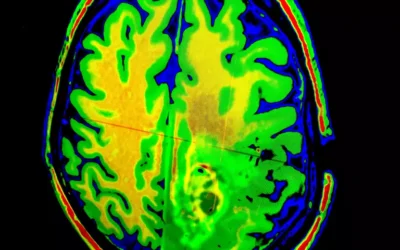
Coercive control also lives in the body. Years of hypervigilance, ritual fear and sudden punishment leave a nervous system that startles at authority or freezes at conflict. Brain-based and somatic methods such as Brainspotting, EMDR and Somatic Experiencing work with those stored reactions directly, so that insight is matched by a felt sense of safety.
The Solar Temple is a stark reminder that the search for meaning can be captured and turned against the person searching. If that search has been used against you, or you are still untangling a group, family or relationship that controlled you, you can contact Taproot Therapy Collective to talk with a therapist who understands both the spiritual longing and the harm.
Frequently asked questions
How many people died in the Solar Temple deaths?
In total 74 people connected with the Order of the Solar Temple died. In October 1994, 53 died at Morin-Heights in Quebec and at Cheiry and Granges-sur-Salvan in Switzerland. Sixteen more died in the Vercors in France in December 1995, and five at Saint-Casimir, Quebec, in March 1997, where three teenagers survived.
Who founded the Order of the Solar Temple?
The Order of the Solar Temple was founded in Geneva in 1984 by Joseph Di Mambro, a French former jeweller with a background in the Rosicrucian order AMORC, and Luc Jouret, a Belgian homeopathic doctor and lecturer. Jouret was the public speaker and recruiter, while Di Mambro held real authority, money and control behind the scenes.
What did the Solar Temple believe about Sirius?
The Solar Temple taught that the Earth was entering a final crisis and that initiated members would make a transit through fire to a higher spiritual world associated with the star Sirius. The leaders’ final letters described the 1994 deaths as this departure, presenting murder and suicide as a passage rather than an ending.
Why do educated people join cults like the Solar Temple?
Groups like the Solar Temple recruit through real needs: meaning, belonging, health, a sense of being chosen and relief from fear of death. Intelligence offers little protection once a person is isolated, invested and taught that doubt is spiritual failure. Researchers call this bounded choice, where every option feels free but has been shaped by the group.
Can therapy help someone who left a cult or controlling relationship?
Therapy can help former members of cults and coercive relationships grieve the community they lost, understand what they projected onto the leader, and calm a nervous system trained to fear authority. Depth work, parts work such as IFS, and body-based trauma methods like Brainspotting and EMDR each address a different layer of that recovery.
Related reading
- The Interpersonal Theory of Psychiatry: Harry Stack Sullivan’s Vision of the Social Self
- Yoga Therapy and Trauma-Informed Yoga: Healing Mind and Body Through Mindful Practice
- Unveiling the Power of Intensive Short-Term Dynamic Psychotherapy (ISTDP): A Comprehensive Guide
- Lacanian Psychoanalysis: A Comprehensive Overview
- Joseph Henderson: Bridging Cultural Contexts and Analytical Psychology
- Jean Baudrillard: Philosopher of Hyperreality and Simulation
References
- Mayer, J.-F. (1999). “Our terrestrial journey is coming to an end”: The last voyage of the Solar Temple. Nova Religio, 2(2), 172-196. https://doi.org/10.1525/nr.1999.2.2.172
- Introvigne, M. (1995). Ordeal by fire: The tragedy of the Solar Temple. Religion, 25(3), 267-283. https://doi.org/10.1006/reli.1995.0023
- Introvigne, M., & Mayer, J.-F. (2002). Occult masters and the temple of doom: The fiery end of the Solar Temple. In D. G. Bromley & J. G. Melton (Eds.), Cults, religion, and violence (pp. 170-188). Cambridge University Press. https://doi.org/10.1017/cbo9780511499326.010
- Palmer, S. J. (1996). Purity and danger in the Solar Temple. Journal of Contemporary Religion, 11(3), 303-318. https://doi.org/10.1080/13537909608580777
- Mayer, J.-F. (1996). Les mythes du Temple Solaire. Georg.
- Hall, J. R., Schuyler, P. D., & Trinh, S. (2000). Apocalypse observed: Religious movements and violence in North America, Europe and Japan. Routledge.
- Lifton, R. J. (1961). Thought reform and the psychology of totalism: A study of “brainwashing” in China. W. W. Norton.
- Lalich, J. (2004). Bounded choice: True believers and charismatic cults. University of California Press. https://doi.org/10.1525/california/9780520231948.001.0001
- Stark, E. (2007). Coercive control: How men entrap women in personal life. Oxford University Press. https://doi.org/10.1093/oso/9780195154276.001.0001
- Kohut, H. (1971). The analysis of the self. International Universities Press.
- Becker, E. (1973). The denial of death. Free Press.
- Palmer, S. J. (2011). The new heretics of France: Minority religions, la République, and the government-sponsored “war on sects”. Oxford University Press. https://doi.org/10.1093/acprof:oso/9780199735211.001.0001
- Santayana, G. (1905). The life of reason: Vol. 1. Reason in common sense. Charles Scribner’s Sons.


0 Comments