
Who Was John Watson
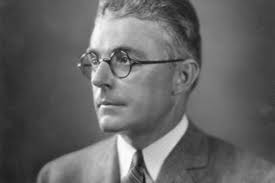
John Broadus Watson (1878-1958) was an influential American psychologist who is widely regarded as the founder of behaviorism, a school of thought that dominated psychology for much of the 20th century. Watson’s emphasis on observable behavior and environmental determinants of behavior challenged the prevailing focus on introspection and mentalism in psychology and had far-reaching implications for fields ranging from education to advertising.
1. Early Life and Academic Career
1.1. Childhood and Education
John B. Watson was born on January 9, 1878, near Greenville, South Carolina. He was the fourth of six children born to Pickens Butler Watson and Emma Kesiah Watson. Watson’s early life was marked by poverty and instability; his father was an alcoholic who struggled to maintain steady employment.
Despite these challenges, Watson excelled academically. He attended Furman University in Greenville, where he earned his master’s degree in 1899. He then went on to study psychology at the University of Chicago, earning his Ph.D. in 1903 under the supervision of James Rowland Angell.
1.2. Early Research and Academic Appointments
After completing his doctorate, Watson began his academic career at the University of Chicago, where he served as an instructor and later as an assistant professor. During this time, he conducted research on animal behavior, focusing particularly on the behavior of rats in mazes.
In 1908, Watson accepted a position at Johns Hopkins University, where he would remain until 1920. It was during his time at Johns Hopkins that Watson began to develop his behaviorist approach to psychology.
2. The Rise of Behaviorism
2.1. The Behaviorist Manifesto
In 1913, Watson published his famous article “Psychology as the Behaviorist Views It,” which has come to be known as the “behaviorist manifesto.” In this article, Watson argued that psychology should abandon its focus on introspection and mentalism and instead focus solely on observable behavior.
Watson defined behaviorism as a purely objective experimental branch of natural science, with the goal of predicting and controlling behavior. He argued that all behavior, including human behavior, could be understood in terms of stimulus-response associations and that the environment was the primary determinant of behavior.
2.2. The Little Albert Experiment
One of Watson’s most famous and controversial studies was the Little Albert experiment, conducted in 1920. In this experiment, Watson and his assistant Rosalie Rayner conditioned an 11-month-old boy, known as “Little Albert,” to fear a white rat by pairing the presentation of the rat with a loud, frightening noise.
Watson demonstrated that Little Albert’s fear generalized to other white, furry objects, such as a rabbit and a Santa Claus mask. This study was used to illustrate the principles of classical conditioning and the malleability of emotional responses.
2.3. Impact on Psychology and Beyond
Watson’s behaviorist approach had a profound impact on the field of psychology. It shifted the focus of psychological research away from introspection and toward observable behavior, setting the stage for the rise of animal research and the development of new research methods.
Behaviorism also had significant implications beyond the field of psychology. Watson’s emphasis on environmental determinants of behavior influenced approaches to education, child-rearing, and even advertising. Watson himself became involved in the advertising industry after leaving academia, applying behaviorist principles to the development of advertising campaigns.
3. Controversies and Criticisms
3.1. Ethical Concerns
Watson’s work, particularly the Little Albert experiment, has been the subject of significant ethical criticism. The experiment subjected an infant to psychological distress and fear without any apparent regard for the child’s well-being or the long-term consequences of the conditioning.
The Little Albert experiment, along with other studies of the era, led to increased scrutiny of research involving human subjects and the development of more stringent ethical guidelines for psychological research.
3.2. Neglect of Cognitive and Emotional Factors
While behaviorism made significant contributions to our understanding of learning and behavior, it has also been criticized for its neglect of cognitive and emotional factors. By focusing solely on observable behavior and stimulus-response associations, behaviorism largely ignored the role of mental processes, thoughts, and feelings in shaping behavior.
This neglect of internal processes led to a backlash against behaviorism in the mid-20th century, with the rise of cognitive psychology and other approaches that emphasized the importance of mental representations and information processing.
3.3. Overemphasis on Environmental Determinism
Watson’s strong emphasis on environmental determinants of behavior has also been a source of criticism. While the environment undoubtedly plays a significant role in shaping behavior, critics argue that Watson and other radical behaviorists went too far in discounting the role of biological and genetic factors.
This overemphasis on environmental determinism led to an oversimplified view of human behavior and development, and has been challenged by more recent research highlighting the complex interplay of genes and environment in shaping psychological outcomes.
4. Legacy and Impact
4.1. Contributions to Learning Theory
Despite its limitations, behaviorism made significant contributions to our understanding of learning and behavior. Watson’s work, along with that of other behaviorists such as B.F. Skinner, laid the foundation for the development of learning theories such as classical and operant conditioning.
These theories have been widely applied in fields such as education, where they have informed the development of instructional strategies and behavior management techniques. They have also been influential in clinical psychology, particularly in the development of behavior therapy approaches.
4.2. Influence on Advertising and Consumer Psychology
Watson’s application of behaviorist principles to advertising had a significant impact on the development of consumer psychology and marketing. He emphasized the importance of creating strong, positive associations between products and emotional responses, a strategy that continues to be widely used in advertising today.
Watson’s work in advertising also highlighted the potential for psychological research to be applied to real-world problems and to shape public opinion and behavior.
4.3. The Cognitive Revolution and the Decline of Behaviorism
While behaviorism dominated psychology for much of the early to mid-20th century, it began to lose its hold in the 1950s and 1960s with the rise of the cognitive revolution. Researchers such as Noam Chomsky and Ulric Neisser challenged the behaviorist view of the mind as a “black box” and emphasized the importance of mental representations and information processing in understanding behavior.
The cognitive revolution led to a shift away from the strict focus on observable behavior and toward a more integrative view of psychology that incorporated insights from fields such as linguistics, computer science, and neuroscience.
4.4. A Controversial but Significant Legacy
John B. Watson’s legacy in psychology is a complex and controversial one. On one hand, his emphasis on observable behavior and scientific rigor helped to establish psychology as a legitimate scientific discipline and laid the foundation for important developments in learning theory and behavior therapy.
On the other hand, Watson’s radical environmentalism and neglect of cognitive and emotional factors led to an oversimplified view of human behavior that has been challenged by subsequent research. His work also raises important ethical questions about the treatment of research subjects and the potential misuse of psychological principles for commercial or political ends.
In conclusion, John B. Watson’s impact on psychology cannot be overstated. As the founder of behaviorism, he challenged the introspective and mentalistic approaches that dominated early psychology and helped to establish the scientific study of behavior as a central focus of the discipline.
While the limitations and controversies surrounding Watson’s work are significant, his legacy continues to shape our understanding of learning, behavior, and the application of psychological principles to real-world problems. As we continue to grapple with questions of how to understand and influence human behavior, Watson’s emphasis on the power of the environment and the importance of scientific rigor remains as relevant as ever.
At the same time, the story of John B. Watson and behaviorism serves as a reminder of the need for ongoing reflection and evolution within the field of psychology. As our understanding of the complexity of human behavior and cognition continues to grow, we must strive to integrate insights from multiple perspectives and to remain vigilant about the ethical implications of our research and practice.
Bibliography
- Watson, J. B. (1913). Psychology as the behaviorist views it. Psychological Review, 20(2), 158-177. – This seminal article outlines Watson’s behaviorist manifesto, advocating for psychology to focus exclusively on observable behavior.
- Watson, J. B. (1919). Psychology from the standpoint of a behaviorist. Lippincott. – A comprehensive book where Watson expands on behaviorism and its applications to various psychological phenomena.
- Watson, J. B. (1924). Behaviorism. People’s Institute. – Another influential book where Watson discusses behaviorism as a philosophy of psychology.
- Watson, J. B. (1930). Behaviorism. University of Chicago Press. – A compilation of Watson’s key ideas and arguments in behaviorism.
- Watson, J. B., & Rayner, R. (1920). Conditioned emotional reactions. Journal of Experimental Psychology, 3(1), 1-14. – A classic experiment where Watson and Rayner demonstrated classical conditioning in an infant (Little Albert), showing how fear could be conditioned.
- Harris, B. (1979). John Broadus Watson: The Founder of Behaviorism. Psychology Press. – A biography that provides insights into Watson’s life, work, and his contributions to psychology.
- Morgan, C. T. (Ed.). (1979). Physiological psychology: Readings from Scientific American. W. H. Freeman. – Includes Watson’s influential article on behaviorism and psychology.
- Buckley, K. W. (1989). Mechanical man: John Broadus Watson and the beginnings of behaviorism. Guilford Press. – Provides a detailed exploration of Watson’s life and work, placing his ideas in historical context.
- Watson, J. B., & Watson, R. R. (1928). Psychological care of infant and child. W. W. Norton & Company. – A work co-authored by Watson that influenced child-rearing practices, emphasizing the role of environment in shaping behavior.
- Leahey, T. H. (1991). The myth of the first three years: A new understanding of early brain development and lifelong learning. Free Press. – Discusses Watson’s influence on early developmental psychology.
Influential Psychologists























0 Comments